Legal Ethics Train Wreck on “The Good Wife”

Oh, Alicia, Alicia...what have they done to you?

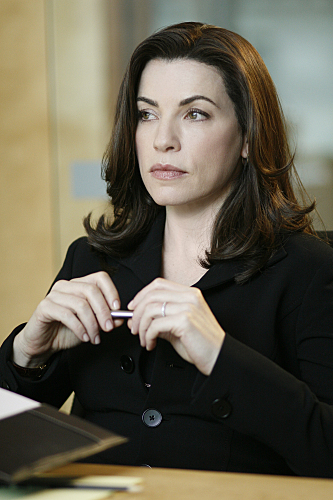
The CBS legal drama “The Good Wife” continues to show the seamy side of big firm legal practice, with heroine Alicia Florrick’s firm, Lockhart, Gardner and Bond, its adversaries, and even Good Alicia herself violating legal ethics rules with abandon, and at an accelerating rate, based on recent episodes. There is nothing wrong with this as entertainment, as long as the Rules themselves are not being misrepresented (they aren’t), the misconduct isn’t being presented as ethical (it isn’t, though it is sometimes hard to tell), and viewers don’t get the idea that this is how most law firms behave. Unfortunately, like most legal shows, “The Good Wife” fails in this important realm. I work with many large law firms, and they are all very aware on the ethical lines, bold or fuzzy, that they must not cross, and take their obligations seriously.

The most recent episode of “The Good Wife,” entitled “Getting Off” included a full-fledged ethics train wreck sparked by the firm’s habitually unethical adversary, the fecund Patti Nyholm. In the middle of representing the defendant hospital in a lawsuit brought by a Lockhart, Gardner and Bond, Nyholm is fired by her firm and removed from the case. With a twinkle in her eye, she approaches none other than the Lockhart firm to represent her in a multi-million dollar lawsuit against her former firm for discrimination and wrongful termination, on the theory that it fired her because she was pregnant. Continue reading

Mother’s Day Reflections On A Wonderful Mother With Flawed Ethics

My mom and Ma Barker had some things in common.

I am spending this Mothers Day in mourning, as today is the first time I have had to experience the holiday without a mother. My mom died earlier this year, as I mentioned here at the time, and she has been buried for less than a month. My mother used to be a regular feature of my ethics seminars, as I would reference her whenever I talked about the so-called “Mom Test,” one of the three famous ethics tests that are useful to set off sluggish ethics alarms, the other two being the Gut Test (“Does this feel wrong?”) and the New York Times Test (“Would I be willing to see my conduct on the front page of the New York Times?”). The “Mom Test” is whether you could tell your mother about your ethically-dubious conduct without hesitation or shame, and I often told my classes that with some mothers, like my own, this test didn’t work very well. “My mother,” I would explain, “has the ethics of Ma Barker.” I was only partially kidding. Continue reading

Comment of the Day: “Osama’s Assassination: The Ethics Elephant in the Room”

First time commenter Margo Schulter delivers a powerful, passionate and eloquent absolutist rebuttal to my post asserting an ethical defense of Osama bin Laden’s targeted killing/assassination/execution by U.S. military personnel. My immediate response to her can be found in the comments to the original post here; I don’t want to re-post it with this post because Margo’s thoughtful comment should be read and thought about prior to considering my rebuttal. Ethics Alarms is blessed with many sharp and persuasive comments, and this is one of the finest. In the grand tradition of absolutism, her answer to my question about firing the bullet that would kill an unarmed and submissive Osama  is “I wouldn’t fire that bullet to save the whole universe.” And she explains why:

“Please let me try to put my best foot forward, and keep a spirit of civility and friendly inquiry, as I say that my whole being — my guts, heart, intuition, and intellect –cry out, “No exceptions! Executions, extrajudicial or legal, are _wrong_!” I wonder what an MRI might show, and what neuroethics might say, about how people in the U.S.A. and elsewhere have such different reactions to what I would call a consummately evil and dehumanizing act.

“Please let me also apologize for the length of this comment, nevertheless just the starting point for a dialogue with lots of ramifications. How do pacifists like me see the scale of moral evils in different kinds of violence, and when might we consider using certain forms of nonlethal force? Also, there’s a way that President Obama might have modified his strategy a bit to fit Frances Kamm’s Doctrine of Triple Effect (DTE), illustrating what I see as the dangers of this intellectually intriguing concept. I’d love to join a dialogue going in any or all of these directions.

“It’s curious. You write, “I assume you shoot him dead.” And my whole being cries out, “You assume wrong!” While I’m not a physicalist, I do recognize that while we’re in this world experience and behavior are mediated through the brain, so I wonder what an MRI or the like would show for
people who have these radically different intuitions. Continue reading

Osama’s Assassination: The Ethics Elephant in the Room

You are one of the Navy Seals raiding Osama bin Laden’s Pakistan compound. Bin Laden rushes out, with a white flag, shouting “Mercy!”, “I surrender!” and “I’m so, so sorry!” He throws his flag down, puts his hands up, and falls to his knees, pleading for his life. What do you do?

I assume that you shoot him dead. I would. Is this ethically defensible? Continue reading

Guess Who Invited Donald Trump to the White House Correspondents Association Dinner?

OK, who's the wiseguy that brought the skunk to the picnic?

I missed it, but the Washington Post of April 28 revealed who it was that invited Donald Trump, fresh from a month of trying to make the President’s citizenship a campaign issue while denigrating Obama’s integrity, legitimacy, and honesty, to the annual light-hearted White House Correspondents Association dinner, where the President is always a featured “performer.” It was buried in the gossipy Style section, but there was the culprit. Who invited him?

The Washington Post invited him, that who.

Inviting Trump to that event is in approximately the same good taste as inviting blogger Pamela Geller to a Park51 (a.k.a. “the Ground Zero Mosque”) controversy, or allowing a group of “Truthers” to crash a testimonial to Dick Cheney.

What could the Post have been thinking? “He’s a fascinating figure to Washington right now!” the Post’s representative breathlessly explained on the 28th. We are to assume, then, that if the dinner was being held this week and Osama bin Laden hadn’t been dispatched (most respectfully, of course) to Davy Jones’ Locker, the Post might have invited Osama’s bullet-riddled corpse to slump at its table.

The Post was stirring the pot, is what it was doing, and that is not the media’s proper of ethical role. If the intention was to set up Trump, who had been called everything from a joke to a fool to a thug to a racist by various Post writers only days before, to be insulted to his face by host Seth Myers and the President, that is taking sides in the news rather than reporting it. If it the intent was to position volatile elements together in the hopes of sparking a story, that is unethical  journalism too.

The paper got both results that it presumably desired: Trump was a sitting duck at the dinner, and then he embarrassed himself by later complaining about the skewering he so richly deserved. It also, not for the first time, showed how rusty those old ethics alarms are at the offices of Washington, D.C.’s most prestigious newspaper.

[Thanks to sharp-eyed Post reader Robert Sher.]

Ethics Hero: Washington Post Columnist Carolyn Hax

I’m breaking some precedent here: I don’t usually pick Ethics Heroes based upon writing alone, and I don’t usually reprint long sections from someone else’s column. But relationship advice columnist Carolyn Hax has long displayed a brilliant feel for ethical analysis, and expresses it sharply and entertainingly to the great benefit of her readers. Good general readership ethical analysis is all too rare, and she deserves accolades.

Today she provided as clear and as deft a lesson in how responsibility, honesty, fairness, bias and accountability work as I can imagine, while chiding a man who wants to rescue a younger woman from the relationship he didn’t have the guts to pursue herself. It shows her at her best, and is impeccable ethics as well. Brava!

Here is the inquiry and Hax’s response: Continue reading

Ethics Hero Emeritus: Marlene Dietrich (1901-1992)

The great Marlene Dietrich, Ethics Hero

It was on this date in 1992 that the magnificent Marlene Dietrich died, in her sleep, in her Paris apartment at age of 91. She had hidden her face from the world since she had stopped performing over a decade before, saying that the public should remember her as she had been. Sadly, Dietrich is one of those former icons of Hollywood whom the public is slowly failing to remember anything about at all; most are more familiar with Madeleine Kahn’s send-up of her in the Western spoof “Blazing Saddles” than they are with Marlene herself. That is wrong, for she deserves better. Not only was Marlene Dietrich a unique performer and important cultural figure, she was also an Ethics Hero.

She was a rising German stage and screen actress when director Josef von Sternberg cast her as Lola-Lola, the beautiful, cynical leading character in “Der blaue Engel,” (The Blue Angel), Germany’s first talking film. The movie made Dietrich a star. Von Sternberg took her with him when Hollywood beckoned and signed her with Paramount Pictures. There Dietrich built her image and legend by perfecting her femme fatale film persona in a series of classic films directed by her mentor: “Morocco” (1930), “Dishonored” (1931), “Shanghai Express” (1932), “Blonde Venus” (1932), “The Scarlet Empress” (1934), and “The Devil Is a Woman” (1935).

Meanwhile, she had already begun fighting Hitler’s regime. Continue reading

Comment of the Day: “Death Photo Ethics”

Tim LeVier elaborates on the ethical awkwardness of President Obama’s stated rationale for not releasing Osama’s death photos, the topic of the post, Death Photo Ethics: Continue reading

Death Photo Ethics

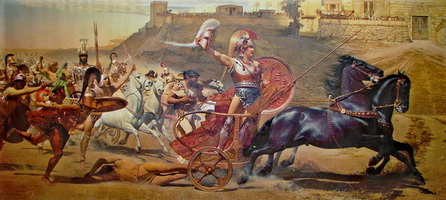
Even before Achilles dragged the corpse of Hector behind his chariot through the dust around the walled city of Troy, the tradition of demoralizing the enemy by degrading and displaying the bodies of its dead heroes was well-established. The United States was horrified when this was done to our fallen servicemen in Somalia, and it is one of the most barbaric and unnecessary practices of war.  While the Geneva Convention doesn’t mention the displaying of enemy corpses, a 2005 publication by the Red Cross called Customary International Humanitarian Law does. It was written to address issues that international treaties omitted, and its Rule 113 reads:

“Each party to the conflict must take all possible measures to prevent the dead from being despoiled. Mutilation of dead bodies is prohibited. Continue reading

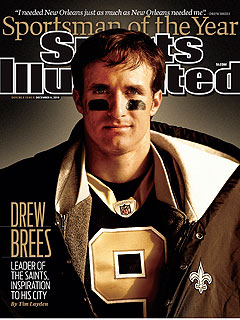
Ethics Hero: New Orleans Saints QB Drew Brees

Drew Brees is one professional athlete—yes, there are others—who sees the riches he acquires in his high-paid trade as a star NFL quarterback as tools to achieve good ends. He has established an impressive foundation to assist children in New Orleans, and now he is using his wealth to keep his team together and get them ready for the coming season.

As NFL training camps remain in limbo while the courts decide the legality of the owners’ lock-out, Brees’s Saints are training anyway, because he is picking up the bill, paying Tulane staff to help out during practices and flying in his personal trainer to oversee the team’s conditioning program, even arranging for the Tulane Institute of Sports Medicine to provide insurance for players who need it. Brees has also arranged for lodging for some of the younger players on the team.

Quarterbacks are always team leaders in name and reputation, but Drew Brees is exhibiting exemplary leadership and character by acknowledging his special resources and using them for the benefit of his colleagues during a crisis. Wealth and influence can accomplish wonderful things if the individual who is wealthy and influential has the ethical character to make it so. Drew Brees is such an individual, and a magnificent example of leadership as well.

____________________________

Note: Ethics Bob posted on Drees right about the same time I did. You can read his comments here.