A Theater Lore Ethics Story

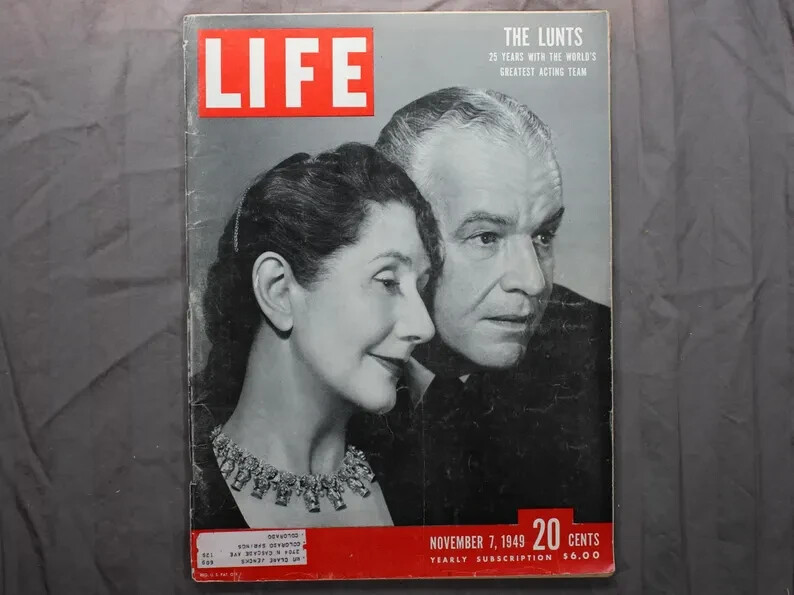
It’s depressing, but most readers here have probably never heard of Alfred Lunt and Lynn Fontanne. They were (and are still) the most acclaimed husband and wife acting team in theater history, legendary in the field.

If you have never heard of Lunt and Fontaine, I doubt that you’ll recognize the name of actor Cameron Mitchell, though he had a long, varied and successful career in movies and television. He was never considered a star: in his 1994 obituaries, Mitchell’s supporting role in the long-running TV western “The High Chaparral,” a “Bonanza” rip-off, usually dominated. I first took note of his talents when he appeared in a TV production of the drama “The Andersonville Trial” as Judge Advocate Lew Wallace. In interviews and in his autobiography, Mitchell told the story many times about a crucial moment in his career when the ethics heroism of the Lunts changed the course of his life.

Mitchell was a 21-year-old aspiring actor frustrated in his efforts to get cast in New York City. For two years he struggled to survive, taking dozens of dead-end jobs, like ushering at movie theaters, mail clerking, and washing dishes. Then Cameron Mitzell (his name before he changed it) saw the 1931 film adaptation of “The Guardsman” starring Alfred Lunt, and was overcome with resentment, feeling that the supposedly brilliant actor’s performance hadn’t shown that he deserved his exalted reputation. So Mitchell wrote what he later described as “the world’s worst letter.” Mitchell wrote Lunt the opposite of a fan letter; it was a “You stink! letter stating that he was certain that he was a better actor than Lunt, but no one would give him a chance to prove it. After listing the inadequacies of Lunt’s performance as he saw it, he concluded the letter by writing, “If you think you can act, you should see me.”

Far from being insulted, Lunt was intrigued by the writer’s confidence and audacity. He wrote back to Mitchell and offered him an opportunity to, as the saying goes,”put his money where is mouth is,” by auditioning for Lunt and his wife. Mitchell was terrified but wasn’t about to chicken out. He came to the auditions and immediately apologized to Lunt. Lynn Fontanne told him there was nothing to be sorry about. “Don’t worry about what you’ve done,” she said. “Acting is your life’s work, and you’re not only going to be a good actor, but you’re going to be a great one!” The Lunts then cast the young actor in their production of Shakespeare’s “The Taming of the Shrew” on Broadway. Fontaine also persuaded him to adopt the stage name, “Cameron Mitchell.”

Mitchell went on to be a successful working actor for more than five decades. And he made certain that at every opportunity he would tell the story of how he owed his career to the Lunts’ spontaneous act of support and kindness to a rude and cocky young actor.
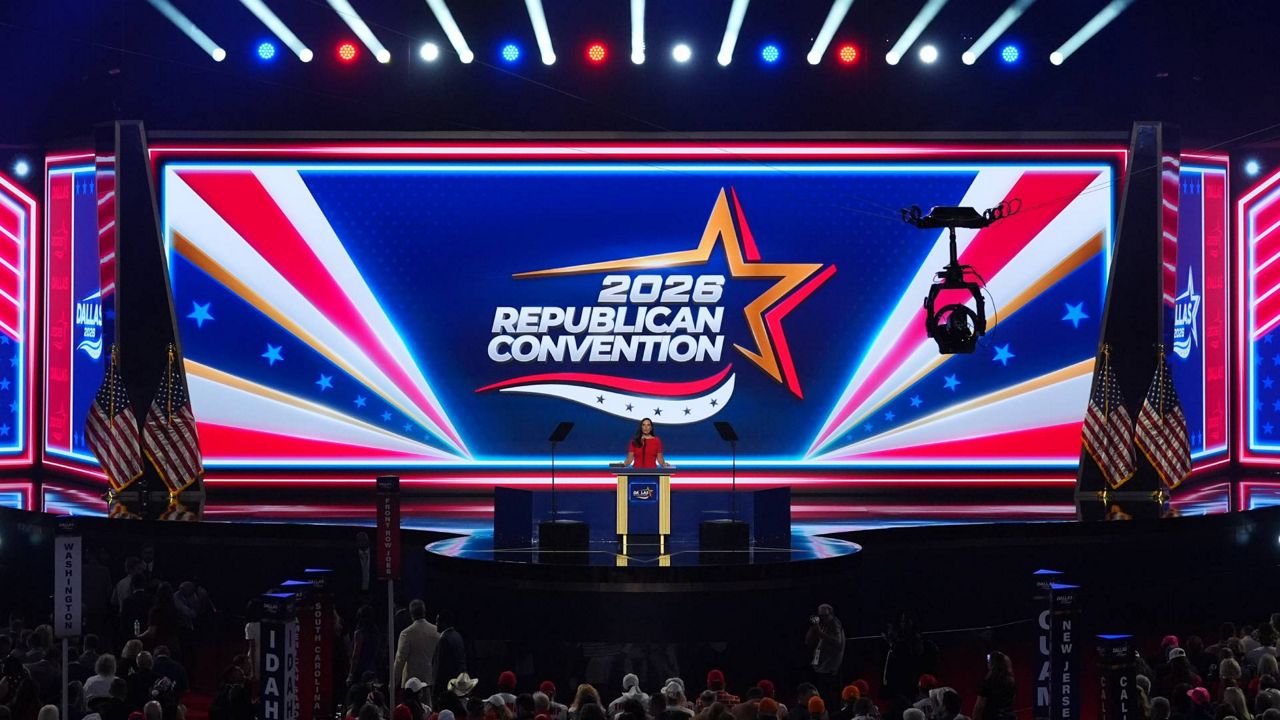

Ethics Observations on the GOP Mid-Term Convention

I could write full posts about many of these, and if I had time, I would. The networks and the Axis want to ignore it and are trying to bury it in negatives, but the event is obviously news, and attention should be paid….

Observations:

1. Competence! If this was the President’s idea, it was a great one. The GOP has to get voters to the polls (or to mailboxes, if he can’t stem mail-in balloting). If the event picks up just one or two percentage points in Republican voter participation, it will have been a success. If Republicans hold Congress, I guarantee both parties will make this tactic a tradition.

Incidentally, adding a mid-term convention is another so-called “democratic norm” that Trump is violating. The Horror.

2. Fetterman! One of the two biggest stories to come out of last night’s opening of the convention was Senator John Fetterman’s surprise video appearance, shot in front of a steel mill. Fetterman praised and endorsed his fellow Pennsylvania Senator David McCormick, a Republican, and said that they would work together “and work with President Trump and defend the steel way of life.” This makes Fetterman the Ethics Hero of the convention thus far. It also tells Democrats that if they are going to try convict Trump after a House impeachment and try to pack the Supreme Court, they will need to flip an extra Senate seat to their side.

Ethics Hero: Tuskegee University President Dr. Mark Brown

Now and then there are moments when I feel that indeed I have not lived in vain.

Tuskegee University president Dr. Mark Brown (above), a retired Air Force major general, issued a memo to all students of the “traditional black institution” this academic year declaring that all students will be required to follow a dress code right out of 1962.

“The university has developed a new policy for student attire on campus, classroom attendance, and cell phone use in classrooms,” Brown wrote in a message to students. “Tuskegee students now have a dress code for public and professional places. The Student Handbook requires students to arrive on campus with a business suit and proper shoes for a business meeting. Students are prohibited from wearing revealing clothing in class, to the cafeteria or in official settings like Convocation. They are also not able to wear bedroom shoes, bonnets, or du-rags to class or the cafeteria. The goal here is not meant to restrict you from enjoying the Tuskegee Experience, but to prepare you with a solid foundation for the workforce you will enter once you leave Tuskegee. Employers are less forgiving and too often presentation may overrule stellar preparation.”

“Tuskegee University continues to prepare the best and brightest for a lifetime of success,” Brown added. “With these changes, we want to ensure every student is as prepared as they can be. I look forward to seeing you in August.”

To which I say,

Now that wasn’t so hard, was it?

The Ethical Significance of the Post-Dolly Response

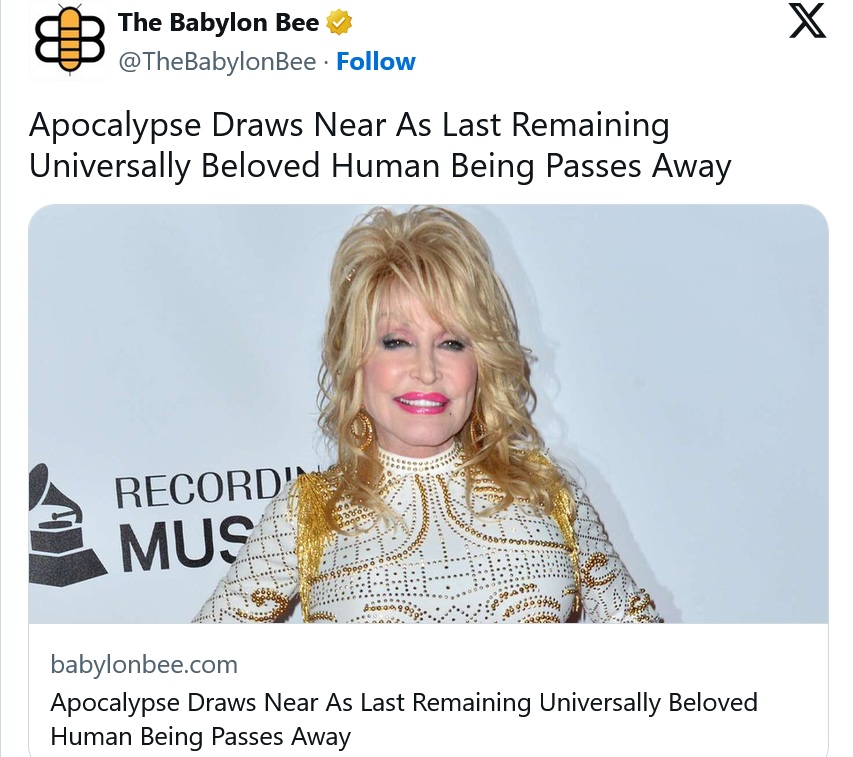
As you must know by now unless you have been in a submerged submarine with a broken communications system like the one in “Crimson Tide,” Dolly Parton died yesterday at 80. Why her death is being described as a shock is a mystery: as my father said when he hit 80, “It’s the Red Zone, son. I can kick off any second from here on!” Nonetheless, the public and official outpouring of grief, love and admiration is unlike anything we’ve seen at least since Princess Diana’s demise in 1997.

The tectonic reaction is certainly not based on Dolly’s singing, acting or song-writing. Personally, I was never a fan; Dolly’s singing voice always sounded to me like someone who has inhaled helium. Her songs were pleasant but unremarkable to my ear. As an actress, I place Dolly Parton in the large category of experienced public performers who can project their own personalities effectively into roles and stories where their personalities seem appropriate, a diverse group that ranges from the late Fred Thompson to the late Bob Newhart to the not-quite-late Ringo Starr.

Clearly, the reason Dolly is being mourned so vigorously is that her public persona was entirely benign, virtuous and lovable, even aggressively so. She literally gave nobody any reason not to like her. In 2020, as the Great Stupid was grabbing American society by the throat, Hollywood producer Rob Long wrote an appreciation of Dolly in “Commentary” exploring her universal popularity. He wrote in part,

On The California-Texas Foiled Baby Murder Case, Part II: Ethics Verdicts

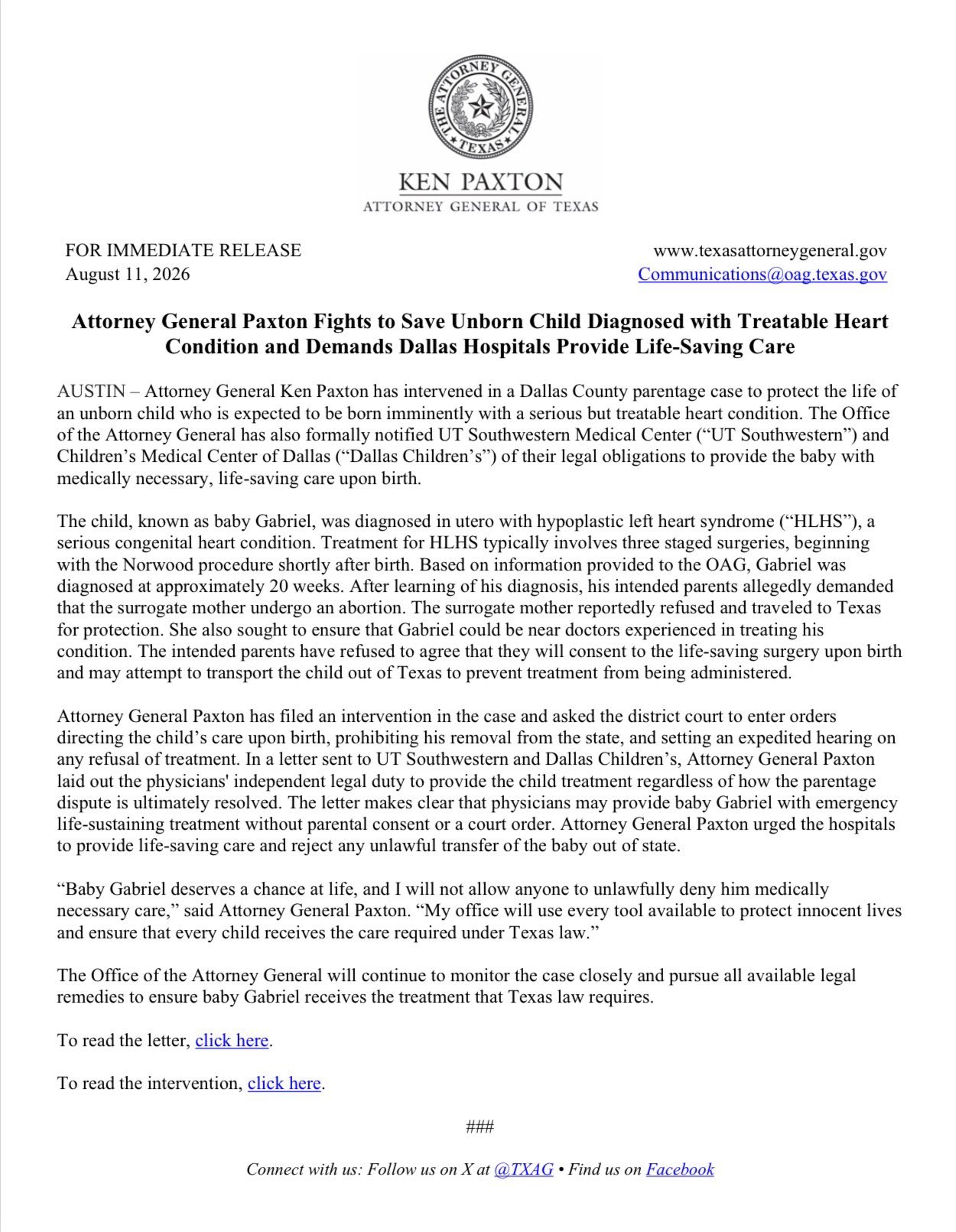
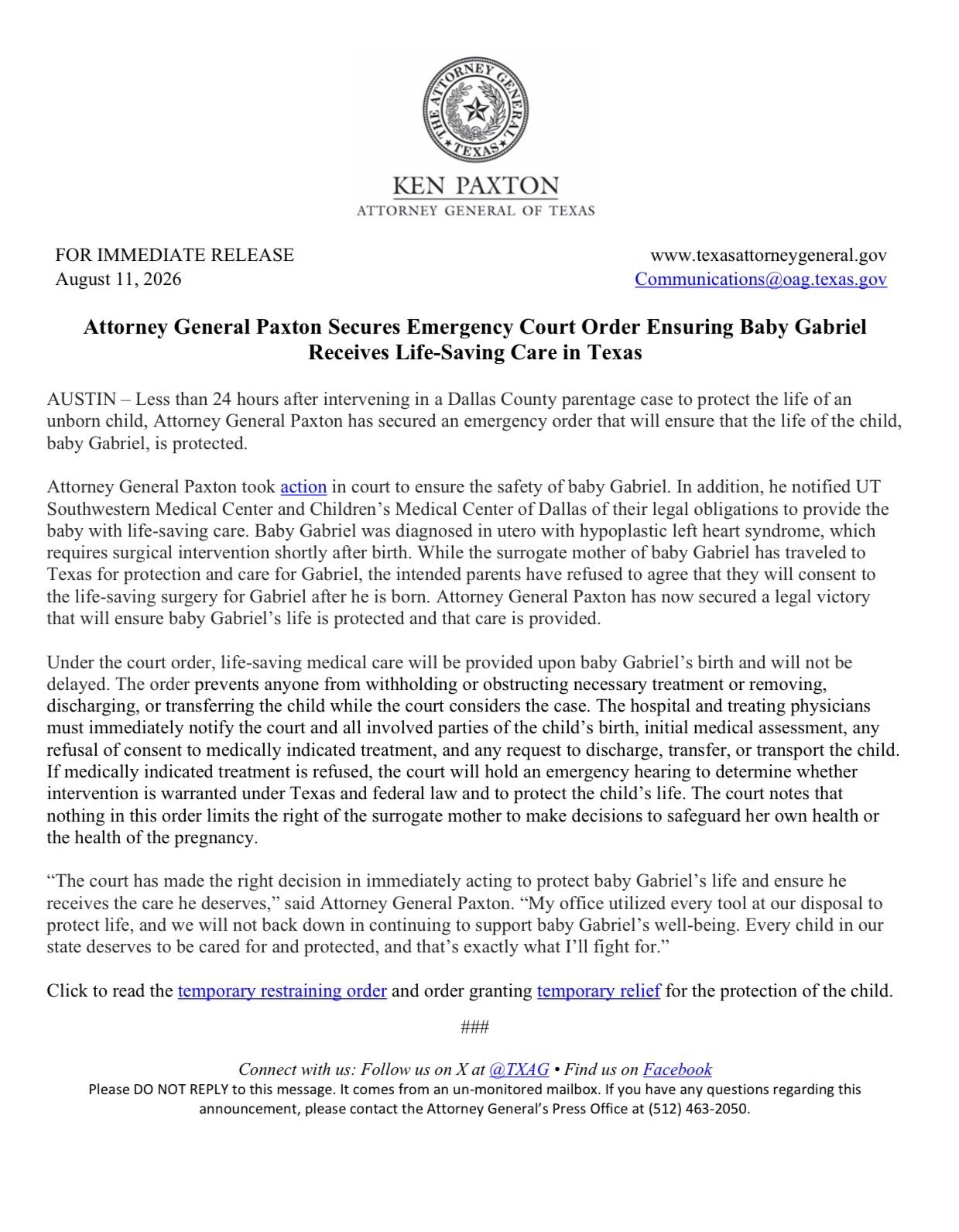
Again, I don’t know how any thoughtful, ethical person could question the outcome in this case. Apparently the “intended parents” refused to agree that they would seek appropriate medical care for the child after he was born with a serious but medically correctable heart problem. Having been unsuccessful in their efforts to have the child aborted late term, these ghouls were going to get custody of the child and perhaps have a hospital administer “palliative care”…that is, let the baby die. Pleasantly, of course,

A legal battle, at least regarding the life of the child, was averted when the child was born ahead of the September 3 due date.

As with some of the other cases discussed in Part 1, how could a typical pro-abortion advocate who uses the standard pro-abortion rhetoric about women’s “bodily autonomy” argue that the parents could force the surrogate to undergo an abortion? Yet abortion activists are apparently immune to integrity, logic, and decency. The main thing is to get the unborn child disposed of.

The surrogate’s contract contained a clause obligating her to submit to an abortion if the “intended parents” demanded it. The lawyers who drafted that contract should be sued for legal malpractice, and there are arguable ethical violations as well. I am wondering how common such contracts are, and how often they are enforced. For human beings cannot sell themselves into slavery or otherwise contract away their “unalienable rights.” That contract provision is unenforceable as against public policy, and should be made illegal by statute.

Republicans should pass the bill in the House and make Democrats show their lack decency when they vote it down.

Ethics points:

Rep. Brandon Gill Exposes and Embarrasses The Woke Propagandist Who Runs The Smithsonian: GOOD!

These exchanges are hard to watch unless you enjoy watching dishonest, woke propagandists being publicly exposed as the disgraces to their professions and the enemies of democracy that they are.

When the White House announced that it was reviewing Smithsonian exhibits for left-wing bias about a year ago, I wrote here (in part):

“There can be little question that the current curators of the Smithsonian museums have used their positions to promote woke agenda items and to manipulate the exhibits to try to indoctrinate museum visitors. Most of what the Federalist flagged as well as the White House’s items are genuinely objectionable…For example, Ibram X. Kendi is a race-hustler, and his presence anywhere in the museums is signature significance.

“Does the Pride Flag have genuine historical significance? I suppose so. But emphasizing Ben Franklin’s early slave-holding stinks of the “1619 Project”: by the time that he was a Founder, Ben had become a vocal foe of slavery.

“I believe that a nation’s museums should err on the side of emphasizing the positive aspect of its history and culture, but that’s easier to say than to execute. Substituting one extreme bias for another is not a solution. But as I wrote in the previous post on this topic, I think finding an ethical balance will be a futile exercise.”

In a previous post, I had written,

Return To “The Odyssey”: Ethics-wise This Is All I Can Say Now, So I Guess I’m Going To Have To See The Damn Thing…[EXPANDED]

Above is Ben Shapiro’s podcast review of the movie conservative commentators and pundits declared woke and offensive long before it was released. Many also circulated false information to support their position, resulting in this Ethics Alarms post from May, which, thanks to a reminder from Ethics Alarms “gotcha!” master Neil Dorr, I returned to yesterday with a correction. All the reviews are out now, and the majority of them are raves, which doesn’t prove anything in my metaphorical book. (“The Crying Game” got raves. “Don’t Look Now!” got raves. “The Substance” got raves.) I do find Shapiro’s review above brave and encouraging, however. He’s a well known conservative activist and commentator and the creator of the Daily Wire, and still pronounced the film to be a) excellent and b) largely conservative in its perspective. Ben gets ethics bonus points for not following the herd.

Tangent: Ben does not get points for his delivery. Cowabunga, how can someone be peddling a podcast without taking the time to learn how to speak distinctly and clearly? Shapiro doesn’t open his mouth sufficiently when he speaks, he places his voice in his sinuses, and he speaks way, way too fast. I could make Ben three times as effective in a two-hour coaching session. Why doesn’t someone tell him? I found listening to his review excruciating.

But I digress. Christopher Nolan is a cult director who is intermittently daring and regarded as an auteur rather than an ideologue. His initially fame flowed from his Batman films, which posed provocative ethics scenarios. Personally, I thought “Dunkirk” was an inexcusable botch of an important historical film topic, and I haven’t forgiven him for it yet. I was still thrilled to learn that he was tackling Homer’s second-best story, however. “The Odyssey” has long been obscured by Virgil’s rip-off starring Odysseus mimic Ulysses along with stop-action films confounding “Odyssey” with the voyages of Sinbad.

Shapiro isn’t the only conservative critic to undermine the Right’s narrative that the movie is more woke propaganda: Christian Toto, the rightish Hollywood critic, also praised the movie. On the other side, several reliably progressive publications have slammed it. TIME’s critic called the movie an “eye-glazing dud of a movie.” The Economist—not that I care what that Eurocentric leftist pseudo-intellectual rag says about anything,  called Nolan’s film “a very silly adaptation of “The Odyssey”, and was particularly annoyed by the imposition of modern attitudes and conduct on the story. Anachronisms bother me too, but they are so frequent in period films that I tend to give them a pass unless they are really intrusive.

I now have enough information to make some ethics calls before I see the film. I have only paid money to see three films in a theater since Grace died, a) because I am in cash-flow hell, b) because I hate seeing movies alone and c) because seeing virtue-signaling Northern Virginia audiences wearing masks makes me crazy. I will see “The Odyssey,” however.

Ethics points:

Ethics Hero: Reporter Rachel Menitoff

This is a companion piece to yesterday’s celebratory post honoring the DoorDash driver who completed her delivery after being hit by a car. With her “the show must go on!” exemplary professionalism, Menitoff’s composure under extreme “EW!” has to be cheered, and, arguably, was even more impressive than Miracle’s performance under duress.

Menitoff was reporting live for KTLA in Los Angeles on the lingering effects of Southern California’s heat wave when a huge flying cockroach landed on her shoulder and crawled across her chest.

“And it’s a lot more comfortable at this hour, but we’re still in the 80s here in the Valley,” Menitoff was saying, “So overnight temperatures aren’t necessarily dropping, and this leads to less recovery time from the daytime heat…” Meanwhile, the ugly thing was visible as it scurried across her stomach, chest and neck before jumping onto her microphone, presumably to make a statement.

Only after the live shot ended did Menitoff exclaim, “Oh gosh! Oh, I feel something,” and try to deal with the bug. “I knew it was on me,” she said later. “But I knew if I took notice of it, I wouldn’t be able to continue on with the report. So I said to myself, just get through this moment and then kind of shake it off.”

Brava. Unfortunately, since everything is political now, even this incident was quickly exploited for partisan effect. In a classic of over-reach, Vigilante ex-mayoral candidate Spencer Pratt shared the clip on X to criticize Los Angeles City Councilmember Nithya Raman, who is challenging incumbent Mayor Karen Bass in the 2026 mayoral race. Pratt said the insect symbolized conditions in Raman’s council district, where the Rachel’s report took place.

Ethics Hero: DoorDash Driver Miracle Heron, and Say Hello To Rationalization #18 A: “Nobody Could Blame You!”

The video is self-explanatory, though the various news reports haven’t always emphasized the ethics issue.

Heron was hit by a car and knocked down as well as, I assume, traumatized just a bit. Nonetheless, she picked herself up, dusted herself off (just like Fred Astaire!) and completed her job.

That she would deliver the food despite her mishap shouldn’t have been so shocking: it was the ethical thing to do. Yet I just heard my local news readers exclaim that they wouldn’t complete a delivery after that. Good to know: no one should hire them for any job requiring dedication, diligence, commitment or fortitude.

Since Miracle wasn’t hurt and the incident did not in anyway impede her ability to deliver the food, it would have been unethical for her not to do so. Once again, my theater background is governing: “the show must go on” is a core principle with me, and should be in any field. We never have leave to make our problems into other people’s problems for our own convenience. Undoubtedly, the driver could have used the accident as an excuse not to complete her job; nobody would blame her if she hadn’t. That fallacy, however, is at the root of Rationalization #18. Hamm’s Excuse, or “It wasn’t my fault and I realize #18 A is called for.

“Nobody could blame you!” is the new rationalization. The fact that you have an easy out to let you avoid your responsibilities doesn’t make it ethical to do so. Most people default to emotion over rationality and will allow sympathy and empathy to over-rule duty. Most people are ethics dunces. Miracle Heron did her job because someone was depending on her, and her employer had made a commitment to complete a transaction. She could have used the scary brush with serious injury as a reason not to do her job, but she didn’t, because it would have been unfair to the customer as well as her employer.

That near-miss definitely didn’t damage her well-regulated ethics alarms.

Rep. Gill’s Question To Rep. Pressley: More Than a “Gotcha!”

An exchange yesterday between Democratic Representative Ayanna Pressley (D-Mass) and Republican Representative Brandon Gill during a House hearing on diversity, equity, and inclusion (DEI) initiatives is rapidly going “viral” this morning, no thanks to any left-leaning news aggregators and the Axis media, which are trying to ignore it.

During the hearing, Representative Pressley criticized Republican anti-DEI policies as harmful to women (translation: not discriminating against men is harmful to women) and in her usual obnoxious “I wish I didn’t have to deal with these racist idiots” air asked Representative Gill to support her legislation to support the justly dead-in-the-water Equal Rights Amendment (ERA) as the 28th Amendment to the U.S. Constitution.

Gill immediately responded, Does it define what a woman is?” and was met with crickets by Pressley, who pretended he hadn’t said that and muttered weakly, “I look forward to your signing on.” Gill, triumphant, replied, “I just was hoping for some analytical clarity, but thank you.”

Gil’s question was deft and significant. It instantly drew attention to the intellectual dishonesty, internal contradictions and the procrustean nature of so many progressive obsessions, including affirmative action (violating laws against discrimination in order to remedy discrimination), trans-female sports competition (harming biological women by warping Title IX) and, of course, DEI.