Comment of the Day: “The Hazing Abuse of Michael Warren”

Frequent commenter and anti-child abuse advocate Steven Mark Pilling catalogues the defenses and rationalizations offered here by collegiate commenters who thought my post was overly hard on pro-hazing Hartwick College. The references to “Hounddog” relate to a thankfully buried film shot five years years back that required a 12-year-old Dakota Fanning to be the victim in a graphic rape scene with an adult actor. Steven, along with Paul Petersen and others, successfully exposed the film’s skirting of laws and exploitation of Fanning. You can read my ethics commentary on that horrible story here and here.

“Jack: In reading those collegian posts and your responses, I almost had a feeling of deja vu. Isn’t it amazing how all the excuses and means of “defending the indefensible”- no matter what the specific issue- have points of commonality that immediately grab at you? When I was involved in the “Hounddog” issue, I ran into them all. I see many of them here… Continue reading

Loop-Hole Ethics and The New York Times

The NYT’s website paywall plan floats in a sea of holes.

Ariel Kaminer, author of “The Ethicist” column in The New York Times Magazine, made an interesting assertion in her answer to a reader who asked about whether he could exploit several loop-holes in the Times’ new paywall plan for its website.

Noting that he was a struggling freelance journalist who visits the Times website often, he asked if it was unethical for him to use his parents’ free access to the content, since they are subscribers.  Then he Mused about other scenarios. “If I buy online access, can I share the password with my live-in girlfriend, even if I move to New York for the summer? What about our other housemates?” Continue reading

Ethics Hero: Attorney Paul Clement

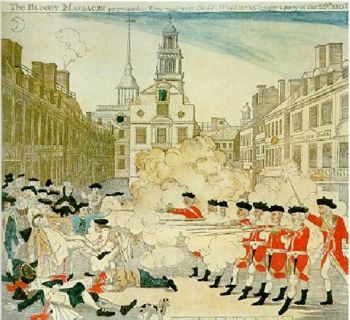
John Adams defended the guys in red, and Paul Clement understands why.

Law firm King & Spalding announced Monday that it would no longer represent congressional Republicans regarding the constitutionality of the Defense of Marriage Act (DOMA), the controversial 1996 legislation that defines marriage as being only between a man and a woman.. In response, the firm’s chief appellate lawyer, Paul Clement, who was handling the case, resigned from the firm.

In February, the Obama administration announced that its Justice Department would refuse to defend DOMA in a number of lawsuits, an unusual, controversial and troubling decision. It doesn’t take a lot of imagination to conceive of other federal laws another administration might decide to render dead letters by non-defense despite being duly passed by the people’s representatives. A government has an obligation to duly execute its laws or repeal them. The policy of the Administration regarding DOMA raised issues of governmental integrity quite separate from the provisions of the law itself. Continue reading

Why I Hate Hate Crime Laws

Just do it with love, and they'll be lenient...

I did it to myself, I confess: reminding myself of the nation’s offensive hate crime laws while writing about the McDonald’s beating, pausing in the middle of the main theme of the post to note the foolishness of investigating whether or not an unprovoked attack qualifies as a hate crime. Hate crime laws infuriate me every time I think about them, because they represent the lowest and most cynical form of cultural values-setting by lawmaking, an important governmental task that is increasingly a lost art, because today’s lawmakers care more about posturing and power than values.

Two unidentified men beat Bryan Stow, a 42-year-old paramedic, senseless in the parking lot outside Dodger Stadium on opening day. Why? He was wearing a San Francisco Giant jersey, and it was Dodger territory. Continue reading

Comment of the Day: “Fake Pregnancy, Real Deception, Real Harm

Commenter Karl Penny expands on the original post with reflections on trust:

“…Ms. Rodriguez’s actions were just plain wrong. Society, a civilized one anyway, depends on trust if it is to function. I buy foods that I trust were processed in such a manner that they are still wholesome, for example. Not so long ago, my wife and I went to see a movie and, while still some distance from the ticket booths, noticed that a number of people had turned and started walking away from the line they’d been in. We asked a couple who’d headed off in our direction what the matter was. They said a particular movie (forgot which one, now), the one we had planned to see, was sold out. We thanked them and left. We believed them. We didn’t wonder if it was a stunt or practical joke of some kind. We didn’t think a competing theater chain was trying to undermine a competitor’s business in that way. We certainly didn’t wonder if some local students were conducting a study on the behavior of disappointed theater patrons. I don’t want to have to live in a society where it would have been necessary to check whether the theater was really out of tickets for that show. We have enough people already who have worked at undermining public trust, to the detriment of us all. Any more of them, we don’t need.”

Flashback: “Ethics Test at McDonald’s”

Background: The McDonald’s beating and video story reminded me of another ethics essay arising out of a McDonald’s incident, one that I was personally involved in. This post first appeared on The Ethics Scoreboard in 2006, and reading it again, I realized it was one of the first times that I used the ethics alarms imagery that became the basis for this blog. The incident that inspired the essay still troubles me. I wish I could blame McDonald’s for the callousness that my 2006 experience and last week’s incident in Maryland exposed, but unfortunately, our problem relates to the Golden Rule, not the Golden Arches. Here is “Ethics Test at McDonald’s”:

Life gives ethics tests like pop quizzes. You often get no warning, and if you’re thinking about something else, you might not even realize the test is going on. Continue reading

The MacDonald’s Beating Video, Another Dead Canary in The Ethics Mine

Vernon Hacket: videographer, violence afficianado, shameless bystander

Last week, In the early hours of  April 18,two teenaged patrons at a Rosedale, Maryland MacDonald’s brutally beat Chrissy Lee Polis, 22, into a seizure. The attack was captured on a video recorded by Vernon Hackett, one of the MacDonald’s workers, on a cellphone camera. Other employees can be heard laughing on the video, and Hackett apparently is heard warning the attackers that the police are coming. He has been fired by the restaurant’s proprietor.  (More on this here.)

His firing was well-deserved, but it doesn’t begin to address the disturbing implications of the incident. Continue reading

The ACLU Gives Us a Lesson in Principles

Paul Scofield as Sir Thomas More

“What would you do? Cut a great road through the law to get after the Devil?…And when the last law was down, and the Devil turned ’round on you, where would you hide…the laws all being flat? This country is planted thick with laws, from coast to coast, Man’s laws, not God’s! And if you cut them down…do you really think you could stand upright in the winds that would blow then? Yes, I’d give the Devil benefit of law, for my own safety’s sake!”—- Sir Thomas More [Played by Paul Scofield, scripted by Robert Bolt (in a speech adapted from More’s writings) in the film of “A Man for All Seasons” (1966)]

My opinion of Rev. Terry Jones is a matter of record; to summarize, I think he is well beneath Charlie Sheen, Donald Trump, Tom DeLay, Goldman Sachs, Nancy Pelosi, Eliot Spitzer, AIG, Charlie Rangel , Mark Sanford, Barry Bonds, “Ronbo” and most of the other members in bad standing on the Ethics Alarms Bottom 100. Determined as he is to sully the First Amendment with his disgraceful and hate-soaked use of it, however, he is an American, and he has rights. A Dearborn, Michigan jury, prompted by the city, has taken away those rights by preventing him and another fool from protesting outside a local mosque. Continue reading

Fake Pregnancy, Real Deception, Real Harm

"How exciting! It's fake, isn't it?"

Gaby Rodriguez, a Yakima (Washington) High School senior, faked a pregnancy for six months as a school-approved senior project. She told no one about the charade, which the school has called a “social experiment,” except her mother, boyfriend and principal. Others, like her siblings, her boyfriend’s family, fellow students, friends and teachers, were led to believe the pregnancy was real.

Thanks to hidden camera shows like ABC’s “What Would You Do?” and various reality shows, too many people have the impression that everyone they meet is a potential guinea pig. On the contrary: using decent, disguise, deception and lies to “see how people react” is no better than lying for any other reason, and often more harmful. Continue reading

No-Hit Piñatas and the Killers of Childhood

This is a no-hit piñata. Send it to Hell.

The latest device invented by childhood-fearing adults is the “no-hit piñata,”a new invention designed to make the ancient traditional child’s game less violent. Instead of hitting the colorful paper container with sticks to get at the candy and toys inside, the children pull strings, and the piñata opens non-violently.

What fun.

This is just another sally from the growing number of whimsy-challenged and anti-violence-addled parents and psychologists, who won’t rest until no child ever again picks up a stick to use as an imaginary gun, plays soldier, watches the Roadrunner push Wile E. Coyote off a cliff, or participates in a dodge ball game. Continue reading