Me, Wrestling With Bias, And Losing

A large part of being ethical involves being aware of your biases and minimizing their impact on your conduct. As I recently was reminded, this sounds easier than it is in practice.

Searching yesterday for an Ethics Alarms topic, I came across an interesting, if not earth-shaking, issue of legal ethics that had obvious applications to other professions. Tracking down the source of the story, I discovered that the original idea was posted by a lawyer-blogger who in the past has gone out of his way to denigrate me professionally and personally on the web. He has also insulted me directly. Outside of that, though, he is by all accounts a terrific lawyer, an astute commentator on the legal profession, and, I’m sure, the salt of the earth.

Still, I don’t feel like sending readers to his site. Not only did the guy, unfairly, set out to harm me professionally, but he probably would do so again. I have no reason to do something that benefits him, nor is there any reason for me to try to curry favor with him: he owes me an apology, and I know I am never getting it.

I could link to one of the blogs and websites that picked up and elaborated on his post, but that would be unfair: I try to link to the originator of a useful ethical discussion as a matter of fairness and recognition. Continue reading

The Uncommon Common Dilemma

Emily Dickinson, he's not.

It is unusual to encounter a situation where there is no course that doesn’t violate some legitimate ethical principle. The dilemma involving rapper Common’s controversial invitation to the White House is one of them. None of the options are strictly ethical, and this has led advocates both for and against his inclusion in Michelle Obama’s poetry event, “An Evening of  Poetry at the White House,” to behave unethically themselves. Let’s see: what comes closest to being ethical conduct of the possible outcomes?

Option A: Michelle has her poetry event, but doesn’t invite any mainstream rapper. Ethical breaches: Incompetence, bias, censorship, dishonesty.

Rap is the most dynamic and popular form of poetry in America today. Having an event to “showcase the impact of poetry on American culture” at the White House that excludes popular rappers is absurd on its face; it would be like the White House celebrating the influence of sports in American culture and omitting football. Continue reading

The Unfair and Dishonest Regulation…of Interior Decorators?

Deadly in the hands of an amateur

I stumbled on this as my wife and I investigated the possibility of her setting up a business as an interior design consultant. 22 States and the District of  Columbia require a license to be an interior decorator, which technically means, as Reason so pointedly puts it, that moving a throw pillow could theoretically get you jailed or fined.

How can this be? All professional licensing creates a bar to membership, making such licenses targets of Libertarians and other critics. But at least most professions requiring a license have a plausible argument for the certification based on health and the protection of the public welfare. Lawyers, doctors, dentists, builders, electricians…that makes sense. Real estate brokers, teachers, personal trainers…er, okay, I guess so. But interior decorators? Isn’t this just an example of nakedly restricting competition, and using the sordid process of buying state legislators to do it? What other justification could there be? Continue reading

Ethics Quote of the Week: Washington Post Columnist Michael Gerson

“In determining who is a “major” candidate for president, let’s begin here. Those who support the legalization of heroin while mocking addicts are marginal. It is difficult to be a first-tier candidate while holding second-rate values.”

—-Washington Post columnist and former Bush advisor Michael Gerson, pronouncing presidential candidate Rep. Ron Paul’s Libertarian endorsement of drug legalization ethically unacceptable.

Gerson’s deconstruction of the all-too-common and increasingly ominous calls for legalizing addictive drugs nicely captures the trio of ethical flaws of the advocacy: it denies the crucial and legitimate government role defining responsible conduct for society, it embraces the myth that recreational drug use “does no harm,” and it is arrogant and selfish, condemning the poor and reckless to problems that their fragile resources cope with, in order to bestow a dubious “freedom” that the drug advocates do not need. Continue reading

What Do you Call A Newspaper That Defends Outrageous Journalistic Practices? How About “Di Tzeitung”?

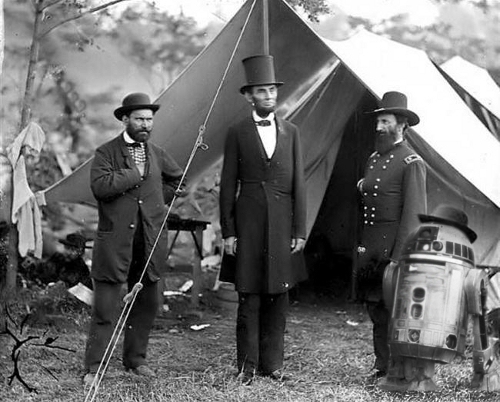
If Di Tzeitung had covered the Civil War

If I could pronounce it, the Brooklyn-based Hasidic newspaper Di Tzeitung would be useful shorthand  for “shamelessly using rationalizations to defend indefensible conduct.”

Last week, the newspaper ran the now-familiar photo of President Obama, Secretary of State Hillary Clinton, and others in the White House Situation Room, except that in Di Tzeitung’s version, Clinton  and the only other woman present, Director for Counter-terrorism Audrey Tomason, had magically vanished. Di Tzeitung had airbrushed them out, Politburo-style.

Of course, publishing the photo of a historic news event and altering it to convey misleading or false information (in this case, “Hillary wasn’t there”) is a substantial and wide-ranging violation of core journalism ethics, a breach of the reader’s trust, unfair, dishonest, misleading, incompetent and disrespectful. The altered photo was alternately condemned and mocked all over the media and blogosphere. Yet Di Tzeitung is largely unapologetic, and made it clear that it would do the same thing again if the opportunity arose. In a prepared statement, the editors explained why they did nothing “wrong”…well, almost nothing…challenging the Olympic record for rationalization by a news organization along the way: Continue reading

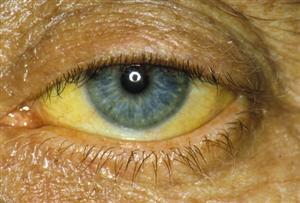
The Jaundiced Eye of Noam Chomsky

I’ve been enduring, teeth gritted, the America-hating propaganda of Noam Chomsky since my college days. He is a brilliant linguistics professor who has credibility as a social critic only because his world view—briefly put, that the United States is evil, and anything that indicates otherwise is the result of a conspiracy–has been so supportive of and nurturing to the extreme Left. It is hard to quantify how much harm he has done to this nation or how many potentially productive minds, foreign and domestic, that he has warped with his bile, but I am sure it is substantial on both counts.

We are fortunate, I guess, to have his assessment of Osama Bin Laden’s death, recently published and available for reading here. The piece is res ipsa loquitur that the man is so consumed with unreasoning hatred for his country that he cannot process the truth or think straight, but I know that plenty of Chomsky followers will be cheering. Thus I am grateful that Christopher Hitchens has authored an admirable take-down of the professor, here.

Lying to Dogs

Could you lie to this dog?

I am looking at a box of “premium dog treats” that my sister gave Rugby, my Jack Russell Terrier. (All right, she gave the stuff to me to give to Rugby.) The box says that they are “ridiculously delicious.” I have just offered him one of the “natural wellness nuggets” because we are temporarily out of regular dog biscuits and he is clamoring for his afternoon snack, driving me crazy in the process. You don’t want to be in the room when a Jack Russell clamors.

He refuses to touch it. In the past, he has spat them out; occasionally he will throw them around the house like an Olympic discus thrower would do if he had no arms and could only use his mouth. Clearly, Rugby doesn’t believe the damn things are edible. Continue reading

The Great Norwalk Kindergarten Heist

The Tanya McDonald controversy

A homeless woman is facing 20 years in prison if she is convicted of stealing over $15,000 of Norwalk, Conn. taxpayer funds. The details of her crime are controversial: she lied about her residence to get her child into what she believed was a better school system, but one that, as non-resident, she was not entitled to use. The details also create a tangled mess of law, justice, ethics, fairness, compassion, public policy, finances, class and education.

Let’s try to unravel it, shall we? Continue reading

Legal Ethics Train Wreck on “The Good Wife”

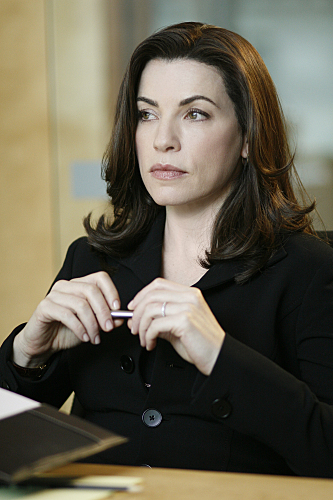
Oh, Alicia, Alicia...what have they done to you?

The CBS legal drama “The Good Wife” continues to show the seamy side of big firm legal practice, with heroine Alicia Florrick’s firm, Lockhart, Gardner and Bond, its adversaries, and even Good Alicia herself violating legal ethics rules with abandon, and at an accelerating rate, based on recent episodes. There is nothing wrong with this as entertainment, as long as the Rules themselves are not being misrepresented (they aren’t), the misconduct isn’t being presented as ethical (it isn’t, though it is sometimes hard to tell), and viewers don’t get the idea that this is how most law firms behave. Unfortunately, like most legal shows, “The Good Wife” fails in this important realm. I work with many large law firms, and they are all very aware on the ethical lines, bold or fuzzy, that they must not cross, and take their obligations seriously.

The most recent episode of “The Good Wife,” entitled “Getting Off” included a full-fledged ethics train wreck sparked by the firm’s habitually unethical adversary, the fecund Patti Nyholm. In the middle of representing the defendant hospital in a lawsuit brought by a Lockhart, Gardner and Bond, Nyholm is fired by her firm and removed from the case. With a twinkle in her eye, she approaches none other than the Lockhart firm to represent her in a multi-million dollar lawsuit against her former firm for discrimination and wrongful termination, on the theory that it fired her because she was pregnant. Continue reading

Mother’s Day Reflections On A Wonderful Mother With Flawed Ethics

My mom and Ma Barker had some things in common.

I am spending this Mothers Day in mourning, as today is the first time I have had to experience the holiday without a mother. My mom died earlier this year, as I mentioned here at the time, and she has been buried for less than a month. My mother used to be a regular feature of my ethics seminars, as I would reference her whenever I talked about the so-called “Mom Test,” one of the three famous ethics tests that are useful to set off sluggish ethics alarms, the other two being the Gut Test (“Does this feel wrong?”) and the New York Times Test (“Would I be willing to see my conduct on the front page of the New York Times?”). The “Mom Test” is whether you could tell your mother about your ethically-dubious conduct without hesitation or shame, and I often told my classes that with some mothers, like my own, this test didn’t work very well. “My mother,” I would explain, “has the ethics of Ma Barker.” I was only partially kidding. Continue reading