Ethics Hero: Google

Yesterday, Google demoted its own Google Chrome homepage in pagerank for at least 60 days following the revelation that the browser’s online advertising campaign violated Google’s policy banning the use of paid links. Google had contracted with an outside firm to handle Chrome’s the campaign, and it mutated into a scheme where bloggers were paid to link to a video that extolled the virtues of Chrome to small businesses.

Thus Google was violating its own policies, the stated punishment for which is demotion in search results. Google says that it didn’t know that its sub-contractor was doing this, but nonetheless issued this statement:

We’ve investigated and are taking manual action to demote http://www.google.com/chrome and lower the site’s PageRank for a period of at least 60 days. We strive to enforce Google’s webmaster guidelines consistently in order to provide better search results for users. While Google did not authorize this campaign, and we can find no remaining violations of our webmaster guidelines, we believe Google should be held to a higher standard, so we have taken stricter action than we would against a typical site.”

Today, if you do a Google search for “browser,” Chrome doesn’t appear on the first page of results.

Living by your own rules is the mark of integrity. This time, Google delivered.

The NAACP’s “Gotcha!” Games

Somewhere there must be advocates for the African-American community who realize that the practice of lying in wait for white politicians to make a mis-phrased or politically incorrect statement and then pouncing on them with indignant press releases charging racial insensitivity is counter-productive, feeding mistrust on all sides and tempting many on the political right to just by-pass issues of concern to blacks as a lost cause with a hopelessly biased audience. Somewhere—but not in the NAACP, which has relied for decades on playing “gotcha!” games to flex its PR muscles and appeal to its most racially polarized core. I remember poor Ross Perot speaking to the group in 1988, and being pilloried for referring to an his all-black audience once as “you people.” Of course, Perot was appearing with the expectation that he would explain what a Perot presidency would do to address the problems of African-Americans, a group he was not a member of,  yet the completely self-explanatory and accurate, if clumsy, “you people” was attacked as patronizing and vaguely racist.

Now GOP presidential candidate Rick Santorum is under fire by the NAACP for this statement: “I don’t want to make black people’s lives better by giving them somebody else’s money; I want to give them the opportunity to go out and earn the money.” Continue reading

Incompetent Elected Official of the Month: Indiana State Senator Vaneta Becker

"All right, Jimi, you're busted. That will be $25!"

Indiana State Senator Vaneta Becker wants to establish a law that would impose a fine of $25 on any performer or citizen who significantly alters the lyrics or melody of The Star-Spangled Banner.  “I don’t think the National Anthem is something we ought to be joking around with,” she has said. “Singing our national anthem is a sign of gratitude to those who have served our country.”

One may notice a theme among those chosen here as incompetent elected officials: the complete unfamiliarity with core American values and ideals, often displayed in a misguided effort to protect those values. This is known as “ignorance,” or perhaps, in extreme cases, “utter stupidity.”  My presumption is that being ignorant or stupid renders an official incompetent to discharge the duties of lawmaking. Am I expecting too much? Continue reading

Liar, Liar, Volt on Fire

Not a hotcake. Definitely selling like a hotcake.

There are times when I miss the David Manning Liar of the Month, a regular feature on my old Ethics Scoreboard reserved for flagging a breed of lie that I find the most annoying of all. These are the lies that even the liars know are unbelievable from the moment the dishonest statements leave their mouths. Then, when they are inevitably caught, the liars argue that the lie wasn’t really a lie because nobody believed it in the first place. Such lies tell us that the liar doesn’t think lying is anything to be ashamed of. Beware such people, especially when they dwell in high places. The lie may be trivial, but the attitude toward lying is not.

Spared the indignity of being a David Manning Liar by the Scoreboard’s dormant state is Rep. John Dingell, a Michigan Democrat, who took umbrage at Mitt Romney’s statement that the Chevy Volt was “and idea whose time has not come.” Dingell protested, isssuing a press release that said, Continue reading

Politics in Elementary School: Unethical Always

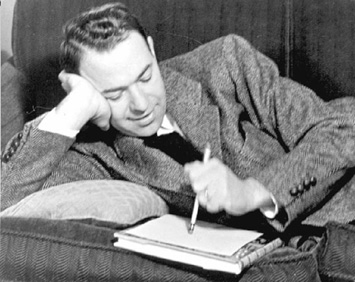
Believe it or not, Yip Harburg is only 7 years old in this photo...

Third graders at Woodbrook Elementary School in Albemarle County, Virginia recently performed a song called “Part of the 99,” proclaiming their solidarity with the “Occupy” movement’s zeitgeist.  The song was part of a program sponsored by “Kid Pan Alley,” a children’s arts organization. The children worked with a facilitator to develop the theme and lyrics for a song, and that facilitator, who so far has not been identified, obviously, and I mean that in the “do these people really think we’re all idiots?” sense of the word, manipulated the process to produce an “Occupied Youth” moment. A blog got wind of it, and the criticism, richly deserved, erupted on the internet.

Incredibly, the school denies that any indoctrination went on, and claims that the children came up with the lyrics and theme on their own. As “who are you going to believe, me or your own eyes?” lies go, this one is superb. Here are the lyrics those third graders supposedly came up with by themselves: Continue reading

The Third Annual Ethics Alarms Awards: The BEST of Ethics 2011

Why is the The Best in Ethics 2011 only about 33% the size of the “Worst”?

This troubles me. My objective is not to be negative. The problem, I think, is that ethical conduct is still much more common than unethical conduct, and it is usually less controversial to identify: most of the time, good ethics is self-explanatory. All of us learn more from mistakes and misdeeds, our own and those of others, than we do from meeting societal standards. Most of what Ethics Alarms does is to try to identify unethical conduct, what was wrong with it, why it happened, and how we can discourage it.

Which is all well and good, but I still would like to make 2012’s Ethics Alarms  more positive year than this one, if possible. Help me, will you, find more topics involving good ethics, so next year’s Best list can hold its own with the Worst.

Here are the 2011 Ethics Alarms Awards for the Best in Ethics:

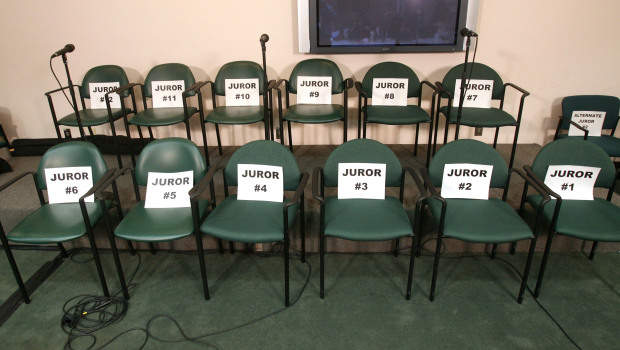
Most Important Ethical Act of the Year: Acquitting Casey Anthony. The Florida jury charged with deciding if Casey Anthony murdered her daughter faced the ire of a lynch mob-minded public that wanted the unsympathetic Anthony convicted, based on suspicious conduct and a dubious explanation,  but the evidence just wasn’t there. Thus the courageous twelve upheld the American values of fairness, objectivity, and justice under the law. It is interesting that the most ethical act of the year also sparked some of the most unethical arguments of the year, by too many citizens who benefit from our nation’s ideals without comprehending them. Continue reading

The Incompetent, Iowa Stubborn News Media, Wasting Our Time and Theirs

IOWA!!!!????

I kid you not: I have been waking up with “The Music Man” ditty “Iowa Stubborn” ringing in my head two days running [ “We can be cold as our falling thermometer in December if you ask about our weather in July; And we’re so by God stubborn, we could stand touchin’ noses for a week at a time and never see eye-to-eye….You really ought to give Iowa a try!”] and I am not happy about it. The reason I am suffering from Meredith Willson-itis, of course, is because the network and cable news shows will not shut up about the Iowa caucuses, and have been allowing their endless, pointless, non-informative, inside-baseball, useless analysis of nothing (analyzing polls is the definition of “nothing”) for how long now? A week? A month? Forever? Continue reading

The Admirable Mr. Sondheim

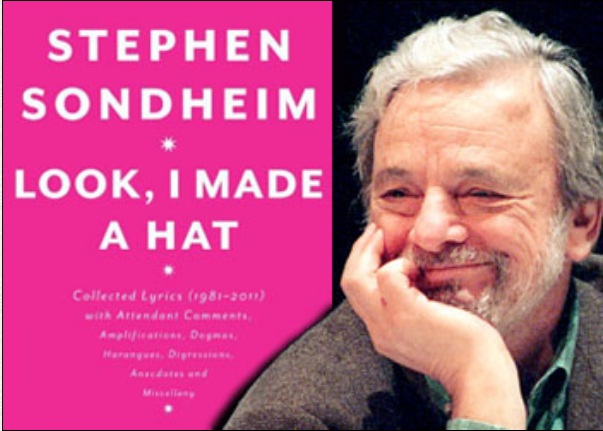
And an ethical hat it is, too!

Readers who are not interested in the art of lyric writing and the mechanics of constructing a Broadway musical should probably avoid the second and final installment of Stephen Sondheim’s chronicle of his creative life, “Look, I Made a Hat.”  They will be missing something important nonetheless: a rare example of truly ethical memoirs.

As in his first volume, “Finishing the Hat,” America’s pre-eminent composer-lyricist for the stage reveals himself as a gentleman, an adult, and a thoroughly ethical human being, and does so not by proclaiming his virtues, but by demonstrating them in his writing. He is not uncritical, but always fair and kind. He accepts personal responsibility for projects that failed, and is generous with giving credit for projects that were successful. There is no false modesty in Sondheim about his own skills and achievements, but neither does he seem to overvalue them or seek his reader’s admiration by blowing his own horn.

The line Sondheim walks in both books is fine, and he walks it finely. For example, I initially thought his decision to only criticize the techniques of other lyricists who are dead was a cowardly one, but upon reading both books it is clear that the decision was motivated by kindness. Sondheim takes the craft of lyric-writing very seriously, and his integrity would not allow him to censor a critical observation regarding a colleague’s work when he believed the criticism was illuminating and had merit. Realizing how hurtful a critique from someone of his reputation and accomplishments could be, Sondheim restricted his frank and (mostly)  fair assessments to writers beyond wounding. If Jerry Herman isn’t grateful, he should be. Continue reading

The Third Annual Ethics Alarms Awards: The Worst of Ethics 2011 (Part 2)

The 2011 Ethics Alarms Awards for the worst in ethics continues (you can catch up with Part I here) with the large and depressing…

 Shameless Bad Character Division

Jerk (defined as an individual who habitually places his personal benefit and ego gratification above the welfare of everyone and everything else) of the Year: Donald Trump

The Dennis Rodman Award, (Awarded to a professional athlete for a career and lifetime of  behaving like a jerk): Jose Canseco. Jose’s done it all, from being baseball’s Typhoid Mary of steroids, to getting arrested for various assaults, to writing a series of tell-all books designed to rat out the very players he corrupted, not as a service to his sport, but as revenge for it rejecting him. In 2011, he hit a new low, accepting money to appear in a celebrity boxing match (the 21st Century version of becoming a circus geek to pay the bills) and sending his less-talented, equally dim-witted, identical twin brother Ozzie to perform instead, hoping to fool the fools who hired him. This, of course, was fraud. It takes quite a jerk to take this award from Manny Ramirez, who became eligible in 2011, but Jose was up to the task.

Asshole (defined as an individual who intentionally and maliciously causes pain and harm to others because he can) of the Year: Rev. Terry Jones, the publicity-seeking leader of a tiny rural church, who caused riots and deaths abroad and ramped up political tensions between America and Muslim nations by threatening to burn, and finally burning, the Koran as a demonstration of contempt for Muslims and the Islamic faith. Continue reading

Unethical Quote of the Week: Rep. Ron Paul

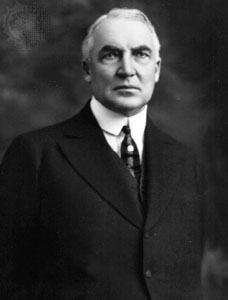
Warren G. Harding, the patron saint of "Nobody's perfect!" presidencies.

“I don’t think anybody in the world has been perfect on management, everybody that’s ever worked for them. So, yes…  it’s a flaw. But I think it’s a human flaw… I admit that I’m an imperfect person and didn’t monitor that as well.”

–GOP presidential candidate Ron Paul, responding to ABC’s Jake Tapper’s question about whether his accountability for racially inflammatory statements made in his name in newsletters published by him 20 years ago raise legitimate doubts about his management abilities.

Anyone who’s read this blog much knows what I think of the “nobody’s perfect” excuse for misconduct. To be precise in this case:

1. Nobody said you weren’t human, Ron. Humanity is a rather low bar for a presidential candidate, don’t you think?

2. There is a lot of territory between “perfect” and “letting people write racist and homophobic content under your name in a for-profit newsletter.” For example, the rest of the Republican field is as far from perfect as one could imagine, yet none of them have done that.

3. People who fail to fulfill core management functions when they oversee a project are imperfect, flawed and human, and also called “inattentive and incompetent leaders.” Imperfect, flawed and human individuals can be good and effective Presidents of the United States. Inattentive and incompetent leaders, however, cannot.