
Five Sarcastic Observations About The Least Surprising Ethics Story Of The Year…

.Hands down.

And in addition, we can all agree, can we not, that:

  1. …this does not indicate media bias?
  2. …the timing was completely coincidental, and had nothing to do with journalists fearing that their candidate might lose?
  3. …there was no ethical obligation on the part of responsible news media to make certain that its coverage was balanced in the final week, given its likely disparate impact in a close race?
  4. …this had no impact on the election?
  5. …Nate Silver knew it was going to be like this all along?

______________________________________

Graphic: Davintosh

Elmo and the One Recant Rule

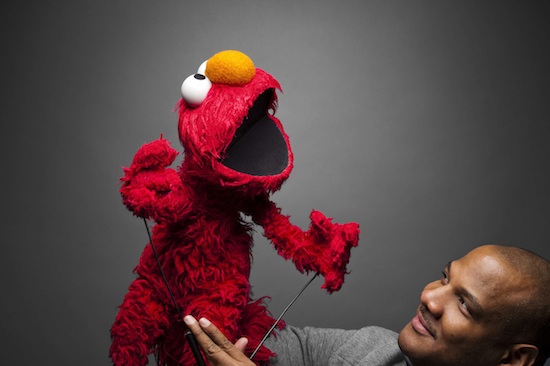
When we last left the sad saga of Kevin Clash, the Muppets puppeteer whose voice and hands give cute little Elmo his panache, the 23-year-old man who had accused Clash of having underage sex with him had recanted, agreeing with Clash’s defense that their relationship was consummated later, when both were consenting adults. I opined that this would do little to rescue Clash’s career, as the most innocent Muppet on Sesame Street could not survive being operated by a man who was now associated with gay sex, consensual of not. This likely result seemed unfair to Clash, but is nonetheless a responsible decision on the part of Clash’s employers, the Children’s Television Workshop, whose duty is to their mission and core audience, not to one unmasked Muppet.

Clash’s prospects have not improved. It was revealed last week that the recant was bought and paid for by Clash, who handed Sheldon Stephens $125,000 to deny his previous accusation and never to raise it again. Needless to say, a recant induced by monetary compensation is not a reliable one, and leaves as many questions open as the original claim, if not more. In a settlement, the accuser is paid to drop any legal action, but doesn’t agree to retract the original claim. What Clash did is called “buying testimony,” or ” a pay-off.” Continue reading

If This Is Obvious To Everybody, Why Isn’t It Obvious That Petraeus Had To Go?

Look, Sheila must be back at work—that’s her car in her parking space!”

From the Boston Globe:

“The administration of Governor Deval Patrick, embarrassed by revelations that the state highway safety director has a driving record that includes seven accidents, four speeding violations and two failures to stop for a police officer, announced today that the director will be removed from that job.

“Sheila Burgess, the top safety officer since 2007, is on medical leave recovering from an Aug. 24 one-car accident in Milton in which she drove off the road and suffered a head injury. She told police she swerved to avoid an oncoming vehicle in her lane. Burgess will be assigned to a “different role” within the state Office of Public Safety and Security, according to a statement released today by Mary Elizabeth Heffernan, the public safety secretary.

“Given her driving record, it is clear that Ms. Burgess should not have been hired as the director of Highway Safety in 2007,” Heffernan said in the statement. “Burgess is a former fund-raising consultant to high-profile Democratic candidates for public office, including Congressman James McGovern, whose office said on Friday that McGovern asked the newly elected Patrick administration in 2007 to hire Burgess, but without suggesting a specific role for her. She is paid $87,000 annually. Burgess had no experience in public safety, transportation or government administration when hired, according to her resume.”

“Heffernan called Burgess “a solid and dependable employee” during the intervening years, but today, following a Globe story that revealed her driving record, said she no long has confidence in Burgess leading the state’s efforts to reduce accidents by promoting good driving practices…” Continue reading

Ethics Quiz: Photographer Flambé

The YouTube video description reads:

“While photographing Murray and Emma’s wedding Ceremony at Netherwood Estate, Jacki Bruniquel’s hair caught alight after getting too close to a candle. One of Murray’s groomsmen attempted to help Jacki put the flames out.

Now watch the video (you’ll want to skip the movie trailer at the beginning).

Does anyone seem to be the least concerned about the woman whose head is on fire? Would you react that way if a friend of yours caught fire?  Hypervocal headlined this WHY ARE YOU LAUGHING? MY HEAD IS ON F*&KING FIRE!”

Your Ethics Quiz question:

Is it fair to conclude from the video that this is a wedding party of heartless jerks ?

I suppose not, but I have to say, I find the lack of any hint of concern on the faces of the bride and groom disturbing. Especially the bride. Then again, maybe it was her new husband’s old flame.
(Sorry.)
_______________________________________
Pointer: Hypervocal

NOW You Tell Us? Rep. Scott DesJarlais (R-Tenn) Is Not What What He Appeared To Be

Unconfirmed photo of Tennessee Rep. Scott DesJarlais caught out of his man suit.

In 2010, physician Scott DesJarnais ran to represent Tennessee’s Fourth Congressional District on a pro-life, anti-abortion platform, and won. He also ran as an honest, trustworthy, honorable individual, as all members of the U.S. House of Representatives ought to be.  He is an MD; integrity, intelligence and professional standards of conduct should be assumed. Little more than week after he was re-elected by Tennessee’s voters this year, however, the court records of his 2001 divorce were released. The Democratic Party in the state had fought to have them released before the election with the support of his ex-wife, but DesJarnais successfully persuaded a judge to wait—after all, why spoil a good surprise? When the transcripts were finally revealed, Tennesseans learned that their re-elected, pro-family Representative:

  • Supported his ex-wife’s two abortions before they were wed
  • Helped arrange abortions for a mistress and a patient he impregnated after they were married.
  • Had multiple sexual affairs with co-workers, subordinates and patients
  • Prescribed recreational pills for at least one of his sex partners
  • At one point, put a pistol barrel in his mouth for two hours and threatened suicide
  • Engaged in multiple actions that are violations of medical ethics, workplace ethics, and laws. Continue reading

Putting My Mouth Where My Blog Is

I’m on the way to New Mexico today, to speak to the news media there and to try to build some consensus—New Mexico is as good a place to start as any—that using faux indignation over manufactured political correctness offenses is no way to run a political system, community, society or culture. It is, in fact, a cynical and despicable practice  used by special interest groups and unscrupulous politicians to stifle legitimate debate, or, as in the case that inspired my trip, to unfairly tar the character and reputation of a political adversary. The victim in the New Mexico incident was attorney Pat Rogers, who saw his obviously satirical e-mail intentionally twisted by partisan foes who almost certainly knew its real meaning into being represented in the press as a gratuitous racist slur—which it was not. I wrote about this here, and a similar incident, with parties reversed in Washington state, here.

What am I going to tell the various interviews and reporters I speak with over the next few days? I will tell them that political blood sport has got to stop. That the effort to discredit political positions by seeking ways to demonize their advocates is unethical and wrong. That contrived accusations of racism (or sexism, homophobia, or any other form of bigotry) should not be aided and abetted by the media or tolerated by the public. I will also assert that political warriors on the right or left who intentionally choose to misinterpret innocent expressions of irony, satire or humor as racist attacks both diminish the charge of true bigotry when it is justified, and expose themselves as polluters of our culture and national cohesion.

I don’t know Pat Rogers well; we have only met once. But I know who he represents: those who have been harmed as collateral damage in a hyper-partisan environment encouraged by Washington, D.C. and cheered on by the vilest members of the blogosphere, to the detriment of our sense of community, decency, and trust. My efforts, whatever they are, will be modest at best, and, in all likelihood, inconsequential. But you never know.

Wish me luck.

Ethics Dunces: The Petraeus Defenders

I know I have touched on this before regarding the Petraeus scandal (and elsewhere), but it bears emphasizing—especially since so many seem to be unable to process the concept. Leaders cannot be seen as willing to violate their own rules, principles and those of the organizations they represent. Arguing that the rules violated are foolish, or outdated, or too restrictive does not rebut this fact of leadership in any way, but making that argument does show beyond question that the pundit making it doesn’t comprehend the most basic facts of leadership and the building of ethical cultures.

Today’s Sunday papers are awash in editorials and op-ed pieces by former intelligence personnel, lawyers, social scientists and other pundits blaming the widening Petraeus scandal ( now focusing on Gen. John Allen, the U.S. commander in Kabul, and the significance of his exchanging thousands of inappropriate emails with Jill Kelley, the Tampa socialite who is apparently the military equivalent of a rock-and-roll groupie, only older) on antiquated morals and political opportunism. There are too many of these bewildered commentators to count, but their views all ooze from the same basic, shockingly facile, and in some cases intentionally misleading theory, which is that Petraeus’s and Allen’s conduct are irrelevant to their ability to do their jobs. The Washington Post’s David Ignatius, usually one of the more rational and objective of that paper’s leftward chorus, actually reprints verbatim an e-mail he received from an Arab diplomatic source as if it contains illumination rather than naiveté:

“He needs to resign cause he has an affair? What da hell??? He is brilliant!!!! Why like this????” Continue reading

The Bakery, Confectionery, Tobacco Workers and Grain Millers International Union Show Us The Way

“The operation was a success, but the patient died.”

“We had to destroy the village to save it.”

Massada. That worked out well too.

I’m sure the Bakery, Confectionery, Tobacco Workers and Grain Millers International Union approves of these classic oxymoronic statements, because its members are currently patting themselves on the back for standing up to Hostess Brands, Inc and not giving an inch in contentious labor negotiations that had put them on the picket line. “I think we’re the first ones who have stood up and said, ‘We’re not going to let you get away with it,’” was the message the union’s resolve sent according to  Sue Tapley, the strike captain at the Biddeford, Maine Hostess plant. “You can fight them. You can shut them down.” “Unions have been losing power for years,” added  a striking worker outside of the same plant. “This is an exceptional case. If Hostess had been allowed to get away with what they’d been trying to do, other corporations would have lined up to try the same tactics. Hopefully, this will be an example to other companies not to break their unions.” Continue reading

The Despicable Non-Crime of Briana Augustenborg

Alexander Jordan, 2002-2012

In US v. Alvarez, the U.S. Supreme Court upheld the 9th Circuit’s ruling that the Stolen Valor Act, which made it illegal to claim military honors that one has not in fact received, was unconstitutional. There is, the courts say, a Constitutional, First Amendment right to lie. Fraud—using lies for monetary profit, is already a crime, the courts argue, and so is slander. Making up stories about yourself and others may be unwise, annoying, even hurtful. Still, it is protected speech; so sayeth a majority of the U.S. Supreme Court, and it is now the law of the land.

This was a bad ruling, and I was surprised at it. Briana Augustenborg shows why.

One day this year she shared a story with a co-worker about a little 10-year-old boy she knew who was terminally ill with leukemia. The boy, Alex, was a big fan, she said, of Eagle Valley (Colorado) High School’s  football team. The colleague, a woman named Holly Sandoval, had a son that played on the team, and she offered to share the story with her son and get the team to sign a football for Alex. Continue reading

Welcome To The World Of “Expert Witnesses”

Then there’s the arrow that reads, “Willingness to say what we need to win the case.”

It doesn’t happen often, but it does pay well and can be interesting: occasionally I accept an engagement as a testifying ethics expert in a law suit. I have a rule, however, that surprisingly (or not) seems to come as a shock to many potential clients. They may be buying my opinion, but they are not necessarily buying the opinion they want. After I review the facts, documents and issues involved, I will render my opinion, but no promises. I won’t take a case unless I generally agree that the theory of the side hiring me is plausible, but after all the facts are in and I’ve done my analysis, if the case of the client whose lawyer hired me is weak, I will say so.

Strangely, some lawyers seem to have a problem with this, even when the expert insisting on integrity is an ethics expert. I am currently in settlement mode with a law firm that hired me to render my opinion regarding the billing submitted by another firm to the law firm’s client. Part of their argument, in claiming malpractice against the billing firm, was that its billing was excessive, unreasonable and inflated, a violation of  Rule 1.5 of the Rules of Professional Conduct governing lawyers. I reviewed the billing statements, and they could have been inflated—some of the methods of stating who did what work was vague, and there sure was a lot of work billed on the matter, by an astounding number of lawyers—-but I could only assess that to a level of certainty sufficient to be certain in my own mind, much less state it under oath, if I could examine what all that work produced. This the law firm that hired me refused to produce, perhaps because the time it would have taken me to review it thoroughly would have been very expensive. But how could I decide whether the amount of money billed for a product was unreasonable without being able to determine what the product was? I couldn’t. Thus my written opinion stated what I could say honestly and with authority: based on the billing statements and the materials I was allowed to review,  I could only speculate on whether the billing was proper or not. It was possible. More than that, I could not say.

The law firm was not happy, although they never spoke to me about it. The firm just settled the case, and never paid me. (My very reasonable fee for services was $6,000, and if you’ve ever spent much time reviewing legal billing statements, you would know that they got off cheap.) You see, it didn’t really want an ethics expert, or an independent expert, or an honest, informed, professional analysis. They wanted a pre-determined opinion, bought with cash, delivered to specifications. Well, they won’t get that from me.

Welcome to the world of “expert witnesses.”