“Luck,” Causation, and the Complex Computation of Mixed Motivations

Was it good luck, or bad luck?

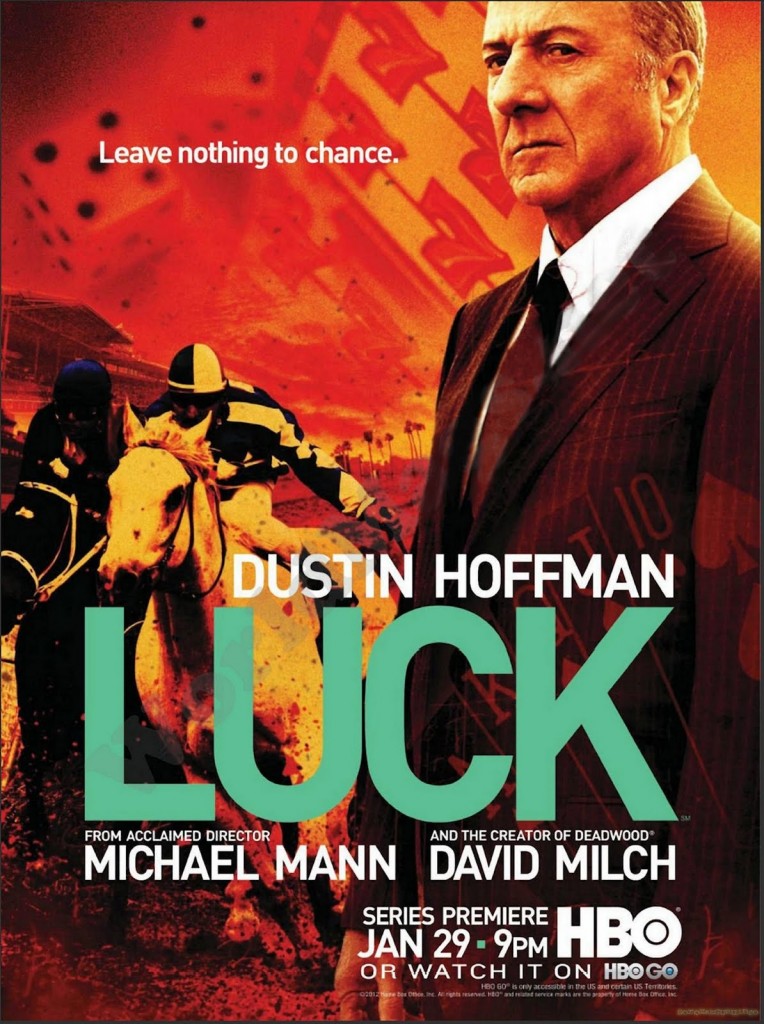
HBO has announced that it is cancelling “Luck,” its well-reviewed series about corruption in the sport of professional horse-racing. Why? Well, that’s an interesting question.

The immediate impetus for the decision was the death of a one of the horses used in the series. It was the third horse to die, so the announcement took the form of a sensitive and humane decision based on concerns for the animals. “While we maintained the highest safety standards possible, accidents unfortunately happen and it is impossible to guarantee they won’t in the future,” HBO’s statement said. “Accordingly, we have reached this difficult decision.”

I was initially impressed, but a couple of things about the move, which seemed uncharacteristically ethical by show business standards, bothered me. “Luck” was much-praised but low-rated, despite a cast headed by Dustin Hoffman and Nick Nolte and a production team headed by respected film director Michael Mann. Though it had been renewed for a second season, some felt that the renewal was dictated by a corporate decision not to embarrass its Hollywood royalty. Continue reading


The Process Can Be Ugly, And Sure Was This Time, But This Is How Cultural Ethics Standards Change

Greta was the tipping point.

The Rush Limbaugh-Sandra Fluke Ethics Train Wreck is over at last, but unlike with many such debacles, something positive occurred. I believe that an emphatic cultural standard was established that calling a woman—any woman, famous or not, liberal or conservative—a derogatory term designed purely to denigrate her by denigrating her gender will not be considered acceptable in political, quasi-political or arguably-political commentary henceforward. If such rhetoric occurs in a comic or entertainment context, no politician or elected official can appear to endorse the individual who utters the offensive words.

I’m not arguing right now whether this is a good or a bad development, but merely that it happened, and that it is a real change. For this to happen, a conservative radio talk show host had to use the terms “slut’ and “prostitute” to make the botched satirical point that a feminist law student activist who argued that free contraceptives were a woman’s right was the equivalent of women who wanted to be “paid for sex.” If pundits and bloggers had merely declared this statement uncivil and cruel, nothing more would have happened, and the incident would have been quickly forgotten. But sensing political points to be scored in an election year, and with the added incentive of being handed what was seen as powerful ammunition to attempt a frontal attack against a detested partisan critic, Democrats,  progressives, feminists, activists, Obama strategists and left-biased journalists decided to cast the Limbaugh’s poor judgment in extreme terms. Continue reading

The Beautiful Lie!

Irony! Stupidity! Symmetry!  Elegance! Chutzpah! Redundancy!

Ahhhhh! Breathtaking!

Yes, this amazing lie, by the California State University System, has it all. This is the Sistine Chapel of lies, the Mona Lisa of mendacity, a true masterpiece of the liar’s art.

Consider…this is “Sunshine Week,” the annual campaign to raise awareness about the essential nature of open, honest and transparent government. So to celebrate,  CSU’s  public affairs office falsely announced on Monday that it had won the 2012 Sunshine Award for most transparent government website in the nation. It had not. It isn’t even eligible to win such an award.

Sunshine Review, the national nonprofit organization that sponsors the annual awards, has confirmed that this would be impossible, since they “do not grade state universities or colleges at this time, so it would be impossible for Cal State to have won an award.” Sure enough, the system is not included on the list of winners available online.

Why would the university system of the Sunshine State lie about receiving the Sunshine Award from the Sunshine Review, and do it on Sunshine Week, no less?  Clearly, this was a once-in-a-lifetime opportunity to good to pass up. It may be unethical, but in the annals of lying, it’s beautiful!

[Thanks to James Taranto for the tip.]

Unethical Quote of the Week: “Brad”

“How much did all these hacks get paid to do this? What a waste of money. Are they bothering somebody? Leave them alone. They obviously want to be together, and who are we to say that they shouldn’t? How much did this judge and all the hacks get paid to issue this decision? Somewhere, somehow this waste has to stop.”

“Brad,” a commenter on NECN.com’s story about Lisa Lavole, a former teacher who was out of jail on parole after three years for the offense of having sex with her 15-year old student and running away with him. She was taken back into custody when the same student, now 18, was discovered hiding in her closet. One of the conditions of her parole was that she had to stay away from her former victim.

Lisa Lavole, doing her Norman Bates imitation

While perusing the comments to news stories often gives me more insight into the state of our culture’s ethics than reading the stories themselves, there is always the downside that many comments make me want to chuck ethics as a futile and pointless career choice and begin honest work as a bookie or a pimp. “Brad’s” comment is a case in point.

It would be difficult to pack more flawed ethical reasoning and rationalizations into a mere 60 words. The woman was hired to teach, and instead used her authority, age and power to entice a child into a sexual relationship, and then take him away from his parents and his home. By the most charitable interpretation she is a sexual predator and a rapist, as well as the betrayer of the community’s trust. Of course part of her punishment involves keeping her away from her victim, whose mind and emotions she had damaged and warped. To Brad, however, it is a “waste of money” to enforce legitimate laws, protect children from predatory adults, and make certain that at very least adults who prey on the children in their charge don’t benefit from it. She turned a child into a sex object and lover, and Brad thinks it’s a waste of time and money for society to make certain that she can’t keep reaping the benefits of her crime after her prison sentence. Continue reading

Ethics Hero Emeritus: Rushworth Kidder (1944-2012)

Not everyone named Rush is an uncivil blow-hard. This Rush, Rushworth Kidder, was a dedicated ethicist, teacher, author and philanthropist who was one of the pioneers in the field of professional ethics. His trademark phrase was “moral courage,” but it was more than a motto: Rush thought about it, taught it, and lived it.

He founded his Institute for Global Ethics in 1990, just as the idea was beginning to take hold that organizational ethics was something that needed to be formalized and made part of the culture in companies and professional communities, and unlike many who were to enter the field as it grew, Kidder never sold out. He wasn’t in the field of ethics to make a buck. He believed. Continue reading

The Ethics Verdict on the Homeless Hotspot Project

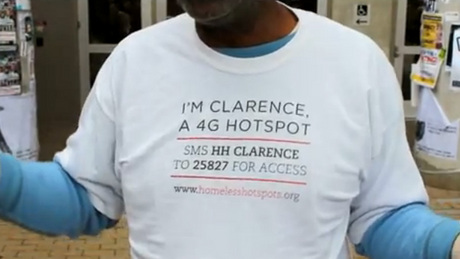
BBH Labs, the innovation unit of the international marketing agency BBH, hired members of the Austin, Texas homeless population to walk around carrying mobile Wi-Fi devices, offering high-speed Internet access in exchange for donations. Thirteen volunteers from a homeless shelter were hooked up to the devices, given business cards and put in shirts with messages that designated them as human connections. “I’m Rudolph, a 4G Hotspot” read the label on the homeless man on the New York Post’s front page with the lead, “HOT BUMS!

The Walking Hotspots—now there’s a new horror series for AMC when they run out of zombies— were told to go to the most densely packed areas of the South by Southwest high-tech festival in Austin, Texas, where the technology trend-devouring conventioners often overwhelm the cellular networks with their smart phones. Attendees were told they could go up to a Homeless Hotspot and log on to his 4G network using the number on his T-shirt. A two-dollar contribution to the homeless man was the suggested payment for 15 minutes of service. BBH Labs paid  the wired-up homeless $20 a day, and they were also able to keep whatever customers donated.

What BBH called its “charitable  experiment” ended yesterday with the conference, and with all participants seemingly thrilled. The “Homeless Hotspot” gimmick got nationwide publicity, thirteen homeless men made some money, and conference participants got great connectivity…so why were so many people upset? Continue reading

“The Good Wife” Ethics Addendum: Why Misrepresenting the Legal Profession’s Standards Does Real Harm

Sure, it was a comedy, but how many people believe that Jim Carrey's compulsively lying lawyer was not that far from the truth?

A comment from reader Penn on my post about “The Good Wife’s” recent misrepresentation of legal ethics standards got me thinking, and what it got me thinking was that I was too easy on the show.

Penn asked why I waste my time watching programs that raise my blood pressure, and there are two answers. The first is what I wrote back: it’s not a bad show; in the past it has been a very good one, even from the legal ethics perspective. I have used several scenarios from episodes in seminars.

The second answer, which I didn’t mention in my response to Penn, is the more important one, however. Good show or not, millions of Americans get their information about the legal profession from the portrayal of lawyers and law on TV and in movies. From these fictional sources, they think they know that most lawyers are liars, that they allow their clients to lie, that they put witnesses on the stand who they know will lie under oath. The public thinks that lawyers abuse the law, don’t earn their fees, don’t give a damn about their clients (unless they are sleeping with them), switch sides routinely and confuse juries to release serial killers on more victims. Continue reading

More Airport Encounters: Saying Thanks To An Accidental Mentor

Better late than never.

I previously wrote about the dilemma of whether to impose on celebrities who you encounter as they engage in the necessities of life (though I did not mention the time I was using a Kennedy Center urinal next to Colonel Sanders). I generally have ambivalence about the situation, but when I saw former Senator Alan Simpson standing at my gate as I disembarked at La Guardia, there was no question in my mind. I crossed over to him immediately, shook his hand, and said thank you.

I owe him, you see. Continue reading

“Goody Goody” to the Least Sympathetic Betrayal Victim of the Year, Former Senator Arlen Specter

First, this musical introduction, courtesy of the brilliant and tragic Frankie Lymon:

Ironically, over the weekend I wrote, in a reply to a comment, about how badly I felt when I finally met Arlen Specter and he was very complimentary to me, after I had described his 2009 defection from the Republican Party in very uncomplimentary terms. Now comes the news that the former Pennsylvania Senator’s new book includes a lament that neither President Obama, Senate Majority Leader Harry Reid nor other key Democrats delivered on the promises that caused him to betray his party and those who had voted for him.

Arlen, Arlen, Arlen. Continue reading

Is Cosmetic Surgery For Dogs Eth…Oh, For Heaven’s Sake! I Can’t Believe I Have To Ask!

NPR’s gag current events quiz show “Wait, Wait, Don’t Tell Me!” got gasps from its panelists, its audience and me this week when it discussed the supposedly growing trend of “canine plastic surgery”, including “face lifts for dogs.” WWDTM was, as is often the case, being a bit misleading in the interests of time and humor: the case that prompted the discussion was the story of a British couple who had spent thousands of dollars on wrinkle-reduction for their bloodhound, but it was not, as she show led us to believe, an effort to create a canine Joan Rivers. The dog had a rare medical condition in which it developed excessive skin folds that covered its eyes. Truth may be stranger than fiction, but sometimes it’s not as funny.

While researching the bloodhound story, however, I learned about “Neuticles”

—fake testicles implanted in neutered dogs in order to…well, what, really? Continue reading