 A persnickety Washington Post reader recently reprimanded that paper for using the term “snafu,” which, he said, is but an acronym for “Situation Normal, All Fucked Up” and therefore inappropriate in a “family paper.” Leaving aside whether there actually is such a thing as a family paper any more, the letter once again raised the ethics and civility issue of whether a stand-in for an uncivil word is less uncivil than the word itself. The reader actually agrees with the position I have taken in the past, though he reaches some conclusions from it I would not. Continue reading
Month: January 2012
The New York Times Asks: “Should We Be Truth Vigilantes?” Ethics Alarms Answers: “No, Because You Can’t Be Trusted.”

Should Times reporters be like Wonder Woman's lasso of truth?
In an appeal to New York Times readers that is at once alarming, naive, arrogant and ominous, Arthur Brisbane, the Times’ “public editor” (Translation: ombudsman) asks whether the paper’s reporters should be “truth vigilante(s)… should challenge ‘facts’ that are asserted by newsmakers they write about.”
The answer is no, no, no, and for the obvious reasons. Times reporters are biased, and not inclined to challenge dubious statements they agree with or that come from political figures they like, and are inclined to find statements “non-factual” because of their own preferences and biases. Helpfully, the two examples cited by Brisbane are exactly the kinds of statements the Times, and most of the press, are completely incapable of handling fairly. Here’s the first: Continue reading
Van Der Sloot’s Defense: Worst Rationalization Ever?

Yup: It's Natalee's fault.
Joran van der Sloot finally pleaded guilty yesterday to the murder of a Peruvian woman, Stefany Flores, whom he had met in a bar. His lawyer, Jose Luis Jimenez, blamed the crime on van der Sloot’s earlier arrest for the disappearance of Natalee Holloway in Aruba and the widespread suspicion that he was the missing teenager’s killer.
Defense lawyers, in the zealous representation of their clients, must often come up with creative theories bordering on the risable to try to wring every last drop of helpful spin out of a hopeless case. It bothers non-lawyers and legal ethicists alike when attorneys assert things about a case or their client that they couldn’t possibly believe is true, though it is enough to meet the low bar of the Rules of Professional Conduct for the lawyer to believe that such statements might be true, perhaps in a parallel universe. They are in the “well, how about this?” category. A defense lawyer with a despicable client like van der Sloot, who appears to be a stone cold sociopath, doesn’t have much to work with. Continue reading
Romney, Firing, Leadership, and Ethics Bob’s Lament
Yes, yes, firing people is one thing Donald Trump does well too. Shut up.
Ethics Bob Stone sent in a comment late last night that I replied to, but that I think deserves more discussion, on several points. Responding to my Ethics Hero designation for Ron Paul for coming to his adversary’s defense over Romney’s now infamous remark about firing people, Bob wrote:
“…I think Romney’s “I like to fire people”–even taken IN context–displays an inner heartlessness. I know about creative destruction, and I myself have taken actions to lay off people, and even fired a couple face-to-face. I did what needed to be done. No apologies.
“But did I like it? I HATED it.
“Romney’s comment seems of a kind with his strapping the family dog on his car roof for a 500-mi trip, or his advocacy of breaking up families to deport the parent or child who’s illegal. Gingrich was right.”
There are several issues here, some minor. Continue reading
Standards of Decency: Where Ethics Belongs, and Law Does Not

If this is the Super Bowl half-time show, will the FCC fine the network?
Slate legal columnist Dahlia Lithwick drives me crazy on a regular basis, but she hit a home run with her tongue-in-cheek account of the oral argument before the Supreme Court regarding the constitutionality of the Federal Communications Commission’s indecency policy, which has broadcast networks shivering in their boots over the possibility of another “wardrobe malfunction” at the Super Bowl or another trash-mouth star saying “fuck” as she picks up an Academy Award. The particular topic before SCOTUS was momentary nudity in TV drama, such as walrus-like actor Dennis Franz’s mega-butt flashing by our horrified eyes on “NYPD Blue.” In an Ethics Hero-worthy moment, attorney Seth Waxman, representing ABC, showed the Court how absurd and arbitrary it is to try to regulate taste and decorum in art. Lithwick writes: Continue reading
Comment of the Day: “The Priorities of U.S. Higher Education Defy Understanding”
When the topic on Ethics Alarms is education, Michael frequently scores a Comment of the Day, and he did it again following the post on the University of Maryland spending a fortune on its president’s residence. Here is his effort to help us understand the conduct discussed in The Priorities of U.S. Higher Education Defy Understanding. And I’ll have a closing comment at the end.
“I have asked these questions about what is driving up college costs. Here is what I have found: Continue reading
Poll: 84% Don’t Have a Clue What “Ethical” Means
Was Norman Bates unethical or sentimental? Well..wait, WHAT?
OK, that was a somewhat misleading headline. According to a poll run by ABC News, 84% of the public thinks that cloning dead pets is unethical. But since there is absolutely nothing unethical about cloning dead pets, I think the headline above is accurate. Well, maybe 84% accurate.
The story is over at Sodahead, which is dedicated to dumb polls. The analysis of the poll, if one can call it analysis, is almost totally bereft of anything remotely connected with ethics or ethical theory. In a previous poll on the subject, Sodahead asked those polled to choose whether the practice was “unethical” or “sentimental”, which is a choice akin to, “Do you like baseball, or can you swim?” Of course cloning a pet is sentimental—why else would someone do it? Who came up with the boneheaded idea that sentimental and unethical were mutually exclusive? Norman Bates dressing up as his beloved mother and killing people was sentimental, but I’d also say it was less than ethical. Continue reading
Ethics Hero: Rep. Ron Paul
The identity of Mitt Romney's knight in shining armor was a surprise, but it shouldn't have been.
Ron Paul is, to engage in understatement, unusual, and often in a good way. How many politicians, for example, will actively defend their adversary in a campaign right before a critical vote? Yet that’s what Ron Paul did, defending Mitt Romney, his main competition for the GOP presidential nomination, after Romney had blooped a line that will undoubtedly haunt him for a long time. “I like being able to fire people who provide services to me,” Romney had said. “You know, if someone doesn’t give me the good service I need, I want to say ‘You know, I’m going to go get someone else to provide that service to me.” It was predictable that the line would be truncated and taken out of context, and it was…by the press, by Jon Huntsman, by Rick Perry. It will surely be used against Romney by President Obama, who has adopted the position that people should be able to hold on to jobs whether they do them well or not— Eric Holder and Janet Napolitano, for example. But Paul would have none of it, saying,
“I think this is just typical politics and they’re unfairly attacking him on that issue,” Paul said outside a polling place at Webster School in Manchester. “He never literally said what they say he said. They’re taking him way out of context.”
Paul also defended Romney’s history as CEO at Bain Capital, the subject of a new attack video by Newt Gingrich, as an example of the free market working properly. “You save companies, you save jobs when you reorganize companies that are going to go bankrupt,” Paul said. “They [the critics] don’t understand.” Continue reading
Ethics Quiz: Is This Racism, or Just Business?
The Mother Jones headline is designed to provoke a gasp: George Lucas: Hollywood Didn’t Want To Fund My Film Because Of Its Black Cast.
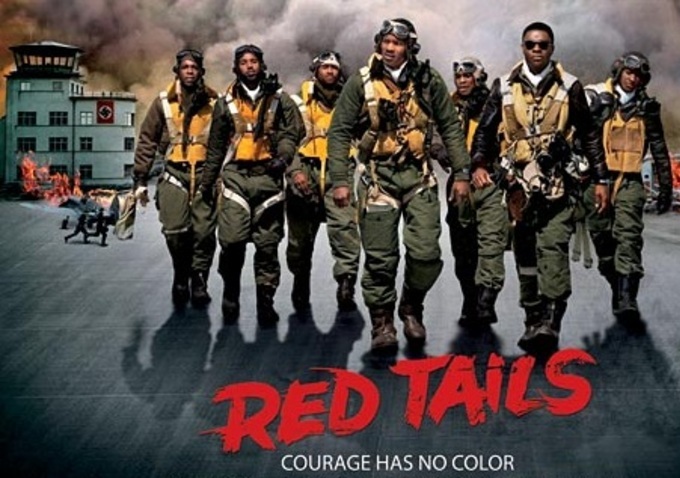 The headline is literally accurate. Lucas tells the magazine that he had trouble finding backers for “Red Tails,” his upcoming film about the fabled Tuskegee airmen, because the studios told him that films without white protagonists didn’t draw a wide enough audience, especially overseas, to make his film a good investment for them. Presuming that the film-makers know their business—and presuming their real reason for rejecting Lucas was not that the movies he’s produced lately were god awful, —Lucas’s story raises this Ethics Alarms Ethics Quiz Question, which you may answer if you dare:
Is a studio that refuses to fund a movie with an all-black cast engaging in racism, or just practicing business responsibly? Continue reading
The Priorities of U.S. Higher Education Defy Understanding

The next president of the University of Maryland, apparently. Wait---that was the previous post!
The out-of-control costs of higher education are one of many systemic problems that plague America, and it is one that I confess baffles me completely. I do not understand why tuition is so high and continues to climb. I do not understand why universities pay professors huge salaries for minimal teaching duties, and I don’t see what expensive buildings and beautiful surroundings have to do with education. I don’t understand why students pay outrageous sums to be educated then take trivial and absurd courses, like the now-cancelled Columbia University undergraduate course that was to consist of hanging out with the Occupy Wall Street gang to endear oneself with course’s OWS-loving professor.
Most of all, I do not understand the persistence of the myth that a college education can, does, or should qualify a graduate for good job, when it appears that a large percentage of students, if not a majority, leave the campus unable to write, think, or name the men on Mount Rushmore. Decades ago, as an administrator at major law school, I was shocked to discover that the school held remedial reading and wring courses for some first year students, one of them a graduate of Yale. Do you think the problem has improved since then? A college education in the U.S. is a poor and declining product that is over-priced and over-hyped, and I don’t understand why people are willing to go into debt to purchase it, and why the manufacturers haven’t cut costs, improved the product, and lowered the price.
Well, maybe I do understand. Like so many other problems, the reason for this one may be no more mysterious than the fact that those in charge are irresponsible, incompetent, and unaccountable.
This week brought the news that crews will begin demolishing the president’s house at the University of Maryland, and begin construction of a new 14,000-square-foot mansion that will cost the school at least $7.2 million. The palatial new digs for Maryland U’s president is being built in the midst of the university’s pleas for donors to contribute funds to rescue Maryland students who may be forced to drop out because of their family’s financial plights.
Meanwhile, the current president, Wallace D. Loh, has said that he will cut eight varsity sports teams in June to save an estimated $29 million over the next eight years. Do you understand this? Continue reading
 Ethics Alarms