Why “He’s Suffered Enough” Is Not Enough

Not enough.

“He’s suffered enough” is one of the more popular and effective rationalizations, usually put into use in defense of white collar criminals and the likes of Roman Polanski, wealthy or once-respectable criminals for whom remorse and humiliation are deemed to be as devastating as incarceration.  Yet it is still a rationalization—a deceptive representation of the truth—and shows a misunderstanding of what official punishment needs to accomplish.

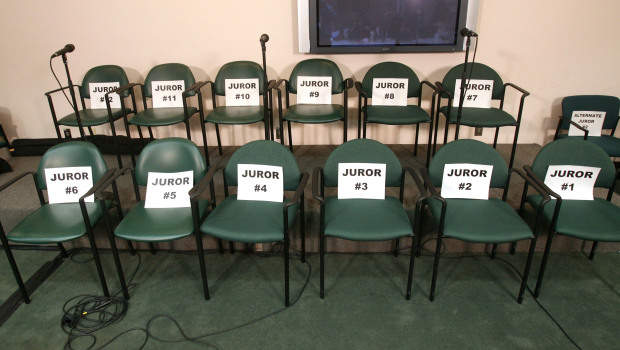
A sad drama has played out in a Montgomery County Maryland court, where twenty-year old Kevin Coffay was sentenced to twenty years in prison for fleeing the scene of a May auto accident that he had caused by being drunk behind the wheel, as Spencer Datt, 18; John Hoover, 20; and Haeley McGuire, 18, remained in the wreck after Coffay fled.  All three died.

Coffay was stunned by the sentence, and news reports say that the case has torn the community apart, with the families of the victims seeking retribution, and supporters of Coffay pleading for compassion and mercy. Their argument, as it always is in such tragedies, is that “he’s suffered enough”. This misses the point of the trial, the sentence, and the societal ritual that such events demand. Continue reading


Iowa Aftermath: Five Ethics Lessons

The Iowa Caucuses produced a bumper crop of ethics lessons.

Ah, it may look like corn, but but there are kernals of ethics knowledge in those Iowa fields!

1. People may do the right thing for the wrong reasons, but what counts is that they do the right thing. Jaw-dropping statements from some Evangelicals in Iowa that they just couldn’t see voting for a woman to be President had many pundits writing that Iowa was too backward to have such a prominent role in electoral politics. The result of this particular bias, however, was to knock Rep. Michele Bachmann out of the race, a result she had earned with her serial irresponsible statements and half-truths. And it was a bias that she courted, both by her repeated nod to subservience in her own marriage and her self-identification with the Evangelical bloc. The bigotry that helped end her candidacy was a bigotry that she  supported, and that equals rough justice, but justice nonetheless.

2. The news media’s lack of diligence and professionalism warps the process. Continue reading

Ethics Hero: Google

Yesterday, Google demoted its own Google Chrome homepage in pagerank for at least 60 days following the revelation that the browser’s online advertising campaign violated Google’s policy banning the use of paid links. Google had contracted with an outside firm to handle Chrome’s the campaign, and it mutated into a scheme where bloggers were paid to link to a video that extolled the virtues of Chrome to small businesses.

Thus Google was violating its own policies, the stated punishment for which is demotion in search results. Google says that it didn’t know that its sub-contractor was doing this, but nonetheless issued this statement:

We’ve investigated and are taking manual action to demote http://www.google.com/chrome and lower the site’s PageRank for a period of at least 60 days. We strive to enforce Google’s webmaster guidelines consistently in order to provide better search results for users. While Google did not authorize this campaign, and we can find no remaining violations of our webmaster guidelines, we believe Google should be held to a higher standard, so we have taken stricter action than we would against a typical site.”

Today, if you do a Google search for “browser,” Chrome doesn’t appear on the first page of results.

Living by your own rules is the mark of integrity. This time, Google delivered.

The NAACP’s “Gotcha!” Games

Somewhere there must be advocates for the African-American community who realize that the practice of lying in wait for white politicians to make a mis-phrased or politically incorrect statement and then pouncing on them with indignant press releases charging racial insensitivity is counter-productive, feeding mistrust on all sides and tempting many on the political right to just by-pass issues of concern to blacks as a lost cause with a hopelessly biased audience. Somewhere—but not in the NAACP, which has relied for decades on playing “gotcha!” games to flex its PR muscles and appeal to its most racially polarized core. I remember poor Ross Perot speaking to the group in 1988, and being pilloried for referring to an his all-black audience once as “you people.” Of course, Perot was appearing with the expectation that he would explain what a Perot presidency would do to address the problems of African-Americans, a group he was not a member of,  yet the completely self-explanatory and accurate, if clumsy, “you people” was attacked as patronizing and vaguely racist.

Now GOP presidential candidate Rick Santorum is under fire by the NAACP for this statement: “I don’t want to make black people’s lives better by giving them somebody else’s money; I want to give them the opportunity to go out and earn the money.” Continue reading

Incompetent Elected Official of the Month: Indiana State Senator Vaneta Becker

"All right, Jimi, you're busted. That will be $25!"

Indiana State Senator Vaneta Becker wants to establish a law that would impose a fine of $25 on any performer or citizen who significantly alters the lyrics or melody of The Star-Spangled Banner.  “I don’t think the National Anthem is something we ought to be joking around with,” she has said. “Singing our national anthem is a sign of gratitude to those who have served our country.”

One may notice a theme among those chosen here as incompetent elected officials: the complete unfamiliarity with core American values and ideals, often displayed in a misguided effort to protect those values. This is known as “ignorance,” or perhaps, in extreme cases, “utter stupidity.”  My presumption is that being ignorant or stupid renders an official incompetent to discharge the duties of lawmaking. Am I expecting too much? Continue reading

Liar, Liar, Volt on Fire

Not a hotcake. Definitely selling like a hotcake.

There are times when I miss the David Manning Liar of the Month, a regular feature on my old Ethics Scoreboard reserved for flagging a breed of lie that I find the most annoying of all. These are the lies that even the liars know are unbelievable from the moment the dishonest statements leave their mouths. Then, when they are inevitably caught, the liars argue that the lie wasn’t really a lie because nobody believed it in the first place. Such lies tell us that the liar doesn’t think lying is anything to be ashamed of. Beware such people, especially when they dwell in high places. The lie may be trivial, but the attitude toward lying is not.

Spared the indignity of being a David Manning Liar by the Scoreboard’s dormant state is Rep. John Dingell, a Michigan Democrat, who took umbrage at Mitt Romney’s statement that the Chevy Volt was “and idea whose time has not come.” Dingell protested, isssuing a press release that said, Continue reading

Politics in Elementary School: Unethical Always

Believe it or not, Yip Harburg is only 7 years old in this photo...

Third graders at Woodbrook Elementary School in Albemarle County, Virginia recently performed a song called “Part of the 99,” proclaiming their solidarity with the “Occupy” movement’s zeitgeist.  The song was part of a program sponsored by “Kid Pan Alley,” a children’s arts organization. The children worked with a facilitator to develop the theme and lyrics for a song, and that facilitator, who so far has not been identified, obviously, and I mean that in the “do these people really think we’re all idiots?” sense of the word, manipulated the process to produce an “Occupied Youth” moment. A blog got wind of it, and the criticism, richly deserved, erupted on the internet.

Incredibly, the school denies that any indoctrination went on, and claims that the children came up with the lyrics and theme on their own. As “who are you going to believe, me or your own eyes?” lies go, this one is superb. Here are the lyrics those third graders supposedly came up with by themselves: Continue reading

The Third Annual Ethics Alarms Awards: The BEST of Ethics 2011

Why is the The Best in Ethics 2011 only about 33% the size of the “Worst”?

This troubles me. My objective is not to be negative. The problem, I think, is that ethical conduct is still much more common than unethical conduct, and it is usually less controversial to identify: most of the time, good ethics is self-explanatory. All of us learn more from mistakes and misdeeds, our own and those of others, than we do from meeting societal standards. Most of what Ethics Alarms does is to try to identify unethical conduct, what was wrong with it, why it happened, and how we can discourage it.

Which is all well and good, but I still would like to make 2012’s Ethics Alarms  more positive year than this one, if possible. Help me, will you, find more topics involving good ethics, so next year’s Best list can hold its own with the Worst.

Here are the 2011 Ethics Alarms Awards for the Best in Ethics:

Most Important Ethical Act of the Year: Acquitting Casey Anthony. The Florida jury charged with deciding if Casey Anthony murdered her daughter faced the ire of a lynch mob-minded public that wanted the unsympathetic Anthony convicted, based on suspicious conduct and a dubious explanation,  but the evidence just wasn’t there. Thus the courageous twelve upheld the American values of fairness, objectivity, and justice under the law. It is interesting that the most ethical act of the year also sparked some of the most unethical arguments of the year, by too many citizens who benefit from our nation’s ideals without comprehending them. Continue reading

The Incompetent, Iowa Stubborn News Media, Wasting Our Time and Theirs

IOWA!!!!????

I kid you not: I have been waking up with “The Music Man” ditty “Iowa Stubborn” ringing in my head two days running [ “We can be cold as our falling thermometer in December if you ask about our weather in July; And we’re so by God stubborn, we could stand touchin’ noses for a week at a time and never see eye-to-eye….You really ought to give Iowa a try!”] and I am not happy about it. The reason I am suffering from Meredith Willson-itis, of course, is because the network and cable news shows will not shut up about the Iowa caucuses, and have been allowing their endless, pointless, non-informative, inside-baseball, useless analysis of nothing (analyzing polls is the definition of “nothing”) for how long now? A week? A month? Forever? Continue reading

The Admirable Mr. Sondheim

And an ethical hat it is, too!

Readers who are not interested in the art of lyric writing and the mechanics of constructing a Broadway musical should probably avoid the second and final installment of Stephen Sondheim’s chronicle of his creative life, “Look, I Made a Hat.”  They will be missing something important nonetheless: a rare example of truly ethical memoirs.

As in his first volume, “Finishing the Hat,” America’s pre-eminent composer-lyricist for the stage reveals himself as a gentleman, an adult, and a thoroughly ethical human being, and does so not by proclaiming his virtues, but by demonstrating them in his writing. He is not uncritical, but always fair and kind. He accepts personal responsibility for projects that failed, and is generous with giving credit for projects that were successful. There is no false modesty in Sondheim about his own skills and achievements, but neither does he seem to overvalue them or seek his reader’s admiration by blowing his own horn.

The line Sondheim walks in both books is fine, and he walks it finely. For example, I initially thought his decision to only criticize the techniques of other lyricists who are dead was a cowardly one, but upon reading both books it is clear that the decision was motivated by kindness. Sondheim takes the craft of lyric-writing very seriously, and his integrity would not allow him to censor a critical observation regarding a colleague’s work when he believed the criticism was illuminating and had merit. Realizing how hurtful a critique from someone of his reputation and accomplishments could be, Sondheim restricted his frank and (mostly)  fair assessments to writers beyond wounding. If Jerry Herman isn’t grateful, he should be. Continue reading