The Center for Public Integrity got what it wanted yesterday, which was headlines about its extensive new study of public ethics laws in the U.S. In order to get its cherished publicity, the Center added to the public’s confusion about what corruption is, what ethics is, and how one discourages one while iencouraging the other in our various governments. They released results that graded the 50 states according to “corruptibility”, and found that New Jersey was the least corruptible of all. I hope the Center’s officials and scholars are happy with their PR, but if they have a shred of integrity and common sense, they should be ashamed of themselves. Continue reading
Month: March 2012
Mike Daisey Follow-up: Behold! The Classic Response of the Self-Righteous and Unethical!

Mike Daisey in China. Or, standing in front of a big poster. What difference does it make which, really?
Soon after I posted my article about Mike Daisey’s representation of fabricated events and facts as truth in his January feature on NPR, the actor/activist posted this dismissive explanation on his own blog. It is Dan Rather’s Memogate excuse taken to the next level, the epitome of self-justification of the unapologetic zealot who believes that all is fair in the battle against (what he regards as) evil, employing a full battery of rationalizations for unethical conduct:
1) Daisey’s lies don’t matter, because they were used to expose a real problem (a.k.a “the ends justify the means”); Continue reading
Ethics Dunces: 29 Wisconsin Judges
There is something seriously wrong with the ethical culture of the judiciary in Wisconsin. I suppose this was already obvious, as it is definitely a bad sign when two members of the state Supreme Court accused each other of physical attacks. Nonetheless, the news that 29 of Wisconsin’s sitting judges placed their names on the recall petition for Gov. Scott Walker would seem to settle any remaining doubts.
Is doing this a strict, slam-dunk, violation of the Wisconsin Code of Judicial conduct? No, probably not. It is in a gray area of the Code. Judicial ethics codes prohibit judges from becoming involved in political contests, but a recall petition a judge signs as a private individual (Personally and professionally, I don’t think it is possible for a judge to sign a petition as “a private individual”) don’t fit neatly into the definition of political activity. Other states, such as New York and New Mexico, have allowed judges to sign nominating petitions for candidates on the theory that it is the equivalent of voting, the right to which judges do not give up by ascending the bench.
Still, the judicial codes don’t exactly give a ringing endorsement to this kind of activity, and I would say the better interpretation is that the ethical rules preclude it. The ABA’s Model Judicial Code, for example, says… Continue reading
Unethical Quote of the Month: Mike Daisey
“Well, I don’t know that I would say in a theatrical context that it isn’t true. I believe that when I perform it in a theatrical context in the theater that when people hear the story in those terms that we have different languages for what the truth means.”
—Actor, writer, activist Mike Daisey, in an interview with NPR’s Ira Glass, exploring how Daisey was able to justify fabricating facts and accounts for the earlier aired—and just retracted—“American Life” installment called “Mr. Daisy Goes To The Apple Factory.” NPR checked the particulars of Daisey’s first hand account of the human rights and labor violations he claimed to witness at Apple’s factory in China, and found that the writer had embellished, exaggerated, and misrepresented much of what he reported. What NPR had broadcast as journalistic reporting was an excerpt from Daisey’s acclaimed touring one-man stage show, “The Agony and Ecstasy of Steve Jobs.”
Daisey’s quote, which is both illuminating and chilling, argues that using made-up stories and personal accounts in a theatrical context qualifies as truth, even if the same misrepresentations in a journalistic context are inappropriately false. The problem with his argument, and the flawed ethical theory behind it, is that both the NPR audience and his theater audience believe that Daisey is telling the truth. Daisey’s solution to the problem is simple: his one-man show does tell the truth…it just uses lies to do it. Continue reading
Ethics Corrupters on The Web: Symptoms of a Cheating Culture
I encountered this charming example of high school cheating advice quite by accident. There is a stunning amount of this kind of thing on the web, and perhaps what is most impressive about it is the matter-of-fact way it is received. This example was posted on a Facebook page, and the few posters who registered objections to it as cheating were ridiculed. mocked and insulted by the rest as prudes, fools, judgmental ass-holes, “holier-than thou” bitches, and worse. One commenter couldn’t understand why this would even be called cheating. “Nobody’s copying any exam answers!”, he asked, puzzled.
The trick here reminds me of a response I got from a lawyer in an ethics seminar, as I was discussing a hypothetical in which an attorney had promised to review a non-profit client’s by-laws that had to be included in a crucial grant submission. Continue reading
Ethics Dunce: Glenn Kessler, Washington Post “Fact Checker”
It pains me, it really does, to make Glenn Kessler, the Washington Post’s “Fact Checker,” an Ethics Dunce. He is one of the best of an often incompetent breed that, as exhaustively and repeatedly shown by Wall Street Journal blogger James Taranto, frequently defines “fact” as “the way we see it.” Kessler is notable for at least trying to keep his political biases out of the equation, and generally does an outstanding job.
His most recent column, however, took on President Obama’s repeated use of the statistic that the U.S. uses 20% of the world’s energy but only has 2% of the world’s oil reserves. Kessler correctly points out that the statement is confounding:
“…But measuring the U.S. consumption against its proven oil reserves makes little sense. Europe, with the exception of Russia, Kazakhstan and Norway, has virtually no oil reserves. Japan, a major consumer, has zero. China’s oil reserves are about half the size of the United States. In fact, in the relative scheme of things, the United States is relatively blessed with proven oil reserves — and, given the U.S. technological advantage, also with potentially large resources of oil yet to be tapped.
“That’s why we said the president is using “non sequitur facts.” It would make much more sense to note that the United States has just 4.5 percent of the world’s population and yet we consume 20 percent of the oil, which is a finite resource, in order to urge Americans that we need to have greater energy efficiency. But in the context of higher gas prices — which is how the president often uses these figures now — it just is not logical to compare consumption to “proven oil reserves.” This is a lowball figure that does not begin to describe the oil known to be within the U.S. borders.” Continue reading
Comment of the Day: Anti-Bullying Mis-steps: The Perils of Changing Cultural Norms (Part 2)
From Penn, excellent and valuable insight on “The Hunger Games” controversy, going into relevant issues and facts that my post did not. Here is his Comment of the Day on the post, Anti-Bullying Mis-steps: The Perils of Changing Cultural Norms (Part 2):
“The purpose of this argument scares the hell out of me. As one press-screener’s review had it, and as the trailers make clear, “The Hunger Games” tells the story of a televised fight to the death between(sic) a group of youngsters in which only one can survive.” If I believed there were any merit to the MPAA system, yes, R is what it should be. [“This Film is Not Yet Rated” is the movie to see on this subject.] Continue reading
Revisiting the Tragedy of the Dead Child in the Locked Car
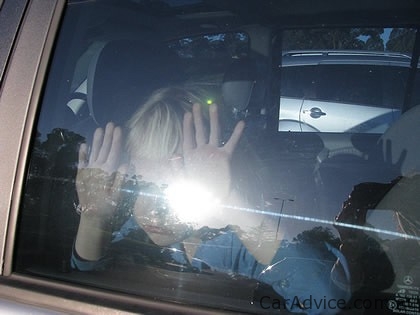
Almost two years ago, I wrote about Washington Post feature writer Gene Weingarten’s provocative and sensitive 2009 exploration of the tragic cases in which a distracted parent leaves a small child in an over-heated car. The issue, now as then, is how society should treat such parents, who are without exception crushed with remorse and guilt, their lives and psyches permanently scarred. Weingarten’s original piece, which won him a 2010 Pulitzer, did not take a position on how such parents should be treated by the criminal justice system. In today’s Washington Post, he does.
“The parents are a continuing danger to no one, nor could anybody sanely argue that fear of prison is even a minuscule factor in preventing this. So we are left with the nebulous notion of punishing, for punishment’s sake alone, an act of accidental negligence that by its nature subjects the doer to a lifetime of agony so profound that it is unfathomable to anyone who has not lived it. Prosecution is not, in my view, warranted.”
Weingarten is thoughtful, analytical, reasonable, compassionate and fair. He is also, in this case, dead wrong. Continue reading
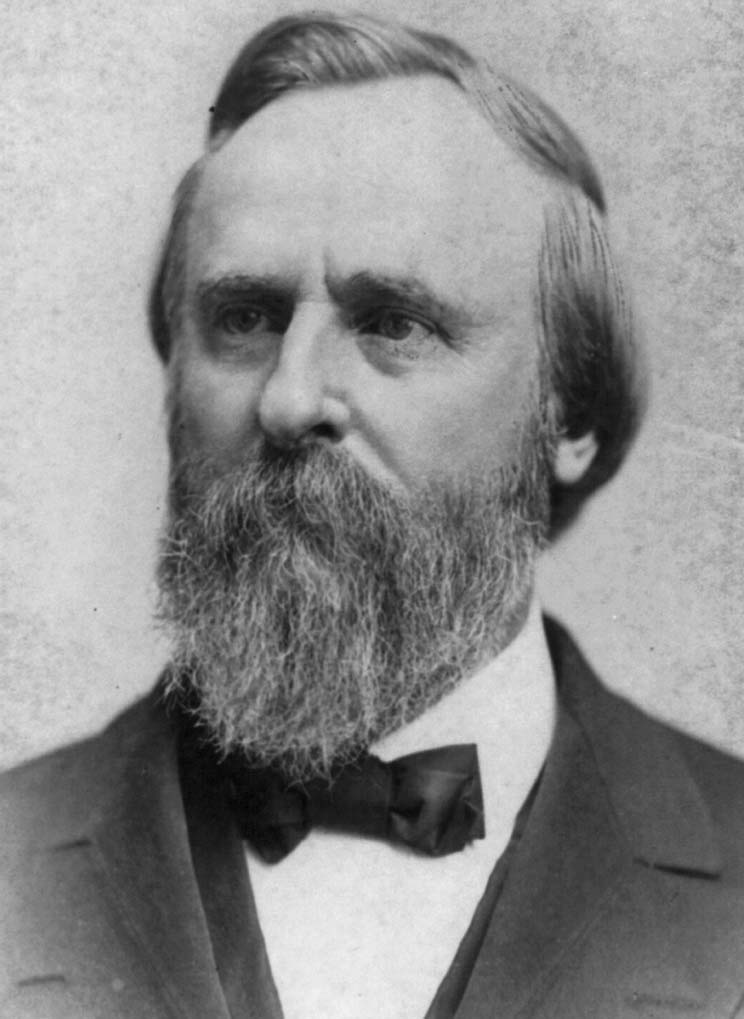
Dear President Obama: Show Some Respect. President Hayes Earned It.
One of the many deplorable tendencies of the previous Democratic President was to use the memories, reputations and good names of his predecessors as props to deflect criticism for his own slimy and irresponsible conduct and lies. A standard feature of Bill Clinton’s “everybody does it” defense during his Monica travails was to have his surrogates, like the shameless Lanny Davis, mouth that Bill was no different from other Presidents who used the power of their office to cheat on their wives and exploit other women. Since it wasn’t too ennobling for this tactic to rely on the two most indisputable examples of Presidential sexual excess–Jack Kennedy being a (false) Democratic icon and a misogynist, and Warren G. Harding being the U.S.’s worst or next to worst President ever (depending upon your opinion of James Buchanan, President Clinton allowed his lapdogs to accuse FDR (who as a paraplegic was almost certainly incapable of anything but an illicit affair of the heart), and Dwight Eisenhower, whose supposedly adulterous relationship with his female driver in World War II is 1) unconfirmed rumor only and 2) has nothing to do with his conduct as President. The last time I respected Chis Matthews was when he reprimanded a Clinton surrogate for raising the Ike story, calling it—correctly—an outrageous slur on a great American patriot to try to excuse Clinton’s inexcusable conduct.
It is disheartening to see President Obama displaying a similar lack of respect and deference for his White House predecessors. Every one of the men who served in the office of President performed a great service at significant personal sacrifice in a job both impossible and dangerous. If anyone is obligated to give these men appropriate respect, it should be the current President, whoever it is. But just as President Obama has set new records for blaming his immediate predecessor for problems deep into his own term, he has shown a Clintonian willingness to trash a past President for his own purposes.
This would be despicable if the denigration had a basis in fact. Obama’s slur on the 19th President, Rutherford B. Hayes, however, has none. Continue reading
Anti-Bullying Mis-steps: The Perils of Changing Cultural Norms (Part 2)

If "Hunger Games" should be able to bypass the ratings because kids can learn from it, then why shouldn't a film like "A Clockwork Orange," a better film, should also get a pass?
When society decides makes altering attitudes about any conduct a priority,an immediate danger is that it will destroy other societal safe-guards and damage other valid cultural norms in its tunnel-vision.
“Hunger Games,” a film about the consequences of bullying based on a best-selling novel, is about to hit theaters with an R rating, meaning that teens, the prime target of the nation’s anti-bullying effort, can’t see the film without their parents’ permission. Katy Butler, a young bullying victim, has led a national effort to get the film’s ratings reversed. Predictably, politicians have jumped on the bandwagon.
“Over 13 million American youths will be bullied over the course of this year alone, making it the most common form of violence experienced by young people in our nation,” begins a letter from Rep. Mike Honda (D.- Calif.) to his colleagues, in support of Butler’s campaign. “We cannot hope to control this epidemic … without discussing tough issues publicly and bringing them to the forefront of the consciousness of the American public.”
“YES! RIGHT ON! OF COURSE!” Except that what Butler and Honda are proposing essentially undermines the entire purpose of movie ratings, and if their efforts succeed, there is no way anyone will be able to argue that the system has a shred of integrity at all. Continue reading