Comment of the Day: Time To Retire Editorial Cartoons—With Gratitude

Cartoonist and frequent combatant on Ethics Alarms Barry Deutsch did not disappoint—I was counting on a strong reply from him—in commenting on my post about political cartoonists. And I think he has me convinced. I think what I should have suggested, rather than advocating sending newspaper political cartoonists to the trash bin of history (soon to be followed by newspapers themselves), is that editors exercise some discretion over when an editorial cartoon, even by a respected cartoonist, just doesn’t meet editorial standards.

Here is Barry’s persuasive and educational Comment of the Day on the post Time To Retire Editorial Cartoons—With Gratitude:

“Oh, how could I possibly resist this thread?

“1) At his best, Tom Toles is a wonderful cartoonist, elegant and with an incredibly distinctive style. But he hasn’t been at his best for years. The particular cartoon you’re talking about — which can be seen here, if anyone’s curious — is an embarrassment.

“The problem with that Toles cartoon isn’t that it takes a side, or that it paints with a broad brush; many good cartoons do both those things. The problem is, it’s painfully stupid.

“2) There are good political cartoonists doing interesting work, but they’re mostly not found in mainstream newspapers.

“3) Even the best political cartoonists tend to produce more mediocre than great cartoons.

“4) It’s a very, very rare reader who can recognize the artistic merit of a political cartoon that they strongly disagree with politically.

“5) The economic base has fallen out from under political cartooning; every year, fewer and fewer newspapers support a staff cartoonist, and those that remain are seeing their incomes and outlets shrinking. And no one’s yet found a business model for political cartooning to thrive on the web.

“As a result, the most talented new cartoonists usually aren’t going into political cartooning, because they want to be able to eat and pay rent.

“6) Some of the most interesting political cartoonists have gone so far away from traditional political cartooning that no one even recognizes what they’re doing as political cartooning. See, for instance, Joe Sacco, who does journalism in comics form; his second book on Palestine, “Footnotes In Gaza,” is one of the best books about life in Gaza anyone’s done, in prose or comics.
Anti-Bullying Mis-steps: The Perils of Changing Cultural Norms (Part I)

It's a simple rule, really: if they call you a jerk, thy're bullies; if you call them jerks, you're a hero.

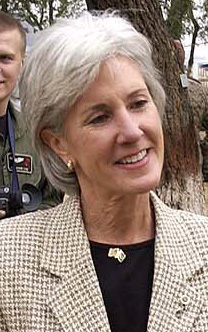
The efforts to reduce bullying in schools has already shown the dangers inherent in using the heavy hand and and often empty skull of government authority to adjust social norms. The laudable goal has already led schools to impose their wills where it emphatically does not belong: in the private interactions and communications among student over the internet. This week, HHS Secretary Kathleen Sebelius provided another example of the perils of the government trying to impose a social taboo where it didn’t exist before.

Sebelius was a guest of the Stuart-Hobson Middle School in Washington, D.C., whose students were shown  a new anti-bullying video from the Cartoon Network that among its messages urged children not to call people names like “stupid,” “fat,” and “jerk.”  Immediately after the screening,  CNN’s Don Lemon moderated a panel discussion of the issues raised by “Stop Bullying: Speak Up.”

“What do you think is the best advice for people who are going into watching this film and anyone who is watching?” Lemon asked.

Sebelius answered, in part: “I think, very important, is for kids to understand how powerful you really are. You might feel like you’re not big enough, not strong enough, not–don’t have enough tools. But just saying, ‘Stop it! You know, you’re being a jerk!’–walk away, get away from this person can make a huge amount of difference.” Continue reading

Time To Retire Editorial Cartoons, With Gratitude

The nuanced subtlety of Pulitzer Prize winning Herb Block. Translation: "Nixon's a crook." Brilliant!!!

All right, hear me out. I love cartoons. I used to aspire to being a cartoonist. I have good friends who are cartoonists, and I know there are cartoonists who are strong contributors to Ethics Alarms. But for many years it has appeared to me that editorial cartoons have become an increasingly archaic form of commentary, one that misinforms the public and contributes to the venom and lack of nuance in public discourse.

Cartoons, by their very nature, deal in caricature, exaggeration and extremes for metaphorical and humorous effect. The practical effect of this, however, is that the opinions expressed through cartoons are also “supported” in a manner that would be outrageous in a written opinion piece. I know: you can’t hold a cartoon to the same standard as an op-ed. Fine—then don’t put it on the editorial pages. Continue reading

Greg Smith’s Urgent Ethics Alarm

“Today is my last day at Goldman Sachs. After almost 12 years at the firm — first as a summer intern while at Stanford, then in New York for 10 years, and now in London — I believe I have worked here long enough to understand the trajectory of its culture, its people and its identity. And I can honestly say that the environment now is as toxic and destructive as I have ever seen it”

This, says Greg Smith, is how the leadership of Goldman Sachs sees its clients.

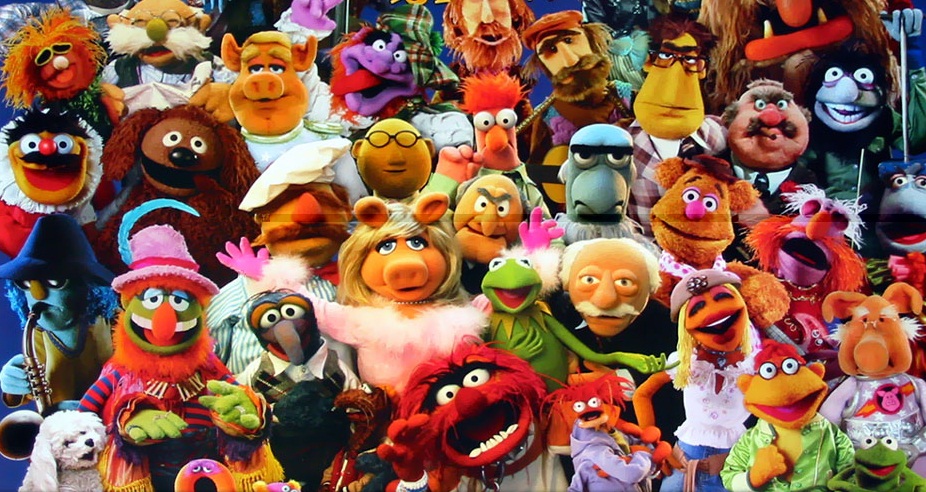
With that, Goldman Sach’s executive Greg Smith began his remarkable op-ed in the New York Times, sending his former employers into crisis mode, panicking investors, and setting the financial, political and journalistic worlds buzzing. Obviously, it was an exposé about ethics as much as anything else.  Smith described a corporation-wide breach of trust with clients, a culture in which leadership openly derided those the company pledged to serve as “muppets,” and apparently, sheep to be sheared:

“It makes me ill how callously people talk about ripping their clients off… I don’t know of any illegal behavior, but will people push the envelope and pitch lucrative and complicated products to clients even if they are not the simplest investments or the ones most directly aligned with the client’s goals? Absolutely. Every day, in fact.”

Smith cites a breakdown in leadership, resulting in a corruption of values: Continue reading

Funny! But Unfair.

Here’s conservative news aggregator Matt Drudge’s top of the page lead headlines at the moment…

If you are going to try to make the (silly and petty) argument that there is something unseemly about the President taking a break from the heavy lifting his job entails to indulge his passion for March Madness basketball, then make it. Implying it this way is snide and unfair; it reminds me of the trouble the Harvard Crimson got into years ago when its printer placed a photo from an art exhibit that appeared to depict two young people engaging in oral sex right next to a headline that read, “New Cafeteria Opens at Radcliffe.”

Funny!  But still wrong.

As I’m sure Matt Drudge knows this.

He just doesn’t care.

Presenting 2012’s “Most Ethical Companies”

The World’s Most Ethical (WME) Companies designation recognizes companies that truly go beyond making statements about doing business “ethically” and translate those words into action. WME honorees not only promote ethical business standards and practices internally, they exceed legal compliance minimums and shape future industry standards by introducing best practices today.

Ethisphere, which recognizes corporations that set a good example for ethical business practices internally and in their business dealings, puts out an annual list of its “World’s Most Ethical Companies.” This year a record 145 companies, including more than three dozen industries, from aerospace to wind power, made the list. Ethisphere notes that since the list’s inception, more than 20 companies have made the list all six years including, including Aflac, American Express, Fluor, General Electric, Milliken & Company, Patagonia, Rabobank and Starbucks, among others.

You can read the list of 2012 honorees here.

(Thanks to Ira Levy for the link.)

Ethics Lessons of the Great Lotto Betrayal

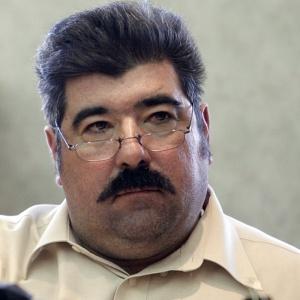
Let's see how many friends you can buy now, Amerigo...

After more than a year and a contentious trial, a New Jersey jury has unanimously determined that hard-hat worker Americo Lopes cheated five co-workers out their fair shares of $38.5 million in lottery winnings. Each was awarded a $4 million share. The evidence presented in the trial was mostly circumstantial, and the case came down to what the jury believed, whom they trusted. Go figure: they chose not to believe the man who organized a lottery pool with his co-workers, collected their money and bought New Jersey lottery tickets with it routinely, and then, when he found himself with a winning ticket in the Mega-Millions game…

  • Didn’t tell any of the group.
  • Claimed he was going on leave to have surgery,
  • Quietly quit without returning,
  • Claimed that the winning ticket was bought with his personal funds, not the pool’s,
  • Argued that none of the men were friends of his and
  • Reportedly said at one point, “With all that money, I can buy new friends.”

Gee, who wouldn’t believe such a terrific guy? Continue reading

Ethics Dunces: Lake County Democrats

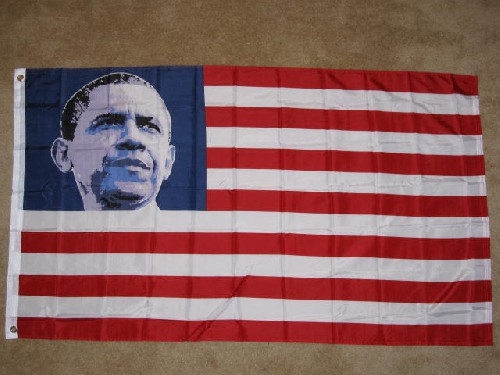
….or, to be more precise, whoever the Maoist idiot was who approved the above flag.

A group of veterans confronted Democratic personnel and demanded that the Obama flag, which was flying under the U.S. flag at Democratic party headquarters in Lake County,  Florida, be taken down. It was finally removed. Continue reading

“Luck,” Causation, and the Complex Computation of Mixed Motivations

Was it good luck, or bad luck?

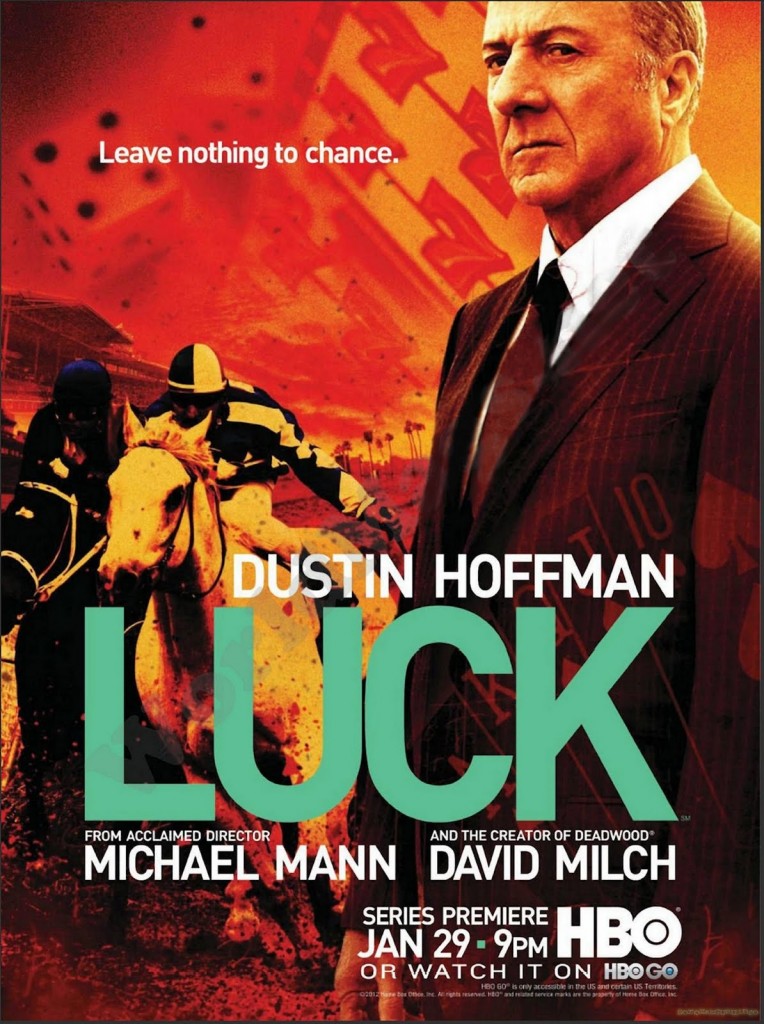
HBO has announced that it is cancelling “Luck,” its well-reviewed series about corruption in the sport of professional horse-racing. Why? Well, that’s an interesting question.

The immediate impetus for the decision was the death of a one of the horses used in the series. It was the third horse to die, so the announcement took the form of a sensitive and humane decision based on concerns for the animals. “While we maintained the highest safety standards possible, accidents unfortunately happen and it is impossible to guarantee they won’t in the future,” HBO’s statement said. “Accordingly, we have reached this difficult decision.”

I was initially impressed, but a couple of things about the move, which seemed uncharacteristically ethical by show business standards, bothered me. “Luck” was much-praised but low-rated, despite a cast headed by Dustin Hoffman and Nick Nolte and a production team headed by respected film director Michael Mann. Though it had been renewed for a second season, some felt that the renewal was dictated by a corporate decision not to embarrass its Hollywood royalty. Continue reading

The Process Can Be Ugly, And Sure Was This Time, But This Is How Cultural Ethics Standards Change

Greta was the tipping point.

The Rush Limbaugh-Sandra Fluke Ethics Train Wreck is over at last, but unlike with many such debacles, something positive occurred. I believe that an emphatic cultural standard was established that calling a woman—any woman, famous or not, liberal or conservative—a derogatory term designed purely to denigrate her by denigrating her gender will not be considered acceptable in political, quasi-political or arguably-political commentary henceforward. If such rhetoric occurs in a comic or entertainment context, no politician or elected official can appear to endorse the individual who utters the offensive words.

I’m not arguing right now whether this is a good or a bad development, but merely that it happened, and that it is a real change. For this to happen, a conservative radio talk show host had to use the terms “slut’ and “prostitute” to make the botched satirical point that a feminist law student activist who argued that free contraceptives were a woman’s right was the equivalent of women who wanted to be “paid for sex.” If pundits and bloggers had merely declared this statement uncivil and cruel, nothing more would have happened, and the incident would have been quickly forgotten. But sensing political points to be scored in an election year, and with the added incentive of being handed what was seen as powerful ammunition to attempt a frontal attack against a detested partisan critic, Democrats,  progressives, feminists, activists, Obama strategists and left-biased journalists decided to cast the Limbaugh’s poor judgment in extreme terms. Continue reading