First Amendment Ethics and the Conundrum of the Despicable Blogger

Attack-blogger Crystal Cox---exercising her rights, jeopardizing yours.

One thing that the public just doesn’t understand about lawyers is that their job sometimes involves fighting for the most despicable people imaginable, because those despicable people have legal objectives they have a right to pursue as citizens, and because the principles underlying the fight are important, even if the particular clients—and often their objectives too–are blights on humanity.

Over at Popehat, Ken has chronicled a classic example, in which First Amendment specialist Eugene Volokh (he of the Volokh Conspiracy) and the Electronic Freedom Foundation are backing blogger Crystal Cox as she appeals a $2.5 million defamation judgment against her, in which an Oregon judge ruled that bloggers did not have the same protection against defamation claims under the First Amendment as journalists do. Cox, of whom I was blissfully unaware until Ken’s post, is clearly the kind of person who is a menace on the internet, lacking basic decency, fairness, scruples and common sense, and yet stimulated by the power that the medium provides her. The signature act that established this for me is revealed by Ken at the top of his post:

“Here’s the most important thing you need to know about blogger and “investigative journalist” Crystal Cox: when she got angry at First Amendment attorney Marc Randazza, she didn’t just register the domains marcrandazza.com and fuckmarcrandazza.com and marcrandazzasucks.com in order to attack him. She registered jenniferrandazza.com and nataliarandazza.com — the names of Randazza’s wife and three-year-old daughter.”

Yup, that’s enough, all right: signature significance. Is there any chance that an individual who would do this even once could be an ethical, reasonable, fair person?  No! Only an unethical creep would even consider such conduct; with a normal person, the ethics alarms would be ringing so loud that they would be paralyzing. Continue reading
Ethics Dunce: Eric Wemple

Talk about ethics blindness.

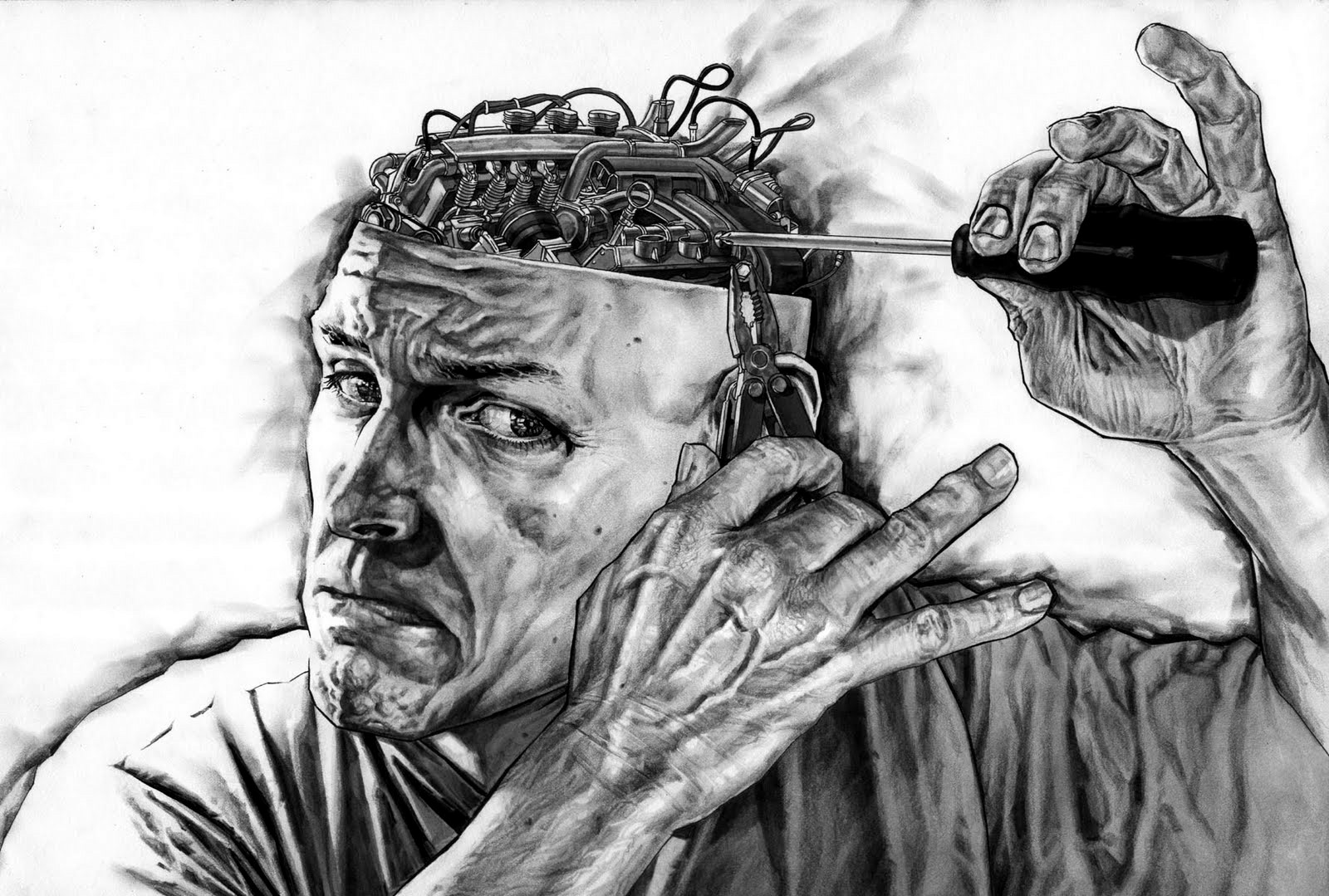
Find that loose screw, Eric, and then tell Spike where it is...

On his Washington Post blog, Eric Wemple gushes like Old Faithful about sweet, contrite, courageous Spike Lee, who appropriately apologized (and paid an undisclosed sum) to the Florida couple whose address he had accidentally tweeted to help get George Zimmerman harassed, attacked or killed—that being his clear intent by trying to send Zimmerman’s address to the world, or more specifically, the New Black Panthers’ vigilantes. Wemple was blown away by Spike’s willingness to accept responsibility for his boneheadedness and admit he was wrong:

“Yet his reaction to the mishap rehabilitates the good name of an honest apology. Lee used no qualifiers, no minimizers, no excuses — and no ‘I am sorry if anyone took offense to my actions.’ Just plain regret and shame. Score a victory for the apology.”

So “I’m sorry I nearly got you killed; honest, I was trying to get that other guy killed!” is an impressive apology, is it? Continue reading

Ethics Hero Emeritus: National Guard Sergeant Dennis P. Weichel Jr. (1983 -2012)

There are those who say that human beings are incapable of truly altruistic conduct, and that everything we do, no matter how outwardly generous and selfless, is in fact self-serving. There are others, and I am among them, who believe that human beings have natural ethical instincts that lead them to sacrifice for the benefit of society generally, those in peril, and those who are weaker than themselves, especially children. Those instincts can be nurtured by our culture or extinguished by it, but I believe that they are there in most of us….for a while, at least, sometimes weak or dormant, but there, nonetheless.

They were obviously there in Specialist Dennis P. Weichel Jr. of Providence, Rhode Island, a National Guardsman serving in an Afghan province east of Kabul. On March 22, he left the 16-ton gun truck he was riding in to disperse local children who were wandering in front of his heavily armored convoy, searching for treasure, the brass shell casings that could be melted down for other uses or be sold.  Suddenly a small girl saw a casing and ran into the path of one of the huge military vehicles. Weichel, a father of three, dashed to her, grabbed her, and threw her to safety unharmed. The gun truck struck the Guardsman instead, fatally injuring him.

Weichel was engaged to be married. He is the first member of the Rhode Island National Guard to die in Afghanistan.

Nothing can erase the tragedy of the U.S. serviceman who turned mass murderer in Afghanistan a month ago, and Weichel’s heroism is unlikely to change any hearts and minds there. That wasn’t Weichel’s objective anyway. He saw a young life in danger and acted, risking his own. It would be a better United States if all of us were raised to react as he did, and if our culture more unambiguously encouraged our best instincts rather than our worst ones. The cliché mouthed by politicians is that our military combat personnel are fighting for American values. Dennis Weichel demonstrated that they also carry American values with them, and in his case, he displayed the very finest.

Weichel was promoted posthumously from specialist to sergeant and awarded the Bronze Star, which is appropriate, and Rhode Island’s flags are being flown at half-mast. The honor he most deserves, however, is to be remembered and emulated by the rest of us.

Ethics Train Wreck Update: Martin-Zimmerman Reflections

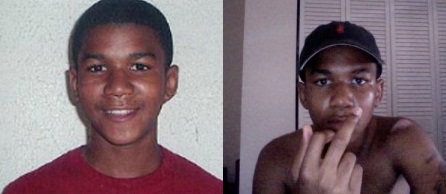
Is it only fair to show one version of the victim?

As the NAACP joined with Al Sharpton today to lead a protest of thousands in Sanford Florida, some notes on recent ethics carnage and confusion in the wake of Trayvon Martin’s shooting death:

  • Roslyn Brock, who chairs the national board of directors for the NAACP, perfectly illustrated  ignorance of the justice system and short-sightedness that has characterized this whole, sorry incident. “We come to make sense of this great tragedy and the entire world grieves with us,” she said . “When the Sanford police did not arrest George Zimmerman, they essentially placed the burden of proof on a dead young man who cannot speak for himself.” But of course, as every American should know, that is where the burden of proof lies. The alleged victim in a death is represented by the state, and it is the state that has the burden of proof of guilt as well as having the burden to justify an arrest. It is not Zimmerman’s responsibility to prove his innocence, though that is what the un-American process engineered by race-activists and the media has come to. Does the NAACP really want to take the position that there should be a presumption of guilt in criminal matters? Or just in circumstances where the victim is an African-American and the suspect is not?
  • While CNN has taken the lead in trying to present a balanced picture of the controversy, NBC, mostly through MSNBC, has thoroughly disgraced itself by essentially taking an advocacy position on Zimmerman’s guilt, even to the point of doctoring his 911 call to make it seem clear that this was a case of racial profiling. “This guy looks like he’s up to no good…He looks black.” is how Zimmerman’s 911 call was played on the  “Today Show” and relayed on MSNBC’s website. The actual conversation was this: Continue reading