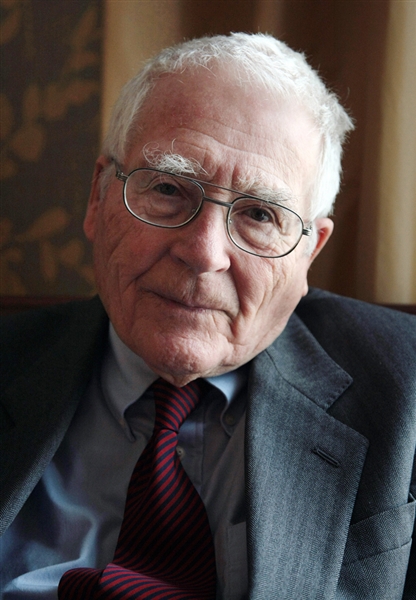
Ethics Hero: “Gaia” Scientist James Lovelock

James Lovelock

“The problem is we don’t know what the climate is doing. We thought we knew 20 years ago. That led to some alarmist books – mine included – because it looked clear-cut, but it hasn’t happened. The climate is doing its usual tricks. There’s nothing much really happening yet. We were supposed to be halfway toward a frying world now. The world has not warmed up very much since the millennium. Twelve years is a reasonable time… it (the temperature) has stayed almost constant, whereas it should have been rising — carbon dioxide is rising, no question about that.”

With that admirable statement of candor and humility, renowned earth scientist James Lovelock did what everyone in the climate change debate should be doing, and should have been doing all along. He admitted the uncertainty of climate science, the fallibility of models and projections, and the fact that the extent, speed, predictability and causes of climate change are still far from certain. If other scientists involved in this critical issue had Lovelock’s integrity,  perhaps ignorant pundits, journalists and politicians would not feel so justified in calling skeptics about climate change the equivalent of Holocaust deniers. Continue reading
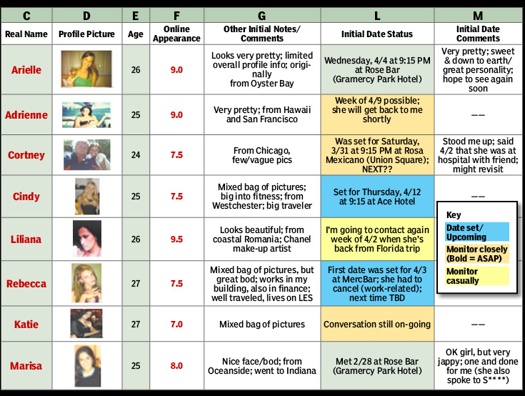
Internet Betrayal: The Dork, The Spreadsheet, and the E-mail Avenger

If someone sends you an obnoxious, arrogant, idiotic or otherwise embarrassing e-mail, the ethical thing to do is to tell the individual what’s wrong with it, and perhaps save them from future embarrassment. The principle is simple: The Golden Rule. When you send a private message to someone and pour out your heart, empty your skull, vent your spleen, or otherwise express things you probably should have slept on and moderated in the clear light of day, you don’t want your correspondent to use the internet as a weapon against you and introduce you to millions at your worst. It is a terrible, cruel, indefensible thing to do…to anyone. Continue reading

NOW the New York Times Is Going To Be Fair And Objective?

I nearly entitled this “Jaw-Dropping Confession Of The Decade.”

Stop, you're killing me! My drink just came out my nose!

In his column today, Arthur Brisbane, The New York Times’ timid ombudsman (the Times calls him its “public editor”), writes a long post about widespread accusations that the Times has not applied the same objective rigor to Barack Obama that it could have, should have, and typically has done to other politicians despite its openly liberal tilt. Oh, Arthur’s defensive about it, all right, but his defense boils down to “it wasn’t intentional.” Brisbane appears to be convinced by an assortment of media scholars he respects that the accusations on the Right that the Times has been “in the tank” for Obama is not that far from the truth after all. Bias can be overcome, though, he concludes. Yes we ca…uh, well, you know.

Brisbane writes, Continue reading

Ethics Chess Lesson: The Tale of the Kidney and the Ungrateful Boss

Ethics chess is complicated, but ignore it at your peril!

Ethics chess is the process by which one considers the likely chain of events that follow from an act, and tries to predict the ethical dilemmas that may result before they occur. Debbie Stevens and Jackie Brucia didn’t play ethics chess. This is what happened to them.

When  Stevens was exploring the possibility of returning to the Atlantic Automotive Group, where she had worked previously, she met with Brucia, her former and potential boss, and somehow got on the topic of Brucia’s health problems. She needed a kidney transplant, and had found a donor, though it was not yet certain that the kidney would be hers. Stevens said that she might be willing to contribute her own kidney if that donor didn’t work out.

Later, Stevens was hired by Brucia,and two months later, in January of 2011,  Brucia called Stevens into her office and told her that she had lost her organ donor. “Were you serious when you said you would be willing to give me one of yours?’ Brucia asked.  “Sure, yeah,” Stevens says now. “She was my boss, I respected her. It’s just who I am. I didn’t want her to die.’’ It wasn’t exactly a direct donation, but Stevens donated her kidney to a stranger who matched up well with it so Brucia could be advanced on the list and get a better matched kidney from another source. Nonetheless, Brucia got a healthy kidney because Steven’s gave up one of her own. Continue reading

Comment of the Day: “A Last Word on the Kevin Coffay Sentence”

Brain chemistry?

Michael, who is the reigning Comment of the Day champion, comes up with another here regarding the Kevin Coffay sentence and the mitigating factor in juvenile crimes, supported by brain chemistry research, that adolescents are not as capable of rational decision-making as adults, and therefor should not be punished as severely for their reckless acts. This is his post regarding A Last Word on the Kevin Coffay Sentence.”

“Don’t go overboard with the studies that show adolescents are incapable of being responsible, thinking rationally, or evaluating risks. If you look at such studies, they are done in a vacuum and merely state that older people are BETTER at evaluating risks (duh). The main point is that our brains continue to develop until 25 or so. Much like Titanic research, however, this research is interpreted wildly and without considering evidence to the contrary. Continue reading

Trayvon Martin-George Zimmerman Ethics Train Wreck Post-Bail Update

Sadly, still with a good head of steam...

George Zimmerman has been released on $150,000 bail, prompting more ethical misconduct from the media and the lynch mob on the Left:

  • Cable news was reporting that Martin’s parents are “devastated” at the news of Zimmerman’s release. They should not be devastated that an innocent man (in the eyes of the law) is not being forced to stay in prison for more than a year to await trial, and the fact that they are suggests that vengeance, not “justice”, is their true objective. Meanwhile, for CNN et al. to be reporting this as if releasing a defendant on bail is some kind of gift to Zimmerman or affront to Martin’s family is irresponsible and provocative. The news organizations have an obligation to explain that bail is based on the likelihood that the defendant is not a danger to others and not a flight risk. Zimmerman is neither: he turned himself into police as soon as he was charged, and has ties to the community. In America, we do not keep people in jail before they have been convicted unless it is absolutely unavoidable. Citizens interested in ‘justice” should not be devastated when any fellow citizen is afforded freedom up to and until his guilt of a crime has been proven. It is a right they may need themselves some day. Continue reading

Ethics Dunce, Trayvon Martin-George Zimmerman Ethics Train Wreck Division: Mansfield Frazier

"Do the right thing, George. Or else."

Mansfield Frazier, whose name I was blissfully unaware of until I read his astounding opinion piece in The Daily Beast, thinks that in order to prevent another set of deadly riots along the lines of what occurred when the police who beat Rodney King were acquitted, George Zimmerman should be persuaded to accept a prison sentence without a trial by jury of his own. “The time is now for strong hands to take the helm and steady the ship of state—not to mention our national racial, political and legal discourse. The paramount concern has to be to avert a large-scale racial calamity.” he writes.

No, the paramount concern is for the justice system to give George Zimmerman the same due process of law, same fair trial, same guaranteed legal defense and same right to a trial before his peers as any other citizen accused of an alleged crime that has not been used to fan racial hate and suspicion on MSNBC. Those concerned about potential race riots should look to the people who irresponsibly lit the fuse to ignite them, and order them to snuff out the flame. Those concerned should observe the actions of the Florida prosecutors, who have given every indication that they either have no valid case or are incapable of presenting one. They should seek to discipline a national news media that has misinformed the public about the case, stating that there were elements of racism and profiling in Trayvon Martin’s death when the evidence so far firmly establishes neither. It is not George Zimmerman’s responsibility to sacrifice his freedom to prevent a social calamity that was not and will not be of his making. Continue reading

A Last Word on the Kevin Coffay Sentence

Keven Coffay, the teen who drove drunk, killed three of his friends as a result and fled the wreck as they lay trapped and dying, has prevailed in his effort to get the original 20 year prison sentence (for involuntary manslaughter) reduced. Now he may be released as early as next spring, on parole from his new, lenient, 8 year sentence. I won’t re-iterate my views on Coffay’s case, which are already here and here. I will make this additional observation.

In his column today, George Will discusses the science behind the growing consensus that life sentences without the chance of parole qualify as “cruel and unusual punishment” prohibited by the 8th Amendment. I don’t disagree with his conclusion, nor do I doubt, as the father of a teen-age son, that the brain chemistry of teens dictate special calculations and analysis when trying to decide on what is just punishment for crimes arising from the recklessness and poor judgment of adolescents as opposed to adults. Continue reading

The Heroic Bird-Watchers and The Shame of the Star Princess

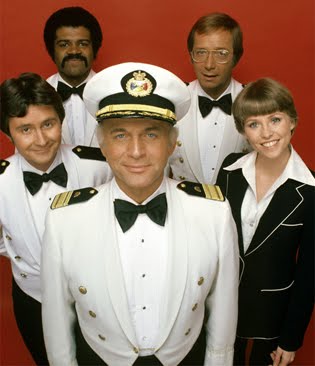
If Captain Stubing had been at the helm, a tragedy might have been averted.

Rescue is a frequent topic on Ethics Alarms, usually in a disturbing context. We all have a duty to rescue others in peril, but we should never underestimate the powerful forces that often work against that duty. Rescue can be dangerous or frightening, and often there are perplexing questions about when an individual has done enough to ensure a rescue, and what constitutes “enough,” especially if the rescue fails.

In March, the Star Princess—a luxury cruise ship operated by Carnival—was on a cruise around South America. Three of the passengers were bird-watchers, who eschewed shuffleboard and the other fun activities organized by whoever was the counterpart to Lauren Tewes on “The Love Boat” to use their binoculars and telescopes to spot seabirds from the ship’s decks.

It was March 10 when one of the bird-lovers, Jeff Gilligan from Portland, Oregon., saw a boat with a person standing up in it, waving a dark piece of cloth. The vessel was at least a mile away.  Another Oregon bird-watcher, Judy Meredith, told reporters that when she focused her lenses on the boat, it was clear to her that the man waving the cloth was trying to get the Star Princess’s attention, and that the boat was drifting, without an engine. She went inside to try to alert the crew about the situation. After she talked to one crew member, she says, he called the bridge and she talked him through what she and Gilligan had seen.”I was trying to have a sense or urgency in my voice — and tell them that the boat was in distress, and they were trying to get our attention.” Another crew member used Gilligan’s telescope to look at the drifting boat, and confirmed their assessment. The boat was drifting in the open seas and in peril. Gilligan said that at that point “We were a bit relieved because he had confirmed that he had seen what we were describing. We expected the ship to turn back or stop or something.” Continue reading

An Unethical and Stupid Blue Line

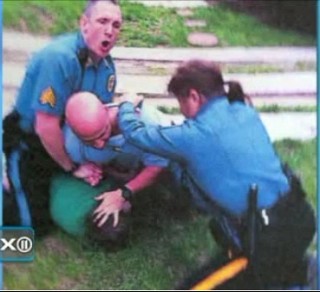
Officer Tasca, defying a police taboo

Police have a hard, crucial and dangerous job, so it is not surprising that the profession has developed a culture of rigidly enforced mutual support, the famous “blue line” that represents order against chaos, with police protecting society from the lawless and the predators, and making solidarity among the components of that line a key element in its strength. I understand why the culture has evolved to be what it is, and why an ethic of unconditional loyalty and trust thrives in police departments. There are times. however, when enforcing the integrity of the blue line serves to undermine it, and the saga of Officer Regina Tasca of the Bogota (New York) Police Department appears to be one of them. Continue reading