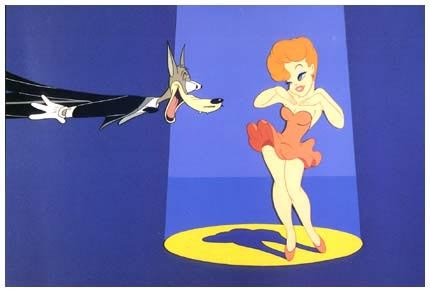
 I just finished reading some of the posts on a Washington, D.C. site called Collective Action for Safe Spaces, and found myself simultaneously amazed, shocked, repulsed and depressed. Based on the posts from female victims of random acts in broad daylight raging from harassment to sexual assault, the unethical male treatment of women like prime grade beef on the hoof is far, far more common than I assumed, and raises a genuine question about what kind of values our culture teaches its men.
What would ever lead a man to decide that it was acceptable to pinch a woman’s derriere in a crowd? Or a cyclist to shove his hand up a woman’s skirt as he zipped by? Or a photographer to aim his zoom lens camera at multiple women’s busts in public? Apparently this conduct is so commonplace that many, even most, women don’t bother to report it, reasoning that the police have better things to do.
You know what? They don’t. Either the police have to enforce a woman’s right to enjoy life and appear in public without being sexually molested, or we need to pass laws the allow anti-harassment enforcement by women and the men, if there are any, who possess a sense of decency and are willing to act decisively to stop the predators—and by that I mean breaking their faces. I cannot imagine anything more important than maintaining the cultural standard that harassing women, touching them without permission and making unwanted and unasked for sexual remarks to them is not merely rude and boorish, but a violation of basic human rights.
If this nation is really raising a bumper crop of men who think otherwise, and we seem to be, it is time for women and men alike to be vigorously non-partisan in rejecting and shunning writers, public figures, entertainers and next door neighbors who make it obvious in their speech and conduct that they believe women exist on earth for their denigration and pleasure. To pick the obvious example, Bill Maher has repeatedly referred to women on his HBO show “Real Time” as cunts, twats, bitches, and other misogynist terms. What message does is send that he keeps getting nominated for a Emmy? Why have Dan Rather, Charles M. Blow, Paul Begala, Andrew Sullivan, Catherine Crier, Michael Steele, and Eliot Spitzer—wait, scratch Eliot; I know the answer in his case—-appeared on Maher’s show, licked his boots, and endorsed his sick frat boy attitudes toward women and giving spiritual nourishment to our rising young rapists?
We have no ethical standards unless we are willing to stand up for them, enforce them, and refuse to tolerate anything less. It is dangerous to “walk while female” because both men and women do tolerate such despicable, primitive, joy obliterating conduct.
_____________________________________________
Facts: Collective Action
Source:Washington Post
Graphic: Parterre
Ethics Alarms attempts to give proper attribution and credit to all sources of facts, analysis and other assistance that go into its blog posts. If you are aware of one I missed, or believe your own work was used in any way without proper attribution, please contact me, Jack Marshall, at jamproethics@verizon.net.
 Ethics Alarms
https://ethicsalarms.com/2012/01/07/ethics-quiz-sydneys-expressive-yearbook-photo/
Same coin, reverse side, no? Women are the victims of the cultural message, and they also are among the messengers.
lol. You could say that, Jack. In my mind, what you accuse Maher of above is the exactly same as what you (and others) do in the post referencing Sydney with one exception; Maher’s known topic is comedy and your known topic is ethics. In my mind, I know not in yours, that makes your post (and commented fallout) worse than what Maher is doing. Fact is, the Sydney post bothered me so much, I have never forgotten it and I can only say that about 3 or 4 posts going back to the start of my reading. I know you see it differently but that is my take on it still. No worries though, I am not going to take your above advise and shun your blog for the perceived transgression.
Your argument continues to amaze me. Bill Maher called a series of elected US officials who happened to be women sluts, cunts and twats—funny!—because he doesn’t like their politics.I wrote that a high school student who intentionally posed in an age-inappropriate and sexually provocative photo that would be right at home in the call girl ads for her Yearbook (and was told to get another picture) was apparently determined to be remembered as “the class slut.” I stand 100% behind that analysis today. I wasn’t denigrating the girl; I was describing exactly what the impact of her photo was likely to be, a reasonable guess why she created it,and why it was rejected. Surely you understand that the same word can be misogynistic in one context and descriptive in another. Calling a woman a “whore” to insult her is wrong. Calling a prostitute a whore is a little rude, but hardly unjust. Saying a woman who goes out of her way to dress like a street-walker “looks like a whore” is stating a fact. Comparing my analysis with Maher’s attack is unfair, and I resent it.
You absolutely denigrated her in my mind and I doubt her intent, misguided as it was, was to be remembered as the class slut (whatever that word means to you). I am with Will Smith’s grandmother on this one, if you are smart, you can always make your point without that language and I happen to know, you are among the smart enough beccause I have read you do it on more often than not.
Resentlment isn’t worth your time in relation to my opinion so let that go but your rationalization isn’t changing my mind.
Slut has a clear definition: an individual who is considered to have loose sexual morals or who is sexually promiscuous. The term had no substantive relationship to any of the individuals Maher has used it against—there is no other interpretation of the image intended to be conveyed in this photo of a high school student.
Jack,
You and Maher are guilty of different things in the same realm. Maher puts all women down generally with his comments…like they are generally lesser than men. You ‘just’ claim that any woman that tries to look sexy is a slut.
Your statements on Sydney are actually a more appropriate example of the issues and causes of the male misbehavior than Maher’s statements. To you, if she looks attractive, she’s a slut. Now, if she’s a slut, why shouldn’t she be touched, secretly photographed, and catcalled at? Sluts are willing, right?
I think that’s an intellectually dishonest argument, tgt. Sydney’s pose was not “attractive.” I’m a stage director, and I know a little bit about expressions, settings, costuming, make-up and body language. The women–girl, in fact, was wearing revealing clothing, showing bare midriff and leg, on the stairs to a loft, shooting a come-hither glance to the camera, not flirtatious, but seductive. It is a pose that would be appropriate for Maggie the Cat or Gilda. I suppose I could have used the archaic term “temptress,” but in the 21st Century, a 17-year old girl who behaves as a temptress is acting like a slut.
If you read any of my comments on sexual harassment, you will see that I consistently and absolutely hold that a woman can run naked through the streets in nothing but her DD breast implants, and nobody should touch her. Now, if she says to a man, “Hey, eyes up HERE, buddy,” I have no sympathy for her. Sydney wanted to be looked at in the way her demeanor and costuming suggested. Her photo may have suggested that she was inviting sexual congress, but that has nothing to do with someone treating it as a real invitation. The so-called “slut walks” making this point are completely consistent with my post. Women have a right to dress like sluts without being treated by strangers as sluts. They don’t have the right to make their yearbooks advertise their “look.”
So where’s the line in expressions, settings, costuming, make-up, and body language that change from looking attractive to seductive? You know what, don’t bother. It doesn’t matter, as looking seductive does not justify calling someone a slut. Look != actions.
I agree with the first part of your second paragraph, but it shows how much off your comments about Sydney are. When you call her a slut, you’re saying that her looks mean she is a certain way… a certain way that welcomes the otherwise egregious behaviors.
Mr. Marshall,
I’m going to start by saying that I agree with the core point in your initial post about this issue—the school was right to reject this photo from their yearbook. They have any number of adequate justifications at their disposal. I’ll name just two.
First, it creates a standard for attractiveness that others will want to meet. This can create a sexual arms race in the school environment. There is no shortage of social distractions in our schools, and we should avoid adding unnecessary ones if we can.
Second, Sydney is arguably too young to understand and weigh the possible costs of her behavior. By displaying a picture of herself in revealing clothing and in a sexual pose, she’s increasing her risk category for sexual harassment and assault. Rejecting the picture helps protect the girl from herself AND helps foster a culture at the school that will reduce such risks, and the liabilities that come with them. Also, the cost to the girl of preventing this risk is minimal. She still maintains, in most (and the most important) respects, her freedom of expression—even those relating to her appearance.
That being said, I want to draw a distinction between a behavior increasing someone’s risk category for sexual harassment or assault, and a behavior making someone DESERVE sexual harassment or assault. For example, merely having long hair increases the chances that a woman will be raped. It certainly doesn’t follow that women with long hair DESERVE to be raped.
I agree with Danielle and tgt that the use of the terms “hooker-in-training” and “slut,” along with the implied label of “whore” in the phrase “personal advertisement for her services,” were inappropriate. They were inflammatory, and unnecessary to make the core point. Most problematic, these terms are almost always used in ways that conflate the distinction I outlined above and to justify inappropriate behaviors. Based on your follow up to tgt, I understand that’s not how you intended to use them. However, my reaction to your use of those words was the same as theirs, and it was guided by my understanding of the conventions surrounding how people tend to use these words. I think it’s best to use those words carefully (and perhaps not at all). In this case, it’s unfortunate that your use of them discredited what was otherwise a good argument–especially they didn’t add anything to the content of your argument.
Joy,
I can’t agree with your 2 possible reasons for rejecting the photo.
First there’s artificially deflating the attractiveness of one individual. I don’t see how this photo sets off a sexually attractiveness arms race. I think that already exists in all high schools. Also, it’s too easy to make fun of: “You’re gorgeous, so we can’t have this picture of you. While everyone else is trying to look their best, can you please submit your driver’s license photo?” Jack came up with the idea that the picture is beyond the realm of decorum, but you’re now suggesting that the issue is the photo shows the girl in too good of a light. Maybe we should tell the star quarterback to play worse so it doesn’t set off an athletic arms race.
The second reason down to two things: “She’s a dumb girl” and “It’s dangerous for women to look sexy”. The first is amazing paternalism considering we don’t know this girl. The second is so out of place with the rest of your comment. While you clarify that it’s not right to abuse women, you think that women should be censored anyway.
Now, though, I can switch gears and praise you for your last paragraph. You said what I was getting at better than I did. We know Jack doesn’t intend to make it a more hostile word for women who dress sexily, but his use of the term slut (not using it in general, but using it to refer to someone dressed sexily) works against his intentions.
Thanks for your reply, tgt. Here are a couple of responses.
First, I didn’t mean to say the picture should be rejected because Sydney “looks too good,” and I think your reaction to my clumsy claim was right on target. Rather, I meant to say that Sydney was going to extreme lengths to be seen as “sexy,” and I worry about the possibility that this would lead to a sexual arms race in which girls reveal more and more skin, and present themselves in more and more sexualizing ways, in order to gain admiration.
The thing that worries me about relying too much on ideas about “decorum” is that it’s possible for the rules of decorum to be oppressive, and for the benefits of maintaining decorum to be outweighed by the costs. So why is maintaining decorum important in this case? I was trying to pinpoint the reason, but failed to articulate my point clearly. I realize my above argument may still have some problems, but I didn’t want to rely overmuch on vague references to “propriety” without suggesting what that means and why it’s important here.
Second, I think some degree of paternalism is appropriate in our schools. If an activity is risky, and the costs of avoiding that activity are minimal, then I think that creates a strong justification for prohibiting that activity within the context of a school—not only because it protects the students, but also because it protects the schools from taking on additional liabilities for harboring the risky behavior. You’re right that I think it’s wrong to abuse women, but I don’t see how prohibiting this type of behavior amounts to abuse.
Joy,
Now that I understand your true intent for reason 1, I still don’t particularly like it, but I don’t find it by any means egregious. I still don’t think the picture would kick off an arms’ race any more than already exists in high schools, but I can understand thinking this picture is over the line. Since we don’t know the people involved or how this particular school functions, I think we can say that it’s possible the school could legitimately use the sexiness of the picture as a reason for rejecting it, but we don’t know. Assuming it was a no-brainer seems inappropriate.
I agree that Schools should be able to limit some conduct to protect their students, but I think you’ve gone overboard and also miscategorized situations. You’ve suggested that allowing girls to dress sexy opens a school up to lawsuits. That’s not at all true. Tolerating harrassment would open the school up to lawsuits, whether girls are allowed to dress sexily or not. Allowing girls to dress sexy is not “harboring risky behavior” by any means. You also appear to be arguing against a strawman. I have not suggested that the limitations you are suggesting on girls ability to dress sexily is abuse. It clearly isn’t. I am against abuse, but I don’t think the solution is to cover up our womenfolk so the horny boys won’t be tempted by them. That kind of thinking hurts everybody (though females significantly more).
Mmmmm.. well, maybe, but I’m not so sure.
Here we have a handful of anecdotes, none of which have been verified, collected on a site that’s specifically focused upon exposing this type of bad behavior. This, apparently, centered in the seventh-largest metropolitan area in the nation (population approx. 5.6 million). At the risk of sounding cynical, these here Interwebs give the congenitally aggrieved a splendid mechanism for finding each other and self-reinforcing their dudgeon.
This doesn’t mean I think these stories are false. There are creeps everywhere, of all kinds and stripes, and it’s fair to assume that there are a considerable number of cases that do, in fact, go unreported. I think we can agree that this type of behavior is completely unacceptable, but even so, I’m unconvinced that it truly rises to a major threshold of concern – especially when we consider how prevalent REAL harassment was only a generation or two ago. From my perspective, as a culture, we appear to be on the correct side of that particular curve.
It’s also important, I think, to remember that people who want to perceive themselves as victims are constantly on the lookout for evidence of same, and are quick to seize upon innocent (if clumsy) behavior as proof of it. Charges of racism come immediately to mind. Yes, there is racist behavior out there, but it’s highly unlikely that it’s as prevalent as those who wish to see racism believe it to be.
I’m troubled by this comment. I understand the main thrust of your argument as follows:
1) To meet a major threshold for concern, “real” sexual harassment needs to be common.
2) Many reported cases of sexual harassment don’t count as “real” sexual harassment because they are motivated by “innocent (if clumsy)” behavior.
3) Once we dismiss reported cases of sexual harassment that are “innocent,” the problem of sexual harassment is not common.
________________________________________________________
Conclusion) Sexual harassment isn’t common enough to meet a “major threshold for concern.”
If you think I’ve interpreted your argument unfairly, please feel free to revise my outline in a reply.
Claim (2) is not only false, but offensive. I’m going to assume you agree that the cases Mr. Marshall brought up, in which a person’s physical boundaries were crossed, are neither innocent nor harmless. Moving forward, though, there are cases in which someone’s behavior is innocent (in that the person doesn’t intend to cause harm), but far from harmless. Even unintentional sexual harassment can inspire fear, tarnish a person’s professional reputation, or reinforce a societal opinion that women’s best asset is their physical attractiveness. And in order to minimize the damage, the victims who respond to it have to master a social dance that takes valuable time and energy. By claiming that this cost is not worthy of our attention, you’re suggesting that we should be willing to let harassment victims suffer the cost of other people’s irresponsible behavior simply because “they didn’t mean to.”
Further, it’s worth noting that when intelligent, capable people have to spend energy dealing with this behavior, we all lose out on the benefits of their lost productivity. So the immediate victims aren’t the only ones who pay the costs of sexual harassment. We all do.
On a final note, I’m also concerned with your suggestion that, because sexual harassment isn’t as prevalent as it used to be, it’s not worthy of our attention. I believe that rationalization is on Mr. Marshall’s list, under “The Comparative Virtue Excuse.”
1) I think this is 100% correct in all respects.
2) Call me Jack. Or “Ishmael.”
You raise some valid points, Joy. In my effort to be as brief as possible I certainly left the impression that I’m minimizing the issue.
My larger points were these:
1) while harassment is certainly behavior which should not be tolerated, the United States is making remarkable progress in eliminating it. That doesn’t mean that we should settle for where we are; it’s unacceptable behavior and people of conscience should (obviously) refrain from it themselves and intervene when seeing it perpetrated by others. Thus, it is a FAR smaller problem than it was comparatively recently. In my personal view, we as a society face larger issues right now. You may disagree.
2) I am sorry if you find what you have labeled “point 2” offensive. I can see how you presented that point based on my previous, but that’s not what I was saying. I completely agree that any crossing of physical boundaries is unacceptable, as are such behaviors as leering, propositioning, offering quid pro quos for sexual favors and so forth. That stuff simply doesn’t belong in a respectful society. I am specifically referring to situations in which people who are LOOKING for evidence that others are either harassing or discriminating against them interpret innocuous comments or behaviors as evidence that they are being harassed. I have seen it happen (not to me, thankfully). It can be extremely disruptive to an organization, and unfair to the accused.
Thanks for your thoughtful reply, Arthur. I’ve got a few follow-up thoughts.
First, the claim “there are more pressing issues” is often used to suggest that we shouldn’t even bother talking about (or doing anything about) the problem under discussion. Perhaps that’s not what you meant to do. While you may be right that there are more pressing issues (which may include poverty, fraud, and problems with our democratic process), the problem of sexual harassment has a real cost, and certainly bears discussion and counter-measures.
Second, I’d have to see examples of what you have in mind to evaluate your claim that many people “are looking for evidence that others are either harassing or discriminating against them” in order to evaluate your claim. Here is an example of harassment that I’ve witnessed/faced that many would dismiss as innocuous.
When I was in graduate school, our program hosted graduate student conferences in which students from around the country would present and defend papers. One year, a student from our program told several visiting scholars that he thought our female graduate students were significantly more attractive than the female grad students in other programs, and then asked their opinions on the matter. The result? The attractiveness of the women in my program became a major topic of discussion during informal social gatherings and meet-and-greets. These social events are usually an opportunity for scholars to discuss their work and receive feedback from other experts in the field. But a great deal of time that should have been spent evaluating our work was instead spent evaluating our appearance. The student who started this happens to be one of the kindest people I know. While his behavior (along with the behavior of those who joined in) was innocent (if clumsy), it was NOT innocuous. Also, because the claims were complimentary, it was difficult to object to this behavior without being seen as overreacting or “looking for evidence” that we were facing harassment or discrimination.
I agree that it’s wrong to use buzz words like “discrimination” or “harassment” to level attacks against the innocent. As has been discussed on this blog, this move is sometimes used push an agenda rather than to support a legitimate complaint. For example, if I present a paper and receive a lot of objections to my argument, it would be completely unfair for me to claim this was evidence of sexism. I should instead answer the attacks I can answer, and use the rest of the objections as useful feedback that will help me strengthen my argument.
When you responded to Mr. Marshall’s discussion of legitimate sexual harassment/discrimination concerns by pointing out that many accusations have no merit, it was easy to think you meant to claim the issue isn’t worthy of concern, or to dismiss the complaints of those Marshall highlighted. Perhaps that was not your intention.
I think sexual harassment and discrimination is much more widespread than you recognize. Because statistics are unreliable (for reasons we’ve already discussed), and references to my experience and observations would merely support a weak inductive argument, there’s not much I can do to prove that claim. However, I (along with most of my friends) have suffered significant harm from sexual harassment and discrimination. As a result, it’s easy to take it personally when people minimize the importance of the issue.
No question: it’s a shame that we have to have laws against workplace sexual harassment, because the whole idea of basing an offense on the victim’s tolerance for particular conduct is weird and flawed. And it is true that some use the shield as a sword, and make unjust accusations. But…
1) There is no ambiguity about a man touching a woman without her permission in sexual areas. That was always battery, and is inexcusable.
2) Ditto exposing oneself and making any comments of a sexual nature to a stranger in public. There’s no ambiguity about this either.
The fact that there are false claims no more changes the seriousness of the offense than the fact that the wrong people are charged with murder makes laws against murder a bad idea. Sexual assault is rape-lite, and rape, is about men asserting power over women that they have no right to assert.
I’m backing Joy’s points 100%.
Me too. I am with Joy.
Not just D.C., or just recently. 45 yrs ago, walking thru Waikiki. some jerk pinched the derriere of my Hapai Wahine (pregnant wife). I grabbed him, and he tried the excuse that she was “just haole (white)” — apparently not knowing she’s hapa-Chinee, and as if that were an excuse. I was offering him a fat lip when the crowd convinced me to let him go with an apology. Point is, it’s not just the classical pinchers of Italy.
i’m going to have to disagree on one point… if you present your bust to the public, you can’t be too upset if somebody takes a picture. Just saying. Cover your bust if you don’t want a pervy photographer getting all trigger happy. If you dress like a decent person then you shouldn’t have to worry wear stray eyes are looking.
Because women have breasts, they shouldn’t complain that they are surreptiously photographed. Considering that there was no talk of dress involved, I can only assume you think that anything less than a burqa is indecent.
I just banned Les9, tgt. He’s not unintelligent, but he’s a troll—I gave him lots of chances. He just has fun taking contrary positions and sticking to them, and I have no time for that. This was one of those intentionally annoying comments. That, and the fact that he accused me of being biased towards President Obama…..