Unethical Quote of the Day: Comedian Chris Rock

“Happy white peoples independence day the slaves weren’t free but I’m sure they enjoyed fireworks”

—-Chris Rock, in a 4th of July tweet

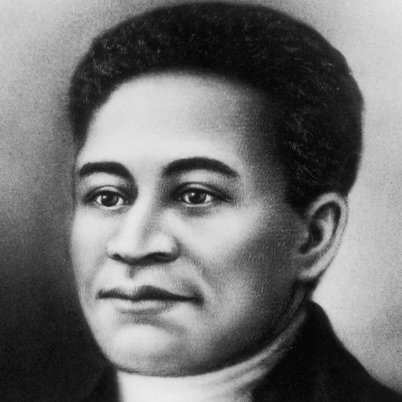
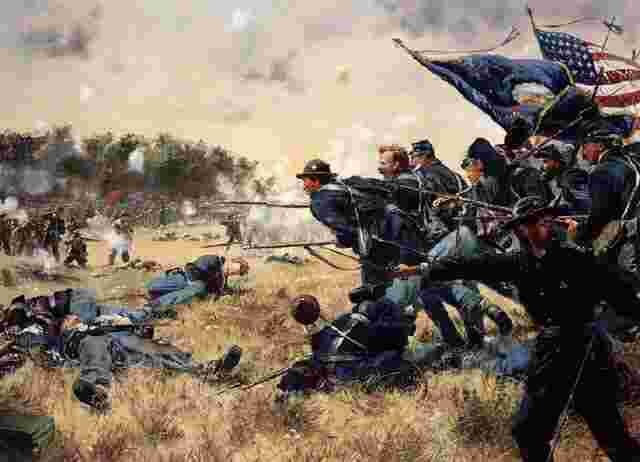
Crispus Attucks. Missed the fireworks.

Let’s see: what’s wrong with this comment?

Ignorant, racist, divisive, unfair, disrespectful, bitter, dumb, and not funny…what else?

In analytical terms: What an ass!

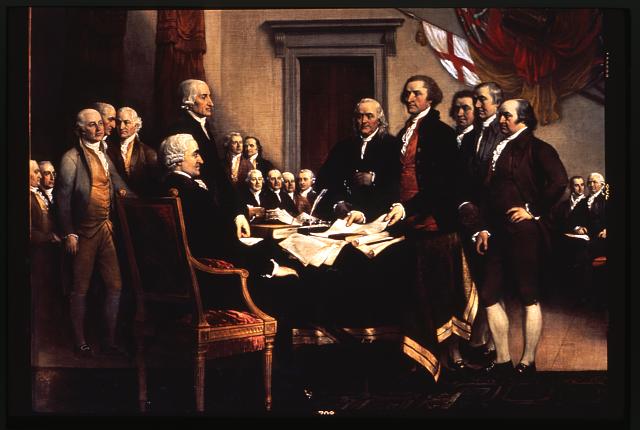
Ethics Quotes of the Day: On Liberty, Freedom, and Democracy

“Hurrah for the flag of the free!
May it wave as our standard forever,
The gem of the land and the sea,
The banner of the right.

“Let despots remember the day
When our fathers with mighty endeavor
Proclaimed as they marched to the fray
That by their might and by their right
It waves forever.”

—–John Phillip Sousa, “The Stars and Stripes Forever”

“Democracy is like sex. When it is good, it is very very good. And when its is bad, it is still pretty good.

—–Anonymous.

“The real democratic American idea is, not that every man shall be on a level with every other man, but that every man shall have liberty to be what God made him, without hindrance.”

—-Henry Ward Beecher, American preacher

“Democracy is moral before it is political.”

—- Louis Brandeis, Supreme Court Justice

“The experience of democracy is like the experience of life itself-always changing, infinite in its variety, sometimes turbulent and all the more valuable for having been tested by adversity.”

—-  Jimmy  Carter

“A constitutional democracy like ours is perhaps the most difficult of man’s social arrangements to manage successfully. Our scheme of society is more dependent than any other form of government on knowledge and wisdom and self-discipline for the achievement of its aims. For our democracy implies the reign of reason on the most extensive scale. The Founders of this Nation were not imbued with the modern cynicism that the only thing that history teaches is that it teaches nothing. They acted on the conviction that the experience of man sheds a good deal of light on his nature. It sheds a good deal of light not merely on the need for effective power if a society is to be at once cohesive and civilized, but also on the need for limitations on the power of governors over the governed.”

—- Felix Frankfurter, Supreme Court Justice

“In contrast to totalitarianism, democracy can face and live with the truth about itself.”

—-Sidney Hook, American philosopher and historian

“America’s experiment with government of the people, by the people, and for the people depends not only on constitutional structure and organization but also on the commitment, person to person, that we make to each other.”

—-Robert Hutchins Continue reading

Comment of the Day: “Ethics Dunce: Animal Planet”

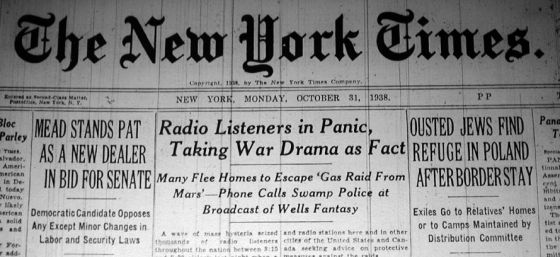
Arthur in Maine contributes the Comment of the Day, expanding on the predictable comparison between Orson Welles’ Halloween radio broadcast of his adaptation of “War of the Worlds,” which many gullible listeners believed was a real invasion, with the misinformation broadcast by Animal Planet in its recent fake documentary claiming that mermaids may exist. I have a few comments afterwards; meanwhile, here is Arthur’s interesting perspective on the post, “Ethics Dunce: Animal Planet”:

“I’ll give Welles a pass here. Because of my work, I am a student of the media (contrary to the assumptions made by a kindhearted poster on another thread).

“Welles was not irresponsible. He was groundbreaking in his art, using a new form of media in a way it had never been used before. The program was announced as a radio play; it was interrupted by commercial breaks, it ended in an hour, nothing about the invasion was carried on other networks, and even more to the point: the panic ascribed to “The War of the Worlds” broadcast never happened. Continue reading

Ethics Dunce: Animal Planet

The National Oceanic and Atmospheric Administration recently felt that it was necessary to put out this statement, which reads in part:

“Mermaids — those half-human, half-fish sirens of the sea — are legendary sea creatures chronicled in maritime cultures since time immemorial…But are mermaids real? No evidence of aquatic humanoids has ever been found. Why, then, do they occupy the collective unconscious of nearly all seafaring peoples? That’s a question best left to historians, philosophers, and anthropologists.”

Why, you ask? Wasn’t the mummy of the Fiji Mermaid, a famous P.T. Barnum humbug, debunked almost two centuries ago? Yes, it was. Now, however, instead of a famous showman whom people expected to be fooling them, we have unscrupulous and irresponsible TV executives, who run channels with trustworthy names like The History Channel, Discovery and The Learning Channel, and then use these venues to make Americans even more stupid and ignorant than they already are. Continue reading

Rest in Peace, Andy: Mayberry Wasn’t Racist

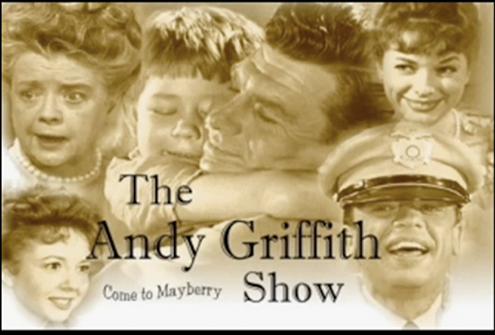
In the wake of Andy Griffith’s death today, a friend of mine wrote this on Facebook: “If you’re waxing nostalgic about Mayberry as an idyllic 1960s Southern town, remember that it had no Negroes living there. Is it any wonder that show was so popular in the midst of the turmoil of the civil rights movement?”

The sentiment was undoubtedly motivated by good intentions, but boy, it is unfair. America was a largely segregated society in 1960, when “The Andy Griffith Show” began its trek to television Valhalla, and it was not up to the producers or writers of a folksy sitcom set in small North Carolina town to remedy that, protest it, or comment on it. This wasn’t “Andy Kills a Mockingbird.” It was a comedy, and a comedy unique and precious for celebrating basic ethical values like kindness, loyalty, friendship, tolerance, community, cooperation, patience, respect and virtue. There were no racist sentiments or attitudes expressed in Mayberry, and no reason to doubt that if a black family moved into the town, they would have been embraced, appreciated, and treated like everyone else. The fact that this may not have been true of a real North Carolina town of that period is as irrelevant as pointing out that real Scottish villages don’t disappear and reappear centuries later like Brigadoon. Continue reading

Unethical But Irresistible: The Trouble With Anonymous Sources

“Hello, CBS? Jan Crawford, please. Jan? I can’t talk too loudly because I’m on Justice Roberts’ wall…listen, I’ve got a…DAMN! Lost the signal again! That’s it, I’m dumping Sprint…”

The reverberations of Chief Justice Roberts’ surprise parsing of the Affordable Care Act continue unabated. He is, according to which pundit or analyst you read, a patriot, a fool, a traitor, a Machiavellian, a genius, a coward, a patsy or a hero. Now CBS reporter Jan Crawford has the Washington, D.C. elite chattering from their Manassas hotel rooms, where they have fled to find electricity and air conditioning, with a story that is headlined: “Roberts Switched Votes To Uphold Health Care Law.” Her story begins…

“Chief Justice John Roberts initially sided with the Supreme Court’s four conservative justices to strike down the heart of President Obama’s health care reform law, the Affordable Care Act, but later changed his position and formed an alliance with liberals to uphold the bulk of the law, according to two sources with specific knowledge of the deliberations. Roberts then withstood a month-long, desperate campaign to bring him back to his original position, the sources said. Ironically, Justice Anthony Kennedy – believed by many conservatives to be the justice most likely to defect and vote for the law – led the effort to try to bring Roberts back to the fold”

It is attributed to two anonymous “sources with specific knowledge of the deliberations.”

In the absence of named sources whose credibility can assessed for their own motives and reliability, Crawford’s report should be treated as no better than rumor. It is not being so treated, however. The story is headlined as fact, and the media is treating it as fact in many cases, though more responsible media sources are using the headline, “CBS: Roberts Switched Votes To Uphold Health Care Law.” Although all newspapers and legitimate news organization have ethical guidelines urging “caution,” “retraint”and “circumspection” in the use of anonymous sources to support a story, they are also addicted to them like crack. Most anonymous sources have good reasons to stay anonymous, prime among them the fact that they are breaking laws, regulations, professional ethics codes and bounds of trust by talking to reporters. Others have axes to grind and personal objectives served by planting stories. We can’t assess any of these things without knowing the identifies of the sources, and, of course, the targets of anonymous stories can’t defend themselves against ghosts. Continue reading

Ethics Hero: Anderson Cooper

It was not exactly a surprise, but CNN anchor Anderson Cooper announced today that indeed he is gay.

This is far from the career death sentence that it would have been just a few years ago, but Cooper’s announcement took great courage nonetheless. It is difficult for gay children and teens to develop confidence and self-esteem when gay adults who have achieved success, fame and respect in their fields remain closeted out of fear and uncertainty. If there is nothing wrong with being gay, they think, then why are prominent gays hiding it?

Well, we do know the answer, and that the societal problem isn’t gays, but bigotry. That is why Cooper’s actions are so important. His openness about his sexual orientation challenges both the fear and the bigotry, and gives young gays a mainstream role model of substance and character.

Bravo.

________________________________

Source: The Daily Beast

Graphic: Media Bistro

Ethics Alarms attempts to give proper attribution and credit to all sources of facts, analysis and other assistance that go into its blog posts. If you are aware of one I missed, or believe your own work was used in any way without proper attribution, please contact me, Jack Marshall, at  jamproethics@verizon.net.

Reminder: July 2 Is “Thank Minnesota Day,” and Remember Gettysburg, Too.

Last year on this date, I posted about the injustice of historical memory, and how the heroic exploits of the Maine soldiers on Little Round Top commanded by Col. Joshua Chamberlain on the second day of the Battle of Gettysburg have all but obliterated recognition of the even more remarkable sacrifices made by the First Minnesota Volunteer Regiment that same day, when it took on the suicide mission of blocking a hole in the Union line against a Confederate force that outnumbered it five to one. Those Minnesotans quite possibly saved the United States of America at the price of their lives.

I see that some readers are finding that post today: let me make it easier for everybody. Here is the link. This a day for all of us to honor the heroism of the First Minnesota, and indeed all of the Americans, North and South, who fought for their nation, their states, their ideals and the soul of America in the Pennsylvania town of Gettysburg, on July 2, 1863. Continue reading

Dan Ariely: Without Ethics, We Are Governed By Psychological Enablers of Cheating and Worse

And it’s nothing to be proud of.

Duke behavioral scientist (or, as he likes to call himself, “behavioral economist”) Dan Ariely, has a new book out. This is a boon for my ethics classes, since I’m sure they are getting a little sick of me quoting the last one, “Predictably Irrational.” His new best seller is “The Honest Truth About Dishonesty,” and Ariely has been making the rounds of NPR and various publications promoting it. Like Malcolm Gladwell (“The Tipping Point”), Ariely writes provocative and easily digested books that seemed to be designed to make you skip the movie on airplane flights; they are not deep, but they are helpful, at promoting self-understanding if nothing else.

I’ve been saving my copy of “The Honest Truth About Dishonesty” for my next trip, but the most valuable thing about it from my perspective is that it validates the importance of developing the skills of ethical analysis. As the author explained in a recent interview, when most human beings ( Ariely pegs the percentage at a depressing 98%—and one of the two missing percentage points are people who cheat no matter what! ) human beings let their gut determine whether they are going to cheat or not, they will make their choice according to a potpourri of rationalizions and quirky psychological factors that have little to do with right and wrong.

Among the useful observations he made in his recent interview with journalist Gary Belsky: Continue reading

Comment of the Day: “Nomination For Enshrinement in the Hall Of Bad Ethics Ideas: A Hippocratic Oath For Scientists”

Zoebrain, the Aussie researcher who has enlightened many Ethics Alarms debates, provides delicious perspective to the post regarding scientific ethics, specifically regarding the question of whether scientists can or should pledge, like doctors, to “do no harm.”

Here is her Comment of the Day to Nomination For Enshrinement in the Hall Of Bad Ethics Ideas: A Hippocratic Oath For Scientists:

“Tell the truth, the whole truth – but possibly not nothing but the truth, as long as any opinion is unmistakably marked as such. Correct your past mistakes as you find them. Also be prepared to accept responsibility for the moral consequences of the power you provide to others being misused. Unless you feel it right to give them the power, you must accept personal responsibility and so withhold it. That’s not a Scientific sin, it’s a personal one.

“Providing the sharpest possible scalpel to a surgeon is one thing. Providing it to a vivisectionist of “untermenschen” another. Providing it as a toy for a 6-month-old baby yet another.

“The only scientific sins are knowing falsification of results, and omitting contradictory evidence. But scientists have responsibilities as humans too.

“Please have a listen to this song [ by musical satirist/scholar Tom Lehrer’s “Werner Von Braun,” about the amoral Nazi-turned-U.S. rocket-scientist.]:

Continue reading