Undercutting the “Nerd Defense”

“A killer? Him? Come on, look at him. He couldn’t hurt a fly!”

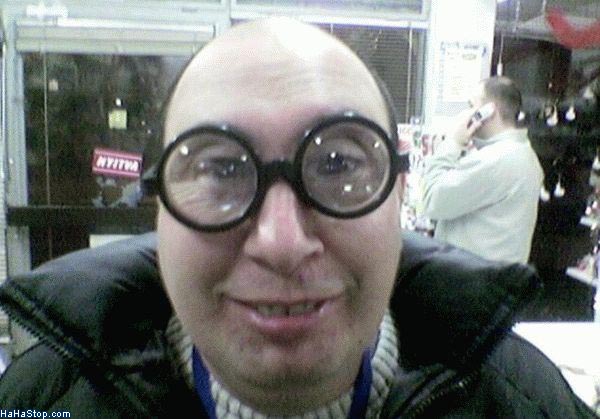
More than a year ago, Ethics Alarms discussed the ethics of a current criminal defense tactic employed by lawyers with clients accused of violent crimes, putting them in nerdy glasses:

“It’s not a guarantee, but  the Daily News report says that criminal defense lawyers “swear by the gimmick, believing the right spectacles can make a sinister-looking murder suspect seem like a perfect gentleman.” “Glasses soften their appearance so that they don’t look capable of committing a violent crime,” veteran lawyer Harvey Slovis told the paper.”I’ve tried cases where there’s been a tremendous amount of evidence, but my client wore glasses, dressed well and got acquitted.” Cordero, who was represented by Slovis, wore bifocals throughout his trial, but threw them away the moment he was free.”

I’ve quizzed lawyers about the ethics of this tactic in my CLE classes, and they nearly unanimously agree that the tactic crosses no ethical lines that can be drawn with appropriate precision. I’m not so sure. I think it goes beyond merely giving your axe-murderer a shave and a haircut so he doesn’t look like an axe murderer, and edges into the realm of intentional deception. Apparently some courts may agree. Continue reading

Incompetent Elected Official of the Week: U.S. Rep Rubén Hinojosa, D-Texas

The mind of a Congressman.

Nine term U.S. Democratic Rep Rubén Hinojosa was asked about the Second Amendment at a political debate this week with his opponent, Republican businessman Dale Brueggemann. His response:

“There are so many people in Washington who come and talk to us about the Constitution and the rights that they want kept sacred and that not do anything about them. That we not change them. That we not amend them. And I can tell you that — I’m drawing a blank on the Second Amendment, but I think it’s the weapons, isn’t it? The NRA?”

He thinks it’s “the weapons”?

Yikes! Continue reading

Forget Balancing: Lance Armstrong Is a Villain

A constant conundrum faced by every culture is how it should categorize significant individuals whose positive contributions to society and civilization are marred by other acts that range from the unethical to the despicable. How much bad can a great man do and still be called “great”? How much wrong can a good woman engage in and still fairly be remembered as “good”? Can one wonderful act erase a lifetime of bad conduct? Are some bad acts so terrible that nothing can compensate for them? Every real human being is going to yield to some temptations, make some bad choices, be selfish, be cruel, lie, or worse. If we insist that all our heroes have an unblemished record in every aspect of their lives, we simply forfeit our heroes.

One reaction to this persistent dilemma is that we tend to be reluctant to look under the rock of a heroes accomplishments for fear that we will be disillusioned, or once the rock is lifted, we will attempt to rationalize into invisibility the ugly things we find there, or insist that they don’t matter. Of course they matter. It matters that Thomas Jefferson, who gave this nation its beating heart, didn’t pay his debts, cheated his friends and refused to live up to his own ideals. It matters that Clarence Darrow, who saved over a hundred men from execution, was a terrible father and husband and an unethical lawyer. It matters that Arthur Miller, whose plays dramatized the plight of the aging worker and the dangers of political persecution, rejected his mentally-challenged son, leaving him institutionalized and without contact from his father, though he knew who his father was. Charles Lindbergh, Jackie Kennedy, Diane Fossey, Thomas Edison, George Washington, Andrew Jackson, Frank Sinatra, Ted Kennedy, Pete Rose, Lillian Hellman, Walter Cronkite, Hillary Clinton—the list of the great, near-great, lionized and admired who behaved less than admirably or worse in significant ways can circle the globe. In assessing their character, as well as whether their lives deserve to be regarded as positive or negative influences on their society, fellow citizens and civilization, all we can do is apply a complex balancing formula, with factors in their lives weighted according to ethical principles, experience and our own priorities.

The question of how this balance should be applied has been raised in recent weeks in the wake of the final verdict on Lance Armstrong’s cycling career, which was decisively removed from the categories of “alleged misconduct,” “controversies,”and definitely “witch hunts” for all time as mountains of documentation, lab tests, and testimony moved it squarely into the categories of “outrageous cheating’, “criminal activity”, “corruption” and “fraud.” Continue reading

Election Publicity Hound Ethics Quiz: Whose “October Surprise” Was Dirtier?

That’s Gloria on the left, Donald on the right.

What could be more challenging than trying to choose between Gloria Allred and Donald Trump in the field of inappropriate and shameless headline grabbing?

Both Trump and Allred this week decided to distract voters from the solemn and difficult job of deciding which Presidential candidate’s misrepresentations to forgive by trumpeting an upcoming “October Surprise” that would propel their respective champions to victory. In addition, both are shameless using the election to get their names in the papers for pure personal publicity purposes, to attack Obama or Romney using innuendo, and to attempt to skew a close election by using old matters far past their pull date. The tactic worked for both publicity hounds, because an October surprise in 2000, held for months and leaked by a Gore operative, probably cost George W. Bush the popular vote: his covered up DWI arrest of more than a decade earlier.

Your test: whose attempted late hit was more unethical? We will stipulate that both are revolting. The candidates: Continue reading

Cognitive Dissonance, Corruption, and Patrick Moran

This video creates a major cognitive dissonance problem for me.

James O’Keefe, of ACORN take-down infamy, who engages in unethical journalistic practices to catch conservative foes in incriminating or otherwise damning statements, once again succeeded in exposing serious corruption, this time in the Virginia Democratic Party and more specifically on the staff of Northern Virginia Congressman Jim Moran. O’Keefe and his “Project Veritas” are the epitome of “the ends justify the means” philosophy of political warfare, and they are neither trustworthy nor admirable. Nonetheless, the video his dishonest methods produced provides important information to the public, and its message should not be ignored or minimized because it is the product of lies and a hidden camera.

Jim Moran is my Congressman, and has been for decades. There is no question that Moran is untrustworthy; there is substantial evidence that he is corrupt and has the values of a thug. We can add to this evidence that fact that his son Patrick, as the O’Keefe video shows, was happy to volunteer information to a starnger he thought was an aspiring voter fraud conspirator just how to cast Democratic votes for a hundred or so Virginians who weren’t going to visit the voting booth. Patrick Moran was the Congressman’s campaign field director at the time; he is also the nephew of Jim’s brother, who heads the Virginia Democratic Party. Patrick has since resigned, saying, naturally, that he made “a mistake.” In his exit statement to the media, Moran said:

“In reference to the ‘O’Keefe’ video, at no point have I, or will I ever endorse any sort of illegal or unethical behavior. At no point did I take this person seriously. He struck me as being unstable and joking, and for only that reason did I humor him. In hindsight, I should have immediately walked away, making it clear that there is no place in the electoral process for even the suggestion of illegal behavior: joking or not. In regards to my position on the campaign, I have stepped down because I do not want to be a distraction during this year’s critical election.”

Watching the video, his characterization of the incident is risible, but you can decide for yourself. In my view, Moran endorses illegal and unethical behavior by having the conversation, and not immediately responding to the initial inquiry by saying, “Neither this campaign, nor this party, tolerates what you are suggesting, which is an illegal attempt to subvert the Democratic process. What’s your name? I’m calling the police right now.” Continue reading

“The Girl” and the Hitchcockian Horrors of Sexual Harassment

“Mr. Hitchcock requests your company in his hotel room over dinner.”.

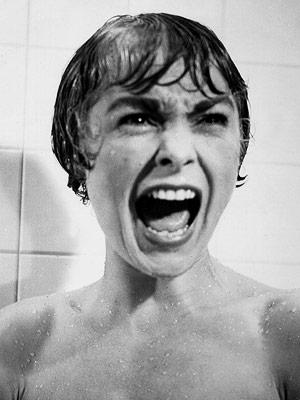
HBO’s original film “The Girl” has premiered, and has garnered mixed reviews from critics, in part because they recoil from the film’s disturbing portrait of iconic director Alfred Hitchcock, played here by the great Toby Jones, who is almost as uncanny evoking Hitch as he was reincarnating Truman Capote in “Infamous.”  It tells the well-documented story of how Hitchcock chose newcomer Tippi Hedren as his latest blonde obsession (placing her in line behind Grace Kelly, Kim Novak, Ingrid Bergman, Janet Leigh and others) and then relentlessly pursued a sexual relationship with the actress during the filming of “The Birds” and “Marnie.” Hedren, not surprisingly, found him about as alluring a potential sex partner as Hermione would regard Dobby the house elf. Less so, probably. Unlike so many actresses subjected to that kind of extortion as their final obstacle to stardom, however, Hedren refused to submit.

The movie is the most powerful and harrowing, portrayal of sexual harassment I have ever seen, and whatever its fate as a dramatic work, “The Girl” has a future, if anyone’s paying attention, in workplace training sessions. Continue reading

Ethics Dunce: The New York Post

Autumn Pasquale appears to have been murdered by the two boys who lived next door because they wanted her bicycle.

From today’s New York Post:

“A New Jersey mom ratted out her teen sons for the murder of a 12-year-old girl after reading a Facebook posting hinting that one of them wanted to go on the lam, law-enforcement sources told The Post.”

Wrong. A courageous mother made the most difficult ethical decision of all, placing her duties as a citizen,  a member of the community and a neighbor above her duties of loyalty and love as a mother, to report her two sons for the murder of the 13-year-old girl who lived next door.

The Post’s use of the term “ratted out” is irresponsible and offensive. “Ratting out” is a pejorative term for reporting crimes to the police, and the foundation of a resilient and warped ethical code that works to the benefit of inner city thugs and gangs while undermining efforts to combat crime. The mother is an Ethics Hero, and deserved respect and admiration from the Post, not derision as a “rat.”

You can read the Post story here. A more responsible version is here.

Unethical Quote of the Month: Indiana GOP U.S. Senate candidate Richard Mourdock

“The only exception I have to have an abortion is in the case of the life of the mother. I struggled with it myself for a long time, but I came to realize life is that gift from God. I think that even when life begins in that horrible situation of rape, that it is something that God intended to happen.”

Indiana GOP U.S. Senate candidate Richard Mourdock in Tuesday’s televised debate, in response to a question regarding the candidates’ position on abortion.

“If found, please contact Indiana GOP Senate candidate Richard Mourdock, who will answer the phone by saying, “URUHHHHGHHAR???”

Ah, so few words, so many options for Ethics Alarms!  Should we make Richard Mourdock an Ethics Dunce? The Incompetent Elected Official of the Week, perhaps? Since it is his quote that opened up this cornucopia of possibilities, I decided that it should be the quote that gets nod.

How is Mourdock’s quote unethical? Let me count the ways:

1. It needlessly confuses right and wrong. If God intends that a pregnancy should result from a rape, then one can argue that the rapist is just doing God’s will. I know that people like Mourdock answer that the Lord works in mysterious ways, but this argument does nothing but undermine the victims of rape (“If God wanted this, is it wrong for me to complain? To reject the pregnancy?”) and hands a rationalization to rapists.

Continue reading

If You Liked “Enhanced Interrogation,” You’ll Love The “Disposition Matrix”

Is THIS the Administration’s secret weapon against terrorists?

The Washington Post launched a three-part series today about the U.S. drone strike program, in which terrorists abroad are targeted and assassinated from the sky. I’m not prepared to attempt an ethical analysis of this deadly tool against international terrorism, although I will acknowledge that my initial, gut level assessment is that the unique nature of terrorism requires adjustments in the ethics of national security and warfare, and drone killings seem to be a fair and reasonable adjustment.

Yet it is still killing. It is also controversial, with many human rights activists, international law specialists and ethicists vehemently condemning the tactic, especially when used against turn-coat Americans abroad without due process of law. Consequently, the Post’s revelation that the Administration’s “kill list” is called something else rings the ethics alarms.

The Post:

“Over the past two years, the Obama administration has been secretly developing a new blueprint for pursuing terrorists, a next-generation targeting list called the “disposition matrix.” The matrix contains the names of terrorism suspects arrayed against an accounting of the resources being marshaled to track them down, including sealed indictments and clandestine operations. U.S. officials said the database is designed to go beyond existing kill lists, mapping plans for the “disposition” of suspects beyond the reach of American drones.” Continue reading

The Global Warming Debate Is The World Series of Confirmation Bias

Confirmation bias is the dastardly human thought tendency that makes objectivity virtually impossible, and fair analysis nearly so. It is the human instinct to view external facts and events in such a way that they confirm preexisting beliefs, or, if they challenge these beliefs, to find reasons to distrust the facts or explain them away.

A line in a Washington Post book review caused me to realize that nothing  exemplifies confirmation bias at work better than the global warming controversy. It was a review by Post business editor Alan Sipress of “Spillover,”  a new book about how pandemics spread. He wrote:

“This year, a mild winter and an unusually hot summer — which look suspiciously like results of man-made climate change — yielded a bumper crop of virus-carrying mosquitoes. The result is an unprecedented outbreak that has sickened people in almost every state.”

Wait a minute: why does the past year’s mild winter and unusually hot summer “look suspiciously like results of man-made climate change”? Were there never mild winters with scorching summers before scientists developed climate change models? And why do those two factors, when paired, “look suspiciously” like man-made climate change? What about the winter and summer of 2012 screamed “man-made”? Continue reading