Putting My Mouth Where My Blog Is

I’m on the way to New Mexico today, to speak to the news media there and to try to build some consensus—New Mexico is as good a place to start as any—that using faux indignation over manufactured political correctness offenses is no way to run a political system, community, society or culture. It is, in fact, a cynical and despicable practice  used by special interest groups and unscrupulous politicians to stifle legitimate debate, or, as in the case that inspired my trip, to unfairly tar the character and reputation of a political adversary. The victim in the New Mexico incident was attorney Pat Rogers, who saw his obviously satirical e-mail intentionally twisted by partisan foes who almost certainly knew its real meaning into being represented in the press as a gratuitous racist slur—which it was not. I wrote about this here, and a similar incident, with parties reversed in Washington state, here.

What am I going to tell the various interviews and reporters I speak with over the next few days? I will tell them that political blood sport has got to stop. That the effort to discredit political positions by seeking ways to demonize their advocates is unethical and wrong. That contrived accusations of racism (or sexism, homophobia, or any other form of bigotry) should not be aided and abetted by the media or tolerated by the public. I will also assert that political warriors on the right or left who intentionally choose to misinterpret innocent expressions of irony, satire or humor as racist attacks both diminish the charge of true bigotry when it is justified, and expose themselves as polluters of our culture and national cohesion.

I don’t know Pat Rogers well; we have only met once. But I know who he represents: those who have been harmed as collateral damage in a hyper-partisan environment encouraged by Washington, D.C. and cheered on by the vilest members of the blogosphere, to the detriment of our sense of community, decency, and trust. My efforts, whatever they are, will be modest at best, and, in all likelihood, inconsequential. But you never know.

Wish me luck.
Ethics Dunces: The Petraeus Defenders

I know I have touched on this before regarding the Petraeus scandal (and elsewhere), but it bears emphasizing—especially since so many seem to be unable to process the concept. Leaders cannot be seen as willing to violate their own rules, principles and those of the organizations they represent. Arguing that the rules violated are foolish, or outdated, or too restrictive does not rebut this fact of leadership in any way, but making that argument does show beyond question that the pundit making it doesn’t comprehend the most basic facts of leadership and the building of ethical cultures.

Today’s Sunday papers are awash in editorials and op-ed pieces by former intelligence personnel, lawyers, social scientists and other pundits blaming the widening Petraeus scandal ( now focusing on Gen. John Allen, the U.S. commander in Kabul, and the significance of his exchanging thousands of inappropriate emails with Jill Kelley, the Tampa socialite who is apparently the military equivalent of a rock-and-roll groupie, only older) on antiquated morals and political opportunism. There are too many of these bewildered commentators to count, but their views all ooze from the same basic, shockingly facile, and in some cases intentionally misleading theory, which is that Petraeus’s and Allen’s conduct are irrelevant to their ability to do their jobs. The Washington Post’s David Ignatius, usually one of the more rational and objective of that paper’s leftward chorus, actually reprints verbatim an e-mail he received from an Arab diplomatic source as if it contains illumination rather than naiveté:

“He needs to resign cause he has an affair? What da hell??? He is brilliant!!!! Why like this????” Continue reading

The Bakery, Confectionery, Tobacco Workers and Grain Millers International Union Show Us The Way

“The operation was a success, but the patient died.”

“We had to destroy the village to save it.”

Massada. That worked out well too.

I’m sure the Bakery, Confectionery, Tobacco Workers and Grain Millers International Union approves of these classic oxymoronic statements, because its members are currently patting themselves on the back for standing up to Hostess Brands, Inc and not giving an inch in contentious labor negotiations that had put them on the picket line. “I think we’re the first ones who have stood up and said, ‘We’re not going to let you get away with it,’” was the message the union’s resolve sent according to  Sue Tapley, the strike captain at the Biddeford, Maine Hostess plant. “You can fight them. You can shut them down.” “Unions have been losing power for years,” added  a striking worker outside of the same plant. “This is an exceptional case. If Hostess had been allowed to get away with what they’d been trying to do, other corporations would have lined up to try the same tactics. Hopefully, this will be an example to other companies not to break their unions.” Continue reading

The Despicable Non-Crime of Briana Augustenborg

Alexander Jordan, 2002-2012

In US v. Alvarez, the U.S. Supreme Court upheld the 9th Circuit’s ruling that the Stolen Valor Act, which made it illegal to claim military honors that one has not in fact received, was unconstitutional. There is, the courts say, a Constitutional, First Amendment right to lie. Fraud—using lies for monetary profit, is already a crime, the courts argue, and so is slander. Making up stories about yourself and others may be unwise, annoying, even hurtful. Still, it is protected speech; so sayeth a majority of the U.S. Supreme Court, and it is now the law of the land.

This was a bad ruling, and I was surprised at it. Briana Augustenborg shows why.

One day this year she shared a story with a co-worker about a little 10-year-old boy she knew who was terminally ill with leukemia. The boy, Alex, was a big fan, she said, of Eagle Valley (Colorado) High School’s  football team. The colleague, a woman named Holly Sandoval, had a son that played on the team, and she offered to share the story with her son and get the team to sign a football for Alex. Continue reading

Welcome To The World Of “Expert Witnesses”

Then there’s the arrow that reads, “Willingness to say what we need to win the case.”

It doesn’t happen often, but it does pay well and can be interesting: occasionally I accept an engagement as a testifying ethics expert in a law suit. I have a rule, however, that surprisingly (or not) seems to come as a shock to many potential clients. They may be buying my opinion, but they are not necessarily buying the opinion they want. After I review the facts, documents and issues involved, I will render my opinion, but no promises. I won’t take a case unless I generally agree that the theory of the side hiring me is plausible, but after all the facts are in and I’ve done my analysis, if the case of the client whose lawyer hired me is weak, I will say so.

Strangely, some lawyers seem to have a problem with this, even when the expert insisting on integrity is an ethics expert. I am currently in settlement mode with a law firm that hired me to render my opinion regarding the billing submitted by another firm to the law firm’s client. Part of their argument, in claiming malpractice against the billing firm, was that its billing was excessive, unreasonable and inflated, a violation of  Rule 1.5 of the Rules of Professional Conduct governing lawyers. I reviewed the billing statements, and they could have been inflated—some of the methods of stating who did what work was vague, and there sure was a lot of work billed on the matter, by an astounding number of lawyers—-but I could only assess that to a level of certainty sufficient to be certain in my own mind, much less state it under oath, if I could examine what all that work produced. This the law firm that hired me refused to produce, perhaps because the time it would have taken me to review it thoroughly would have been very expensive. But how could I decide whether the amount of money billed for a product was unreasonable without being able to determine what the product was? I couldn’t. Thus my written opinion stated what I could say honestly and with authority: based on the billing statements and the materials I was allowed to review,  I could only speculate on whether the billing was proper or not. It was possible. More than that, I could not say.

The law firm was not happy, although they never spoke to me about it. The firm just settled the case, and never paid me. (My very reasonable fee for services was $6,000, and if you’ve ever spent much time reviewing legal billing statements, you would know that they got off cheap.) You see, it didn’t really want an ethics expert, or an independent expert, or an honest, informed, professional analysis. They wanted a pre-determined opinion, bought with cash, delivered to specifications. Well, they won’t get that from me.

Welcome to the world of “expert witnesses.”


Ethics Quote of the Week: Jack Gilbert (1925-2012)

A Brief for the Defense

Sorrow everywhere. Slaughter everywhere. If babies
are not starving someplace, they are starving
somewhere else. With flies in their nostrils.
But we enjoy our lives because that’s what God wants.
Otherwise the mornings before summer dawn would not
be made so fine. The Bengal tiger would not
be fashioned so miraculously well. The poor women
at the fountain are laughing together between
the suffering they have known and the awfulness
in their future, smiling and laughing while somebody
in the village is very sick. There is laughter
every day in the terrible streets of Calcutta,
and the women laugh in the cages of Bombay.
If we deny our happiness, resist our satisfaction,
we lessen the importance of their deprivation.
We must risk delight. We can do without pleasure,
but not delight. Not enjoyment. We must have
the stubbornness to accept our gladness in the ruthless
furnace of this world. To make injustice the only
measure of our attention is to praise the Devil.
If the locomotive of the Lord runs us down,
we should give thanks that the end had magnitude.
We must admit there will be music despite everything.
We stand at the prow again of a small ship
anchored late at night in the tiny port
looking over to the sleeping island: the waterfront
is three shuttered cafés and one naked light burning.
To hear the faint sound of oars in the silence as a rowboat
comes slowly out and then goes back is truly worth
all the years of sorrow that are to come.

—American poet Jack Gilbert, who died this week.

Ethics Dunce: Mitt Romney

Mitt, Mitt, Mitt…

Ah, Mitt, Mitt. We know you’re disappointed. We know you don’t like to lose, especially when you feel smeared and misunderstood.We know its got to hurt.

There is only one way to lose a Presidential election, though, and it is to smile, say that the winner ran a tough campaign, that the people have spoken, that Americans are lucky to live in a democracy, and that’s it. Hell, Richard Nixon had this act down in 1960, when he lost to Mayor Daley, the Mob, Joseph P. Kennedy Sr, the Texas machine and JFK. He didn’t challenge the integrity of the process or the wisdom of the voters. He just resolved to fix his own Presidential election as soon as he had the chance.

But Mitt, for you to say, as you did yesterday, Continue reading

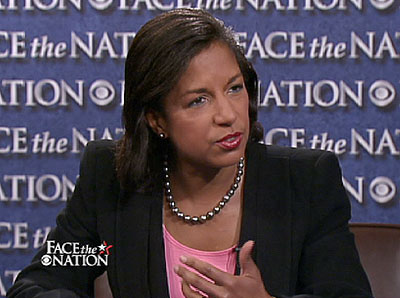
Accountabilty Check: President Obama’s Bizarre Defense of Susan Rice

“Don’t pick on my poor. defenseless, untrustworthy ambassador!”

Add to the list of the Top Ten Outrageous Remarks of President Obama this stunner, the low-light of his first full press conference since March.

“If Sen. McCain and Sen. Graham and others want to go after somebody they should go after me. For them to go after the UN ambassador who had nothing to do with Benghazi…to besmirch her reputation is outrageous.”

“Accountability” continues to be an alien ethical concept to the President, and this proves it. U.N. Ambassador Rice went on the Sunday morning TV shows four days after the deadly Benghazi attack and after U.S. intelligence had determined that the attack that killed the American ambassador in Libya was not a spontaneous demonstration sparked by an anti-Islam video, but a planned, organized, terrorist enterprise. She did this while asserting in no uncertain terms that the attack was not what U.S. intelligence had told the State Department and the White House that it was. Rice, in making this mistaken or dishonest case on behalf of the administration, put her name, her status, her credibility and her position behind it. From the moment she became the Administration’s spokesperson on Benghazi, she had something to do with Benghazi. Continue reading

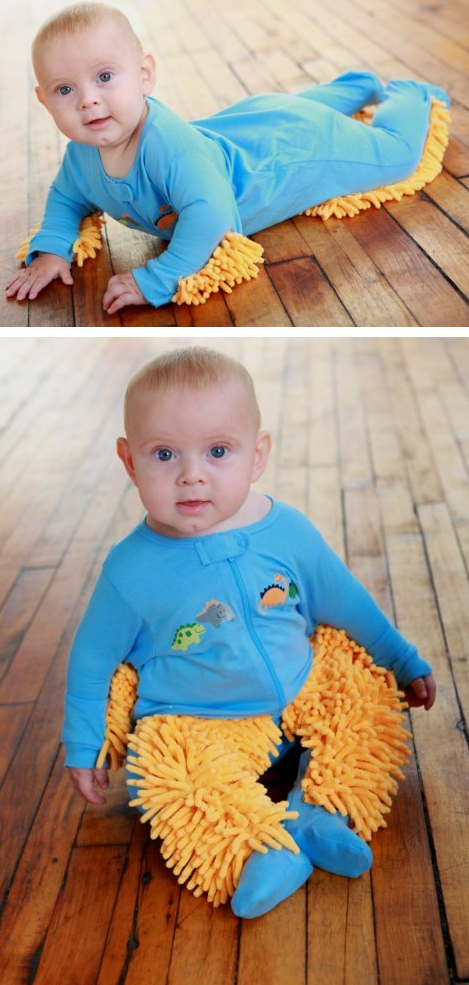
Really? The Baby Mop?

No.

One of the Kantian categorical imperatives is that no human being should ever use another for his or her own selfish objectives. Another ethical principle that is close to absolute is that one should never  exploit children. A third is not to treat human beings as objects, or to denigrate, diminish or humiliate them without their informed consent. A fourth principle is that forced child labor is inherently unethical, and a fifth is that making individuals do work that benefits you without compensation is theft.

HEY! I’ve got a brilliant idea! Let’s help parents turn their babies into living, breathing, drooling mops! Continue reading

A No Tolerance Rule For Cabinet Members: Don’t Threaten Reporters

Intolerable.

I’ll make this simple, and get right to the point: any Cabinet member who threatens a reporter with physical violence for doing the job journalists are supposed to do should be fired. No exceptions. Moreover, that should be obvious and beyond debate.

Ken Salazar, the Secretary of the Interior, didn’t like a question he was asked by Colorado Springs Gazette reporter Dave Philipps. The investigative reporter had tried to reach Salazar for months through his press secretary seeking a comment on a story Philipps had written about how a Colorado man with business connections to Salazar had been sold hundreds of federally protected wild horses that have subsequently vanished. The man is under investigation, and one of his businesses is slaughtering horses, not that any of this is germane to how Salazar treated Phillipps.  When Philipps began asking Salazar about the program and possible personal ties he had to the wild horse buyer now under investigation, Salazar abruptly ended the interview. He then pushed The Gazette’s camera aside, got nose to nose with the reporter, and said, pointing, “Don’t you ever…you know what, you do that again… I’ll punch you out.” Continue reading