Ethics Quiz: Two Lame Excuses

Donald Kaul. In his dreams,

Donald Kaul. In his dreams.


A newspaper columnist and an ESPN commentator both reaped the wild wind last month after statements in a column and on a televised panel that many, including me, took as irresponsible, unprofessional and worse. I wrote here about the column, a diatribe in Iowa’s Des Moines register by veteran Donald Kaul against guns, gun owners, the NRA and any politician who supported them. The panelist was ESPN’s Rob Parker, whom I didn’t write about simply because his racist rant against Redskins quarterback Robert Griffin was so obviously wrong that there was nothing much to say about it. If you missed it, African American Parker questioned Griffin’s bona fides as a black man because, among other offenses, he appeared to be a Republican and has a white girlfriend. I would have had a lot to write about ethical double standards if ESPN hadn’t finally fired Parker after suspending him, but he was let go yesterday.

Both Kaul and Parker now claim they were misunderstood, and thus treated unfairly. Kaul, who has been backed by his paper in an editorial, claimed in a recent column that his universally derided piece was obviously satire, and implying that anyone who didn’t catch the twinkle in his eye is illiterate:

“Gun owners seemed particularly upset at the suggestion that Boehner and McConnell be dragged [ by “a Chevy pickup truck… around a parking lot until they saw the light on gun control” ].The tactic, which dates back to the days of lynch mobs, became a more modern nightmare in the wake of the 1998 dragging murder of James Byrd by white supremacists in Texas. Many of the people I heard from said I should be arrested for threatening federal officials, and one said he had personally reported me to the FBI. Let me say this about that: That wasn’t a suggestion to be taken literally. I don’t believe Boehner and McConnell should be dragged. I was using it as a metaphor for making politicians pay a price for their inability to confront the gun lobby. It’s a literary device.

“Think of Jonathan Swift’s “A Modest Proposal,” written 200 years ago, in which he suggested that the Irish famine could be relieved if babies of poor families were confiscated at 12 months and sold to rich people, who could eat them. Swift, an Irishman, didn’t mean that literally. It was a satiric device to underline the misery that had been visited on the Irish by their English landlords. So too with my dragging of the Republican leaders.”

Yes, this hateful hack just compared himself to Jonathan Swift.

Parker, meanwhile, takes a different route: he tries that old stand-by, “it was taken out of context.”  He told an interviewer he was shocked at the uproar his comments caused, saying,

“I mean, looking back at some of the comments, I can see how some people can take it out of context and run with it, but the response, and what happened over the past 30 days and everything was just shocking.”

Really. Well, here is the video of Parker’s attack on RG III. Tell me in what context such remarks would be considered appropriate, and not racist and mind-blowingly stupid:

Your Ethics Quiz Question:

Which of the two defenses, Kaul’s “It was satire!” or Parker’s “It was taken out of context!” is more unethical, unethical in this case meaning, “a pathetic lie and an insult to the intelligence of everyone who hears or reads it”? Continue reading

Comment of the Day: “Are Musicals Reviewed By Ignoramuses?”

WordPress, for only the second time in three years, was kind enough to include my recent post about Stephen Sondheim’s footnote lament that musicals were the only art form largely reviewed by incompetents. This has brought a lot of new visitors to Ethics Alarms, and I hope they are interested in ethics as well as musicals. One such new reader is a Prof. Ratigan, who apparently does some reviewing himself. Here is his Comment of the Day, on the Jan 3, 2013 post (Here’s something weird—last year’s Jan.3 post was also about Sondheim!) Are Musicals Reviewed By Ignoramuses?…

Two points. The first is the literacy issue. I think it’s interesting that it would appear that a good reviewer is either a novice or a master where everything in between is amateur. I’ve been reviewing movies for the past year (on a blog) and I’ve definitely felt that in my own stuff. The more movies I watched and connections I could draw, the more it became apparent how much I really needed to do to become proficient. I needed to read a lot more literature, read a lot more scripts, and watch a lot more movies. Otherwise, I would start to create a context but have a nagging feeling that the director/writer/actor (who are often scholars of film) might/probably know more than me and were doing something else. It seems that these musical reviewers aren’t expected to take the next step from reviewer to analyst. Continue reading

The Fourth Annual Ethics Alarms Awards: The Worst of Ethics 2012 (Part 2)

reid

The 2012 Ethics Alarms Awards for the Worst in Ethics continues (you can catch up with Part I here , and the Best is here), and yes, it gets worse…

Worst Friend and Relative

Lori Stilley, who faked cancer to get sympathy, favors, parties and money from those who cared about her.

Most Unethical Advice

Emily Yoffe, Slate’s “Dear Prudence,” wins for a year of bad advice in kinky situations, the bottom of the barrel being when she advised a daughter who observed her mother illegally filling out her invalid grandparents’ 2012 absentee ballots to reflect the mother’s electoral preferences to do nothing about this combination of elder abuse and voter fraud.

Shameless Bad Character Division Continue reading

From Curmudgeon Central: The 2012 Curmie Results and “Legally Blonde” Redux

and-the-winner-is

The Curmie votes are in. This is Rick Jones’ annual prize awarded to educators who embarrass their (and his ) profession. Go to his blog, Curmudgeon Central, to see the winner and the vote totals. I don’t want to spoil the suspense.  Check out the nominations here if you haven’t already. A couple of observations, though: Continue reading

Robert Griffin III, Wally Pipp, and the Catch-22 of Lies

Dan Wetzel would have loved Wally Pipp

Dan Wetzel would have loved Wally Pipp

If you want to see the stark difference between the culture of baseball and the culture of football. look no further than Washington, D.C., where the city’s sports fans are in mourning for the second time in barely three months’ time. The surging Redskins just met play-off elimination, because their young star quarterback was injured but allowed to stay in the game. Back in October, the city’s new sports darlings, baseball’s Nationals, were eliminated in their first play-off round, in part, fans believe, because the team wouldn’t let its completely healthy young star pitcher play for fear that he would get injured.

This week everyone from my local sandwich shop proprietor to the driver of the cab I just got out of is furious  at Redskins coach Mike Shanahan for allowing the obviously hobbled Robert Griffin III to stay in the doomed game against the Seattle Seahawks when there was a competent back-up on the bench. And some, like Yahoo! sportswriter Dan Wetzel, are blaming Griffin, for “lying”:

“Robert Griffin III couldn’t do much of anything Sunday except lie, which is what he’s been trained to do in situations like this.
Lie to himself that he can still deliver like no backup could. Lie to his coach that this was nothing big. Lie to the doctors who tried to assess him in the swirl of a playoff sideline. So Robert Griffin III lied, which is to be excused because this is a sport that rewards toughness in the face of common sense, a culture that celebrates the warrior who is willing to leave everything on the field, a business that believes such lies are part of the road to greatness.” Continue reading

New Year’s Ethics Quiz: Is It Ethical To Order A Woman Not To Have Children?

(This is my favorite judge picture, and I like to use it every year)

(This is my favorite judge picture, and I like to use it every year)

Kimberly Lightsey, 30, was being sentenced on four counts of child abuse for leaving her four children, ages 2 to 11 at the time, at a hotel while she went out to play. She had an arrangement with another mother in the hotel to watch the children, but that woman also was partying hard, it seems—so hard that she forgot what room Lightsey’s children were in. Meantime, one of Lightsey’s children, who was confined to a wheelchair, rolled out into the hallway and fell over.

Prosecutors asked for a 32-month jail sentence, but Judge Ernest Jones Jr. offered Kimberly a chance to avoid jail time. He would give her two years of house arrest and 13 years of probation, provided this aspiring Mother of the Year agreed not to have any more kids during that period.

She took the deal, but now The American Civil Liberties Union and her lawyer are wondering if the sentence is legal. My guess: it’s not, but that isn’t the issue. Let’s say this is within a judge’s power, and the sentence is legal. Your Ethics Alarms Quiz Question, the first of the new year, is this:

Is it ethical? Continue reading

Now THIS Is Bad Lie…

"Help!"

“Help!”

…bad, as in “if you can’t come up with something better than this, why bother?”

Adding useful data to the time-honored debate over whether police frequently lie under oath comes this decision from 2nd U.S. Circuit Court of Appeals, which reinstated a 6-year-old civil rights lawsuit filed by a Vietnam veteran and former pilot John Swartz, who contended that he was unconstitutionally stopped and arrested after expressing his displeasure by extending his middle finger to a cop.

After the stop, he and the officer, Richard Insogna, got in a headed argument that culminated in Swartz’s arrest for disorderly conduct. Insogna said in a deposition that he regarded Swartz’s gesture as an attempt to get his attention, not as an insult, and he that he only followed the car to ensure the safety of passenger and driver, who, he surmised, might be embroiled in a domestic dispute.  The 2nd Circuit was, we are told, “skeptical of the explanation.”

Ya think? Continue reading

The Fourth Annual Ethics Alarms Awards: The Worst of Ethics 2012 (Part 1)

Trayvon

Welcome to the Fourth  Annual Ethics Alarms Awards

Recognizing the Best and Worst of Ethics in 2012!

This is the first installment of the Worst. (Part 2 is here, the Best is here.)

2012 inspired over 1000 posts, and Ethics Alarms still missed a lot. And the last week of 2012 was sufficiently ethics packed that the Awards are late this year. My apologies.

In a depressingly unethical year, these were the low points:

Ethics Train Wreck of the Year

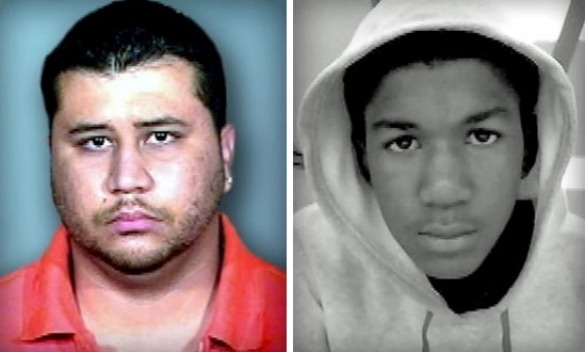
Was there ever any doubt? The Trayvon Martin- George Zimmerman fiasco, naturally, which is far from over. This year’s winner may be the worst ethics train wreck since Monica and Bill were dominating the news.  So far it has involved dubious, unprofessional or clearly unethical conduct by, among others, Martin’s parents, their lawyer, Zimmerman, his wife, the police, Zimmerman’s first set of lawyers, the prosecutor, the Congressional Black Caucus, NBC (which repeatedly broadcast an “accidentally” truncated tape of Zimmerman’s 911 call that made him sound racist), the rest of the broadcast media, conservative talk radio and bloggers (who decided their contribution would be to try to show that Martin deserved to be shot), Spike Lee, Rosie O’Donnell, the New Black Panthers, and President Obama, who ratcheted up the hate being focused on Zimmerman by implying that the killing as racially motivated, and by connecting himself to the victim. Runner-up: The 2012 Presidential campaign.

“Incompetent Elected Officials of the Year” Division Continue reading

Consequentialism Alert At Redskins Park!

Washington, D.C. has a grand tradition of nepotism. Sometimes it works; it's wrong all the time.

Washington, D.C. has a grand tradition of nepotism. Sometimes it works; it’s wrong all the time.

A year ago, I wrote about the dilemma faced by Washington Redskins coach Mike Shanahan, who was mired in another terrible season with a failing offense engineered by his son Kyle, the team’s offensive coordinator.  Here we have the ethical problem with nepotism, I wrote…

“There is no way to tell what is happening or what the effect of the nepotism is, which is why all appearance of impropriety situations are toxic to trust; there is no way to tell whether the apparent conflict is causing real harm or not. When everything goes well, the doubts will be muted and there won’t be a crisis in public trust, but that is luck, and nothing more…Not only are the Skins losing, but the leaks have sprung in Nepotsim Central, where Kyle Shanahan is responsible. It was fully predictable, not that this would happen, but that it could very well happen, way back in 2010 when Mike Shanahan had the bright idea of hiring sonny boy. Not foreseeing this is a miserable failure to play ethics chess: when a choice is a good bet to create an ethics problem a few moves from now, don’t make it. Owner Snyder should have forbidden it; Kyle should have turned the job down.”

Ah, but that was then, and this is now. The vicissitudes of moral luck have struck again.  Now Kyle’s offense is working like a charm, thanks to the magic arm, legs and mind of rookie quarterback sensation Robert Griffin III. Now the ‘Skins are the NFL East Champions! Now Kyle is an offensive wizard, not a putz, and Coach Dad a visionary for hiring him. What’s the matter with a little nepotism? Never mind!

This is rank consequentialism in its worst form. Nepotism is an unethical way to run any staff, company, team, business or government, unfair, inherently conflicted, irresponsible, dangerous and corrupting. It should be recognized as such from the beginning, and rejected, not retroactively justified if it “works.”

I’m sure there were and are non-relatives of the Redskins coach who could have devised a successful offense with RG3 taking the hikes. The ethical thing to do was to find them and give one of them the job.

The Redskins coach’s nepotism is just as unethical in 2013 as it was in 2012, 2011, and 2010.

Ethics Hero: Stanford Law Prof. Pamela Karlan, Pulling A McLuhan

One of the funniest moments in Woody Allen’s Academy Award-winning comedy “Annie Hall” is the classic scene in which Woody squelches a pompous know-it-all standing in line behind him at a movie theater. The man is holding forth on film criticism and finally begins pontificating on the theories of Marshall McCluhan, a Sixties media scholar most famous for the quote, “The media is the message.”  Woody acts out everyone’s fantasy who has had to listen to strangers blather on about topics they aren’t qualified to discuss by magically producing the real McCluhan to confront the man. “You know nothing of my work!,” McLuhan tells the shocked pedant.

Today Stanford law professor pulled a McCluhan on none other than George Will, who, she pointed out in a letter to the Washington Post, recently used her law review article to bolster his position by substantially misrepresenting—or misunderstanding–what it actually said:

“Mr. Will’s column distorted my Harvard Law Review article in details both large and small. Yes, the Framers of our Constitution intended to limit the federal government’s power to protect liberty. But they also crafted the new Constitution to empower the government to deal with critical problems. For much of our history, the Supreme Court recognized congressional resourcefulness as a source of our nation’s strength. By looking only to James Madison and 1787, Mr. Will ignored the post-Civil War 14th Amendment, which explicitly authorizes Congress to enforce guarantees of liberty and equality.

“As for my discussion of the court’s Citizens United ruling, I did not attack “spending by outside groups,” as Mr. Will wrote. Rather, I pointed out only that there has been a significant increase in such spending (much of it in forms that leave voters in the dark as to who bankrolled the messages they hear) and that reasonable people can disagree about whether this is good for democracy.

“Finally, for someone who prides himself on his linguistic precision, Mr. Will’s attack is particularly tone-deaf. “Disdain” means “scorn” or “contempt.” Nothing in my article expresses scorn or contempt for the court or for judicial review. I — like many other Americans, including some of their colleagues and many of their predecessors — simply disagree strongly with the approach some justices have taken and the conclusions they have reached in some recent cases.”

Take that, George! Continue reading