Ethics Dunce: Any South Carolinian Who Votes For Disgraced Ex-Governor Mark Sanford

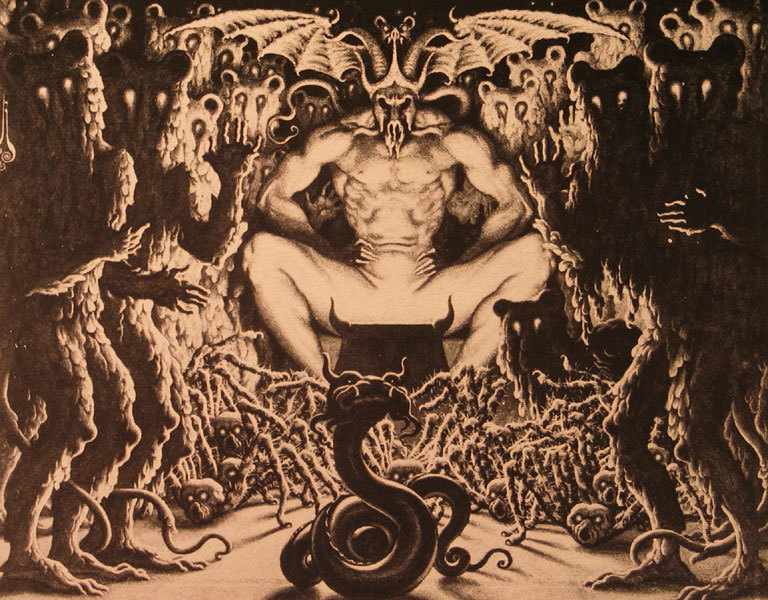
You'll never know if this movie is still playing in the Mark Sanford Head Multiplex...

You’ll never know if this movie is still playing in the Mark Sanford Head Multiplex…

When Mark Sanford was last entrusted with high elected office in South Carolina, he…

  • Carried on a clandestine adulterous affair with a South American “soul mate” when he was supposed to be serving as the governor of the state,
  • Went AWOL from the state and his duties, telling aides that he was “hiking” in South America when he was really doing something very different in Argentina,
  • Used official funds to pay for his personal affair,
  • Lied about it,
  • Humiliated his wife and family while embarrassing South Carolina and his party, and
  • Was censored by the state legislature.

Now, displaying a level of gall only politicians and Hollywood actors can achieve, Sanford is back seeking office in South Carolina, running for the open seat in its 1st Congressional District. His strategy appears to be that old stand-by of the habitual miscreant, evoking the virtue of forgiveness and redemption, as well as suggesting that God wouldn’t rule out voting for him. In his first TV ad, Sanford says that he has learned about a “God of second chances.” Continue reading

Being Clear on Pete Rose and the Hall of Fame

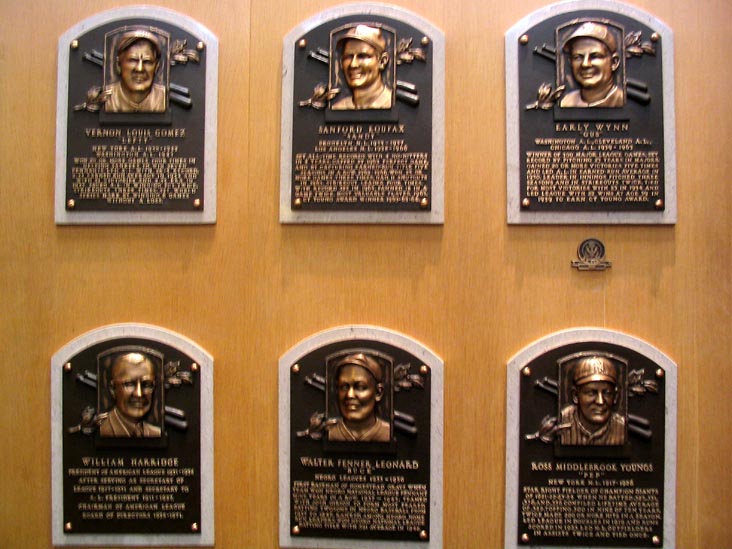
Hall OFLast week, I raised the greasy topic of Pete Rose, in fact defending Pete against the unethical efforts by Topps to avoid invoking his name on their cards, as if he were baseball’s Voldemort. Somehow, the comments morphed into debate about whether Pete deserves to be in the Hall of Fame, and I fear that my position regarding Pete’s qualifications was muddled in the various exchanges.

No, Pete doesn’t deserve to be in the Hall of Fame, for two very clear reasons. His conduct in betting on baseball games, including his own team’s games, while he was a Major League manager requires that he be banned from baseball for life under Rule 21 of Major League Baseball’s official rules, and the Major League Baseball Hall of Fame in Cooperstown has its own rule that makes any player so banned ineligible for enshrinement. Rose is prevented from admission to the Hall by those rules, which were in place when his conduct brought them into play. He doesn’t deserve to be in the Hall, because the rules say so. Pete Rose broke a cardinal rule that potential Hall candidates cannot break. The ethical reason he should not be in the Hall is accountability, or as Tony Baretta used to say on the old TV show, “Don’t do the crime, if you can’t do the time.”

Is there anything at all about Rose’s career record as a player that doesn’t qualify him for the Hall, indeed, over-qualify him? No. Unlike Barry Bonds or Mark McGwire, his statistics are beyond challenge or criticism. He didn’t cheat. He was a great and admirable player in every way.

Was there anything in his conduct as a player on the field, as a player off the field, or off the field as a retired player, that constituted such egregious misconduct that it would justify refusing his admission the Hall of Fame under its so-called character clause? [ “Voting shall be based upon the player’s record, playing ability, integrity, sportsmanship, character and contribution to the team(s) on which the player played.”]

Here is where I want to clarify my position. My answer to this is “No.” Continue reading

Artistic License, History, and Lincoln’s Green Socks

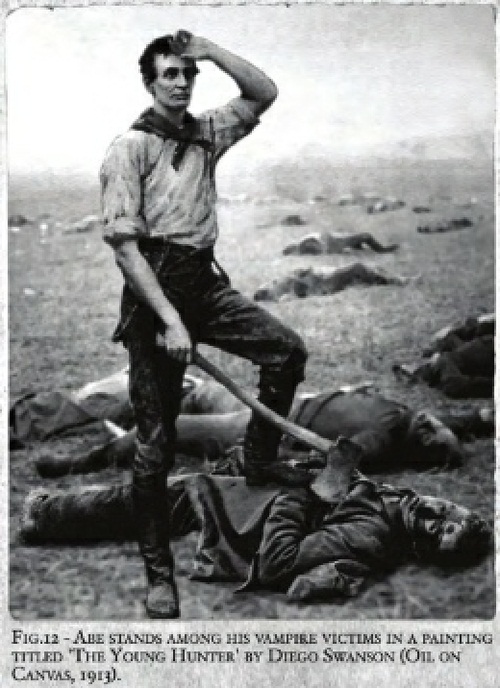
Of course, some historical fabrications are harmless.

Of course, some historical fabrications are harmless.

Several well-placed critics are taking “Lincoln” screenwriter Tony Kushner to task for what they believe are unethical misrepresentations of fact in the much-praised, and supposedly scrupulously accurate film. He, on the other hand, is annoyed. Kushner counters that unlike in history books where a historian gives a well-researched “a blow-by-blow account,” it is reasonable and ethical for a screenwriter to “manipulate a small detail in the service of a greater historical truth. History doesn’t always organize itself according to the rules of drama. It’s ridiculous. It’s like saying that Lincoln didn’t have green socks, he had blue socks.”

I’m going to spare Kushner lawyerly word-parsing and not hold him to “a greater historical truth,” though I suspect that in his hands (he is a skilled political propagandist as well as writer), we would not be pleased with what that license would bring. A politically sympatico film director named Oliver Stone, for example, thought it served a greater historical truth to present completely fictional evidence that Lyndon Johnson was complicit in John F. Kennedy’s assassination, even though Stone’s vehicle, “JFK,” was marketed as a veritable documentary on the “truth” of the Kennedy assassination. Let’s just say that Kushner feels that in a work of entertainment and drama, strictly accurate representation of all historical facts is impossible and unreasonable to expect or require.

I agree. But there is a big, big difference between the ethics of showing Lincoln wearing the wrong color socks, and representing a highly dubious story as fact to denigrate the reputation of a probable hero, as James Cameron did in “Titanic” when he showed First Officer William Murdoch taking a bribe to let a passenger on a lifeboat ( fantasy), shooting a passenger (pure speculation), and committing suicide (denied by a fellow officer under oath at the inquest). Continue reading

Tricking Yourself Into Being More Ethical

Cracked 5 waysOver at Cracked, the website that excels at developing clever factoid lists and debunking conventional wisdom, they have posted a list of “5 Scientific Ways To Trick Yourself Into Being A Good Person.”

Uh-huh. As usual for this site, the headline is just a bit overstated. “Trick” is a misleading word here: most of the devices involve the phenomenon of priming, which basically means that we are more ethical the more something focuses our attention on the ethical implications of what we are doing. By Cracked’s definition of “trick,” Ben Franklin’s morning and evening questions are tricks.

Skepticism is also warranted because we are just getting summaries of studies, and brief, non-technical, non-critical ones at that. It is impossible to know what extraneous factors might have polluted the results, or what biases the researchers brought to their research. Social science research is notoriously fallible and subject to design flaws, particularly regarding sample size. Such research is also prone to confuse cause and effect. I am especially dubious of #2 on the list, “Washing Your Hands Makes You Less Prejudiced.” Yes, researchers found that those who chose to use sanitary wipes on their hands when given the option during a flu epidemic scored better after doing so than those who declined to sanitize when they were asked to answer a survey designed to measure prejudice. I think it is a logical stretch to conclude that the act of ridding their hands of germs washed away the subjects’ biases; it is more likely that those who were more considerate of people around them, as indicated by their interest in sanitizing their hands during a flu outbreak, were also the most empathetic, tolerant and unbiased to begin with. That result isn’t nearly as startling as the claim that handwashing magically heals one’s prejudices, but Cracked apparently needed something to fill out a list of four.

It’s still an interesting article, even though ethical conduct takes a lot more cognitive effort than “tricks.”. You can read the whole thing here.

Ethics Dunces: Everybody Connected With This Ridiculous Story


"Just remove that offensive bumper sticker, sir, and they'll be no trouble."

“Just remove that offensive bumper sticker, sir, and they’ll be no trouble.”

USA Today, NBC, Yahoo! and other news outlets are snickering as they report the story of an elderly couple pulled over by two police cars in Tennessee because a Buckeye leaf decal on their car, signifying their fealty to the Ohio State football team, was mistaken for a marijuana leaf by the men in blue. “What are you doing with a marijuana sticker on your bumper?” one of the cops asked the Jonas-Boggionis, the occupants of the vehicle. It was all a big misunderstanding! Boy, are those Tennessee cops dumb, not to be able to tell a Buckeye leaf from pot!

In classic “what’s wrong with this story?” fashion, not one of the news media reports, in their hilarity over the cops stopping the couple out of official botanical and sports ignorance, noted  that the police would have been just as wrong if the decal DID portray a marijuana leaf. It’s called the First Amendment, guys—perhaps you’ve heard of it? It’s the same Constitutional amendment that allows you media reporters to do the rotten, incompetent job you do covering the news without  being declared by law to be the menace to a free and informed society you are. You know, it might be helpful, when the police engage in a blatant First Amendment violation and abuse of state power, for reporters to recognize and explain it to the public as such, rather than make the news story about how the police stopped the Jonas-Boggionis for the “wrong reason.” Even if they had stopped it for what the stories say is the right reason, it would be the wrong reason. Continue reading

Judge Ken Anderson: A Judge With An Ethical Obligation To Resign

Ken Anderson

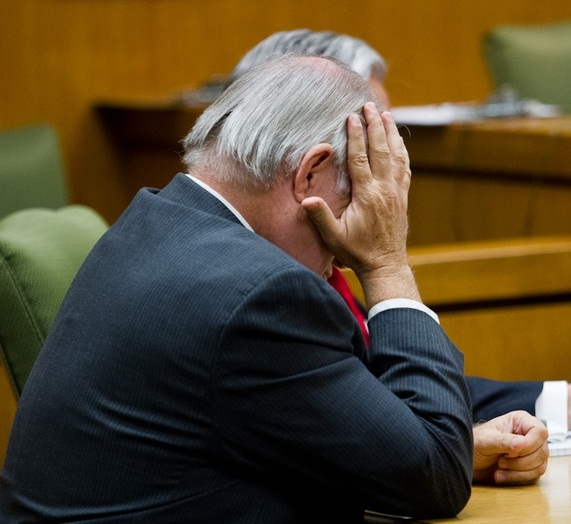
Regret isn’t enough.

Ken Anderson has been a Williamson County (Texas) district judge since 2002, but in 1987  he was the district attorney who prosecuted Michael Morton for fatally beating his wife to death. Morton was convicted and served 25 years in prison before DNA tests proved he was innocent. (This is yet another triumph of The Innocence Project.) Another man has been arrested for the murder of Morton’s wife Christine, as well as a second woman he allegedly killed in similar fashion while Morton was behind bars.

Last week, a five day hearing examined Judge Anderson regarding his conduct in the case, in a special court of inquiry to determine whether he engaged in criminal wrongdoing as well as unethical prosecution. Among the questions raised was why Anderson never divulged to Morton’s defense team a police report that Morton’s neighbors had said that they saw a suspicious man walking into the woods behind the Morton home shortly before the murder, and why Morton’s three-year-old son’s statement that “a monster,” not his father, beat the child’s mother to death was similarly withheld. On the stand enduring five hours of questioning, a tearful Anderson could only say that he didn’t remember not turning over the evidence to the defense, while defense attorneys adamantly insisted that they never received it. The hearing also revealed that Anderson kept his lead investigator from testifying at trial, when his testimony would have ensured that the child’s statement and the report about the stranger were raised in court, as well as allowing defense attorneys to cross-examine the investigator regarding his peculiar theory of the case.The theory, which was subsequently endorsed by DA Anderson, was that Morton become homicidal after his wife fell asleep when he sought to have sex with her, and donned his scuba wet suit so his son wouldn’t know it was him beating her to death. Continue reading

Easiest Ethics Question Of The Month

" Dear Ellie: The firm seems a little shady to me, but I need the experience. Should I take the offer?"

” Dear Ellie: The firm seems a little shady to me, but I need the experience. Should I take the offer?”

Over at Above the Law, Ellie Mystal posts a request for advice from a desperate job-seeking lawyer, and polls readers for their response. The lawyer has an offer from a local attorney she says has a reputation for being unethical and untrustworthy. He has filed for bankruptcy once; he is being investigated by the local bar and the government, and former employees say he’s atrocious to work for. The inexperienced lawyer asks,

“Is this really bad for an entry-level lawyer to work for an (arguably) bad lawyer? Is it an absolute NO? Which one is more important: get some experience or working at a right/good firm? To put it another way, which one is worse: having no experience or working at a bad firm? I keep searching job postings and there is no opening for entry-level. Everyone looks for experienced lawyers. So I get the impression that no experience is the worst.

“I don’t know what to do with this offer. Feels not right to accept this offer but cannot just forgo. So give me some advice — should I accept his offer?”

Well, let me th—NOOOOOOOO!!!! Absolutely NOT! Never in a million years! NEVER!

And yet, almost 20% of Above the Law’s mostly lawyer readers voted for the choice reading, “Yes. Beggars can’t be choosers.”

That is disturbing. Continue reading

Jesse Jackson, Jr. and Our Sick Democracy

Exactly what we deserve.

Exactly what we deserve.

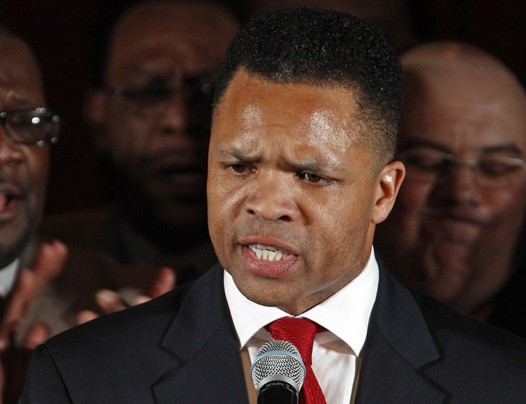
In the end, the fact that Jesse Jackson, Jr. is going to jail in disgrace is less significant than what his disgraceful career represents. Jackson is only one man, and many men have failed their responsibilities to society while showing dire deficits of character in the process. Jackson’s career, however, is smoking gun evidence of the travesty we have allowed America’s democratic system of government to become. If there are any who still wonder why the nation seems incapable of addressing its problems and challenges responsibly,  look no further. This is a democracy whose citizenry has become too complacent, lazy, apathetic and ignorant for the privilege of self-government. The implications of this are terrifying.

Reading the various articles about Jackson’s imminent guilty plea to conspiracy charges, I was struck by the realization that this one-time rising political star is a child. He misappropriated over $750,000 in campaign funds to buy, among other gewgaws like a Rolex watch, such indefensible treasures as Bruce Lee memorabilia ($10,105), Michael Jackson mementos ($14,200), a “Michael Jackson and Eddie Van Halen” guitar for $4,000, and a Michael Jackson fedora, a bargain at $4,600…all with money donated to his political campaign. This is the caliber of mind and the considered priorities of the man entrusted by an Illinois congressional district to participate on their behalf in crucial decisions affecting jobs, the economy, and the course of the nation, while being consistently endorsed by our toadying news media. Continue reading

And Speaking of Grading Ethics…

.

Grrrrrrrrr!

Grrrrrrrrr!

..I am reminded of a grading traumatic experience of my own, involving a famous professor whose curve was the opposite of Prof. Frölich’s.

But first, an aside. Many readers have asked my views on the weird story of  Megan Thode, the grad student who sued to have her C+ grade changed, alleging that it was the result of bias and will cost her 1.3 million dollars in lost income. The judge was understandably annoyed at having to decide the case, and has suggested a compromise between the parties to relieve him of the responsibility of perhaps having to change the grade himself. There was no good result possible here. If the school really had a bias against Megan and she could prove it, then the law suite was valid. She shouldn’t have her career disrupted because of unfair grading. If, on the other hand, her grade was within the range of proper discretion, the law suit was a threat to the education system, and had to be be fought until the last dog died. Nor should the school compromise, as it would create a system in which grades have no integrity and where anyone could buy an inflated grade by threatening court action. Ultimately, the judge decided that the grade had to stand. What I see here is an educational system on all levels collapsing from a toxic combination of warped objectives (education for monetary payoffs, not for its own sake) and a dearth of trust in the competence and integrity of the educators.

Now the story of my own disputed C+, starring the renowned Chester James Antieau. Continue reading

The Red Caboose On The Penn State Ethics Train Wreck Arrives: The Paterno Family’s Report

1-train-wreck-kari-tirrell

To understand what the Joe Paterno’s family’s report (released on Feb. 10) regarding the late Penn State football coach’s culpability in the Jerry Sandusky child abuse cover-up means, one has to understand what lawyers do, and why it is completely ethical for them to do so, as long as their role isn’t misrepresented by them or their clients.

Lawyers exist to allow non-lawyers to have access to a legal system that is (needlessly) complicated and technical, and to provide their legal training, analytical skills and advocacy abilities to their clients’ legal and legitimate needs and objectives. A lawyer who interposes his or her own opinions, judgments and desires on the client without being asked to do so is, in most cases, behaving unprofessionally and unethically. This is an essential principle to grasp, and yet the vast majority of the public do not grasp it. Nonetheless, without the partisanship a lawyer brings to the attorney-client relationship, regardless of whether a client is rich or poor, altruistic or venal, kind or cruel, we would all be slaves to the laws we supposedly create ourselves, through the machinery of a republic.

An independent investigation of the Penn State administration’s failure to stop serial child molester Jerry Sandusky from harming young children found that iconic football coach Joe Paterno was at the center of the school’s misconduct and the catalyst for it. The investigation was performed by Louis Freeh, a lawyer, a former prosecutor, a former federal judge, and once the head of the F.B.I.  His charge was to find out what happened and who was at fault—not to nail Paterno or anyone else.  It was an independent investigation, with no dictated result. Don Van Natta, a sportswriter whom I supposed should not be expected to understand such distinctions, writes,

“If the Freeh report was a prosecutor’s relentless opening statement that delivered devastating, far-reaching consequences, the Paternos’ rebuttal is a defense attorney’s closing argument brimming with outrage and fury.”

Wrong, wrong, wrong. The Freeh report was not a work of advocacy in an adversarial setting, but akin to a judge’s objective decision after reviewing the relevant and available facts. The Paterno family report, in contrast, is a work of advocacy, like a brief arguing an appeal to overturn a judicial decision against a lawyer’s client. The charge given to Freeh in his investigation was to find out what went wrong and why. (It began with the assumption that something did go wrong, which was reasonable, since a child predator had somehow managed to roam the Penn State campus for decades, including a ten-year period after he had been seen sexually assaulting a child in a Penn State shower.) Freeh was not told to get Penn State off the hook, or to pin as much as possible on Joe Paterno. The authors of the Paterno family report, however, were charged with the task of rebutting and discrediting Freeh’s report in order to rescue Joe Paterno’s reputation and legacy. It is an advocacy memorandum, like the torture memos and the recent Justice Department justification of the killer drone program. Continue reading