Melowese Richardson, Ohio poll worker, doesn’t understand why she’s being investigated for voter fraud. Oh, she voted at least twice, no doubt about that, and she doesn’t deny it: According to Hamilton County records, Richardson’s absentee ballot was filed on Nov. 1, 2012 along with her signature. Later, she told an official she also voted at a precinct polling place because she was afraid her absentee ballot would not be counted in time. Double voting is something of a family tradition, for Richardson’s granddaughter, India Richardson, also cast two ballots in November, her first time as a voter. Melowese sees nothing wrong with any of this, or this either: absentee ballots for Montez Richardson, Joseph Jones and Markus Barron all came from Richardson’s Whetsel Avenue address, were received by the board the same time as Richardson’s, and the handwriting on all four of them was similar. Continue reading
Month: February 2013
Stop Picking On Mike Tyson
“Law & Order: SVU” cast former heavyweight boxing champ Mike Tyson as a prisoner and past victim of child abuse victim, who murdered one of his abusers. The episode bombed for the NBC show during the crucial “sweeps” ratings period, and Washington Post TV writer Lisa De Moraes attributes the failure to the show’s insensitivity in casting Tyson. She wrote in today’s Post,
“Before the episode aired, about 7,000 people signed a petition asking NBC to recast the role. The petition was created by an ardent “SVU” fan who is a rape survivor and who said she felt betrayed by the stunt casting. Among those who signed the petition: “NCIS” star and abuse survivor Pauley Perrette. Tyson was arrested in 1991 and charged with raping then-18-year-old Miss Black America pageant competitor Desiree Washington; he was convicted and served three years of a six-year prison sentence.”
If the “Law and Order” producers erred in casting Tyson, it was in under-estimating the fecklessness, bias and hypocrisy of the viewing public. Continue reading
Slow Loris Ethics: Great, Now Even The Smithsonian is Hyping!
If we can’t even trust the Smithsonian not to lie to us, what hope is there?
The February issue of the Smithsonian magazine arrived, full of articles about origins and evolution. I immediately gravitated to the essay about komodo dragons, whose bite, as those of you who have been bitten by one know, is poisonous. In a colorful sidebar to the main article was a smaller note about the wide range of other animals that poison their victims, titled “Pick Your Poison.”
“The komodo dragon may be the newest addition to the elite corps of predators that kill with chemistry, but the venomous world is already more diverse than people realize,” it began. The note was illustrated by photos of a duck-billed platypus (owner of a leg spur with a poison gland that gives the thing quite a kick); the tiny Pacific cone snail, which can kill a human; the black mamba, the snake that had a co-starring role as an assassin in “Kill Bill, Part 2,” and…a slow loris???
The little, big-eyed, furry, cute Asian primate is venomous? That was a surprise. The article included no details, just noting that the slow loris was the only “venomous primate.” I managed to pass along this information as fact to my wife and two friends before bedtime (it takes so little to excite me these days!), and this morning dived into the web to learn the details of the slow loris’s poison. What I discovered was even more shocking than the original note. The Smithsonian magazine was hyping, and badly at that.
To begin with, there is a difference between venomous animals and poisonous ones. “Venomous” means that the creature injects toxin into its prey, through a sting, a bite, or other means. “Poisonous” means that the animal carries some kind of toxin that the prey ingests, absorbs or inhales, occasionally fatally. The Smithsonian article ignores this distinction for sensational purposes, as the title “Pick Your Poison” suggests. But the slow loris, which is definitely not venomous,. and it isn’t really poisonous either. Continue reading
Dog Racism Update: A Definitive Defense of Pit Bulls
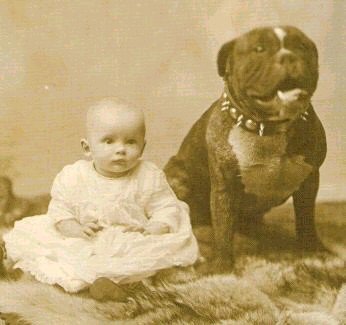
Ethics Alarms has discussed the unfairness, bigotry and ignorance behind the vilification of pit bulls and related breeds on many occasions: here, here, here , here, and here. Now Joshua Holland has written an excellent primer in Salon for the pit bull-phobics to chew on, and he did a superb job of debunking the illusion that this is a monstrous breed rather than what it really is, an uncommonly delightful one.
Among the highlights…
- “Pit bulls are the dog of choice for irresponsible breeders, dog-fighters, people who want a tough-looking dog to tie up in their yard and those who refuse to have their male dogs… 86% of fatal canine attacks involve an unneutered male, according to the American Humane Society.”
- “A 2009 study in the Journal of Forensic Science, found that the owners of vicious dogs, regardless of the breed, had “significantly more criminal behaviors than other dog owners”…According to the ASPCA, “Pit Bulls often attract the worst kind of dog owners.”
- “We have tragically betrayed our children’s beloved nanny-dogs, raising them irresponsibly, training them to be aggressive and then turning them into pariahs when they behave as any dog would in similar circumstances.” Continue reading
Now THIS Is A Legal Ethics Violation!
Jeremy Daniel Oliver, a friendly Oklahoma lawyer specializing in criminal and family law, was recently arrested and charged with the felonies of soliciting sex with a minor and distributing obscene materials via technological means. You see, Oliver offered to knock $1000 off his fee for legal services for a female client…
…in exchange for sex with her, or, in the alternative,
…her 18-year-old-daughter, or, as another option,
… her 13-year-old daughter,
…in a text message sent to his client’s phone
...while deputies were with the mother.
Oh yes…he also sent her a picture of his penis.
This alleged conduct involves several ethics rules, I aver, including those prohibiting a lawyer from breaking significant laws, having sex with clients (though, oddly, there is nothing in the rules prohibiting sex with the daughters of clients), and perhaps most of all, charging unreasonable fees, though to be fair, having not seen the photo of Mr. Oliver’s penis, I can’t say how unreasonable.
As Consumerist’s Vivia Chen would say, “Not cool.”
____________________________
Pointer: ABA Journal
Facts: News OK
If Only The Profession Was This Strict AFTER Admitting A Lawyer To The Bar…

No, surprisingly in light of last week’s revelations from Cambridge, the applicant who cheated on her bar exam did NOT go to Harvard. I’m as stunned as you are!
One of the legal profession’s ethics anomalies is that its character standards for entering legal practice are far more unforgiving than the standards for keeping one’s license to practice after being admitted. For while John Edwards continues to be a North Carolina lawyer in “good standing,” an Ohio bar applicant was held to lack the requisite good character to be a trustworthy lawyer (Ohio Supreme Court opinion here) because of the following set of facts.
When Jasmine Shawn Parker of Covington, Kentucky was taking the Ohio bar exam, a test monitor reported that she had continued to write for up to 30 seconds after “time” was called on a set of two exam questions, and then again for 45 to 60 seconds on two sets of two exam questions. The Board of Bar Examiners investigated, and asked Parker’s tablemates about their observations or her actions, if any, after time had been called. They reported that Parker had continued writing for maybe a second or two past the declared deadline on Day 1 of the exam, and on the second day, had continued to write past the stopping point “long enough to get at least two lines of writing on paper.” As a penalty after these findings, the Ohio Board of Bar Examiners gave Parker no credit on the exam question with the highest point value. Never mind: Parker’s score was high enough to pass the bar exam anyway. Her alleged cheating, however, led the Board of Commissioners on Character and Fitness to recommend her license be denied, with the opportunity to reapply. Continue reading
Cost of Rick Curl’s ‘Stay-Out-Of-Jail-And Keep-Molesting-Girls’ Card: $6,250 a Year
All in all, you would have to say that renowned Maryland swimming coach Rick Curl made a pretty sweet deal for himself. True, he’s headed to jail now, after pleading guilty to charges of child sexual abuse as a result of the testimony of Kelley Currin. Currin, now 41, was a former swimmer coached by Curl, and was molested and ultimately raped by him over six years beginning when she was only 13. But Curl paid Kelley’s parents, Gerald and Pamela Davies, $150,000 to keep his secret from police, the community, and the swim team (the Davies had read about his abuse in their daughter’s journal and confronted him) in 1989. Kelley, who was 19 when her family got paid off, waited until last year to finally alert authorities, so Curl kept his freedom, reputation, and most important of all, his opportunity to be trusted with the yummy, young, nubile daughters of other, unsuspecting parents, for a bargain yearly rate of only $6,250.
Not bad! Not bad at all. Continue reading
Comment of the Day: “Ethics Dunce Meets Ethics Hero”
John T., a reader whose final comment on Ethics Alarms is also the Comment of the Day, provided me with another example of the same phenomenon that manifested itself in some of the more extreme comments to the recent Applebee’s post. For many people who are incapable of coherent ethical analysis, the nature of conduct is assessed not according to the ethical or unethical nature of the conduct itself, but according to whether the author of the conduct is liked, admired, identified or sympathized with, especially in comparison to the individual, authority or entity holding that actor accountable for the unethical conduct involved. Thus supporters of the fired Applebee’s waitress who violated the terms of her employment, embarrassed her employer’s customer online, and used proprietary information to do it used all manner of irrelevant or factually false arguments to make the case that she didn’t warrant punishment, and that it was Applebee’s that was acting wronfully—waitresses are underpaid; Applebee’s doesn’t treat employees well, the pastor was “stealing” by not leaving a tip, the pastor’s obnoxious message “abused” the server (even though the server wasn’t the one who publicized the pastor’s comments), and so on. Because commenters sympathized and identified with the waitress, they crashed through logical and ethical roadblocks to find her innocent of wrongdoing, and mistreated by a big, bad, heartless corporation. In other words, emotion and bias, not objectivity and ethical analysis, took over.
John T. engages in the same fallacious process to defend the 18-year old Xanax abuser who found herself insulting the wrong judge in Miami. His previous jaw-dropping comment described the woman’s horrible demeanor and attitude as “genuinely cooperative and friendly” (she was disrespectful, mocking and seemingly stoned), and opined that unauthorized possession of a controlled substance was a “bullshit charge.” I responded, half in jest, that with that attitude, it was remarkable that he wasn’t in jail. I’ll be back at the end, but here is John T’s masterful rant, the Comment of the Day on the post, “Ethics Dunce Meets Ethics Hero: Continue reading
Soccer, Sports, Corruption, and Cultural Rot
After a moment’s reflection, I realized that it was inevitable that international soccer would be rocked by a match-fixing scandal. If I should have seen it coming, and I care as much about soccer as George S. Kaufman cared about Eddie Fisher’s social life*, then the officials of the sport should have seen it coming too.
From the New York Times:
“…A European police intelligence agency said Monday that its 19-month investigation, code-named Operation Veto, revealed widespread occurrences of match-fixing in recent years, with 680 games globally deemed suspicious. The extent was staggering: some 150 international matches, mostly in Africa, Asia and Latin America; roughly 380 games in Europe, covering World Cup and European championship qualifiers as well as two Champions League games; and games that run the gamut from lower-division semiprofessional matches to contests in top domestic leagues.”
Thus soccer, the most played, most followed, most passionately cheered of all major team sports has been rigged. It doesn’t matter that all the games weren’t rigged; what matters is that now nobody can be sure that a game isn’t rigged. How can a fan care, deeply care, about the outcome of an athletic contest when there is always a lurking, justified suspicion that victory is undeserved and that defeat is unfair? In the span of just a few weeks, we have heard the golden boy of American and international cycling admit that he was at the center of a cheating conspiracy, and that he used lies, influence and financial power to make his sport a contest of which competitor could break the rules most effectively. New revelations from Miami, meanwhile, indicate that Major League Baseball’s so-called steroid era, which supposedly had been vanquished forever, may never have gone away at all: several current stars, like the Yankees’ Alex Rodriguez and 2011 National League MVP Ryan Braun, have been linked to treatments at a clinic known for human growth hormone therapy. Big sports mean big money, and where there is big money, there will always be clever, dishonest people willing to crush laws, ethics, sportsmanship and public trust in order to get more of it. Continue reading
Yes, Putting Underpants on Michaelangelo’s “David” Is Unethical.
So is putting a bikini on the Venus de Milo, in case you’re wondering.
The issue has been raised because a huge replica of the nude male statue was unexpectedly donated to a Japanese town, where it is unsettling some people and frightening others. Clothing “David” in a big Speedo or something has been suggested as a way to make the artwork more viewer-friendly.
Uh, no. Not all art will be welcome in every culture, and it may be that a mega-“David” in a Japanese park was a mistake. It is a work of visual art, however, and it is wrong for anyone other than the artist to alter or censor that artist’s creative work, especially when such a change renders the work of art risible. Putting underwear on “David” is as unfair and disrespectful as putting Groucho glasses on the “Mona Lisa.”
The town of Okuizumo has precisely two ethical choices, and no more: remove the statue and give it to someone else who will take care of it and appreciate it, or leave it alone.
Fruit of the Loom is not an option.
________________________________
Pointer: Lianne Best
Facts and Graphic: News.com.au