Howard Kurtz And The Critic’s Dilemma

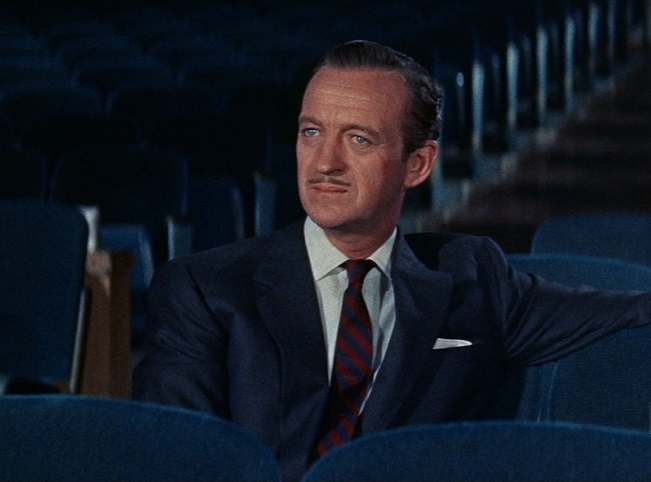
David Niven would understand, Howard.

David Niven would understand, Howard.

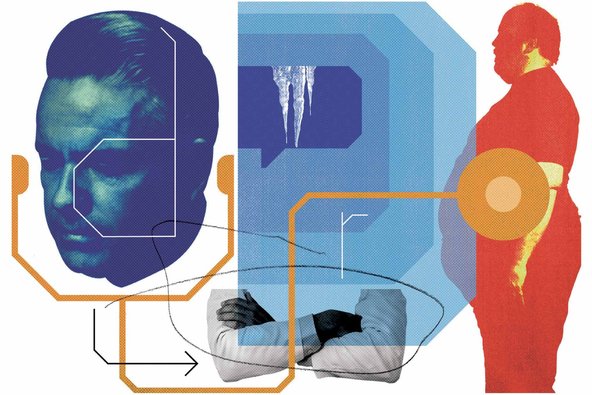
The Daily Beast has canned Howard Kurtz, the only current official news media critic in captivity, and now CNN, long the home of Kurtz’s “Reliable Sources” panel show that reviews the media’s choice and manner of news coverage during the week, is “reviewing” his status with that show as well. The sudden downturn in Kurtz’s fortunes is, we are told, the result of an accumulation of mistaken stories, missed facts and sloppy reporting of his own. I’ll buy that explanation, but there is more here too.

Kurtz’s departure was overdue. I have followed him for years, and his coverage, as I have pointed out periodically, was unacceptably politically slanted for a quasi-journalism ethicist. A typical performance was when he recently criticized —correctly—Republicans who were (and are) trying to twist the Boston bombing tragedy into an argument against immigration reform. In a reply to a comment on the recent Ethics Alarms post on the same topic, I noted that media commentators who saw nothing wrong with the Democrats using a Newtown massacre that would not have been altered in any way by background checks to push for more gun controls were suddenly applying the correct standards to a similar conservative manipulation of the Boston Marathon attack: Continue reading
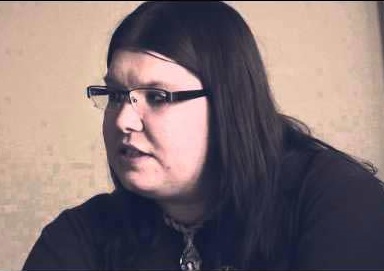

Unethical Quote of the Week: “Meg Lanker-Simons is Innocent” Facebook Page

“Meg Lanker-Simons is innocent we believe what she did was justified and deserves not to be held accountable for her accusations we stand behind you sister.”

—-The Facebook page dedicated to the plight of University of Wyoming student, progressive blogger and campus radio host Meg Lanker-Simons, who apparently sent an obscene and threatening message to herself online under the guise of an anonymous male conservative, one of her sworn foes. She has been charged with a misdemeanor by campus police.*

I confess, there were more flattering photos of Meg I could use, but she doesn't deserve them. What she deserves, really, would be for me to dress up in drag, take my own photo, and not only label it as meg, but then riff on how ugly she is in the picture, when it's really me. Meg would approve of that. She'd have to.

I confess, there were more flattering photos of Meg I could use, but she doesn’t deserve to have me use them. What she deserves, really, would be for me to dress up in drag, blacken my teeth and take my own photo, and then not only label it as Meg, but then riff on how ugly she is in the picture, when it’s really me. Meg would approve of that. She’d have to.

Let us stipulate that the title of the Facebook page may well be correct, as James Taranto persuasively argues: threatening yourself, even with rape, which is what Lanker-Simons did, is unlikely to be anything but protected speech.

Beyond that, however, this kind of stunt is low-wattage Tawana Brawleyism,  and thus ethically revolting. That 38 Facebook fans and the semi-literate clod who authored the quote above argue that it is “justified” shows that ethics rot has some new and virulent strains.

Continue reading

Ethics Alarms, Shaming, and Clarifying the Audrie Pott Tragedy Post

facefist-thumb

There I go again…

I prefer to let arguments over what I write, mean and imply in the posts here resolve themselves in the comments; after all that’s the point of my writing them. I don’t like to write clarifications and re-considerations, and have posted very few. That is not to say that every post is a polished gem and perfectly articulates the often complex and contentious observations I’m attempting to make…far from it. Virtually everything I write would benefit greatly from being able to take the time to review it, think about it, run it by a few trusted colleagues, re-write it a few times, and post it a day or two later. I know that.  I write quickly, often in one draft, trying to keep up with a dynamic and diverse topic with a balance of quantity and quality I have time to deliver. It’s a trade off, and one that, fortunately, a passionate and articulate group of readers help make work.

For several reasons, the post “Audrie Pott, Web-Shaming And Moral Luck” has sparked confusion and discord, and I will accept the responsibility for that. Not every post works. Often, regular readers will note, I will choose a current event to use to highlight an ethics issue that is not the one most people are focusing on—sometimes this has yielded a very good post, and other times, I don’t quite pull it off. The danger is always that by not focusing on the primary issue, I will unintentionally send the message (to some) that I don’t think it still is an important issue, or that what I have chosen to write about instead is more important. That happened with this post. Continue reading

Medical Ethics: The Insideousness of Bias

Obesity biasThe New York Times had an enlightening article about bias in its Science section this week. Apparently a study of the interactions between patients and their primary care physicians suggests that doctors are more pleasant, encouraging, empathetic, kinder—just nicer, in short—to their normal weight patients than they are to those who are obese.

From the article:

‘“It’s not like the physicians were being overtly negative or harsh,” said the lead author, Dr. Kimberly A. Gudzune, an assistant professor of general internal medicine at the Johns Hopkins School of Medicine. “They were just not engaging patients in that rapport-building or making that emotional connection with the patient.” …While such expressions of concern and empathy are not remarkable on their own, what was surprising was how absent they were in conversations with overweight and obese patients. And statements like these are no small thing. Studies show that patients are far more likely to follow a doctor’s advice and to have a better health outcome when they believe their doctor empathizes with their plight.

‘“When there is increased empathy by the doctor, patients are more likely to report they are satisfied with their care, and they are more likely to adhere to recommendations of physicians,” Dr. Gudzune said. “There is evidence to show that after visits with more empathy, patients have improved clinical outcomes, so patients with diabetes have better blood sugar control or cholesterol is better controlled.”’

Continue reading

Yikes! I Turn My Back For A Minute, And All Hell Breaks Loose…

My apologies to all.

I was on the road in Chicago preparing for a marathon musical ethics seminar for a tough crowd (PhD lawyers), and got up early to get some posts up, then was occupied until the wee hours with work and travel. I just checked the blog, and all sorts of arguments are breaking out everywhere, new comenters are stuck waiting for approval, and chaos reigns.

Clearly, I picked the wrong day to try earning a living: I’m sorry for the delay and neglect. Moderation, responses, refereeing and clean-up will commence. I may need to appoint one of you  moderator pro tem in the future.

Sports Commentary Ethics And Bigotry: ESPN Should Tell Chris Broussard To Shut Up

Yes, I have a question, Chris: Who cares what your religious beliefs are?

Yes, I have a question, Chris: Who cares what your religious beliefs are?

ESPN has raised some eyebrows for the sports network’s unequivocal support of Chris Broussard, one of its NBA reporters, who in response to a request for his reaction to Jason Collins’ announcing that he was gay, becoming the first active NBA player ever to do so, said this on the ESPN show, “Outside the Lines”:

“I’m a Christian. I don’t agree with homosexuality. I think it’s a sin, as I think all sex outside of marriage between a man and a woman is,” he said (transcript via Blazers Edge’s Ben Golliver). “L.Z. [Granderson, a gay sportswriter and ESPN contributor] knows that. He and I have played on basketball teams together for several years. We’ve gone out, had lunch together, we’ve had good conversations, good laughs together. He knows where I stand, and I know where he stands. I don’t criticize him, he doesn’t criticize me, and call me a bigot, call me ignorant, call me intolerant. In talking to some people around the league, there’s a lot of Christians in the NBA, and just because they disagree with that lifestyle, they don’t want to be called bigoted and intolerant and things like that. That’s what L.Z. was getting at. Just like I may tolerate someone whose lifestyle I disagree with, he can tolerate my beliefs. He disagrees with my beliefs and my lifestyle, but true tolerance and acceptance is being able to handle that as mature adults and not criticize each other and call each other names….

“Personally, I don’t believe that you can live an openly homosexual lifestyle or an openly premarital sex between heterosexuals, if you’re openly living that type of lifestyle, then the Bible says you know them by their fruits, it says that’s a sin. If you’re openly living in unrepentant sin, whatever it may be, not just homosexuality, adultery, fornication, premarital sex between heterosexuals, whatever it may be, I believe that’s walking in open rebellion to God and to Jesus Christ. I would not characterize that person as a Christian because I do not think the Bible would characterize them as a Christian.”

ESPN diplomatically responded, In a statement, ESPN said: “We regret that a respectful discussion of personal viewpoints became a distraction from today’s news. ESPN is fully committed to diversity and welcomes Jason Collins’ announcement.”

I find it difficult to believe that ESPN would regard similar sentiments about the sinfulness of women failing to be subordinate to their husbands or inter-racial marriage as “a respectful discussion of personal viewpoints.” Continue reading

The Ethics Conundrum of Jim Thorpe’s Body

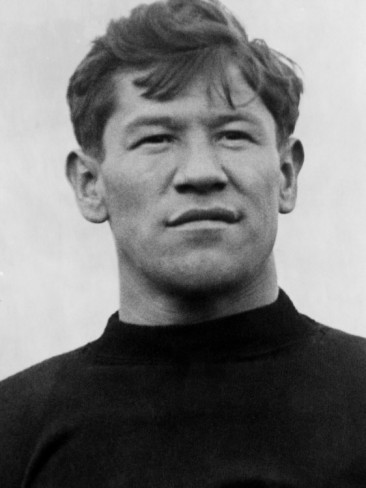
Jim Thorpe: Native American, Olympic Champion, baseball star, football star...football.

Jim Thorpe: Native American, Olympic Champion, baseball star, football star…football.

One thing is for certain: Jim Thorpe doesn’t care. The great Native American athlete whose sports legacy was as sterling as his life was tragic died in 1953, recognized by the country he honored with his record-breaking performance in the 1912 Olympics, but like so many of his race, mistreated and exploited by it as well. Since his death, however, a bizarre battle over his body has raged, and it is a perfect example of the Roshomon-like nature of  ethics in some situations. What is the right thing, the fair thing, the ethical thing? The answer sometimes depends on whose viewpoint is applied, and objectivity, the ideal viewpoint we strive for, doesn’t even exist. In an ethical conflict, moreover, there are good ethical principles on both sides of a dispute.

In Jim Thorpe, Pennsylvania, the ethical verdict of what occurred in a Pennsylvania  court last month is clear: the town has been double-crossed. A federal judge ruled that Thorpe’s remains, which lie in a mausoleum built by the town, can be moved to Oklahoma by his family, to be buried on lands belonging to his tribe. In 1953, however, two Pennsylvania towns signed a contract with Thorpe’s widow, committing them to consolidate and rename themselves after the Olympic, football and baseball legend, in return for being able to house Thorpe’s body and reap the tourism benefits of doing so. The contract was valid, if venal in inspiration: Mrs. Thorpe wanted and received cash in return. But a bargain is a bargain, and Thorpe’s presence and name has defined the town for over half a century. Losing Thorpe means losing the town’s identity and signature feature, which is a calamity. Continue reading

Musings On The Jason Collins Announcement

Jason-Collins

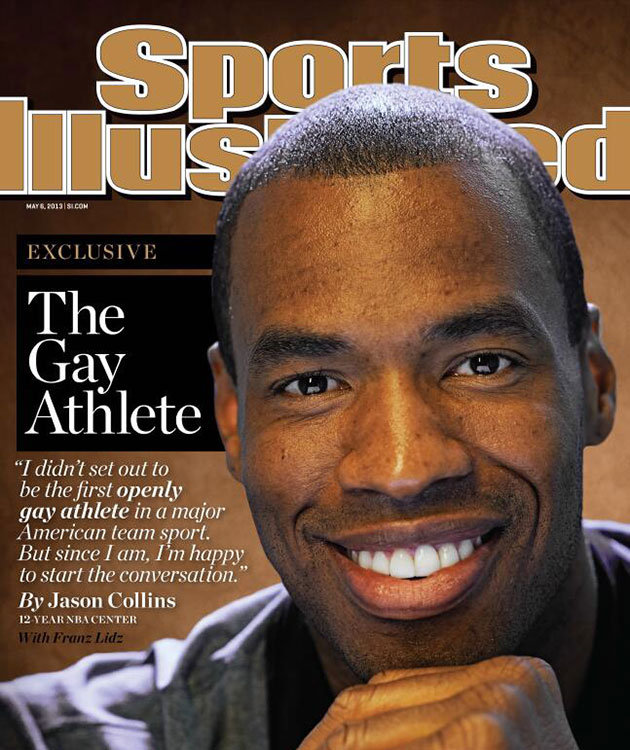
Jason Collins, a reserve NBA center, became a huge news story as well as symbol of increasing gay acceptance in America when he announced his sexual orientation in a Sports Illustrated cover story this week. This made him,technically at least, the first active athlete in one of the U.S’s major professional sports to “come out.” Since his team is not in the NBA play-offs, and since Collins is a free agent going into 2014, the NBA has yet to see its first openly gay player take the floor in a game, and Collins may not be the one who does it.

What does it all mean?

  • Collins is courageous.
  • I hate the fact that the state of celebrity economics, fame and popular culture makes me think like this, but it does: How can we know that Collins, a borderline and largely obscure NBA player nearing the end of his career, didn’t see a chance at the kind of fame, stardom and popularity, not to mention guest appearances, sponsorships and endorsements that have eluded him in his playing career, and grabbed it? We don’t. This was the kind of act that has nothing but good results whatever the motives of the actor, and so it is an ethical act by definition. Was it a truly selfless act, as it is being portrayed? I think Collins deserves the benefit of the doubt, but I sure have some. Continue reading