Ethics Hero: Minneapolis Dairy Queen Manager Joey Prusak

"Good job, Joey!You made Dairy Queen proud and brought honor to the store, Here's 40 dollars."

“Good job, Joey!You made Dairy Queen proud and brought honor to the store, Here’s 40 dollars.”

It’s a simple story, trivial in a way, but with an important ethics lesson.

Joey Prusak, the 19-year-old store manager at a suburban Minneapolis Dairy Queen, watched as a female customer with a heart of ice saw a vision-impaired man drop a $20 bill, picked it up, and instead of returning the money to the unaware customer, slipped it into her own purse. When the certifiably awful woman got up to the counter to order, Prusak told her what he had seen and demanded that she return the bill as a condition of service. The woman, as one might expect from someone who would take money under such circumstances, refused, so Prusek reimbursed the visually impaired customer with $20 of his own.

A customer who saw the incident e-mailed Dairy Queen in praise, and now Prusak has become something of a folk hero.

The important ethics lesson is “Fix the problem.” If you are in a position to right a wrong or prevent one, it has become your obligation to do it. Don’t adopt  any of many rationalizations available to persuade you to do nothing— “It’s not my job,” “Mind your own business,” “Who am I to judge?”, “It’s not my fault”, “What if I’m wrong?”—or, in a case like this one, manufacture excuses for the vile miscreant who took the money—–“Maybe she’s desperate,” “Finders keepers”-–and just act. Fix the problem. Continue reading
Ethics Dunces: The Los Angeles Dodgers

The Los Angeles Dodgers clinched the National League West regular season championship last night by beating their divisional rivals, the Arizona Diamondbacks. Traditionally, when such moments occur away from the winner’s home park, they are celebrated with a happy mob scene around the pitcher’s mound and then a retreat to the clubhouse, where campaign and revelry reign.

But not in the case of the 2013 Dodgers. Seeing the inviting swimming pool that is a unique center field feature of Chase Field, the giddy Dodger team jumped the fence and splashed into the pool to celebrate. The Arizona Republic, in an editorial today, accurately expressed the reaction of the Diamondback fans and community:

“In the interests of good sportsmanship, here’s to the 2013 National League West Division champs.Congratulations are in order. Even to a bunch as classless as the Los Angeles Dodgers, the first players not wearing Diamondbacks uniforms to celebrate a championship by diving into the Chase Field pool. Informally, the Arizona Diamondbacks management had asked their Dodgers counterparts, should their lads clinch the division at Chase Field, to kindly celebrate in the clubhouse until the fans cleared out. For safety’s sake. Well, the Diamondbacks got their answer. Effectively: We got some “safety,” for you. Right here….” Continue reading

And The Lies Just Keep On Coming

"Yes, children, there really was a time, long ago, when the American people got angry when their leaders lied to them...."

“Yes, children, there really was a time, long ago, when the American people got angry when their leaders lied to them….”

I wonder at what point President Obama decided that he could just lie with impunity, and that most Americans wouldn’t care. We should care, you know. There is no reason that I can see why anyone here or abroad should trust the President or believe him or anything he says.

I take no satisfaction or joy in writing this.  It is a terrible development for everyone, and I wish it were not true, just as many of the President’s supporters will deny that it’s true. It is true nonetheless. Continue reading

Unethical Tweet Of The Week: Prof. David Guth

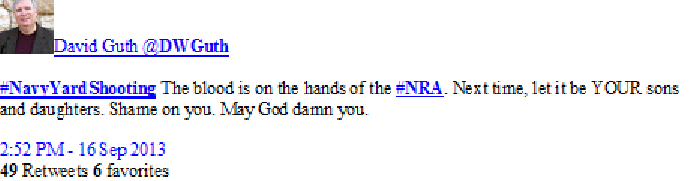
Guth Tweet

With this brain-jarring twitter offal from University of Kansas journalism professor David Guth—and if you marvel at the abysmal quality of today’s journalists, there’s a big clue right there—Ethics Alarms launches a new category, the Unethical Tweet of the Week. Clearly, Twitter has a magic ability to make even reasonable public figures and professionals engage in irresponsible, hateful and idiotic discourse, though I seriously doubt that this particular tweet’s author needed much of a shove.

What’s the matter with the tweet? Well, how long have you got? Let’s see: Continue reading

Comment of The Day…And An Ethics Quiz, Too! : “Ethics Quiz: The United Airlines Give-Away”

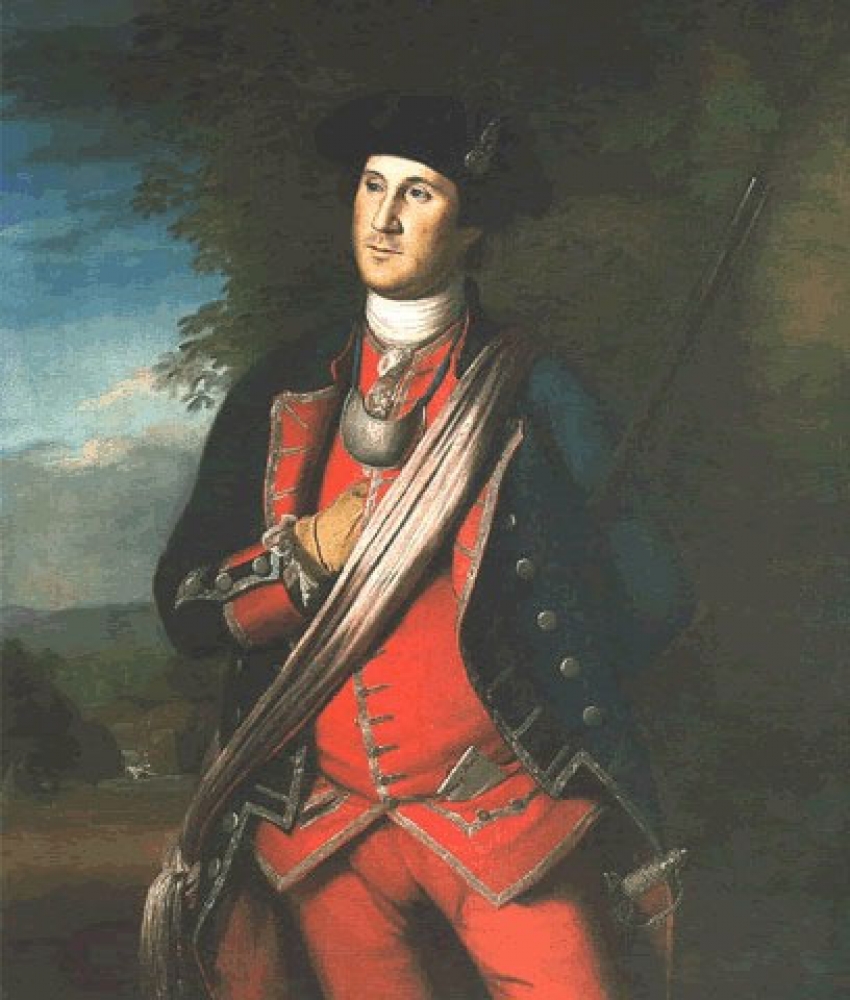
"Oh, this piece of junk? Yeah, who knows who its supposed to be---some guy named Veal or Beale or something painted it, I think. It's been in the attic. Make me an offer!"

“Oh, this piece of junk? Yeah, who knows who it’s supposed to be—some guy named Veal or Beale or something painted it, I think. It’s been in the attic. Make me an offer!”

The Ethics Quiz regarding whether or not it was unethical to take full advantage of United Airlines’  accidental fire sale on tickets spawned several good hypotheticals, including this one, from Tyrone T., an occasional Ethics Alarms commenter who, I happen to know, thinks about these matters as his occupation. I know the answer to this one (I’ve seen it before), so I’ll hold off until you’ve thought about it a while.

Here is Tyrone T.’s Comment of the Day on the post “Ethics Quiz: The United Airlines Give-Away”:

“So, if you are hired by your client to find the cheapest fare, can you act ethically and refuse to take advantage of the error? Consider the following:

“Alexander Mundy is a lawyer and an acknowledged expert in American painting. He has several clients who regularly retain him to negotiate the purchase of museum quality art. Recently, a client hired Mundy to negotiate the purchase of a portrait of George Washington as a young man.

“The client explained, ‘I saw it on a house tour five years ago and tried to buy it then, but the woman who owned it said it was a family heirloom and wasn’t interested in selling. I heard that she died recently and her husband is having an Estate Sale. You have authority to purchase the painting for up to $500,000.’

“Mundy goes to visit the old widower and asks whether he would be willing to sell ‘that picture of the young man there.’ Continue reading

Cher’s Ethics Tweets

Lan 159

Earlier this week, Cher used her interview with USA to take some well-aimed pot-shots at Miley Cyrus’s universally loathed “twerking” antics on the MTV Awards show. She said of Cyrus

“”I’m not old fashioned. She could have come out naked, and if she’d just rocked the house, I would have said, ‘You go, girl.’ She could have come out naked, and if she’d just rocked the house, I would have said, ‘You go, girl.’ It just wasn’t done well. She can’t dance, her body looked like hell, the song wasn’t great, one cheek was hanging out. And, chick, don’t stick out your tongue if it’s coated. If you’re going to go that far, then think about it before you do it.

These are wise words from a veteran and proven performing star to a young one on the way up, or heading for a crash. Essentially, Cher is stating the principles of professionalism: whatever you do, do it right, do it well, and respect your constituency. Cher has the bona fides to offer such an opinion since she has stretched the lines of sexual propriety on stage more than once, but it was always used as an additional enhancement on the way to her “rocking the house.”

The legendary pop diva was apparently surprised that her comments became a one-day sensation on the gossip websites and cable entertainment shows, and  had second thoughts about them, which she communicated in a couple of tweets to the Twitterverse. In Cher-ese, they are all about ethics:

Chers Tweets

Translation: Continue reading

Your National Hispanic Heritage Month Assignment: Remember The Amazing Elfago Baca (February 10, 1865 – August 27, 1945)

Baca statue

As frequent readers of Ethics Alarms know, I fervently believe that history is important, and that we all have a duty to remember and honor the remarkable Americans who have gone before us, their exploits, triumphs, struggles and achievements, both for our sakes—for we can learn much from them—and theirs. I am constantly discouraged by the inspirational stories and fascinating historical figures who have nearly been forgotten. The schools don’t teach our children about them, and popular culture ignores them. This weakens the flavor and the power of our shared culture: it is wrong, that’s all.

Today, as I realized we were in the midst of National Hispanic Heritage Month ( September 15-October 15), I want to do my part to help keep alive the name and the story of a Mexican-American who may have faded from memory because the events of his life seem more fictional than real. Indeed, for most of my life, until a couple of years ago, I thought Elfago Baca was a creation of Walt Disney’s creative staff, who wrote a ten episode mini-series about him called “The Nine Lives of Elfago Baca” for the “Disneyland” show (“Now…from Frontierland!”) in 1958. I loved that series, but it never occurred to me that the series’ tales of a gunslinging, lawyer-sheriff in Old New Mexico could possibly have any connection to reality.

But they did. The real Elfago was, if anything, even more improbable than his fictionalized counterpart, portrayed by a very young and athletic Robert Loggia, who is best known as the toy magnate who plays “Chopsticks” on the giant keyboard with Tom Hanks in “Big.” Continue reading

The Authority Trap: Elizabeth O’Bagey’s Three Ethics Strikes

Woman-pulling-off-a-mask

It is not, you see, enough to have a good idea, an original argument, or a brilliant solution.There must be reason for important people, people who make decisions that affect lives, to pay any more attention to you than they do anyone else who claims to have such things, because its is often difficult for even intelligent and experienced individuals to distinguish genius from well-expressed garbage. There must be something that elevates that unique and valuable perspective you bring to a problem above the swirling mess and noise generated by the blabbering and shouting competition, and the thing is, if you really have a valuable perspective to contribute, you owe it to not just yourself, but to your country, even humanity.

There is one asset, if you are otherwise unknown, that will provide that elevation besides the inherent virtues of your brilliant idea, and that is authority...a book, a connection everybody knows and respects, or, perhaps most of all, academic credentials. And there are two things that will make it impossible to raise your special contribution above the throng, and they are a conflict of interest, and a reputation for hiding the truth. These are the murderers of trust.

This brings us to the strange case of Elizabeth O’Bagy, a senior analyst at the Institute for the Study of War, who managed to get the Wall Street Journal to publish her analysis of the civil war in Syria, and her conclusions, based, we were to assume, on her study, analysis and time in the country, regarding the benefits of U.S. employment of military force in the region. Continue reading

Regarding the New, Improved Second Amendment, Indoctrination and Hanlon’s Razor

Just in time for the latest round of political exploitation of a gun-related tragedy, it has been discovered that a school history textbook used in some Texas  high schools (and probably others) mis-states the meaning of the Second Amendment, neatly editing away the part that all the controversy is about.

In fact, John J. Newman’s “United States History: Preparing for the Advanced Placement Examination,” rewrites the Second Amendment to the United States Constitution. On page 102 of Newman’s book (page 134 of the PDF version), the author summarizes the amendment in a way that distorts its meaning:

newman-book-1

Could this be intentional? Well, it is certainly wrong, and one is not being conspiratorial to wonder how such a blatant error 1) got into a history text in the first place , 2) passed any review process, and 3) lasted this long.

It is well-established that the Second Amendment  guarantees the individual’s right to keep and bear arms, and not only in a militia. How far that guarantee extends is indeed a matter of intense debate, but Newman has misleadingly limited that right only to those who are members of a government militia, essentially editing the amendment right into obsolescence.  Though that is clearly where many anti-gun zealots, including Senator Diane Fienstein, CNN talk-meister Piers Morgan, and many others would like to see it go, it is not the current state of the law, and never has been.The Supreme Court opinion in  District of Columbia vs Heller (2008), which is not mentioned in the textbook, held that the Second Amendment “protects an individual right to possess a firearm unconnected with service in a militia, and to use that arm for traditionally lawful purposes, such as self-defense within the home.”

There is no defending Newman’s textbook, except as a justifiable attempt to destroy the Second Amendment by teaching students that the right to bear arms doesn’t exist in the modern world—in other words, by using deception and indoctrination. Continue reading

Your Introduction To “Private Re-Homing”

Puppy, child, what's the difference? The point is make it someone else's problem, right?

Puppy, child, what’s the difference? The point is t0 make it someone else’s problem, right?

Every time you see a national newscast take up valuable time telling us about Miley Cyrus, the Kardashians, Chelsea Clinton or the White House waterdogs, think about Inga, or Quita, victims of the increasingly common practice of underground adoption known as “private re-homing,” in which adopted children are traded around like dogs or kittens, and abused dogs and kittens at that.

I don’t have a lot of commentary about this horrible practice. My life was a little bit happier before it was brought to my attention. In the history of Ethics Alarms, perhaps the most upsetting story I have had to write about was the horrific conduct of Torry Hansen, a Tennessee mother who adopted a Russian child and then, finding that she couldn’t cope with his problems, put him, alone, on a plane bound for Russia with a note pinned to his jacket. I wrote that post with tears in my eyes; it upsets me to write about it now. Yet something very like what Hansen did to her son is being done via the internet, frequently and with little interference from the government or anyone else. I wish I didn’t know about this—no, that’s not quite right. I wish this wasn’t a feature of our society, so I wouldn’t have to know about it, much less write about it. Continue reading