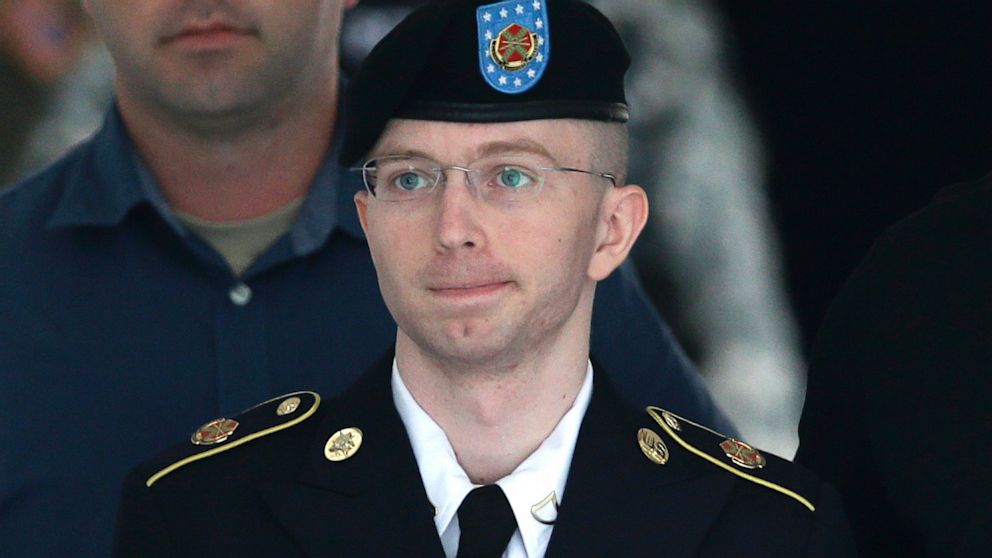
The Encyclopedia of Ethical Failure!
Published by the Defense Department, it doesn’t actually include all ethical failures (you can imagine what keeping that publication up to date would be like), but it is fascinating, illuminating and depressing reading nonetheless.
And, since it was published in 2012, it needs updating too. 2013 was not a good year.
 Ethics Alarms
Sadly, nothing in the encyclopedia about ethics. It’s all about breaking laws and rules.
Yup. The compliance mindset. Strange, since the military codes are good on ethics.
Just to be contentious – Ethics ARE rules and laws. They may not be the laws of a particular country, but they certainly are laws of a particular culture or social group (and often they are just as arbitrary as laws of the land).
I think you’d be hard pressed to say that there are ethics that are constant and unchanging. Look at our changing ways of treating different types killing (the most common moral rule in the world – thou shalt not kill) differently, whether it’s pre-meditated, heat-of-the moment, war or government sanctioned genocde or government mandated penalty for crime, just off the top of my head – the ethics of these (particularly the death penalty), has changed significantly over time and is significantly different in different cultures.
In fact I think we hold the armed forces to different ethical rules than we hold the rest of the country.
None of this is a bad thing of course, but what your point really is (I assume) – is that the encyclopedia doesn’t include ethical breaches that are not covered by the law (or Codes) of the US military.
Check the definitions used here, Robert. There are many definitions of ethics, but I don’t care for the one that includes formal rules. Ethics is the study of what is right and wrong, and having rules substitutes for ethical values and instincts, leaving them to an authority who enforces them. You don’t need to have an ethical bone in your body to follow rules, just a healthy fear of the consequences if you don’t.
Jack in the definitions page you say that
“MORALITY: A system of determining right and wrong that is usually established by some authority, such as a church, an organization, a society, a deity, or a government.
ETHICS: The process of determining right and wrong conduct.
ETHICAL SYSTEM: A specific formula for distinguishing right from wrong.”
I personally think there should be some way of differentiating morality from ethics – particularly when you look at various denunciations of XYZ as “immoral” which in this definition would seem to cross-over into “unethical”.
The real problem is that every single culture has different definitions of right and wrong (let alone morality), and thus different ethics. And because of this the “process of determining right from wrong”, is very much a matter of interpreting the unspoken laws and codes of that society.
Your point above is really about obeying the spirit of the law through some intrinsic desire to conform to cultural norms, versus obeying the letter of the law due to fear of consequences. But I would contend that ethics are still (unspoken, cultural) laws and rules.
Thinking about it, I think the problem is actually one of defining “law”, you are probably using it in a narrow legal sense meaning solely rules passed by a governent, whereas I am using it in a much wider colloquial sense.
From Wiktionary
3. “(more generally) A written or understood rule that concerns behaviours and their consequences. Laws are usually associated with mores.
“Do unto others as you wish them to do unto you” is a good law to follow.
You’ll find that I never use the term immoral here, or hardly ever. Yes, most people use “unethical” and “immoral’ as if they were the same thing. That’s not helpful. Gay sex may be immoral, but its not unethical, for example. The distinction is crucial.
You can find respected definitions that blur all sorts of lines—this is one reason why ethics isn’t a popular field—the practitioners can’t even agree on what the topic is.
Laws are rules enforced by authority, and may (or may not) be based on ethical values. But “Do unto others as you wish them to do unto you” is definitely not a true law OR rule, but a system of ethical analysis.It’s a useful system, but a terrible rule, because there are so many situations where is doesn’t apply or leads to an absurd result. Wiktionary couldn’t have picked a worse or more confusing example.
Ah well – that’s why I’m confused – language is so darn woolly.
I’ve always been slightly fascinated by Wittgenstein’s contention that language actually limits our ability to conceive things for which there are no words. I wonders how this might apply to ethics.
I think ethics is one of the best examples of that phenomenon that you could find.
But is not right and wrong simply an arbitrary set of rules?
Values and principles, and they aren’t arbitrary. They are universal.
then there must be some way to prove their existence as true.
Why the picture of Manning? Is it the leaking of classified information to Wikileaks or his recent announcement that he wished to become a woman because he feels trapped in a man’s body?
Just curious.
Because a private leaking that amount of classified information based on his unilateral call regarding its lawfullness is the epitome of military misconduct. The alternative was Abu Ghraib.
You know I would never argue that feeling trapped in a man’s body was an ethics violation.
I suspect he claims that he is a woman trapped in a man’s body to get protection from the other inmates.
Traitors are not all that popular in Leavenworth.