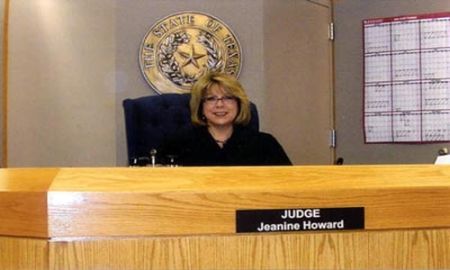
Unethical Quote Of The Month: Judge Jeanine Howard (Who Is Also The Incompetent Elected Official Of The Month, An Ethics Dunce, And Pretty Much A Blight On The Justice System And American Society In General)

judge Howard

“There are rape cases that deserve life. There are rape cases that deserve 20 years. Every now and then you have one of those that deserve probation. This is one of those and I stand by it.”

—-Texas District Judge Jeanine Howard explaining her stunningly lenient sentence of probation and community service—“250 hours of community service at a rape crisis center” !—for a confessed rapist of a 14-year old girl at her school.

The sentence  was not merely lenient but probably illegal, and a it seems likely that the sentence will be altered by another judge. Nonetheless, this kind of result, based on the judge’s assessment that the victim was promiscuous and had been pregnant (which she denies) will certainly make other rape victims think twice before they report the crime. Bobby Villareal, executive director of the Dallas Area Rape Crisis  Center, told reporters…

“This is an example of why people don’t come forward and report their sexual assaults because they are not only victimized at the time but the continuing game of shame and blame. They are put on trial again in the judiciary and the media. The things that were said were outrageous and some of them were actually untrue that were reported.”

Judge Howard seemed to be making up the law and sentencing guidelines on the fly. The rapist, 20-year old Sir Young, never denied that he had raped the girl, or that she hadn’t strenuously told him to stop. “Consent is not an issue and it wasn’t an issue because he admitted he didn’t have her consent,”  prosecutor Andrea Moseley said. “When consent is not an issue, a victim’s past is never appropriate for comment. That’s my problem with it as a woman and as a prosecutor. I was certainly disappointed in the message I think it sends to the community.”

The community can send a message back, as Judge Howard is up for re-election in the fall, but it won’t be easy. A Democrat, she is running unopposed. Continue reading

Ethics Hero: Arkansas Attorney General Dustin McDaniel

Dustin McDanielSome attorneys general understand the obligation of a state’s highest legal representation, even if the Attorney General of the United States does not.

Arkansas Attorney General Dustin McDaniel, a Democrat,told the press yesterday that he personally  he supports allowing same-sex couples to marry,  but will nonetheless continue defending his state’s 2004 ban on gay marriages in court.

The news angle, as reported, was that McDaniel, a Democrat serving his final year as the Arkansas AG, is the first statewide official in conservative Arkansas to back same-sex marriage. Ethically, however, the significance is that although he disagrees with the current law of the state that is his client, he will nonetheless do his duty according to the laws he swore he would uphold….as he should, as an ethical and honorable lawyer who is there to serve the public’s interests, not his own conscience. Continue reading

Ethics Dunce: Van Jones

Slavery, 2014 style.

Slavery, 2014 style.

On this Sunday’s edition of ABC’s This Week with George Stephanopoulis, the weekly gorge-rising moment occurred when former White House “czar” and alleged truther turned pundit Van Jones weighed in on the Donald Sterling saga, noting that in the NBA owner’s taped remarks he arrogantly alluded to the fact that his highly paid NBA players are dependent on him for their livelihood. To plenty of nods and amens around the table (the Sunday talk shows no longer even attempt to attempt partisan or ideological balance), Jones said that this “sounded more like 1814 than 2014.”

I will observe again, though no one in the panel was fair enough to because Sterling is disgusting and doesn’t deserve journalistic fairness, that these comments were spontaneous and off-the-cuff, and not designed to withstand the scrutiny of critical parsing and hostile analysis, as few private conversations are. But that is a secondary point.

The main point is that nobody in the ABC roundtable, including moderator Stephanopoulis, was impertinent, brave, professional or competent enough to note that last week, rancher Cliven Bundy was crucified for making an ignorant statement that minimized the horrors of slavery, and that Jones’s idiotic comparison was as bad or worse. Continue reading

Are Haunted House Ethics The Same As Murder House Ethics?

Haunted-Homes2

I spent the wee hours last night watching “Insidious 2” (not as scary as “1,” and too confusing to watch while composing ethics blog posts), and, to fend off nightmares, the Wayans’ “A Haunted House” (sillier, grosser and not as funny as their two “Scary Movie” efforts). Naturally, this set me wondering about the ethics of selling a haunted house to an unaware buyer.

I thought I had covered this problem before here and here, where the topic was whether a property owner had an ethical obligation to divulge that the house in question had been the site of gruesome murders or suicides. The law in most states declares caveat emptor, but that’s only the law. The ethics verdict, in my view (but not everyone’s) is this, which my last comment on the topic, in 2013: Continue reading

The Sterling Backlash: Signature Significance, Racism, Hypocrisy, and Double Standards

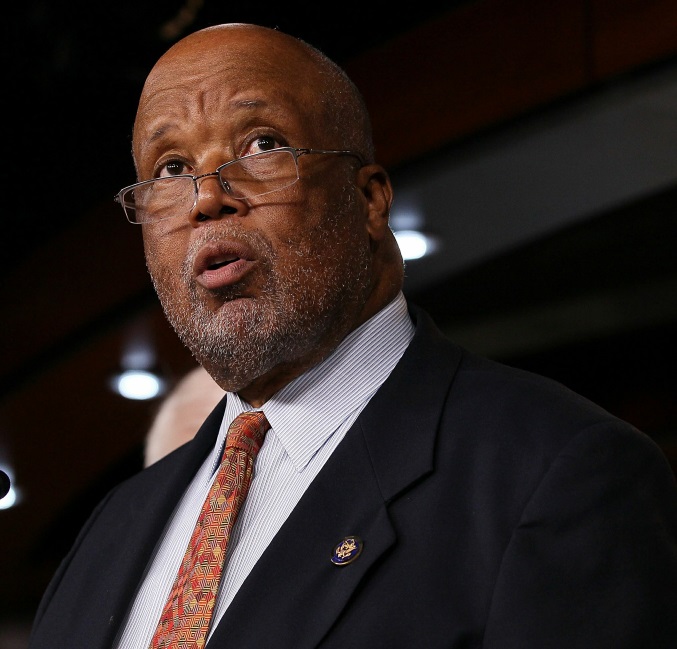
Bennie Thompson

“No big deal, he’s  just a Congressman…”

I often use the term “signature significance” in posts, and since it is a term that is not often applied to ethics, I thought today would be a perfect time to illustrate it in its original context, while clarifying the ethical murk around the Donald Sterling Ethics Train Wreck.

The original context of the phenomenon of signature significance is baseball, and I just watched an example of it. Today Red Sox left-hander John Lester beat the Oakland A’s, a very good team, by hurling eight innings in which he gave up no runs, only one hit, two bases on balls, while striking out 15 batters. If you don’t know anything about the game, let me tell you: this is extraordinarily good. Pitching performances can be measured and compared by using the “game score” method, developed by sabermetrics (that is, baseball statistics) pioneer Bill James. The best game score ever achieved was 105; the highest score in major league history for a pitcher who did not pitch all nine innings (as with Lester today) is 95, and has only been done once. (Theoretically, a game score could be as high as 145)

James also devised the term “signature significance” in the context of such games. His research showed that pitchers who were not outstanding talents never pitched a game with such a high game score even once—it simply didn’t happen. Thus, he reasoned, pitching a single game like Lester’s (the actual game he used was a similar performance by a young Roger Clemens before anyone knew what Clemens would become) was sufficient proof, all by itself, to conclude fairly and scientifically that the game was meaningful, without any other data. In cases of signature significance, he explained, the usual statistical rule that small sample sizes are not reliable indicators do not apply. Sometimes one incident, performance or episode is sufficient to make a confident verdict.

Signature significance is very useful, I have found, to rebut unethical rationalizations for unethical conduct that are used to excuse the agent of the ethical breach. “It’s only one mistake” and “Anyone can make a mistake” are the main ones. In the case of some serious kinds of bad conduct, this reasoning is misleading and false. Donald Sterling’s comments recorded and publicized by his whatever-you-call-her V. Stiviano have signature significance: they prove he’s a racist. Can you imagine any non-racist individual saying, in public or private, that he didn’t want his girlfriend being seen at his team’s games in the company of blacks?  How could this possibly occur? It wouldn’t, of course. Only those who hold racist attitudes and beliefs think and say such things. Sterling is a racist.

Stiviano, for her part, despite being the one who brought the media, the sports world and the public down on Sterling’s 80-year-old head, now says she doesn’t believe he’s a racist. Of course, she also says she’s his “silly rabbit” and that she is going to be President some day. She is an idiot. But I digress.

Other figures have made statements in the media that also have signature significance of the same sort as Sterling’s, yet the very same groups and journalists who have been whipped into a self-righteous froth over Sterling are strangely silent: Continue reading

Ethics Hero: Pasco High School (Dade City, Fla.)

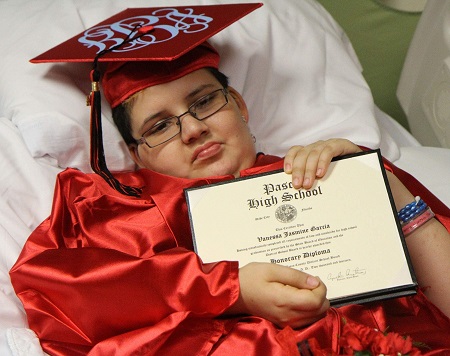
Graduate

I need this story to get the previous post out of my head.

In Mark Harris’s novel “Bang The Drum Slowly,” best known as the inspiration for the film that introduced Robert DeNiro to the movie-going public, a major league baseball team exhibits uncharacteristic kindness toward a third-string catcher who is dying of Hodgkin’s Disease. The book, like the film and the stage adaptation, is about kindness and the Golden Rule, an ethical value that seldom inspires literature or art. Kindness is not particularly exciting, but it may be the most ethical of all ethical virtues. The serious illness and impending death of someone in our life often brings the importance of kindness into sharp focus. “Everybody’d be nice to you if they knew you were dying,” says the doomed catcher, Bruce Pearson, to his room mate and champion, star pitcher Henry Wiggen.  “Everybody knows everybody is dying,” Wiggen replies. “That’s why people are as good as they are.”

Pasco High School student Vanessa Garcia  learned that she had an inoperable brain tumor when she was in elementary school. Until two years ago, treatment had kept the tumor  in remission, but the mass began growing again when she was 15. Undaunted, Garcia continued to go to school, work diligently, and keep a positive and uncomplaining outlook, earning the admiration of her classmates, teachers and school officials. Continue reading

Animal Ethics: Now THIS Is An Unethical Veterinarian

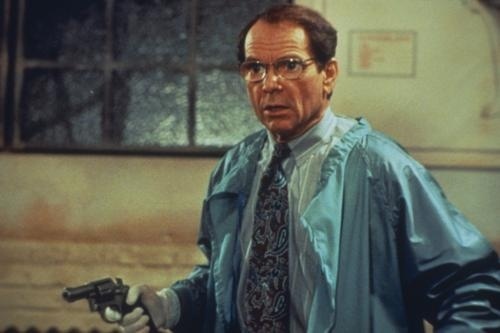
Believe it or not, Dean Jones was a NICE vet compared to Dr. Tierce...

Believe it or not, Dean Jones was a NICE vet compared to Dr. Tierce…

Yechh. This story reads like a sick version of “Beethoven,” which, as all you Charles Grodin fans will recall, featured a villainous veterinarian (Dean Jones, no longer cute) who stole pets to use for medical research.

In Fort Worth, Texas, Jamie and Marian Harris took their dog, a 5-year-old Leonberger named Sid, to the well-respected  Camp Bowie Animal Clinic, to be treated for what they thought was a minor health issue. After undergoing treatment,  Sid developed trouble walking and the veterinarian, Dr. Lou Tierce, told the Harrises that  their dog  had an untreatable spinal condition that would get worse, cause him increasing pain, and ultimately cripple him completely. The family was told the best option was to have Sid euthanized. The couple and their young son agreed, said their goodbyes and authorized the clinic to bury Sid on the vet’s farm.

Six months later, a veterinarian technician named Mary Brewer, who worked at Camp Bowie, contacted the Harrises to inform them that Sid was alive and being kept alive in a cage, surrounded by his urine and feces, so he could be used for blood transfusions to treat other dogs.
Continue reading

A Brief Ethics and Culture Lesson For First Amendment Pedants

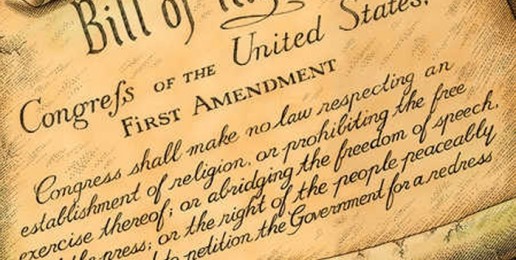
First-Amendment-on-scroll1

Thousands or pundits and web commenters, perhaps hundreds of thousands, in their concerted effort to justify the speech and thought police, (at least as long as the Enforcers are not likely to disapprove of their thoughts and speech), are mocking those who cite the First Amendment as authority for the proposition that the treatment of Donald Sterling, and others, are harmful, sinister, and un-American. The pedants are technically correct, of course. When someone who is fired for posting something offensive on Facebook screams, “My First Amendment right of free speech has been violated!”, that typically speaks of a poor civic education. The Bill of Rights only constrains government action, not private transactions. No rights, which are enumerated and protected from government incursions by the Constitution, have been lost or affected when only private action is involved.

That does not mean, however, that when private action opposes an individual’s Constitutional rights, it is necessarily acceptable, fair, harmless, reasonable or right. Indeed, the government and law serves a crucial function by delineating and encouraging cultural and ethical values. The principles articulated in the Declaration of Independence, the Constitution and the Bill of Rights do not merely constrain government. They form the basis of the ethical values that make the United States a unique culture, and point the way to what Americans, as Americans, regard as right and wrong.

Thus, while searching though a friend’s private e-mail account isn’t a violation of one’s right to privacy under the 10th Amendment, violating a fellow citizen’s privacy is wrong, and the Bill of Rights stands as authority that it is something important to each individual that should be respected. The Constitution and the 13th, 14th, and 15th Amendments won’t and can’t stop Americans like Sterling from being bigots in their private dealings, but they send a clear message that bigotry is not approved by the United States and was not by those who have charted our ethical course. Privately interfering with someone’s right to worship as they please is wrong, and the fact that the government is prevented from doing it tells us so. The First Amendment’s existence also tells us that preserving free speech—open, fearless, speech—is essential to core American values, because it also supports free thought, that which tyrants and dictators fear. Yes, we all have the right to make free speech, thought and discourse costly, difficult and painful, but we should not. We have the right to punish severely the non-conformist, the iconoclast, the rebel, or the citizen who may be a little late, or slow, or reluctant, to accept the conventional wisdom of the moment. We have the right to do it, but it is wrong. It is un-American. The Constitution tells us so.

Addendum: After I wrote the post, I encountered this.


All Aboard The Sterling Train Wreck: The Foolish, The Grandstanders, The Dishonest And The Irresponsible

Hypocrites

The question is, which is which?

I’ll let you puzzle it out; I’ll be busy retching:

And now, the latest and deplorable passengers on this distasteful Ethics Train Wreck…

Sen. Harry Reid

Reid saluted NBA Commissioner Adam Silver for his “work to swiftly move to stamp out bigotry in its ranks,” as if that had any thing at all to do with what Silver was doing. Reid’s endorsement, however, places a high elected official’s stamp of approval on the proposition that those with unpopular ideas and biases should be punished and have their property taken away from them. Reid said that the league has set a new standard for how professional sports leagues should respond to racism. Of course, Sterling did nothing racist at all, not did he attempt to, or publicly announce such intent. The “new standard” that Reid is applauding is economic penalties for non-conforming beliefs. Finally, Reid attempted to make the absurd parallel to the Washington Redskins’ controversial name: “How long will the NFL continue to do nothing — zero — as one of its teams bears a name that inflicts so much pain on Native Americans?” Reid asked Continue reading

The Washington Post, Faking it.

This one’s for you, Bob Hoskins.

You deserved better.

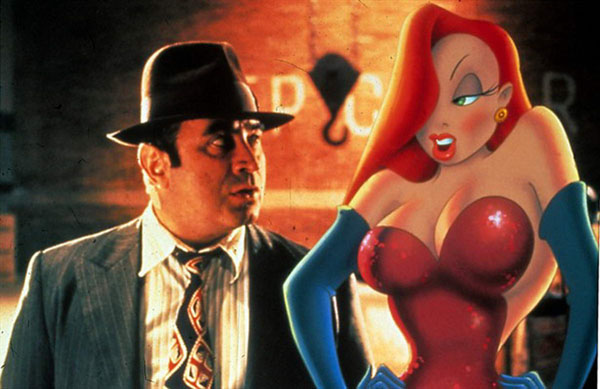
Who-framed-roger-rabbit-Jessica-RabbitIf you come here frequently, you know that I deeply resent lazy, inadequate or inaccurate obituaries of famous and accomplished figures. Obituaries are the beginnings of their legacies, and set the foundations for how, and even if, they will be remembered. Not fairly representing these lives is lousy and lazy journalism, and worse, it is disrespectful to the deceased and contemptuous of history.

Bob Hoskins, the superb and versatile British actor, died this week. He was one of my personal favorites—a better, cockney version of Joe Pesci—but even if he meant nothing to me, the Washington Post’s sloppy and factually wrong obituary today would have been inexcusable. I liked Hoskins’ various tough guys and mobsters, but the film role that blew me away was his amazing portrayal of the human detective trying to unravel a cartoon mystery in the 1988 Disney classic, “Who Framed Roger Rabbit?” Hoskins, in addition to wielding a perfect American accent (he was really a Cockney), was intense, funny, moving and entracing while interacting with characters that were drawn into the scenes long after he performed them. He made the complex conceit of the movie work, and I would rank it among the most impressive acting turns of all time.

Here is how obituary writer Adam Bernstein described Hoskins’ most famous role in the print version of the Post today:

“(He) won over American audiences as a detective who falls in love with a voluptuous cartoon character in “Who Framed Roger Rabbit?”‘

and

“Mr. Hoskins was a boozing detective who falls for Jessica Rabbit, a cartoon human of pneumatic proportions who can’t help but bewitch men. “I’m not bad,” insists Jessica (voiced by Kathleen Turner). “I’m just drawn that way.””

Continue reading