A Proposed Guide To Spoiler Ethics

"It SINKS??? You spoiled the ending!!!"

“It SINKS??? You spoiled the ending!!!”

I was just admonished on Facebook by a friend (a real friend, not just the Facebook variety), for referencing the end of the last episode of Season One of “Orange is the New Black.”  He hadn’t finished viewing the season yet, and this was a breach of spoiler ethics. Or was it?

Ever since I encountered for real someone who was angry with me for “spoiling” the end of “Thirteen Days,” ( “Yes, World War III started and everybody died”), I have been dubious about spoiler etiquette. The advent of DVDs and Netflix has made this all the more annoying. If I’m in a group of five, and one individual hasn’t kept up with “House of Cards,” are the rest of us obligated to censor our discussion? As a devotee and fanatic devourer of popular culture, I admit that my first instinct is to say, “Keep up, get literate, or pay the price.” If I actually live by that rule, however, I will be a walking, talking, writing, spoiler machine.

Chuck Klosterman, “The Ethicist” in the world of the New York Times, recently pronounced himself an anti-spoiler absolutist:

“I’m an anti-spoiler fascist. I don’t believe that any conversation, review or sardonic tweet about a given TV show is more valuable than protecting an individual’s opportunity to experience the episode itself (and to watch it within the context for which it was designed). I’ve never heard a pro-spoiler argument that wasn’t fundamentally absurd.”

Even Klosterman, however, excepted sporting events (the question posed involved mentioning World Cup scores to a friend who was annoyed that the game had been “spoiled” for him) from his fascism, writing, reasonably:

“I must concede that live, unrehearsed events are not subject to “spoiler” embargoes A live event is a form of breaking news. It’s not just entertainment; it’s the first imprint of living history. …Because this guy is your buddy, you might want to avoid discussing the games’ outcomes out of common courtesy — but not out of any moral obligation. It’s his own responsibility to keep himself in the dark about current events.”

For once I agree with Chuck. But what are reasonable ethics rules for dealing with the other kind of spoiler, involving literature and entertainment?

Luckily, this is not new territory, though it is evolving territory. The underlying ethical principles include fairness, trust, consideration, compassion, and empathy, which means that the Golden Rule is also involved.

Back in 2010, an erudite blogger calling himself The Reading Ape proposed a draft “Guide to Responsible Spoiling.” That blog is defunct; the promised successor is not around, and so far, I haven’t been able to discover who the Ape is. Whoever he is (Oh Aaaaape! Come back, Ape!) , he did a very good job, though some tweeks might  improve his work, especially in light of the emergence of Netflix.  (I have edited it slightly, not substantively…I hope he doesn’t mind, or if he does, that he’s not a big ape.) His approach is to frame the problem as an ethical conflict, in which two competing ethics principles must be balanced. I think that’s right.

Here is his “draft”—what do you think?

“A Brief Guide to Responsible Spoiling”

by The Reading Ape (2010)

The objective is to balance two ethical principles:

I. The Right to Surprise: The inherent right of any viewer or reader to experience the pleasure of not knowing what’s
going to happen next.

II. The Right to Debate: The inherent right of any viewer or reader to engage in public discourse about the content of
a given work of narrative art.

Part 1: When Spoiling is Fair Game

In the following circumstances, one can discuss crucial plot details and reveal endings with a clear conscience. Continue reading

Comment of the Day: “The Obama Outhouse Float: Not Racist, Just Wrong”

Obama float

Rick Jones, a drama professor, deep thinker and superb writer, weighed in on the controversy over the tasteless Independence Day float in Norfolk, Nebraska. (As an aside: did my trip to Nebraska last week unleash something in the Ethics Cosmos? First this story, then the Nebraska judge telling the Supremes to “stfu”?) Rick courageously wades into the messy and contentious area, often discussed here, of racial motivations behind criticism of Barack Obama. Here is his Comment of the Day on the post, The Obama Outhouse Float: Not Racist, Just Wrong:

I’ve written about this incident, as well, and we generally but don’t totally agree.

I’m intrigued by the discussion of racism. Certainly I agree that nothing in the events described qualifies as inherently racist… but I think the word “inherently” matters here. The fact that there is not an obvious racial motivation for what is clearly an intentionally offensive float, one which displays its creator’s “disgust,” does not mean that it is intrinsically devoid of such volition. Even the little boy who cried “wolf” was right once. Similarly, whereas there are those who reflexively scream “racism” at every criticism of the current President, that doesn’t mean that there aren’t expressions of anti-Obama sentiment which really are grounded in the fact that he has a little more melanin than you or I do.

In this case, Ms. Kathurima and her daughter have experienced racism—or believe they have—and you say that you “don’t blame her” for perceiving it in this instance. Nor do I. That Mr. Remmich intended to insult the POTUS, I think goes without saying. Why, specifically, he set out to do so is an open question. Maybe it’s racial. Maybe it’s political. Maybe he knows his neighbors and pandered to their predilections. I certainly don’t know, and I wouldn’t be surprised if he doesn’t, really, either.

I grapple with a variation on this theme constantly in my professional work, especially in the area of communication theory as it applies to aesthetics. Oversimplified a little, the modernist/positivist view is that the sender of a message creates and encodes meaning, and the receiver’s job is to “find” the meaning through a process of decoding. The post-positivist view, however, is to argue that the sender catalyzes rather than creates meaning, that meaning is in fact created by the receiver of the message. To me, the two positions are equally valid.

One of my standard approaches to this dilemma is to suggest to students that “somewhere in this room is someone who has had a major fight with a loved one because what one of you thought you said was not what the other thought he/she heard.” Moreover, whether the “blame” for a misinterpretation should be placed with the sender or the receiver is likely to be influenced in your mind not so much by philosophical or theoretical concerns as by which of those positions you happened to occupy on the occasion in question.

We are left, then, with two significant questions, neither or which I am prepared to answer with confidence. 1). Is the meaning of a communication determined by the sender, the receiver, or by some presumably objective external agent? 2). At what point does a particular reaction pass from confirmation bias into, well, experience?

_______________________

Continue reading

Emmy’s Transgender Nomination: Important, Inspiring, and a Breach of Integrity

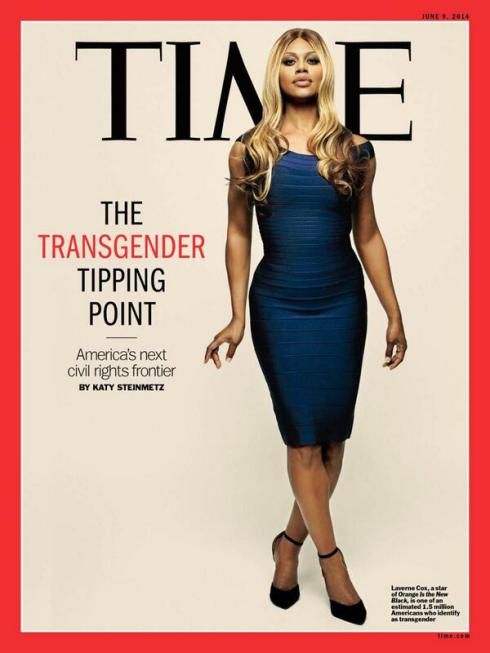
laverne-cox-timeThe Emmys made cultural history yesterday, nominating Netflix’s “Orange Is the New Black” actress Laverne Cox, who plays Sophia Burset in the prison drama, in the category of outstanding guest actress in a comedy series. It is the first time an openly transgendered actress has been nominated for an Emmy.

She joined several of her colleagues  on the show who were also recognized in various acting categories: stars Taylor Schilling, Kate Mulgrew, Uzo Aduba and Natasha Lyonne.

The problem is that Cox received the nomination for political and social reasons unrelated to her performing skills. This will be denied, of course, and since all awards are subjective, no one will be able to prove this is the case. It is, however. In the large, uniformly superb ensemble cast, Cox’s role is relatively minor, and I have a difficult time believing that anyone would objectively identify her as a standout in the show based on her acting. (In the current season, which I have seen in its entirety, her character is almost invisible). This isn’t intended to diminish Cox in any way, for in the role she plays, I cannot imagine it being played better. Nevertheless, there are many un-nominated actresses in that show—as well as other shows— whose characters are more vivid, who have to show more range, and who are more deserving of a nomination once the process is stripped of irrelevant political baggage. Among them: Taryn Manning, whose transformation into the complex religious fanatic Tiffany “Pennsatucky” Doggett is frightening; Yael Stone, as the heartbreaking stalker Lorna Morello; Samara Wiley, as te alcoholic moralist Poussey Washington, and several others.

Everyone is thrilled for Cox, with Cox, reasonably, leading the way. “I’m on cloud nine. I’m through the roof,” said the actress, whose path to an award was  paved when she was featured on the cover of Time magazine.“What a wonderful, wonderful day for “Orange” and for black trans-women,” she said.

Undoubtedly. It’s not such a great day for the acting profession generally, the Emmys, or the principle that awards based on merit should be decided based on merit, and not social and political agendas. I would say, “But that’s Hollywood,” except that it isn’t just Hollywood. Continue reading

A Too Common Media Practice That Is Per Se Unethical: The Purchased “Opinion”

"But remember---we tell you what opinion to express. Deal?"

“But remember—we tell you what opinion to express. Deal?”

Lanny Davis, the attorney and Washington D.C. political consultant who became a tiresome, repetitive and shameless presence on national television during the Monica crisis, has just authored a review of sorts of Hillary Clinton’s book, “Hard Choices.” On “The Hill,” he pronounces it a genuine portrait of its author, and as accurate as it is complimentary. “No, Hillary Clinton hasn’t changed through all the years: the importance of family and friends, the “service gene” as active today as I witnessed some 45 years ago,” David writes, ” motivating her to “never quit — never stop working to make the world a better place.”

Maybe the book is wonderful, and maybe it isn’t; about that, I do not care. Davis begins with a lie: he says that the book’s sales “are strong,” when the buzz on the web, and not just among those rooting for Clinton to fall on her face, is how disappointing sales are. But Davis is paid by his clients to shade the truth; I’m not going to quibble about the deceit inherent in “strong.”

This, however, matters, and it is a long-held pet peeve of mine: Lanny Davis works for the Clintons. He has for years. If he is not currently on Hillary’s payroll, he will be, or is angling to be: pick a, b, or c. The conclusion is the same no matter which it is: he is biased; he will personally benefit from endorsing Hillary and her book, and thus his article, which purports to be an honest, objective, reliable assessment, is almost certainly nothing of the kind. Continue reading

Is There An Ethical Obligation Not To Shock, Nauseate, Or Blind Your Neighbors? Of Obese Joggers and #FreetheNipple

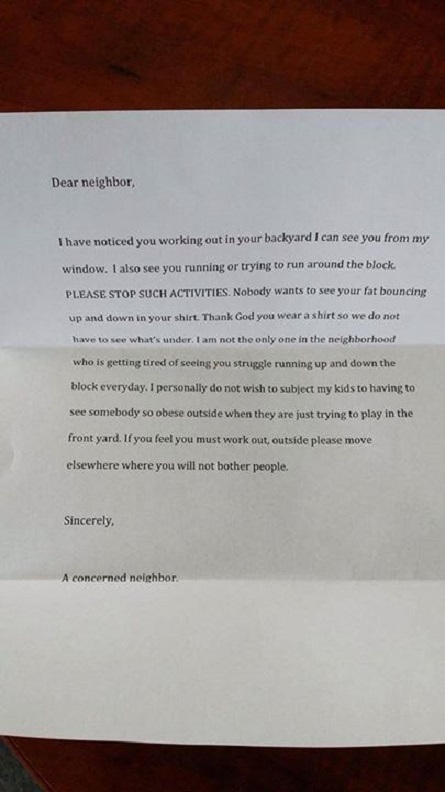
A Facebook friend posted the following letter, posted by one of her friends, and supposedly passed along by the target of the letter. The individual subjected to the complaint is reputedly trying to overcome obesity and various health issues. The letter:

Mean letter

I have my doubts regarding the authenticity of this, but it doesn’t matter to this post. I assume we can all agree that the letter itself, if genuine, is cruel, mean-spirited, cowardly (it is anonymous), hurtful, and indefensible. It does raise an valid ethics question, though, which is this: Do we have any ethical obligation any more to exhibit modesty and a degree of public decorum out of doors, when we are likely to come under the gaze of others? If so, what are that obligation’s parameters? Continue reading

Ethics Dunce: Federal Judge Richard G. Kopf

"Oh dear...and he looks like such a NICE federal judge!"

“Oh dear…and he looks like such a NICE federal judge!”

Richard G. Kopf is a senior district court judge on the U.S. District Court for the District of Nebraska, and a blogger. He is also,I would say obviously, an Ethics Dunce. Why?

He told the U.S. Supreme Court to shut the fuck up.

He really did.

That he did this on his blog, Hercules and the Umpire, doesn’t matter. It was in print, in public, and he’s a Federal judge. The obscenity came in the context of Judge Kopf’s criticism of the recent Hobby Lobby decision, but the context doesn’t matter either. There is no context in which it would be appropriate, judicial and ethical for a member of the judiciary to tell the Supreme Court of the United States to shut the fuck up. Nor does it matter that he used the texting code stfu rather than spelling out the words.

For a Federal judge to be openly disrespectful, uncivil and abusive to the top of the nation’s judicial branch is an assault on the rule of law, and undermines public respect for our institutions. As lawyer and blogger Rich Hasen wrote, Continue reading

Comment of The Day (Public Service Message Division): “Wanetta Gibson Is Even Worse Than We Thought”

Wait a second...I'm getting my rifle...

Wait a second…I’m getting my rifle…

We haven’t had one of these in a while, and I’m feeling like having a good fish-shoot in the ol’ barrel, so here we go….

Apparently there has been another development in the Wanetta Gibson saga—I know this because the last post about this horrible woman is suddenly getting traffic again—and this has moved one Terrance Skerrette—I sure hope there’s just one— to enter one of those periodic comments I receive here that serves as a public service announcement for the ethically-challenged. You know the kind—Saturday Night Live parodies of such spots used to be a staple:

“Hello. I’m Jack Marshall, and this is Terrance. Terrance was raised in an environment that left him with an inability to understand ethics. That’s right–he will go through life justifying horrendous conduct by using rationalizations, hideous logic, and warped values. Will you help Terrance? No, he can’t be helped by treatment, but perhaps, if you give generously, we can provide him with a comfortable shack in the forest and plenty of food, so he can live comfortably without infecting anyone else with his hopeless ethical ignorance and dangerous excuses for terrible conduct. Please send your generous contributions to “Help Terrance,” care of Ethics Alarms. Thank you. Terrance would thank you too, but he probably thinks you are evil.”

Continue reading

Ethics Quiz: Sexy Safety In The Air

This one’s simple. Watch this New Zealand Air safety video. It was recently pulled, possibly in part because of objections that it sexually objectified women. The video, shown to passengers before take-off, was even the target of a Change.org petition, which one again shows that many U.S. citizens don’t comprehend freedom of speech, and think that the U.S. is a monarchy, perhaps because the President often seems to be under that delusion himself. Now the video:

Your Ethics Alarms Ethics Quiz for a slow week in ethics (so far):

Is this video disrespectful to women, in bad taste, vulgar or inappropriate?

In the succinct words of Julia Roberts as Erin Brockovich: “They’re called boobs, Ed.”

And they are everywhere, and a lot more gratuitously displayed than here. Airlines have a problem getting passengers to pay attention to the safety instructions ( here’s Jerry Seinfeld making some trenchant observations on the dilemma), and having beautiful women in bikinis do the chore is as good a solution as any. Even the critics, prudes and boob-o-phobes must have been paying attention. Harm: minimal to none. Benefits: enough. The video passes utilitarian muster.

It’s also funny. I particularly like the Hawaiians in the dugout demonstrating the crash position.

________________________
Pointer: Fred

Facts: ABC


Ethics Tools: “A Theory of Jerks”

Actually, no. The OTHER kind...

Actually, no. The OTHER kind…

In Aeon Magazine last month, philosophy professor Eric Schwitzgebel provided a serious essay on the nature of “jerkitude.” It is also an excellent essay, and useful. “Jerk” is a designation that I have occasion to use frequently on Ethics Alarms, and for the most part, Schwitzgebel convinced me that I have been using it properly. Some excerpts… Continue reading

On Mockery, The Streisand Effect, Incompetent Lawyers And The Sleeping Yankee Fan

ESPN cameras caught Andrew Rector sleeping in his seat in the fourth inning of  the April 13 Boston Red Sox-New York Yankees game. In the time-honored tradition of TV play-by-play when something funny, weird or, most especially, sexy is spied in the stands, ESPN commentators Dan Shulman and John Kruk  began making fun of him. The clip ended up on YouTube, naturally, and thus on various sports websites, followed by the various idiotic, cruel, gratuitously mean-spirited insults, usually composed by brave anonymous commenters.

This is a familiar pattern of unethical public mockery, and we have become inured to it. Though the ESPN team’s jibes were rather mild in nature, and Rector’s legitimate embarrassment quota would be far, far less than, say, that of George Costanza when this happened at the U.S. Open, let me say for the record that picking fans out of the crowd at sporting events and making fun of them, whatever they are doing, is generally a rotten thing to do. I know: it’s public, you know you might be on camera, and the fine print on the ticket stub puts you on notice. Unless, however, the conduct involved is actually newsworthy or despicable (as in instances where an adult has snatched a baseball from a child), the Golden Rule applies. Who knows why Rector was sleeping? Maybe he was up all night with a dying relative or a grievously ill child—Shulman and Kruk don’t know. And if he chooses to pay for a ticket and nap during the game—and it wasn’t exactly a scintillating game, I should add—so what? Continue reading