Ethics Hero: Pasco High School (Dade City, Fla.)

Graduate

I need this story to get the previous post out of my head.

In Mark Harris’s novel “Bang The Drum Slowly,” best known as the inspiration for the film that introduced Robert DeNiro to the movie-going public, a major league baseball team exhibits uncharacteristic kindness toward a third-string catcher who is dying of Hodgkin’s Disease. The book, like the film and the stage adaptation, is about kindness and the Golden Rule, an ethical value that seldom inspires literature or art. Kindness is not particularly exciting, but it may be the most ethical of all ethical virtues. The serious illness and impending death of someone in our life often brings the importance of kindness into sharp focus. “Everybody’d be nice to you if they knew you were dying,” says the doomed catcher, Bruce Pearson, to his room mate and champion, star pitcher Henry Wiggen.  “Everybody knows everybody is dying,” Wiggen replies. “That’s why people are as good as they are.”

Pasco High School student Vanessa Garcia  learned that she had an inoperable brain tumor when she was in elementary school. Until two years ago, treatment had kept the tumor  in remission, but the mass began growing again when she was 15. Undaunted, Garcia continued to go to school, work diligently, and keep a positive and uncomplaining outlook, earning the admiration of her classmates, teachers and school officials. Continue reading

Animal Ethics: Now THIS Is An Unethical Veterinarian

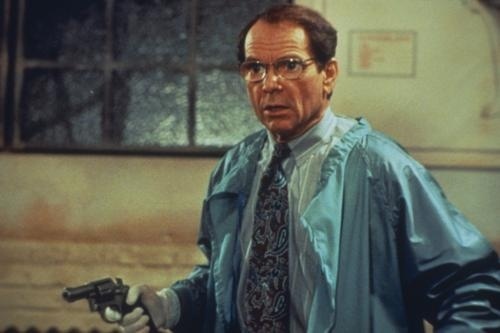
Believe it or not, Dean Jones was a NICE vet compared to Dr. Tierce...

Believe it or not, Dean Jones was a NICE vet compared to Dr. Tierce…

Yechh. This story reads like a sick version of “Beethoven,” which, as all you Charles Grodin fans will recall, featured a villainous veterinarian (Dean Jones, no longer cute) who stole pets to use for medical research.

In Fort Worth, Texas, Jamie and Marian Harris took their dog, a 5-year-old Leonberger named Sid, to the well-respected  Camp Bowie Animal Clinic, to be treated for what they thought was a minor health issue. After undergoing treatment,  Sid developed trouble walking and the veterinarian, Dr. Lou Tierce, told the Harrises that  their dog  had an untreatable spinal condition that would get worse, cause him increasing pain, and ultimately cripple him completely. The family was told the best option was to have Sid euthanized. The couple and their young son agreed, said their goodbyes and authorized the clinic to bury Sid on the vet’s farm.

Six months later, a veterinarian technician named Mary Brewer, who worked at Camp Bowie, contacted the Harrises to inform them that Sid was alive and being kept alive in a cage, surrounded by his urine and feces, so he could be used for blood transfusions to treat other dogs.
Continue reading

A Brief Ethics and Culture Lesson For First Amendment Pedants

First-Amendment-on-scroll1

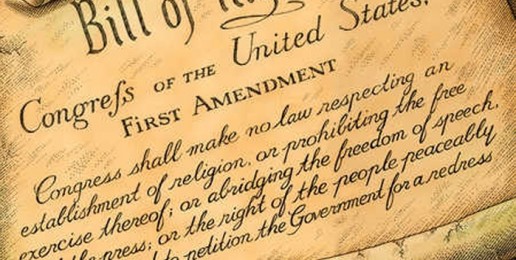
Thousands or pundits and web commenters, perhaps hundreds of thousands, in their concerted effort to justify the speech and thought police, (at least as long as the Enforcers are not likely to disapprove of their thoughts and speech), are mocking those who cite the First Amendment as authority for the proposition that the treatment of Donald Sterling, and others, are harmful, sinister, and un-American. The pedants are technically correct, of course. When someone who is fired for posting something offensive on Facebook screams, “My First Amendment right of free speech has been violated!”, that typically speaks of a poor civic education. The Bill of Rights only constrains government action, not private transactions. No rights, which are enumerated and protected from government incursions by the Constitution, have been lost or affected when only private action is involved.

That does not mean, however, that when private action opposes an individual’s Constitutional rights, it is necessarily acceptable, fair, harmless, reasonable or right. Indeed, the government and law serves a crucial function by delineating and encouraging cultural and ethical values. The principles articulated in the Declaration of Independence, the Constitution and the Bill of Rights do not merely constrain government. They form the basis of the ethical values that make the United States a unique culture, and point the way to what Americans, as Americans, regard as right and wrong.

Thus, while searching though a friend’s private e-mail account isn’t a violation of one’s right to privacy under the 10th Amendment, violating a fellow citizen’s privacy is wrong, and the Bill of Rights stands as authority that it is something important to each individual that should be respected. The Constitution and the 13th, 14th, and 15th Amendments won’t and can’t stop Americans like Sterling from being bigots in their private dealings, but they send a clear message that bigotry is not approved by the United States and was not by those who have charted our ethical course. Privately interfering with someone’s right to worship as they please is wrong, and the fact that the government is prevented from doing it tells us so. The First Amendment’s existence also tells us that preserving free speech—open, fearless, speech—is essential to core American values, because it also supports free thought, that which tyrants and dictators fear. Yes, we all have the right to make free speech, thought and discourse costly, difficult and painful, but we should not. We have the right to punish severely the non-conformist, the iconoclast, the rebel, or the citizen who may be a little late, or slow, or reluctant, to accept the conventional wisdom of the moment. We have the right to do it, but it is wrong. It is un-American. The Constitution tells us so.

Addendum: After I wrote the post, I encountered this.

 

All Aboard The Sterling Train Wreck: The Foolish, The Grandstanders, The Dishonest And The Irresponsible

Hypocrites

The question is, which is which?

I’ll let you puzzle it out; I’ll be busy retching:

And now, the latest and deplorable passengers on this distasteful Ethics Train Wreck…

Sen. Harry Reid

Reid saluted NBA Commissioner Adam Silver for his “work to swiftly move to stamp out bigotry in its ranks,” as if that had any thing at all to do with what Silver was doing. Reid’s endorsement, however, places a high elected official’s stamp of approval on the proposition that those with unpopular ideas and biases should be punished and have their property taken away from them. Reid said that the league has set a new standard for how professional sports leagues should respond to racism. Of course, Sterling did nothing racist at all, not did he attempt to, or publicly announce such intent. The “new standard” that Reid is applauding is economic penalties for non-conforming beliefs. Finally, Reid attempted to make the absurd parallel to the Washington Redskins’ controversial name: “How long will the NFL continue to do nothing — zero — as one of its teams bears a name that inflicts so much pain on Native Americans?” Reid asked Continue reading

The Washington Post, Faking it.

This one’s for you, Bob Hoskins.

You deserved better.

Who-framed-roger-rabbit-Jessica-RabbitIf you come here frequently, you know that I deeply resent lazy, inadequate or inaccurate obituaries of famous and accomplished figures. Obituaries are the beginnings of their legacies, and set the foundations for how, and even if, they will be remembered. Not fairly representing these lives is lousy and lazy journalism, and worse, it is disrespectful to the deceased and contemptuous of history.

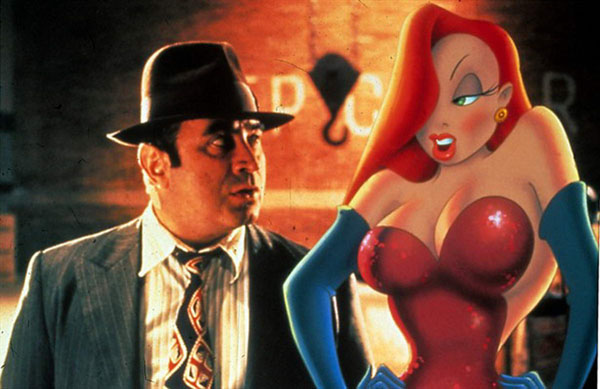
Bob Hoskins, the superb and versatile British actor, died this week. He was one of my personal favorites—a better, cockney version of Joe Pesci—but even if he meant nothing to me, the Washington Post’s sloppy and factually wrong obituary today would have been inexcusable. I liked Hoskins’ various tough guys and mobsters, but the film role that blew me away was his amazing portrayal of the human detective trying to unravel a cartoon mystery in the 1988 Disney classic, “Who Framed Roger Rabbit?” Hoskins, in addition to wielding a perfect American accent (he was really a Cockney), was intense, funny, moving and entracing while interacting with characters that were drawn into the scenes long after he performed them. He made the complex conceit of the movie work, and I would rank it among the most impressive acting turns of all time.

Here is how obituary writer Adam Bernstein described Hoskins’ most famous role in the print version of the Post today:

“(He) won over American audiences as a detective who falls in love with a voluptuous cartoon character in “Who Framed Roger Rabbit?”‘

and

“Mr. Hoskins was a boozing detective who falls for Jessica Rabbit, a cartoon human of pneumatic proportions who can’t help but bewitch men. “I’m not bad,” insists Jessica (voiced by Kathleen Turner). “I’m just drawn that way.””

Continue reading

Comment of the Day: “Clayton Lockett Is Dead, Right? Then 1) Good! and 2) His Execution Wasn’t “Botched””

capital-punishmentThere are well-established group of ethics topics that will always cause spirited debates here, because they are issues that have always divided public opinion and always will: morality vs ethics, drug legalization, abortion, war, social justice, socialism, plus various controversies involving race, sexuality and gender. I try to wade into these only when a current even beckons, as to some extent the arguments are futile and familiar, and too many people refuse to think or listen anymore, retreating to slogans and reflex positions articulated by others.

I decided to wade into one of the most polarized, of these, capital punishment, when the Clayton Lockett execution in Oklahoma sparked a national debate that seemed strange to me, and indeed driven by the unwarranted assumption, uncritically accepted by the news media, that the painlessness of executions were a crucial feature of making them ethical as well as societally palatable. It also opened the question of whether one execution that doesn’t follow the script necessarily calls capital punishment itself into question. I confess: both in my post’s title and in the tone of my responses to anti-death penalty commentators, I intentionally sought to roil the waters of debate, and was determined not to allow the nice people who usually express compassion for the pain and suffering of humanity’s worst and deadliest escape with the usual pieties.

Sure enough, this annoyed the heck out of some readers. Responding to the emphatic objections of one, Isaac delivered a personal and powerful rebuttal. Here is his Comment of the Day on the post Clayton Lockett Is Dead, Right? Then 1) Good! and 2) His Execution Wasn’t “Botched:” Continue reading

Clayton Lockett Is Dead, Right? Then 1) Good! and 2) His Execution Wasn’t “Botched”

Capital punishment foes have no shame, and (I know I am a broken record on this, and it cheers me no more than it pleases you), the knee-jerk journalists who have been squarely in their camp for decades refuse to illuminate their constant hypocrisy. In Connecticut, for example, holding that putting to death the monstrous perpetrators of the Petit home invasion was “immoral,” anti-death penalty advocates argued that the extended time it took to handle appeals made the death penalty more expensive than life imprisonment—an added expense for which the advocates themselves are accountable.

A similar dynamic is at work in the aftermath of the execution of convicted murderer and rapist Clayton Lockett in Oklahoma.Witnesses to his execution by lethal injection said Lockett convulsed and writhed on the gurney, sat up and started to speak before officials blocked the witnesses’ view by pulling a curtain. Apparently his vein “blew,” and instead of killing him efficiently,  the new, three-drug “cocktail” arrived at as the means of execution in Oklahoma after extensive study and litigation failed to work as advertised.  Why was there an excessively complex system involving multiple drugs used in this execution? It was the result of cumulative efforts by anti-death penalty zealots to make sure the process was above all, “humane.” Of course, the more complicated a process is, the more moving parts it has, the more likely it is to fail.

Continue reading

A Sterling Ethics Train Wreck Update, Ethics Heroes Opposing The Mob, and The Comment of the Day

thoughtpoliceEthics Alarms commenter Chris Marschner again scores a Comment of the Day regarding the subtext of my recent post about Peoria Mayor Jim Ardis, whose stunning abuse of government power to punish a citizen’s free speech was ignored while destroying NBA team owner Donald Sterling, because he privately articulated offensive views to a vengeful girlfriend, became a media obsession and a national rallying point.

Before I get to Chris’s excellent comment, however, I should bring us up to date on the Donald Sterling Ethics Train Wreck, which has proceeded as I feared it would: Continue reading

The Maryland Supreme Court Clearly Doesn’t Believe In Signature Significance

PeepingTom

But I do.

The Maryland Supreme Court just reinstated a Clayton W. Boulware, a Montgomery County attorney who had been suspended for six months after being convicted of covertly filming up the skirts of two women, one of whom was a minor, in a public place.  Boulware was suspended in September for six months with a three-year probationary period to follow the suspension.

In his defense, Boulware blamed his upskirt peeping on an “open relationship” with a younger woman, introducing him to a “swinging lifestyle” that included filming themselves having sex. But that relationship is over now, the court notes, so, hey, no problem.

The bar disciplinary board noted in its report to the court that it believed  a more lenient approach to punishing Boulware was called for because of those “mitigating circumstances.”  Lawyers are, as everyone knows, putty in the hands of swinging young women, and this always results in them shooting up other women’s skirts.

I feel like I am losing my mind. Continue reading

Ethics Quiz: “Ick!” Or Unethical—The Arabic Pledge Of Allegiance

"I pledge allegiance to the flag...that the terrorists who speak this language want to tear down..."

“I pledge allegiance to the flag…that the terrorists who speak this language want to tear down…”

In the latest smoking gun example of how the administrators of public schools are widely recruited from the Homes For The Bewildered, we learn of Rocky Mountain High School in Fort Collins, Colorado, where the principal, Tom Lopez, and his staff agreed to let the school’s “Cultural Arms Club” lead the student body in an Arabic version of the Pledge of Allegiance, one that replaced  “under God,” the ill-advised addendum to the Pledge added by Congress when the U.S. felt under siege from “godless Communism” with  “under Allah.”

As further proof that they should be managing a street corner balloon establishment, the school’s administration professes amazement that parents and citizens are upset with this, and as more evidence yet, places the blame on the students. After all it was their idea, and if they voted to have their fellow students recite the pledge in duck voices, or Pig Latin, or punctuated with “Heil Hitler!” salutes and “der Fuhrer” in place of “God,” I’m sure that would be okey-dokey too. Continue reading