Ethics Quiz: “Hot As Hell” Bikinis For Toddlers

We haven’t had a good “Icky or Unethical?”  issue for a while. Here is one to start off your week…strangely.

Last weekend, as I’m sure you all know, commenced Miami Swim Week 2016, which runs though July 19. During the  swimwear fashion and trade show (now in its 12th year!), designers, buyers and models from around the world come to Miami Beach to promote the latest in swim wear.

This year, the brand Hot As Hell featured adult-style bathing suits for little girls. Tiny models walked down the runway, strutting their stuff. Often they were accompanied by full grown models wearing similar out fits, like this…

Hot as Hell2

or this…

NINTCHDBPICT000252438834

Many observers were horrified, and  pronounced the bikinis, the line, and the runway display disturbing, child porn, titillation for pederasts, child abuse, and another dangerous step into the societal abyss of sexualizing childhood. Others have responded with “Aw, they’re so cute!”, “Oh, get over it” and “You’re the one with the dirty mind!”

Hmmmm.

Your Ethics Alarms Ethics Quiz to begin this Republican National Convention Week of Shame is…

Are the kiddie bikinis unethical, or just icky?

Continue reading

Unethical Quote Of The Week: Politico

experience

“This is the fundamental tension of being Clinton’s chief speechwriter: How do you write effectively for a policy-driven candidate who is allergic to campaign-speak? …But it’s also deeper than just a speechwriting problem: It’s about how the most experienced person to ever run for the White House continues to struggle with one of the most basic parts of the job: committing to a message that helps establish a general sense of affection from the electorate.

—-Annie Karnie in Politico, in a post called “Has Hillary finally found her voice?”

The news media has become so biased, so incompetent, so arrogant and so dishonest that I could fill this blog every day with only posts aimed at exposing the horrific and damaging “profession” of journalism. The increasing boldness with which reporters and editors aim to manipulate public opinion and government policy by intentional disinformation is staggering. In focusing on Politico’s Big Lie about Hillary’s credentials, I chose not to write about several others, such as, for example, Cincinnati Enquirer reporter Jessie Balmert, who wrote that the number of murders in the U.S. last year was 15 times higher than it actually was. Another candidate was liberal website ThinkProgress, which headlined a story “GOP Platform Proposes To Get Rid Of National Parks And National Forests.” (It proposes nothing of the sort, but ThinkProgress’s false headline operates as both clickbait and confirmation bias fodder for its readers.)

I chose Politico’s bland statement as fact what is not a fact, but rather easily disprovable pro-Hillary propaganda, because this technique is so insidious. The  biased news media repeats falsity over and over again until it is accepted as truth. No, Trump did not say that “Mexican immigrants were rapists.” No, equally qualified women do not get only 77 cents for every dollar paid to their male counterparts. Those two examples however, have some arguments, however unfair and warped, to justify them. By no possible interpretation can it be claimed that Hillary Clinton is “the most experienced person to ever run for the White House.”  It is an unequivocal falsehood, perpetuated by the news media out of incompetence and ignorance, or in order to intentionally mislead the public. Continue reading

Baseball Ethics: Revealed At Last! Extraordinary Cheating By The 1975 California Angels

Dick Williams, cheat...but a successful and creative cheat, you have to admit.

Dick Williams, cheat…but a successful and creative cheat, you have to admit.

Yesterday on the New England Sports Network broadcast of the Red Sox-Yankees game, Sox color man Jerry Remy was discussing how some teams doctor their home fields for tactical advantages. The Yankee Stadium infield grass, for example, is kept long, slowing down ground balls so the infielders have a better chance of getting to them before they scoot into the outfield for hits. The current Yankees team hitting, such as it is, tends to be fly ball oriented. Jerry expounded on how teams that bunted a lot would sometimes have groundskeepers slant the dirt around the foul lines toward fair territory. “In 1975, when I played for the Angels,” he said, “our home baselines were like gutters. A bunted ball almost couldn’t roll foul.” Such customization is considered fair gamesmanship, because the rules don’t specify ground conditions in sufficient detail.

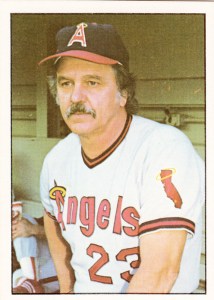
Then Remy revealed an example of  baseball cheating in the extreme. Also n 1975, Remy said, during his rookie year with the California Angels, manager Dick Williams realized that speed on the bases was one of his few assets on a weak roster. (The ’75 Angels would finish  last in the AL West with a 72-89 record) Remy, Tommy Harper, Mickey Rivers and Dave Collins were all accomplished base-stealers, so Williams had groundskeepers move second base six inches closer to first base, thus shortening the distance a base-runner attempting to steal second would have to cover.

“It was that way all year,” Remy said. “Nobody ever noticed.” Continue reading

Ethics Alarm: In Memphis, Facts Are Now Racist

Infamy. I hope.

Infamy. I hope.

This truly upsetting story is in part about headlines, and I had a hard time deciding on one for the post. It makes my head explode—I am trying out a new Swiffer now—but it really shouldn’t have exploded, considering recent developments. I could name Commercial Appeal’s editor Louis Graham (left) an Ethics Dunce, which he certainly is (in addition to being a fool, a coward, and a disgrace to journalism), but that doesn’t do him justice. I thought about making his editorial apologizing for stating facts in a headline as an Unethical Quote of the Month, but this was worse than a bad quote. This was surrender.

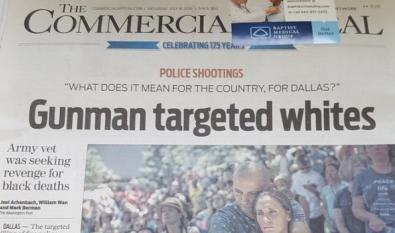
The Memphis, Tennessee newspaper the Commercial Appeal, a Gannett publication, headlined its front page story about the attack on police in Dallas “Gunman targeted whites.” Here it is:

memphiscom headline

Indeed, African-American gunman Micah Xavier Johnson specifically said that his objective was to  kill white police officers. Nonetheless, protestors attacking the paper for publishing a “racist’ headline gathered outside the paper’s office in downtown Memphis last week. Black Lives Matter signs were in evidence.

Commercial Appeal editor Louis Graham met with protesters, and apologized with a front page editorial titled “We got it wrong.” He wrote in part… Continue reading

From An Ethics Dunce Playmate Of The Year, A Full Pazuzu!

dani-mathers post

Dani Mathers is a former Playmate of the Year. On the left below, you see Dani as she appears to unknowing bystanders; on the right, the oil portrait of herself that she keeps in the attic.

Dani+Mathers

Befitting the character and soul accurately portrayed by the portrait, the skin-deep beauty took a cellphone photo of an unaware naked female member of LA Fitness in the gym’s shower. Then Dani posted the pic on Snapchat with the caption, “If I can’t unsee this then you can’t either.”

The actual photo does not have the victim’s body blotted out.

Said LA Fitness of  Dani:”Her behavior is appalling and puts every member’s privacy at risk. We have handled this internally and also notified the police.”

Of course cell phone photography is prohibited in locker rooms. Doing what Mathers did may also be against the law.

Caught with her ugly soul exposed to the world, the model reverted to full Pazuzu mode. Pazuzu was the demon who made poor Linda Blair say all those horrible things in “The Exorcist,” and the Pazuzu Excuse is what Ethics Alarms calls apologies for horrible statements or conduct that include such incredible statements as “Those statements do not express my real beliefs,” “That doesn’t reflect who I am,” and the always popular “That wasn’t me.” Continue reading

Condign Justice For An Ethics Dunce

Chris Christie

The only contemporary writer who regularly uses the term “condign justice” is George Will, who uses it frequently. “Condign” is usually paired with “justice” or “punishment,” and means “well-earned,” “appropriate,” or “deserved.”

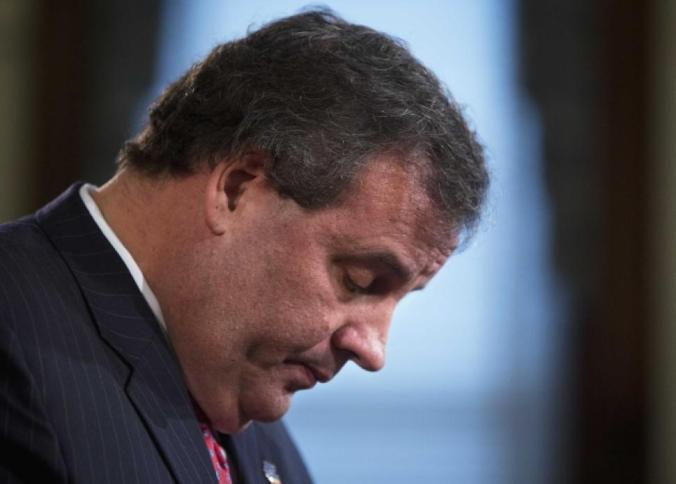
Donald Trump screwed over New Jersey Governor Chris Christie, who foolishly believed that his cynical endorsement of Trump could buy him a Vice-Presidential slot on a Trump ticket. Christie probably didn’t have a direct quid pro quo deal with Trump; he’s a good enough lawyer to know that this would have been illegal. He probably thought he had an “understanding.” How he could not have had an understanding that he was re-enacting the fable of the frog and the scorpion with him playing the role of the amphibian is a mystery. Trump is untrustworthy. Trump is a con man. Doesn’t everyone know that? We know Christie knows that, because he has said so.

Make no mistake: if and when Donald Trump takes the Oath of Office at the Capitol, Chris Christie will be one of the primary figures accountable for that national disaster. (I am beginning to think #1 will be the Democratic Party and its followers, who could not do a better job of making Trump look like the safer of two risky alternatives if they tried.) When the governor made his endorsement, Ethics Alarms awarded him its rarely given Ethics Villain designation. As the one candidate who could match Trump’s bluntness and audacity without the overwhelming stench of ignorance, Christie was the  Republican challenger with the skills and credentials to take Trump out. Instead, he avoided direct confrontation with Trump in the debates and instead symbolically disemboweled Trump’s other most dangerous opponent, Marco Rubio. Then Christie dropped out, and conferred legitimacy on the blowhard by becoming the first non-wacko holding an important elected position to endorse him.

Uck, yechh, blech, gag. Continue reading

Comment of the Day: “Prelude: Intent, Gross Negligence, And ‘Extremely Careless’”

eyes closed driving

Long-time commenter (and blogger) Glenn Logan has authored not one but three COTD-worthy posts of late. I have chosen his commentary on the gross negligence/extremely careless distinction for the honor, but any of them would have been worthy choices. You can find the others in the threads here and here.

Before I get to Glenn, I want to point out that a recent and ridiculous news story illustrated the difficulty of the gross negligence/extreme carelessness distinction perfectly:

A North Florida woman is saying her prayers after running her car into a home — after saying her prayers.

The 28-year-old woman was driving in the tiny town of Mary Esther, located west of Fort Walton Beach in the Florida Panhandle. Deputies from the Okaloosa County Sheriff’s Office say the driver told them she was praying and had her eyes closed before the incident took place.

According to NWFDailyNews.com, authorities say she ran a stop sign, going through an intersection and into the yard of a home. The driver tried to back out, but her car got stuck in sand and dirt around the home. No one was hurt inside the home and the driver was taken to a nearby hospital for evaluation. She was cited for reckless driving with property damage.

Gross negligence would be praying, driving, and closing her eyes knowing well that it endangered others, and doing it anyway. Extremely careless would be praying, driving, and closing her eyes assuming that no harm would come of it, perhaps because God would be driving the car. “Reckless,” however, may cover both.

Here is Glenn’s Comment of the Day on the post, “Prelude: Intent, Gross Negligence, And ‘Extremely Careless’”: Continue reading

Two Critical Integrity Questions For African-Americans, University Administrators, Democrats, Civil Rights Advocates, Progressives And Social Justice Warriors

Seperate-but-Equal

First question: 

Are you prepared to rationalize this?

From the Wisconsin State Journal:

UW-Madison’s Multicultural Student Center separated attendees by race to discuss a violent week of news that stirred debates about racism and law enforcement, prompting criticism from conservative news outlets that the arrangement amounted to segregation.

Campus officials said the decision to hold separate meetings Monday for white and minority students, faculty and staff was made to ensure people of color had a place to discuss their concerns, and said the rules were not meant to exclude participants.

“No one was turned away from any session,” UW-Madison spokeswoman Meredith McGlone said in a statement.

A post that has since been deleted from the Multicultural Student Center’s Facebook page described the meetings as a place where students and UW employees could emotionally process the prior week, which included fatal police shootings of black men in Minnesota and Louisiana, followed by the targeted killing of five police officers in Dallas.

Two of the meetings were for white students and UW employees, according to the post, while two meetings were for people of color.

The Daily Caller, a national conservative news site, wrote about the meetings Monday night, posting a story that included a historic photo of a segregated waiting room sign. The site Right Wisconsin also wrote about the meetings.

McGlone said participants wanted “a space to express feelings without the fear of being judged.”

“Our students of color often find such spaces hard to come by,” McGlone said. “It is a best practice in student affairs to allow quiet and reflective space for those who request it.”

Still, McGlone said, the intent behind the different meetings “could have been communicated more clearly to avoid any impression of exclusion.”

McGlone did not respond to a followup question asking whether the Multicultural Student Center would use a similar structure for meetings in the future…

Here is a handy link to the Ethics Alarms Rationalizations List, so those of you choosing to try to justify this have all the necessary arguments in one convenient place..

The second question:

If you are not prepared to rationalize it, do you have the courage and integrity to condemn it?

Continue reading

Pokémon Go Ethics: Beware The Terms Of Service Agreement!

pokemon-go-starters

I had a hard time finding anything unethical about Pokémon Go, the smartphone GPS scavenger hunt game that sends players all over the landscape to find and trap those adorable Japanese monsters that caused a trading card craze and more a decade ago. (I assume that anything that seems really dumb is likely to have ethics problems. You’d be amazed how often I’m right.) It seems benign. The game can be good exercise, it’s engaging for people who have no more productive avocation, and best of all, it gives American something to obsess about not named Bill or Hillary. There are some troubling signs: administrators at the National Holocaust Museum and Arlington National Cemetery felt that they needed to ask visitors not to play the game while contemplating the murder of six million Jews and the fallen heroes of foreign ways—what is these spoilsports’ problem?—and some people are letting the game endanger themselves and others, leading to these morons falling off a cliff, causing this idiot to drive  his car into a tree, and prompting this in Arizona…

Pokemon go traffic sign

Continue reading

Four Supreme Court Decisions: Abortion, Guns, Affirmative Action, Corruption…And Ethics. Part 3: Whole Woman’s Health v. Hellerstedt

shrinking-number-of-abortion-clinics-in-texas

[The Supreme Court came down with four controversial and ideologically contentious decisions in June, and I apologize for taking almost a month to cover them all. One of the reasons Ethics Alarms occasionally launches a series like this one is to ensure that developing ethics stories of importance do not push important issues to the sidelines. The fact that this four part series had only finished parts 1 and 2 was an irritant to me, as well as some readers.]

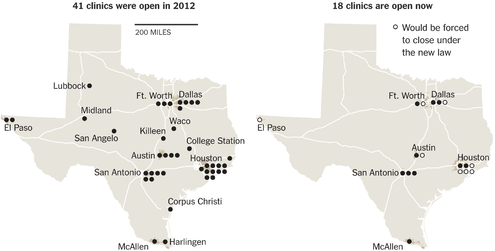
In Whole Woman’s Health v. Hellerstedt, decided on June 27, the Supreme Court held in a 5-3 majority that two provisions of a Texas law, one requiring physicians who perform abortions to have admitting privileges at a nearby hospital and another requiring abortion clinics in the state to have facilities comparable to an ambulatory surgical center,  places a substantial and unconstitutional obstacle in the path of women seeking an abortion, because they constituted an undue burden on abortion access.

Life would be so much simpler if our elected officials and activists employed an adaptation of the Golden Rule, and looked objectively at issues from the other side’s point of view. This is especially true in the realm of rights.  Second Amendment absolutists insist that virtually any laws regulating who can purchase guns, when and where they can purchase them, and how and how quickly they can be purchased are efforts to whittle away the right to bear arms. They also argue that such regulations have the ultimate goal of  eliminating that right entirely, which, in many instances is the case, especially if you listen carefully to the rhetoric of the legislators proposing such measures. There is little difference from this and what anti-abortion advocates are attempting to do with laws like House Bill 2 (H. B. 2).

The bill ostensibly is designed to make abortions safer, thus protecting women’s health, just as many gun laws are promoted as safety measures. Oddly, virtually all of the supporters of the Texas bill would make abortion illegal if they could. I’m sure it’s just a coincidence, just as it’s a coincidence that the authors of bills requiring potential gun owners to jump through increasingly burdensome hoops and deal with mandatory trigger locks and “safe gun” technology would gladly repeal the Second Amendment if they could. The ethical principle is the same in both matters: a right isn’t a right if legal obstacles make it difficult to exercise that right.

The question is, what’s a reasonable obstacle? Any regulation imposed on a constitutional right must not create “a substantial obstacle” and must be reasonably related to “a legitimate state interest.” The Supreme Court uses the language and logic of case precedents, which are its previous examinations of these issues and the balancing they require. One such case, though I did not find it mentioned in the majority opinion or dissents in Hellerstedt, would be the voter ID decision of many years ago, in which a strong majority ruled that the state interest in preventing fraudulent voters and maintaining the integrity of the election process justified inconveniencing those who were subjected to the extra burden of obtaining appropriate identification. In recent years, this decision has been questioned because many believe the motive behind voter ID laws is not really to protect the franchise, but to keep likely Democratic voting blocs from the polls.

Is there a difference legally between a bill that is authored with the intent to restrict the right to vote of older, poorer, and darker citizens while claiming that its sole purpose is to make sure non-citizens don’t affect the results of elections, and an identical  bill that is genuinely intended to safeguard the voting rolls, without any political motive at all? No, or at least there shouldn’t be. The Court’s job is to evaluate what the law does, not try to read the minds and hearts of those who wrote it. Justices only should try to do the latter when there is a debate over what the law says.

Ethically, however, there is a significant difference between a law using a public purpose as a sham to accomplish unethical ends, and a law with a legitimate purpose that has some negative side effects. Trying to restrict a citizen’s rights because one doesn’t respect those rights (or perhaps the citizen) is unethical.

The SCOTUS majority, in its typical examination of a balancing case like this, looked at whether there was a sufficient public safety benefit to a law that had resulted in a precipitous reduction in abortion services: Continue reading