Thoughts On The Death Of Supreme Court Justice Antonin Scalia

chapman.0830 - 08/29/05 - A Supreme Court headed by Supreme Court Justice Antonin Scalia has questions for Chapman University Law School professor John Eastman as he and California Attorney General Bill Lockyer argue the 1905 ''Lochner v. State of New York'' case during a re-enactment Monday afternoon at Chapman University. (Credit: Mark Avery/Orange County Register/ZUMA Press)

Supreme Court Justice Antonin Scalia, the Supreme Court’s most adamant, eloquent, controversial and influential conservative jurist and one of the most important theorists in the institution’s history,  died today, unexpectedly, on a ranch near San Antonio while on a hunting holiday. He was 79.

Reflections:

1.  I had a beer with the Justice at a bar function a long, long time ago, after entertaining the assembled legal heavyweights. He was friendly, funny, and gregarious, and when I asked him if he would be on the Supreme Court for the rest of his life, he said, “God, I hope not!”

2. While everyone will be saying that this ups the ante in the Presidential race, that’s impossible. The importance of the election couldn’t be  greater. The vacancy Scalia’s death creates, unfortunately,will  increase the level of demagoguery from both parties, with the appointment of Scalia’s replacement being elevated to the equivalent of a life and death matter obliterating all other considerations. Anyone who argues that will be exposing their true status as a hack, appealing to hysterics, ignoring te ethical value of proportion. The composition of the Court is important, but it is not that important.

3. What is most important to the Court, and has been lost since Robert Bork became the first qualified judge to be blocked by pure partisan considerations despite undeniably outstanding qualifications, is to have smart, able, proven justices. Scalia was such a jurist.

4 .One of the traits of a qualified jurist is a refusal to pre-judge any issue or case before hearing arguments and knowing all the facts. Several of the current justices, including Scalia, have been sucked into the bitter partisan battles of this era and have made comments that called this trait into question. Continue reading

When Corporations Don’t Respect Autonomy And Freedom Of Speech: Nike

Nike dont

Nike allows purchasers to customize their Air Jordans, but reserves the right to control what ideas, thoughts and preferences you proclaim on your shoes.

Nabeel Kaukab, self-described as “an All American kid with an unusual name,” was browsing the online NikeiD store where customers build and buy custom footwear, and discovered Nike’s lack of support for the concept of free speech when he explored the customization features, one of which includes the ability to place up to six letters on the athletic shoes. When he entered “Islam” and “Muslim,” he was unformed that these words do not fit within the Nike guidelines.

Really? Nike’s guidelines specifically exclude “profanity,” “inappropriate slang,” “insulting or discriminatory content,” “content construed to incite violence,” “material that Nike wishes not to place on products” and anything that “violates another party’s trademark or intellectual property rights.” Continue reading

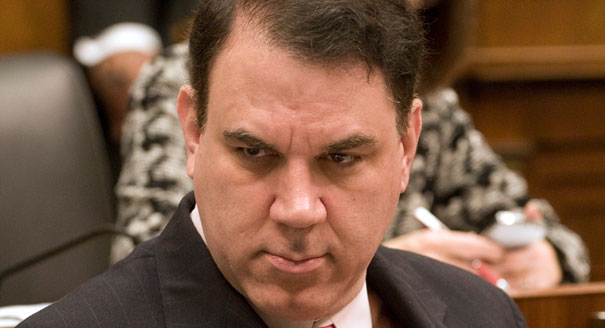
Rep. Alan Grayson, Incivility, Predicting Unethical Conduct…and Donald Trump

Grayson

It should come as no surprise to anyone that Rep. Alan Grayson (D-Fl.) is under investigation by the House Ethics Committee for serious ethics violations. This was pre-ordained by the proclivities he has shown throughout his political career. In his case, the primary tell is his complete lack of civility, which is symptomatic of a crucial respect deficit. Those who do not regard displaying respect for colleagues, fellow citizens, political adversaries and, more broadly, societal standards of fairness and decency as an important behavioral mandate cannot be trusted to respect any other ethical values either. Occasionally one will find someone who deals in insults and personal denigration who is otherwise ethical, just as one will occasionally encounter a baby goat with two heads, but it is rare indeed. If you go through life avoiding uncivil, verbally abusive people like the plague (indeed, such people carry the plague of de-civilization) you will not miss out on very many good companions, and you will spare yourself a lot of misery as well the danger of personal corruption.

Grayson is without question the most uncivil, rudest, least professional member of Congress. I was amused to find that I had mentioned him in a post from 2010 about how many ethics scandals were predictable, given the past conduct of their principle actors. Once Tom DeLay was out of Congress, Alan Grayson was easily the most likely candidate for a scandal, because the man has no ethics alarms. In my very first post about Grayson, I wrote (in 2009),

“Grayson is the Congressman whose explanation of the GOP position on health care was that “they want you to die.” He said that Dick Cheney speaks with “blood dripping from his teeth.” His mode of debate and persuasion, in other words, is insult and hyperbole. Respect for opposing views: zilch. Civility grade: F… He has endorsed unethical rules and plays by them…”

That post was about Grayson trying to get the Justice Department to shut down a website that mocked him. Yes, he doesn’t believe in freedom of speech, either, when he is the target of insults rather than the generator of them.

All of which led me to react with a smile and a yawn when it was revealed that the disgusting congressman, now running for the U.S. Senate–Sure! Why not?—has been secretly moonlighting as a hedge fund manager. It sounds like a Saturday Night Live skit: “By day, a Wall Street-bashing, 1% hating, populist Democratic Congressman! By night, a wheeling and dealing hedge-fund manager!”

Do I need to explain why this is a slam-dunk conflict of interest with the appearance of impropriety? I don’t think so. It also smells of insider trading and using information privy to elected officials for personal gain. On the other side, he used his position as a U.S. House of Representatives member to attract clients.

From the New York Times (it’s me breaking in a couple of  times): Continue reading

Jenrry Mejia, The Inexplicable Ethics Mega-Dunce

mejia

What is the explanation for this?

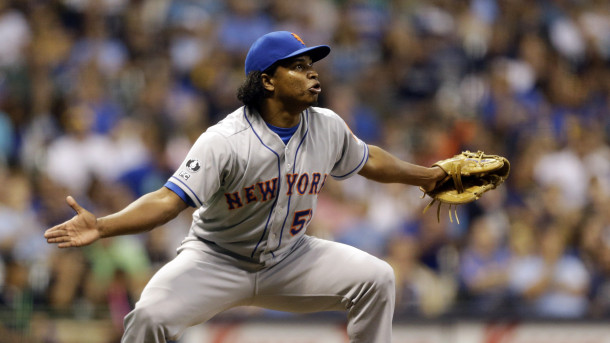
Jenrry Mejia is a young New York Mets relief pitcher who until recently had a bright future as a star closer and a guaranteed multi-millionaire.  Now, entirely on his own initiative, he has become the first player ever banned from baseball for using steroids .

This is not easy, though Mejia did it with ease…and speed.  After recovering from Tommy John surgery, Mejia was establishing himself as the Mets closer by the end of the 2014 season. But he began the 2015 season with an 80-game suspension for testing positive for a common PED (Performance Enhancing Drug), then, even before completing that punishment,  flunked another urine test and earned himself a 162-game suspension a few months later.

Knowing full well that a third positive test would end his career, Mejia tried a different banned steroid, was caught again, and that third strike triggered a lifetime expulsion from major league baseball under the sport’s rules. Nobody has been that reckless and stupid, not even Manny Ramirez (who was caught twice), and Manny’s picture is in the dictionary under “reckless and stupid.” Continue reading

Ethics Quote Of The Month: “Bridge of Spies”

bridge-of-spies-656

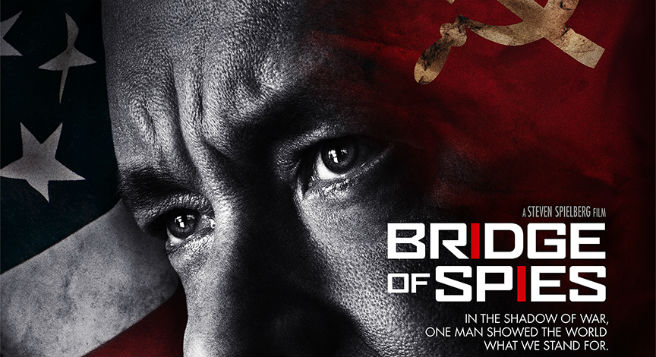
The shooting script for the Academy Award nominated film “Bridge of Spies” is now online. Written by Matt Charman and the Coen brothers, it, like the film that Steven Spielberg made out of it, provides an unusually accurate and nuanced portrayal of ethical lawyering. The movie is worth seeing, better more than once, and I expect that I will use many issues raised in it for class discussion as I teach legal ethics to lawyers this year.

There is one howlingly wrong scene, in which the lawyer, Jim Donovan (played by Tom Hanks) has a private discussion with the judge who will be sentencing his client, a convicted Russian spy. Donovan argues against a death sentence. If this happened, and I doubt it, it would have been an egregious ethics breach: this is called ex parte contact, and is strictly forbidden.

The film redeems this misstep many times over, especially in a scene that neatly explores both the duty of confidentiality and the duty of loyalty, as well as the crucial role of rules in society, and why “the ends justify the means” as well as those who advocate that philosophy must be rejected. “Ethics Bob” Stone told me that he now uses the scene in his business ethics classes.

The scene begins with Donovan meeting in a restaurant with a man who has been following him…. Continue reading

Comment of the Day (1): “Ethics Observations On Beyonce’s Super Bowl 50 Halftime Performance”

Civil-Rts-March-womwn

Late last night produced not one but two clear-cut Comments of the Day. This is the first; another will be along any minute now.

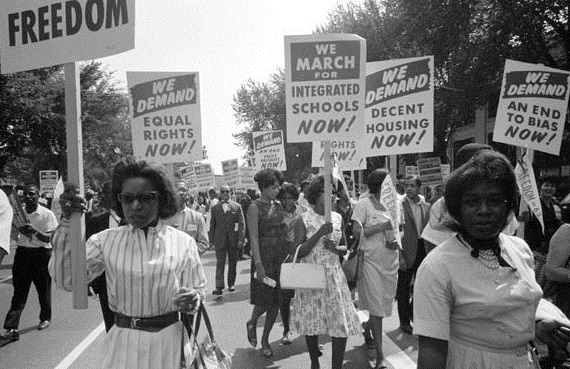
Responding to the post about Beyonce’s use of the Super Bowl halftime show to glamorize black liberation politics, Isaac argued that while the violent and loud radicals and revolutionaries get all the headlines, it is the quiet, law abiding, dedicated “squares”—haven’t heard that word for a long time!—that get the job done. This is essentially the opposite of Clarence Darrow’s conviction that it is the law-breaking revolutionaries who cut through the Gordian Knot of the unacceptable status quo. The man he extolled in a speech making that case was murderer and terrorist John Brown—who would have loved the Black Panthers. [I was just now trying to give you a link to Darrow’s amazing speech about Brown, and can’t find one. Shame on you, Internet! It’s in my book, though…you can get a used one for less than 3 bucks…]

Here is Isaac’s Comment of the Day on the post, Ethics Observations On Beyonce’s Super Bowl 50 Halftime Performance:

The bogus assumption often made is that the hippy/counterculture movement somehow brought about civil rights, since those two things happened at roughly the same time. This is wrong and those people should feel bad. It was decades of hard work by a whole lot of “squares” and a lot of stoically religious people, and the type of nonviolent and extremely effective form of resistance and racial healing preached by Dr. King that got the job done, at great personal cost. The stoner crowd and the violent, revolutionary factions like the Black Panthers were almost entirely counterproductive, but a lot sexier. So they are the ones romanticized today. Beyonce isn’t going to do a nostalgic dance number with Black women dressed as Baptists in flowery hats.

Continue reading

Dead Ethics Alarms And Dead Brains In Cleveland

In other words, be just like Cleveland, Ohio.

In other words, be just like Cleveland, Ohio.

When I read that Cleveland was trying to bill the family $500 for the fatally wounded  Tamir Rice to be carried by an ambulance after an incompetent police officer shot the 12-year-old boy as he played with a toy gun in a city park, I began a mental countdown. How long would it be before a public outcry forced the Cleveland municipal government to cover the bill and apologize? It took about a day.

It doesn’t matter how one regards Rice’s death: a racist murder by a cop, excused by the justice system ( black activists, anti-polce race-hucksters  and too many journalists and pundits), blatant incompetence on the part of many adults and institutions, leading to the negligent, tragic death of an innocent child (Ethics Alarms), or something in between. The incident was a massive humiliation for Cleveland, its leadership and the police, justifying all of the anger and raw emotion in its aftermath. Tamir and his family were undeniably victims, and the city was the entity that harmed them. If there is a single individual on the city payroll who is incapable of immediately recognizing the grotesque insult of billing the family for removing the body of the dead child killed by city police, then the city itself is untrustworthy and dysfunctional. As it happens, many city employees must have been aware of the disgusting bill, and every one of them should have been smart enough to know that this was one expense the city had to eat or else. Now we know how and why Tamir died. Incompetent people are running the city, and incompetent people are dangerous.

Cleveland Mayor Frank Jackson apologized at a news conference yesterday, and said that the city would pay whatever wasn’t covered by Medicaid. “It was mistake in terms of us not flagging it, but it was not a mistake in terms of the legal process,” Jackson said. This logic echoes the rationalizations for the conduct of “The Worst Aunt Ever,” who sued her 12-year-old nephew to get insurance covered damages. Continue reading

Unethical Quote Of The Week (Or “Just Because He’s A Civil Rights Icon Doesn’t Mean He Won’t Lie His Head Off”): Rep. John Lewis (D-GA)

"When John Didn't Meet Bernie"

“When John Didn’t Meet Bernie”

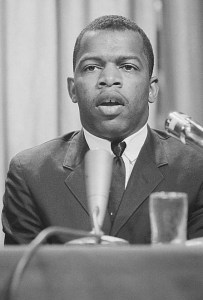
“I never saw him. I never met him. I was involved in the Freedom Rides, the March on Washington, the march from Selma to Montgomery and directed the Voter Education Project for six years. But I met Hillary Clinton. I met President Clinton.”

Rep. John Lewis (D-Ga), 76, civil rights icon, Martin Luther King ally, and Hillary Clinton supporter, challenging Bernie Sanders’ civil rights bona fides during the press conference by the Congressional Black Caucus  endorsing Clinton.

Really? He saw Hillary and Bill at those events? Now, Lewis could have seen Sanders, since Bernie was an organizer for the Student Nonviolent Coordinating Committee at the University of Chicago when Martin Luther King  and Lewis spoke there in 1963.  Hillary’s mother had young Hillary with her when she met  King  in Chicago in 1962. Hillary was 15. Maybe Lewis remembers meeting her then, but that was hardly substantive evidence of civil rights commitment. As for Bill,  we have this testimony from Lewis in Janis F. Kearney’s  Conversations: William Jefferson Clinton : from Hope to Harlem:

The first time I heard of Bill Clinton was in the early ’70s. I was living in Georgia, working for the Southern Poverty Law organization, when someone told me about this young, emerging leader in Arkansas who served as attorney general, then later became governor….I think I paid more attention to him at the 1988 Democratic Convention, when he was asked to introduce the presidential candidate and took up far more time than was allotted to him. After he became involved with the Democratic Leadership Council, I would run into him from time to time. But it was one of his aides, Rodney Slater, who actually introduced us in 1991 and asked me if I would support his presidency.

Hillary isn’t mentioned at all. I haven’t seen any evidence that she was at Selma or the March on Washington: was she? Would Lewis remember that he “saw” the then Republican teen and “Goldwater Girl” if he “saw” her?

He’s denigrating Sanders’ record and lying to do it.

We should expect better conduct from “icons.”

Ethics Observations On Beyonce’s Super Bowl 50 Halftime Performance

beyonce-superbowl-x-cbs

On the eve of her Super Bowl 50 half time show performance, Beyoncé released  “Formation,” a video full of references to Black Lives Matter tropes and propaganda, including “Hand Up! Don’t Shoot!”  (You can view it here. The earlier version of this post had an unofficial version: I apologize for the error.) Then in her portion of the Super Bowl 50 halftime show, the pop star gave the sold-out stadium and world-wide audience a live version of the video, including  backup dancers wearing Black Panther berets who formed  an X, apparently alluding to black Muslim activist Malcolm X, and raised their fists in the “black power” salute. African-Americans activists wrote that they saw the performance as a tribute to the 50th Anniversary, not of the Super Bowl, but to the Black Panthers.

The halftime show was part of a marketing plan messaging across multiple platforms, from social media to mainstream media. Once the show was seen in the context of the more explicit video, a controversy emerged, just as Beyoncé ‘s marketing geniuses hoped it would. Former New York mayor Rudy Giuliani was among the vocal critics, calling the show “outrageous” said telling Fox News,”This is football, it’s not Hollywood, and I thought it was really outrageous that she used it as a platform to attack police officers who are the people who protect her and protect us, and keep us alive.”  Protests are planned at NFL headquarters.

What’s going on here?

1. Stipulated: Beyoncé’s sole intentions are to sell, make money, and get buzz. If she has a genuine political motive, and I doubt it, it is secondary to the good ol’ profit-making motive that has made her a mega-millionaire. She and her husband Jay-Z have been linking their brand to Black Lives Matter because they see profit in it, that’s all. Is it crass and ethically inert? Sure it is…just like the music business and the rest of show business. Is it particular disgusting, at a time of dangerous racial division in this country heightened by liars, crooks, complicit activists and cynical politicians, to try to make money by glamorizing it? Yes indeed, but the Julie Principle needs to be applied here. Fish gotta swim and birds gotta fly, and if you are paying any attention to people like Beyoncé, you can’t be shocked or overly angry at them when they show that their motives are purely non-ethical at all times. Yes, Beyoncé’s conduct was culturally irresponsible and unethical. “This is my shocked face:”

shocked face

2. That said, hijacking the Super Bowl halftime show to make a race-baiting, divisive, anti-police demonstration out of what is supposed to be a unifying, fun, family-friendly cultural event, by extolling the racist Black Lives Matter, the criminal and racist Black Panthers, and destructive lies like “Hands Up, Don’t Shoot!” is indeed outrageous. The stunt deserves every bit of criticism it has recieved and more. Continue reading

The Loyalty Problem: Fundamental Ethics Confusion at Mount St. Mary’s University

Mt st mary

Loyalty is an ethical virtue; the whole concept of duty often depends on it. Loyalty is also the most dangerous of all ethical principles. Misapplied, misinterpreted, followed blindly or carried to extremes, it can lead to absolute wrong. A current controversy at Maryland’s Mount St. Mary’s University illustrates how.

A reliable source obtained information that the school’s president, Simon Newman had argued that the school needed to be ruthless in maintaining high standards by getting rid of less competitive students, and had done so by telling colleagues opposing him, “This is hard for you because you think of the students as cuddly bunnies, but you can’t. You just have to drown the bunnies…Put a Glock to their heads.”

The student newspaper reported the conversation, which Newman hasn’t denied, and it was duly published in The Mountain Echo, the student newspaper.

Shortly after the “scoop,” The Mountain Echo’s faculty advisor Ed Egan was fired by Newman for violating the “code of conduct and acceptable use policies.” During the same period in which Egan was fired,  Newman did a Michael Corleone on some other “disloyal” lieutenants.” Thane Naberhaus, an associate professor of philosophy, was dismissed after criticizing Newman’s policies, and David Rehm, was stripped of his role as provost after questioning university policies.

The dismissal letter to Naberhaus, signed by Newman, said “As an employee of Mount St. Mary’s University, you owe a duty of loyalty to this university and to act in a manner consistent with the duty. However, your recent actions, in my opinion and that of others, have violated that duty and clearly justify your termination.”  Ed Egan says that he was also told that he had been “disloyal.”

I can’t speak to the dismissals of the other employees, but in the case of Egan, his loyalty was where it should be. President Newman doesn’t understand his own job, or the ethical principles applicable in academia. Continue reading