Dear Idiots: Please Stop Making Me Defend The Bigoted Baker

I am pleased that the Supreme Court will be taking the case of Jack Phillips, the Colorado baker who refused to sell a wedding cake to a gay couple because, he said, they wanted it to be customized, and doing so would offend his faith.  His claim is based on the First Amendment, which prevents the government from making you say what you don’t want to say as much as it prevents the government from stopping you from saying what you want to.

Colorado’s courts denied that Phillips was doing anything but saying that he doesn’t like or respect gays sufficiently to make the exact same cake for them that he would make for non-gays.  I agree with their holding that his actions violated the public accommodations laws. I wrote when this case first reared its frosted head…

“The court’s conclusion  is impossible to rebut. The cake the baker was asked to bake for the gay wedding differed not at all from one he would normally sell a straight couple. In truth, this had nothing to do with expression. He was just refusing to serve a gay couple because of their sexual orientation. Selling them a standard cake would neither constitute, nor would it be recognized as a “message” in support of gay marriage.

The Court agreed that a wedding cake with a customized message celebrating a same-sex marriage as such might implicate First Amendment speech issues, but “we need not reach this issue,” the court said. “We note, again, that Phillips denied Craig’s and Mullins’ request without any discussion regarding the wedding cake’s design or any possible written inscriptions.”

In other words, Phillips was gratuitously and unnecessarily being a cruel jerk. An alleged Christian who is unable to detect the basic Golden Rule application in treating fellow citizens with the minimal level of respect inherent in allowing them to buy a standard wedding cake requiring no “Yay Gay!” or “Charlie and David Forever!” messages in pink frosting deserves no sympathy or quarter from the law. Could the couple have just shrugged and found another bakery? Sure, they could have. Linda Brown could also have just shrugged and found an all-black school to attend, too.

The gay couple are not the villains here. Jack Phillips broke the social contract, as well as the law.”

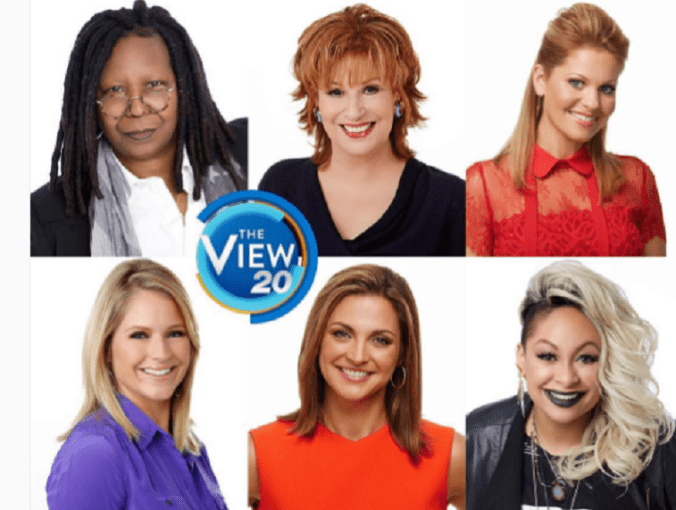
Now that SCOTUS has decided, by agreeing to review the case,  that he has perhaps a scrawny, shaky legal leg to stand on before they kick it out from under him, Phillips and his lawyer are taking a premature victory lap, as if making it quite clear that you think gays are second class citizens is something to be proud of (and, sadly, too many still think it is.) Their publicity campaign took them all the way to The View, a wise choice. After all, nothing can make an unethical position seem more persuasive than when it is being attacked by idiots, and idiots of the left-wing persuasion are pretty much what ABC’s “Six Opinionated Female B and C List Celebrities Sitting Around Slamming Conservatives”  daytime show has to offer. (To be fair, the show usually has one even dumber right-wing idiot on hand to make the left-wing idiots seem astute by comparison.) Continue reading
Comment Of The Day (1): “Observations On Britain’s Charlie Gard Ethics Fiasco”

I thought that the Charlie Gard story would stimulate some excellent thoughts on ethics and public policy from readers, and for once I was right. This is the first of two superb Comments of the Day it generated, and there were several others as well.

Here is Ryan Harkins’ Comment Of The Day on the post,  “Observations On Britain’s Charlie Gard Ethics Fiasco.”

The idea of the state telling me I could not seek medical aid for my child when I had both the money to pay for it and a provider willing to give me the services is terrifying. My sixteen-month-old daughter has been receiving the majority of her sustenance through a feeding tube for the past six months. Prior to that, we had been struggling to get her to eat enough calories so that she would gain just an ounce or two, only to find that weight gain vanish when she caught a cold or a stomach bug. Granted, the gastroparesis she suffers is not a severe condition, but without the feeding tube she would risk starving. The thought that the state might step in, tell me that they not only would not pay for my daughter’s tube and care any more, but also expressly forbid me from feeding my daughter through the tube, makes me shake uncontrollably. If I have to fight for my daughter without the state’s help, fine by me. But for the state to forbid me from fighting for my daughter? That is unconscionable.

However, at this time, I don’t have to face that issue. I live in a place and a time when I don’t have to contend with general threat, and my daughter’s condition is not terminal and readily treatable. I hope that my child-rearing and my fear for my daughter helps me to have empathy for the parents of Charlie Gard. I also hope that I can step back away from the emotional turmoil this issue raises and try to understand what is happening here.

The principle dilemma in the case of this poor baby boy lies in the fundamental tension between the fact that human dignity demands we do fight for life, while at the same time we know that we will all ultimately die. Because human life bears an intrinsic dignity, its wrong to deprive a human being of what it needs to survive. Because all humans ultimately die, it can become, through the use of extreme or unethical means, against human dignity to fight against death when death is inevitable.

Why would it be wrong, in some circumstances, to keep fighting against death? The most clear-cut examples are when the means of preserving life are unethical. Bathing in the blood of virgins, selling one’s soul to the devil, killing an innocent to harvest his organs, transferring one’s consciousness into the unwilling body of another — all these (fantastical as some of them are) represent tactics to extend life that obviously violate ethical principles.

What about less obvious examples? Let’s consider a man in a coma. His state is persistent, perhaps even vegetative, but his body is capable of processing food and drink, although he is incapable of eating and drinking orally. A feeding tube could provide him with all the nourishment he needs, and he could be kept alive for years in such a fashion. To stop feeding him through the tube would be to deliberately deprive him of sustenance he needs to survive, and thus would be unethical. Death is not inevitable in this case, except in the most sweeping sense.

In times past, a feeding tube would not have been possible, or if possible, not recommended because of infection, and thus this would not have been a serious alternative. Absent any means of delivering food to the man in the coma, no one could be faulted for not providing food. And if trying to use a feeding tube would actually kill him quicker, or have negligible effect, then the extreme measure of using a feeding tube would not be ethical. However, since we are at time with the technology that makes the use of a feeding tube fairly easy and safe, we no longer have that excuse to deprive a person of nutrients.

What about a slightly different case, when the man in the coma can no longer process foods even through a feeding tube? Then providing food actually causes harm without any gain. Perhaps nutrients could be provided through an IV, but one would be justified, and perhaps is even obligated, to stop providing food through the feeding tube.

Now, the most challenging cases are when a person is terminally ill, but there are procedures that exist that can extend life. To what extent are we obligated to provide care? It depends on the nature of the treatment, the cost of the treatment, and the effects of the treatment. A person is fully justified in accepting that death cannot be stopped and let the terminal illness run its course. A person is not justified in taking steps to deliberately end that life, but is justified in procuring palliative care that eases the pain of the dying, even if it hastens death. But one is not obliged to pay for or undergo an extensive, dangerous, expensive procedure that will not provide a cure, but only a short extension of life.

It should be clear, though, that just because one is not obliged to pay for or undergo extreme care, it does not follow that one is obliged to never pay for or undergo such procedures. If a person has the money and desire to attempt such care, and that care is available, that person should not be denied.

Is there any instance, then, when that person could be denied that extraordinary care? Again, we are assuming that the person can pay for it and the care is available, so we aren’t discussing an instance in which the terminally ill patient is displacing someone else’s care.

I personally cannot think of an instance in which we could rightly deny that care. What I do know is that, in Catholic theology, death does not mark the end of the existence of a person. The soul survives death, and the soul will be reunited with the body at the Resurrection. There is danger in pursuing treatments at any cost, and that danger lies in the denial of the afterlife. That has consequences for one’s eternal soul. Continue reading

Morning Ethics Warm-Up: 7/2/17 [UPDATED]

1. I wonder when and if the LGTBQ community will ever grow up. I had an annoying exchange yesterday when a Facebook friend began whining that President Trump hadn’t done or said anything to honor Gay Pride Day, proving again that he was the spawn of Satan. A friend of that friend then added, to the usual flood of “likes”—all you hve to do is insult the President to get likes— that for him to honor Gay Pride Day would be like Hitler observing ceremonies for Holocaust victims. Of course, nobody had the integrity or the decency to point out what an idiotic comment that was, so I did. When will people stop making me defend Donald Trump? He is the first and only President to enter office fully accepting same sex marriage (unlike Obama and Clinton) and the unending slur that he is hostile to gays is the product of two factors: fearmongering (He was going to put gays in camps!) and bigotry (If he’s a Republican, he must hate gays.) One response to my rejoinder was someone posting this NBC story as a “rebuttal.” The sum total of the anti-gay actions of the Trump administration, according to this alleged indictment? Here’s the description:

“For many LGBTQ Americans, the early days of Trump’s Republican administration have been fear-inducing. A series of Cabinet appointments have been roundly criticized by LGBTQ advocacy groups. An early draft of a reported executive order legalizing broad discrimination against LGBTQ people threw the community into a panic. The dismantling of Obama-era protections through executive orders came with the simple stroke of a pen.”

This is modern day fake-news journalism at its most obvious. All  the paragraph says is… Continue reading

The New Rationalization #23: The Dealer’s Excuse, or “I’m just giving them what they want!”

The new Rationalization #23, The Dealer’s Excuse. or “I’m just giving them what they want!” now bumps Woody’s Excuse: “The heart wants what the heart wants” to sub-rationalization status as 23A.

Good. Woody Allen doesn’t deserve a free-standing rationalization.

While narcissist Woody’s contribution to the Ethics Alarms Rationalizations list states that something is ethical if you want it badly enough, as in, “I really, really want to have sex with my adopted daughter,” its recently revealed parent hold that conduct becomes justifiable and benign if there is a market for it. Woody’s excuse is bad, but this is worse. For one thing, it’s usually disingenuous. Those who employ the Dealer’s Excuse aren’t providing a service out of altruistic motives, but out of the profit motive. They want the money they can make by doing unethical things that make society uglier, dysfunctional and dangerous, and they really don’t care if their customers come to a bad end or bring miseries to others.

The most famous exposition of The Dealer’s Excuse is in “The Godfather,” as Don Corleone and the other mafia heads discuss their “business.” The Godfather is balking at adding drugs to the mob’s businesses, and says:

When — when did I ever refuse an accommodation? All of you know me here — when did I ever refuse? — except one time. And why? Because — I believe this drug business — is gonna destroy us in the years to come. I mean, it’s not like gambling or liquor — even women –which is something that most people want nowadays, and is forbidden to them by the pezzonovante of the Church. Even the police departments that’ve helped us in the past with gambling and other things are gonna refuse to help us when in comes to narcotics. And I believed that — then — and I believe that now.

Continue reading

Comment of the Day: “Morning Ethics Warm-Up, 6/30/17.”

As he usually does, when he’s feeling frisky,  reader Extradimensional Cephalopod (above right) has dived into the issue of “health care rights” with gusto and perception. As I often do whether I’m feeling frisky or not, I have some cavils about the assumptions being made at the outset.

A right is a moral or legal entitlement to have or obtain something or to be able to do something. Moral and legal rights are two different things. When someone says, as did my friend on Facebook that started this debate. “I believe health care is a right,” he had to be asserting a moral right to healthcare, since a legal right to health care doesn’t exist. If he said, “I believe health acre should be a right,” then he would have clearly meant a legal right. That’s a policy issue. When someone argues that there is a moral right, then they are making the case for a legal right that doesn’t exist. The law in an ethical society ought to protect and advance moral rights, and society must agree what those rights are. Thus when he says, early on, “Note that a right isn’t something we owe Note that a right isn’t something we owe people just because they exist.,” he signals that he is describing legal rights only.   Moral rights are what we owe  people just because they exist. That’s why the Declaration begins with Jefferson saying that “we are endowed by our Creator” with “unalienable rights.”

Here is Extradimensional Cephalopod‘s Comment of the Day on #5 in the post, “Morning Ethics Warm-Up, 6/30/17.”

Let’s start at the beginning. We need to define the phrase “healthcare is a right”.

A “right” is a protection or entitlement we collectively decide to give to people at the expense of our some of our freedoms because we think that society will be more robust, sustainable, able to advance, or generally pleasant to live in as a result. That’s very similar to the basis for ethics, as far as I can tell. A right is a meta-law, a limitation on what laws can be made. Rights may be conditional. Note that a right isn’t something we owe people just because they exist. It’s something we decide we owe them because we want to live in a world where people have that right–because it’s safer for us, or because it means the world will still be there for our descendants, or because it allows civilization to progress to something better, or because we want others to be happy, or all of the above. This will be important later.

Therefore, when we say, “healthcare is a right”, what we mean is “in order to make society more robust, sustainable, able to advance, or generally pleasant, we choose to sacrifice some of our individual freedoms to provide everyone with healthcare.”

We’re half done. Now, what is “healthcare”?

Let’s actually distinguish it from health insurance, because we’re smarter than Congress. Health insurance, like any insurance, is a gamble, in which people periodically pay a small amount of money to an insurance company, which will pay them back a larger amount of money (whatever is necessary, to the limit of what they are insured for) if the person’s health is in danger in a way that neither of them can predict. The idea is that the insurance company can’t predict who needs the money, but they can predict how many will need money and how much, statistically, so they accept enough money from people that they can afford to pay the people who end up needing more money. Continue reading

Observations On Britain’s Charlie Gard Ethics Fiasco

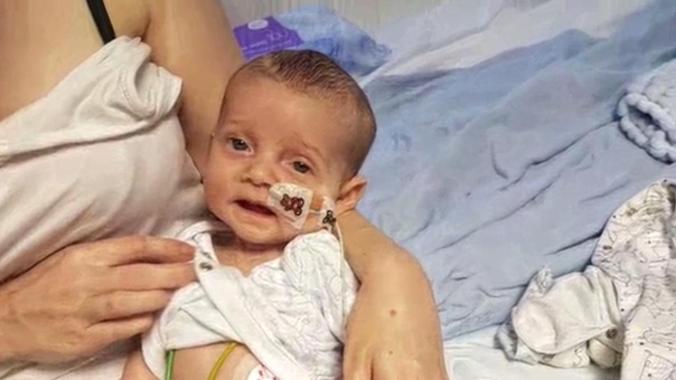
A recipient of Great Britain’s national health care, infant Charlie Gard was born with  a rare genetic condition resulting in what is probably irreversable brain damage.  He cannot move his arms or legs, eat or even breathe without a ventilator.

After 10 months of being kept alive, Charlie’s caretakers, the Great Ormond Street Hospital for Children in London, announced that it was time for Charlie to die. Chris Gard and Connie Yates, Charlie’s parents, wanted to take him to the United States to try an experimental treatment available here. The doctors at the hospital refused to allow them to take the child, and vetoed their decision, even though the parents had received sufficient funds from donations to pay for the effort.  In  the resulting lawsuit, British courts sided with the hospital. The parents then brought the case  to the European Court of Human Rights, which declined to hear the case last week. The previous court rulings that it was in Charlie’s best interest to withdraw life support and that the state, not the parents, got to make this life and death decision stood.

The  parents, Chris Gard and Connie Yates, appeared on a video this week,, sobbing and saying their son would be removed from life support at the hospital. “He’d fight to the very end, but we’re not allowed to fight for him anymore,” Gard said in the video statement. “We can’t even take our own son home to die.”

Initially, the hospital would not delay the fatal  disconnection of the child from life support so family members could gather and say goodbye. It has since relented.

Observations: Continue reading

Morning Ethics Warm-Up: 7/1/17

Good morning, and welcome July!

Once famous American radio news commentator Gabriel Heatter (September 17, 1890 – March 30, 1972) sued to begin his World War II-era  broadcasts by  saying, “There’s good news tonight!” I’ve been trying to find an equivalent up-beat introduction for the Warm-Up from an ethics perspective. The problem is that this requires there to be some genuinely good ethics news. Not today. Maybe tomorrow…

1. The furor over President Trump’s pathetic attack tweets on two pretty awful MSNBC cable TV hosts continues, with “the resistance”—you know, like the New York Times—citing it as proof of madness, and right-wing media and bloggers increasingly rationalizing that it’s high time someone slapped down “media bullies” like silly Joe and biased Mika. The Left’s reaction is disingenuous, and the Right’s is incompetent.

Yesterday on the progressive echo chamber end of my Facebook spectrum, they were going nuts over the tweets, and one woman posted that she had voted for Trump but she regretted it now. She never would have voted for him, she said, if she thought he would act like this. I don’t know this idiot, but I had to reply:

“What? Trump tweeted and talked exactly like that for the whole campaign, and had been similarly gross and boorish publicly for thirty years! Remember Trump talking about blood coming out of Megyn Kelly’s “wherever” after the very first debate in 2015? “Little Marco”? Mocking Carly Fiorina’s face?” 

One could reasonably hope that being President might cause Trump to curb this habit, but one could not reasonable vote for him and not realize that similar conduct was a distinct possibility. On the news media and political side, the tweets prompted a re-run of the exact same (undemocratic, unethical) arguments they have made from the beginning for trying to overturn the election, as if something was new. This isn’t new. That’s part of what’s wrong with it. It also is the predictable conduct of the man elected by voters who were well aware he acted this way. I know you think they are cretins, Good People in Progressive Land, but that’s not a justification for invalidating their votes, and you are not going to get away with it if you try.

As for defenses of Trump like the opinion piece at Mediaite (“President Trump Deserves Credit For Taking On Bullies Like Mika Brzezinski“), how silly can you be? He’s the President of the United States: you can’t “bully” him. Even powerful media figures can’t bully him. He has all the power. They are punching up (more like slapping and griping and sneering up), and he is punching down, provoked by mites, lowering himself and his office by doing so.

2. Remember the Frye Festival fiasco? Billy McFarland, the inept con man/idiot who set it up has been arrested and charged with fraud.

Good. Continue reading