Ethics Hero: John Gunn

John Gunn, the father of a 12-year-old, went to his son’s school to register his objection to his son’s class being allowed to participate in the National Walk-out to Protest Gun Laws That Had Nothing To Do With the Valentine’s Day Massacre in Parkland, Florida. He videoed the exchange with principal Barbara Boggio, and posted the confrontation on the Ventura Unified School District Facebook page.

Gunn (great name, by the way!): “I want to know who authorized these kids to go out and leave the class when I wasn’t even notified about it.”

Boggio: “As our school planned for who and what, we anticipated something…”

Gunn:  “6th graders? 6th graders? When do 6th graders make decisions?…When do 12-year-olds make decisions? You’re an adult, you’re the school, you’re supposed to teach my child. You don’t influence my child in any which way. Democrat, liberal, Republican, whatever it is. I want it out of the school system. So why did my son have to sit in that class — because he didn’t leave — but why wasn’t I notified?”

Boggio: “If the student chose to leave, that’s their choice.”

Gunn: “What do you mean that’s their choice? They’re 6th graders!…If this wasn’t a protest and this wasn’t happening, you would let the kid leave?”  Continue reading

Comment Of The Day: “When Ethics Alarms Don’t Ring: Snapchat Approves A Domestic Abuse Game Ad”

Video games and their effect on societal violence have been mentioned in the comment threads of several recent posts of late, so Michael West’s essay on the topic is especially timely (even if my posting of it is tardy). I am dubious about claims that forms of entertainment warp healthy minds, as I am old enough to have seen a series of modes and genres be condemned from various sides of the political spectrum as turning children into violence-prone monsters. Even the Three Stooges once were fingered as making kids unfeeling sociopaths. I’m also historically astute enough to know dime-novels about bloody Wild Bill Hickock shootouts, pulp novels with half-naked blondes on the cover and  EC comics about shambling, face-eating corpses were similarly accused. My son played “The Godfather” video game, and five earlier versions of the “10 Violent Video Games” the Parenting website says to avoid, all with my blessing.

When my son was 18, he bought a gun, too. I’m not worried. He has many friends, a strong peer group, he has strong ethical values and character, and is kind and thoughtful. That is not to say that every new social influence is different, and that attention must be paid.

Here is Michael West’s Comment of the Day on the post, When Ethics Alarms Don’t Ring: Snapchat Approves A Domestic Abuse Game Ad

Video games have been out nationally for quite a while. Even video games that have abstract versions of violence…like Mario Brothers or Donkey Kong…and I mean old school versions of those games like I used to play on Apple IIe. But for us to seriously contemplate capital V, capital G, capital V Video Game Violence as a force affecting the acculturation of our youths, we ought to fast forward in time specifically to “realistic” video game violence. An estimate that will be off plus or minus a few years, the *mid* 1990s is when our culture saw First Person Shooters enter the market, with early favorites like “Doom” and “Wolfenstein 3D” for desktop computers and ultimately entering the console market. In other words, Video Game Violence is still a young force in our society. This makes measuring its effects a bit problematic.

As we raise our young, they are acculturated through several INPUTS…all of which communicate to some level or another the values that the culture espouses OR worse, inadvertently communicates values the culture notionally DOES NOT espouse, but accidentally promote. In a manner of speaking, “we are what we eat”. My personal take up front is that YES, video game violence, as a subset of ALL informational inputs DOES affect each individual’s acculturation. The real questions are, “how much” and “are it’s effects mitigated by other inputs”?

I would think that for video game violence to start acculturating the young towards violence, they would need to be inundated by it and have few effective counter-acculturating forces in their lives teaching them that wanton and purposeless violence is bad. For the first 20 years of video game violence, my gut tells me we can explain away its effects as having been minimally noticeable without deeply searching each individual or practically non-existent. Children of the early years of video games had plenty of other inputs in their lives as well as outlets for their minds at a vastly greater ratio than the violence int he games…first and foremost active and attentive parents.

That leaves us really with only about 15 years of any generation that could be said to be inundated by truly graphic depictions of limitless violence…most of those age cohorts are still too young to see how they turn out as adults. Again, my gut says that you’d see actual correlations, if they exist, in about another decade. And even then, I don’t think we’ll find a direct causal effect between video game violence and individuals acting on violent tendencies *except in marginal cases*. Continue reading

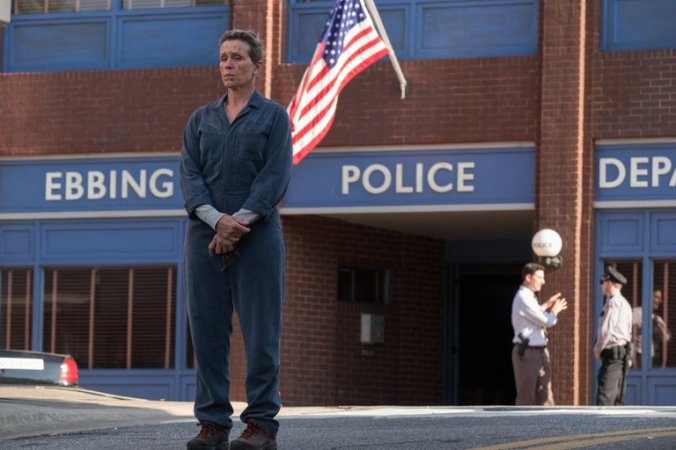
Ethics Review: “Three Billboards Outside Ebbing, Missouri”

I watched last year’s “Three Billboards Outside Ebbing, Missouri,” twice, just to make sure it was the profound ethics movie I thought it was. It is. None of the reviews described it that way, of course. Here is the New York Times:

“The movie opens on low boil with Mildred behind the wheel of her station wagon near three derelict billboards…she uses the billboards to announce her crusade … a way to get things jumping (the investigators, the tale) and splash some foreboding on an outwardly pacific scene. Much of the story involves the ripples of outrage, confusion and buffoonery that the billboards inspire and that soon envelop almost everyone Mildred knows. Months after her daughter’s death, grief has walled her in; isolating and seemingly impenetrable, it is inscribed in the hardness of her gaze and in her grim new identity as a mother of a dead girl. The billboards turn that grief into a weapon, a means of taking on the law and assorted men — a threatening stranger, a vigilante dentist and an abusive ex (John Hawkes) — who collectively suggest another wall that has closed Mildred in….”

None of which addresses what is remarkable about the film, which is that it shows what causes our ethics alarms not to ring—Frances McDormand as Mildred and Sam Rockwell as Dixon, a racist and vicious deputy, in particular demonstrate  what it is like to be driven by non-ethical considerations of the darkest and most passionate sort—and more important, what causes them to start ringing again. Most reviewers described this as a dark and depressing film. The ethics alarms are mostly off again as the film ends, and that is ominous, but its main ethics message is uplifting in many ways. “Three Billboards” teaches us that even broken, ignorant, alienated human beings have the capacity to access their innate instincts for compassion, justice, forgiveness, selflessness and kindness, and even when our ethical selves seem permanently overcome and decisively defeated, they can burst out again, in control, salvaging what’s best about the species.

There is a moment early in “Three Billboards” that signals that it is not only going to show us what monsters anger and grief can transform us into, but also that what George Washington’s list of 110 Rules called “that little spark of celestial fire called conscience” is remarkably resilient.  A sheriff—the ethics compass of the story, played by Woody Harrelson— visits Mildred after her billboard messages embarrass him and roil the town. She is hard and cold as marble as he tries to explain his failure to find her daughter’s rapist/killer, even after he reminds her that he is dying of cancer. Suddenly the sheriff has a violent  spasm: he coughs up blood on himself and Mildred. And we see her fury evaporate in an instant. The compassionate and caring mother she once was emerges, if only for a few moments. ( McDormand is such a superb actress that she pulls off the sudden transition convincingly and movingly: you believe it, though it is like watching Mr. Hyde turn into Dr. Jekyll in the snap of a finger.) Later, when again her fury has been aroused, we see the same woman firebomb the police station and watch implacably as her nemesis deputy burns. A warning: just because the ethics alarms can ring doesn’t mean they are working well enough.

Sam Rockwell’s character also reveals surprisingly that his ethics spark has not been entirely extinguished, again thanks to a catalyst supplied by the sheriff. This transformation caused considerable  criticism of the film among critics and artists in Hollywood, and some attribute the film’s failure to win the Best Picture Oscar to the fact that a racist is redeemed and revealed to have an ethical core. But except for the sociopaths and psychopaths among us, admittedly a disturbingly large group, we all have that ethical core. We have the ethics alarms too, ready to be re-activated, even if they aren’t in perfect working order. Yes, this is  even true of racists. So much of our current political discourse is driven by the false construct that a single belief or a single lapse of reason marks an individual as irredeemable. Its easier to marginalize and demonize them that way. But it isn’t true.

Indeed Ethics Alarms often declares certain conduct and words as signature significance, proving that an individual is unethical because such actions and thoughts are alien to ethical human beings. “Three Billboards Outside Ebbing, Missouri” reminded me that people may be unethical–Mildred and Dixon, the deputy, could never be called ethical, for ethical people don’t set police stations on fire or throw young men out of second story windows, as Dixon does—but that even unethical individuals can find their ethics if you give them a chance.

And if they can find their ethics, so can all of us, and so can society. There is hope.

________________________

Addendum: I cannot leave “Three Billboards” without a salute to one of its most powerful scenes, when Mildred tells a priest why she doesn’t care what he has to say when he comes to her home to admonish her for the messages on the billboards:

Bingo.

Self-Driving Cars And The Hindenburg Phenomenon

In Tempe, Arizona, a homeless woman was pushing a bicycle carrying plastic shopping bags and walked from a center median into a lane of traffic. She was immediately  struck by a self-driving Uber car operating in autonomous mode.

The car was traveling 38 mph in a 35 mph zone, and never braked. Police say the tragedy wasn’t the car’s fault, but it doesn’t matter. Uber has suspended use of the self-driving cars, and history tells us that the devices may be on a road to oblivion due to an unavoidable collapse of public trust.

I’ve been expecting this. To be precise, I’ve been expecting the first fatality inside a self-driving car, and that will happen soon enough. When it does, I think it is a close call whether self-driving cars ever recover, especially if the fatal accident is especially gory, or involves children.

All it took, remember, to end airship travel forever was one spectacular accident, when the Hindenburg burst into flames and was captured in photographs and newsreels. Before that, airships had a good safety record. Another vivid example was the 1933 Dymaxion, a streamlined car on three wheels created by visionary Buckminster Fuller. All three wheels turned, giving  the Dymaxion the ability to pull into parking spaces in one move. But the design was unstable. Three were built, hailed by investors, the media and celebrities as a break-through, and then one crashed, killing the driver. And that was the end of the Dymaxion. It sure was cool, though… Continue reading

Morning Ethics Warm-Up, 3/21/18: Ethics Observations As The Snowflakes Fall

Good Morning!

1 Moral luck.  In Great Mills, Maryland, a student with a handgun entered a high school and began shooting. He was brought down by a lone, armed and trained officer before anyone was killed. In the Parkland shooting, the equivalent officer chose to avoid a confrontation. There were other material differences: yesterday’s student shooter seems to have had a specific target in mind (his ex-girl friend) whereas the Parkland shooter was juts out to kill as many kids as possible. One student carried a hand-gun (which is very difficult for anyone to acquire legally in Maryland, which has among the toughest gun laws in the country), while the Florida shooter had a semi-automatic rifle. However, the primary difference was moral luck: if a competent and courageous officer had entered Marjory Stoneman Douglas High and shot Nikolas Cruz before he could inflict carnage, and Deputy Blaine Gaskill, instead of almost immediately entering the school and shooting 17-year-pld Austin Wyatt Rollins dead, had done a Scot Peterson impression and remained outside, the results in Parkland and Great Mills might have been reversed. In any case, the results would not have been changed by different gun laws or demonizing the NRA and lawful gun owners, only by different responses by human beings, and the vicissitudes of moral luck.

I think Marjory Stoneman Douglas High has serious cultural and management problems that played a larger role in the massacre than gun policies. Today’s news certainly suggest that…

2. This is how puppies end up dead in airplane luggage bins…The headline that caught my eye was “Pit bull goes on rampage in elementary school.” What actually happened was that a pit bull -mix puppy got out of the yard and ran onto a nearby elementary school playground where small children were playing, they started screaming and running because their parents had either taught them to be terrified of dogs or never instructed them how to interact with them, the puppy chased the kids into the school, and began jumping and nipping, as puppies tend to do. I was taught not to run from dogs at about the age of four. The consensus later was that the dog was not aggressive, but was just stimulated by all the commotion and playing. A teacher calmed the dog. You know, dogs are a feature of our neighborhoods and communities, and failing to teach children basic dog-interaction skills is as irresponsible as not teaching them how to cross the street. Anti-pit bull hysteria doesn’t help either. “Rampage.”

Then, this morning, I watched an episode of “My Cat From Hell” on the Animal Planet cable channel. In the first segment, one of a family’s two cats was behaving aggressively, biting and scratching in response to any human contact. The reason became apparent to the cat therapist quickly: the family’s two little girls were abusing both cats, treating the more passive of the pets like a stuffed animal as the  parents laughed and took photos. The second segment was even worse. A couple had bought a Munchkin cat—which is an ethics issue itself, since these are deformed cats bred to have such short legs that they can’t climb or jump—

and apparently thought of the creature as a cute animated decoration. They had no toys or comforts for the cat, just a bare room and a litter box. “Have you ever played with your cat?” the therapist asked. “Play? Well, no, we’re both really busy,” came the response.  And the couple wanted to know why was the cat was behaving so neurotically… Continue reading

Once Again, This Is Why Climate Change Scolds And Activists Have Neither Credibility Nor Integrity

Blogger Ann Althouse received a trenchant comment on her post chiding New York Times columnist Nick Kristof for flying to Easter Island so he could deliver a metaphorical warning about climate change. Noting that Kristof could have leaned all he needed to learn about Easter Island’s well-documented environmental catastrophe without flying halfway around the world by jet, she wrote,

“How on earth….did Nicholas Kristof think he could get away with that sanctimony?! DO NOT LECTURE US! Let your example come first, and then you can talk. You flew to Easter Island — you led a tour, enticing others to fly to Easter Island — so obviously, you think nothing of your carbon footprint or the carbon footprint of all those other people who jetted out there with you. When your actions are so radically different from your words, I don’t believe your words. The depredations of global warming may be coming, but I don’t believe that you believe it.”

Bingo. But Althouse commenter JPS really nails it, writing [remember, AGW is Anthropogenic Global Warming), Continue reading

Morning Ethics Warm-Up, 3/20/18: Life, Death, Fairness, Dissonance And Sanity

1 Let’s see more of such Ethics Heroes, please… In Upper St. Clair, Pennsylvania,  John Orsini, has gone to court to stop his ex-wife from allowing their son, 17-year-old Antonio, from playing high school football in his senior year. Antonio has already suffered at least three concussions. Antonio’s mother and John’s ex-wife, Janice, says that her son understands the risks, and that doctors have OK’d his continued play.

But he doesn’t understand the risks—apparently neither do those doctors—and he is considered a minor under the law because teenagers are prone to poor reasoning and impulsive decisions…especially when they have incipient brain damage.

CNN is eager to hear his position on gun control though. But I digress..

Says the CBS news story: “John contends that after these concussions and sub-concussive hits, medical research shows that Antonio would be in grave danger if he continues to play football.” He contends? There is no contention: that is fact.

“I’m trying to save his future. I’m trying to save his life,” he said of his son.

Janice and her attorney issued a statement, saying in part,

“The mother and her 17-year-old son have reasonably relied upon the input and opinions of his treating physicians and medical providers, and have considered the state mandated safety and concussion protocols followed by the school district, in deciding whether it was appropriate for him to continue to participate in football.”

John believes the court will side with him.  “If you have a significant indication that the child is being placed in harm’s way, and it’s brought to court to protect the child, it’s the court obligation to do so,” he says. I wouldn’t be so sure. This is football country, and football fanatics are in denial. They’ll get thousands of children’s brains injured before they are through.

“I’m hopeful that my son will just go on, get a good education and lead a healthy life. That’s all I want,” said John, whose other two sons no longer speak to him over this conflict.

Good luck.

Let’s hope Anthony is given then chance to grow smarter than his mother.

2. Let’s see, which Trump Derangement news media story should I post today? Every day, every single day, I have literally dozens of biased, vicious, stupid, unprofessional and blatantly partisan mainstream media news reports and pundit excesses to flag as unethical. Here, for example, is a New York Times columnists advocating for Rex Tillerson to betray all professional ethics, confidentiality, trust and responsibility by revealing everything he heard or saw as Secretary of State that could undermine Trump’s administration. It’s called, “Burn it down, Rex.”

Let me repeat: for journalists to set out to intentionally poison public opinion against the elected President of the United States by manipulation and hostile reporting is unethical and dangerous. This conduct has been the single largest ethics breach in the culture for more than a year, and one of the worst in U.S. history. In strenuously condemning journalism’s abdication of its duty to support democratic institutions and to remain objective and responsible, I am not defending Donald Trump. I am attempting to defend the Presidency itself.

Today I pick…this: Continue reading

Let’s Play “Unethical, Confused, Shameless Or Just An Idiot”! Today’s Guest: NY Congressman Tom Suozzi (D)…

Last week, Congressman Suozzi participated in the student walkout for gun control outside the US Capitol,  and called on the youth of his district to back gun ownership restrictions. “I think we should engage the high school students of #NY03, and all of Long Island, to promote gun violence prevention legislation,” he tweeted earlier.

This week, however the gun-grabbing Congressman endorsed the concept of an armed citizenry prepared to overthrow the government…specifically, the current one. This, of course, requires more than rocks and slingshots. It requires guns. Citizens opposed to President Trump had to consider the option of resorting to “Second Amendment,” Suozzi said in  March 12 talk to constituents, saying in part,

“It’s really a matter of putting public pressure on the President/ This is where the Second Amendment comes in, quite frankly, because you know, what if the President was to ignore the courts? What would you do? What would we do?”

After an audience member called out, “What’s the Second Amendment?” (I know, I know. Sigh), Rep. Suozzi answered, “The Second Amendment is the right to bear arms!”


Afterwards, Suozzi’s office tweeted out one of the Thomas Jefferson quotes often cited by the NRA and Second Amendment defenders:

“What country can preserve its liberties if their rulers are not warned from time to time that their people preserve the spirit of resistance. Let them take arms!”

OK, audience, are you ready? We’ve heard the evidence: this isn’t like John Kerry saying that he was for the Iraq War before he was against it. This is like Kerry saying that he was for the Iraq War WHILE he was against it! So it’s time to play the popular new political game show that’s sweeping the nation, “Unethical, Confused, Shameless, Or Just An Idiot”!

Here’s your challenge! Is Congressman SuozziUnethical, Confused, Shameless, Or Just An Idiot?

Choose carefully!

You have only a minute…


Thanks for playing, everyone!

See you next week!


A Bad Week For Puppies, Students, Human Beings…And Turtles.

“Mmmmm…puppies…”

Robert Crosland, a popular veteran science teacher at Preston Junior High School in Idaho, apparently fed a puppy to a snapping turtle in front of students after school last week. Apparently the puppy was infirm and not expected to live, justifying his conversion into Turtle Chow in the teacher’s view.

Crosland has not been criminally charged or placed on leave—yet—but the school is still investigating and considering its options, as is the Franklin County prosecutor.

Interviewed  students said Crosland is a well-liked, “cool” teacher at the school who kept snakes and other reptiles in tanks in his classroom, and had fed guinea pigs to snakes and snapping turtles in past classes. School officials describe him as a passionate, dedicated, gifted teacher. On the other side, Jill Parrish, an animal activist who filed a police report in connection with the alleged feeding, called Crosland’s actions  “sick” and “disgusting.”

“Allowing children to watch an innocent baby puppy scream because it is being fed to an animal … that is violence,” Parrish said. “That is not okay.”

While trying to sort all this out, officials took action: they killed the snapping turtle. Continue reading

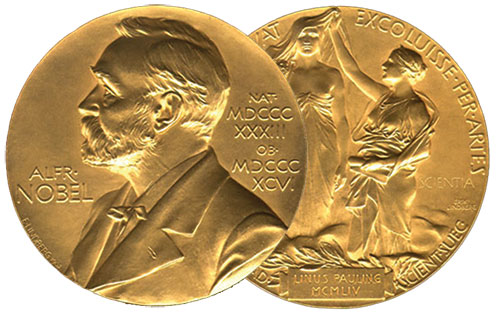
Award Ethics: Just In Case You Forgot, The Nobel Peace Prize Is Confirmed As Having No Integrity Whatsoever

…sort of like the Academy Awards.

The ex-Secretary for the Nobel Prize Geir Lundestad admitted in a recent interview that President Barack Obama did not deserve the 2009 prize but was given  the award to strengthen Obama politically. This is, or should be, no surprise. However, the brazen admission is nauseating.

Not only were there real, deserving candidates for the prize. it is clear that they were passed over in a cynical effort to influence U.S. politics and policy. In his memoir entitled Secretary of Peace, Lundestad writes, “No Nobel Peace Prize ever elicited more attention than the 2009 prize to Barack Obama . . . Even many of Obama’s supporters believed that the prize was a mistake. In that sense the committee didn’t achieve what it had hoped for.”

By using Nobel’s honor this way, the committee devalued the award for all past and future recipients, no matter how deserving. Lundestad, meanwhile, shows that those who have controlled the most ethics oriented of major awards have no comprehension of ethics. His regrets about the award being given to an individual who had done nothing to earn it arise only from the fact that it didn’t work. Indeed it did not, as Obama drone-killed hundreds without due process, carried on illegal bombing in Libya, refused to act when Syria used chemical weapons, and generally practiced feckless, timid, principle-free politics in international affairs. That, however, was moral luck, and the argument is consequentialism. It would have been equally wrong to give the award to Obama if he had achieved real success in promoting world peace afterwards.

I want to be explicit that no one should hold Barack Obama responsible for this fiasco in any way. Awarding  the prize was unfair to him as well. Nor should he have allowed the honor to influence his decision-making at any time during his Presidency. There is no evidence that he did.

Once an award has been given based on politics and ideology rather than merit, it is no longer an award, but a lie. The Nobel Peace Prize is meaningless, not because it was awarded unethically once, but because there is no evidence that it won’t be again, the next time the Committee thinks they can manipulate a nation’s leadership and policies.

_________________________

Pointer: Res Ipsa Loquitur