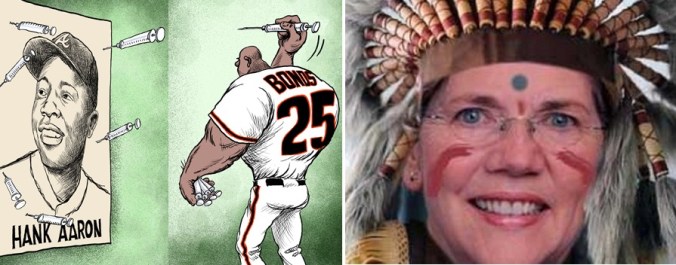
Rationalization Pop Quiz: What Do Barry Bonds And Elizabeth Warren Have In Common?

I wonder how many strategy sessions it took for the supporters and enablers of Senator Elizabeth Warren (D-Mass) to come up with their latest defense of her ongoing lie that she is part Cherokee? We know it’s a lie now—a deliberate misrepresentation designed to deceive—because the Bay State crypto-socialist has refused the obvious resolution of taking a DNA ancestry test….again. You know she’s taken at least one, and maybe more. Being able to wave scientific proof that she had Native  American ancestors after all the “Fauxahontas” jibes would be a political bonanza for Warren, and solve her most daunting public relations problem outside of my home state, the Land of Michael Curley, where corruption, lies and letting young women drown don’t put a dent in your popularity or vote totals, for some reason. Sure, Warren took the test. She probably took another one just in case it was wrong….and she still doesn’t have the integrity or courage to admit her lie.

And that, now and forever, is why her Cherokee fantasy matters. It shows that Warren lies, and lacks integrity. It shows that she was willing to use a falsehood to gain traction in university employment competitions where gender, race and minority status often made all the difference….even if it meant that a real minority candidate failed because of her subterfuge.

Yet those strategy sessions yielded this defense on Warren’s behalf: according to an investigation by the Boston Globe, Warren’s fake Cherokee claim wasn’t a factor in her hiring by Harvard Law School:

The Globe examined hundreds of documents, many of them never before available, and reached out to all 52 of the law professors who are still living and were eligible to be in that Pound Hall room at Harvard Law School. Some are Warren’s allies. Others are not. Thirty-one agreed to talk to the Globe — including the law professor who was, at the time, in charge of recruiting minority faculty. Most said they were unaware of her claims to Native American heritage and all but one of the 31 said those claims were not discussed as part of her hire. One professor told the Globe he is unsure whether her heritage came up, but is certain that, if it did, it had no bearing on his vote on Warren’s appointment.

Perhaps the editors and journalists at the Globe never heard of moral luck, but I bet at least some of those law professors comprehend the concept. Whether or not Warren’s deliberate lie and misrepresentation of her ancestry actually was a factor in her hiring at Harvard was pure chance, and occurred after Warren had embraced a false identity. Once she did that, the consequences were out of her control. Her lie doesn’t become less unethical because it didn’t have any effect after the fact of it. A lot of people have trouble grasping this basic ethical concept, but it isn’t that hard. A person who drops a bowling ball from a bridge onto an express way is just as irresponsible and reckless if the ball misses every thing as he would be if the ball caused a ten car pile-up and the death of ten. He’s just as bad either way, and the rest is all luck. The same is true of Warren’s affirmative action-courting lie. Continue reading
Now THIS Was Hypocrisy: John McCain’s National Cathedral Service

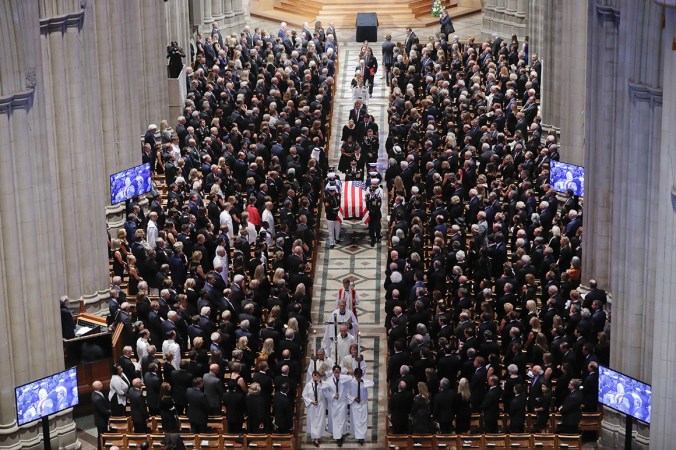
Ethics Alarms has spent a lot of time and space trying to clarifying the term hypocrisy, which like another term abused here by commenters, ad hominem attacks, is more often  misused than used properly. Hypocrisy is conduct that proves insincerity and  dishonesty (or, Hanlon Razor fans, stupidity), in which one’s conduct does not match one’s contemporaneously stated belief regarding what one’s conduct should be, under circumstances that suggest that the objective of the words was to deceive, by falsely claiming dedication to principles the speaker in fact does not possess or aspire to. Thanks to the orgy of hypocrisy that the Washington, D.C. funeral service for the late Senator John McCain this weekend deteriorated into and the equally hypocritical reporting on it, we now have a perfect example of hypocrisy for the ages.

Let’s start with the fact that a theme of the service was McCain’s alleged dedication to civility. The fact that the Senator openly planned his own funeral to settle scores and act on old grudges is the ultimate rebuttal of that claim. It was undeniably uncivil to dis-invite the President of the United States from what would otherwise be a display of unified and bi-partisan Washington community respect for a departed public servant. That was an insult, and intended as one. Insults are not civil. The retort to this is that the President was not civil to McCain, which is true. However, if the professional duty of civility is waived by another’s breach of it, then there is no such duty.

McCain’s own daughter launched the proceedings with her own uncivil rant, saying in part, “We gather here to mourn the passing of American greatness—the real thing, not cheap rhetoric from men who will never come near the sacrifice he gave so willingly, nor the opportunistic appropriation of those who lived lives of comfort and privilege while he suffered and served.” Later, she added, “The America of John McCain has no need to be made great again, because America was always great.”

In addition to being uncivil—I have never been to a funeral that consisted even in small part of veiled insults and attacks on someone else, and Marc Anthony aside, have always understood that using a funeral service for this purpose is boorish and unethical—the attacks on the President, like Meagan McCain’s, were cowardly. The man (and the office) being savaged wasn’t present, and the crowd was united in its hostility to the target. George Washington’s 110 Rules of Civility cover that kind of conduct neatly:

89. Speak not evil of the absent, for it is unjust.

Leading up to the ceremony, the news media were equally dishonest in describing McCain. Dana Milbank of the Washington Post declared that McCain  “never forgot that political opponents are not his enemies, and that there are things more important than winning elections.” Funny, it seems pretty clear that McCain regarded Donald Trump as his enemy, treated him as such, and made certain that his admirers would carry out his vendetta. The description also was historical revisionism, at least through the news media’s own assessments. After fawning over the “maverick” when he was challenging George W. Bush, journalists turned on McCain and discovered his dark side when he ran against a man the entire journalism establishment had decided to elect President. The Pew Research Center found that between the Republican National Convention’s close on September 4, 2008 and the final presidential debate on October 15, McCain’s media coverage was more negative than positive by a 4-to-1 ratio, and pundits like Milbank were writing statements like this one, from New York Times columnist Maureen Dowd, who said ,“Even some of McCain’s former aides are disturbed by the 73-year-old’s hostile, vindictive, sarcastic persona.”

When it was George W. Bush’s turn to speak—his family had enhanced its stock with McCain by barring the President from Barbara Bush’s funeral—one of his accolades was that McCain “detested the abuse of power”, though not, apparently, sufficiently to do the right and responsible thing and give up power when he was no longer well enough to discharge his duties. Is an octogenarian Senator with aggressive brain cancer still fit to serve in the U.S. Senate for almost a year as his condition deteriorates? To ask the question is to answer it, yet McCain insisted on keeping his power to the end, in part so he could continue undermining the President of the United States. Let’s say McCain “detested the abuse of power” by others.

That’s hypocrisy too. Continue reading

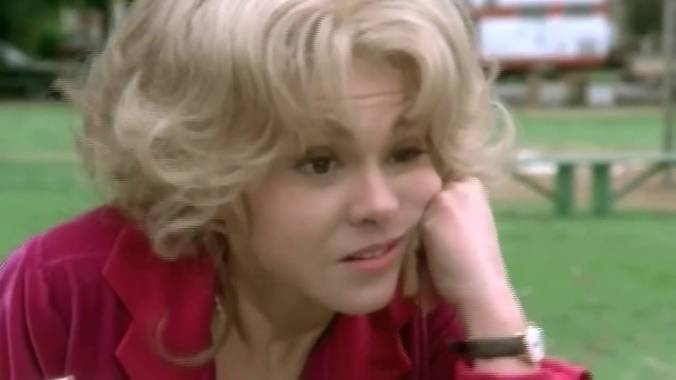
Ethics Quote Of The Month: Barbara Harris (1935-2018)

“Everyone gets acting mixed up with the desire to be famous, but some of us really just stumbled into the fame part, while we were really just interested in the process of acting.”

—Actress Barbara Harris, who died last month at the age of 83.  The statement was quoted in he New York Times obituary from an interview she gave in 2002.

If you didn’t know Barbara Harris had died—indeed, if you didn’t know who Barbara Harris was—it is a measure of her integrity that she would have been pleased. I knew Harris’s work well (though I found out she had died just recently), but only because I have long been dedicated to show business history. Indeed, she was one of my favorite actresses who was a welcome accent to any movie she deigned to appear in, striking, but not beautiful, versatile, but not flashy, funny when the role required it, powerful when the challenge was dramatic or tragic, always a bit off-center, always surprising, never predictable.

She was an off-center ethics hero too, by rejecting the malady not only of her era but of her chosen profession as well. Barbara Harris rejected celebrity as a career goal or a life value, sneered at fame, and believed that it was what you accomplished in life that mattered, not how well-known or admired you became by accomplishing it. Harris often chose her projects according to how obscure she thought they would be, and actively avoided recognition. What a marvelous obsession! In her case, it was also an ironic one, because the most quirky and unpromising projects often became viable because she elevated them.

Her entire career was proof of the wisdom of Harry Truman’s great observation, “It is amazing what you can accomplish if you do not care who gets the credit.” Harris did not care about the credit, but she accomplished a great deal. As a young teenaged actress who loved the process of improvisation, she was a founding member of the Second City improvisational theater in 1959, planting the seeds that gave our culture too many comic geniuses to count, along with Saturday Night Live and everything it spawned as well. Harris was the very first performer to appear on stage for Second City, in fact.  From there it was stardom on Broadway, often with her more famous Second City pals Alan Alda and Alan Arkin. She starred in a the musical  “On a Clear Day You Can See Forever” (Harris could sing, too); “Oh Dad Poor Dad Mama’s Hung You In The Closet And I’m Feeling So Sad”; and “The Apple Tree” (and won a Tony Award in 1967). Her movies included a classic Harris turn in A Thousand Clowns (1965), Who Is Harry Kellerman and Why Is He Saying Those Terrible Things About Me? (which got her an Oscar nomination in 1971), Nashville (1975),the first Freaky Friday (1976) opposite Jody Foster, Hitchcock’s last film, Family Plot (1976), the cool, clever nostalgic spoof  Movie Movie (1978) that I bet you have never seen, a seering performance as the betrayed wife of a Senator in The Seduction of Joe Tynan (1979), and her final film, Grosse Pointe Blank  in 1997. Then she retired from performing to teach acting.

During Harris’s career, she did none of the things actors typically do to keep their name before the public—no talk shows, few guest appearances on TV, no celebrity cameos on “Murder She Wrote” or “The Love Boat.” Somehow she instinctively understood that it wasn’t popularity or fame that defined her worth, or any human bieng’s worth, and refused to allow our society’s corrupting elebrity obsession of  warp her values or dictate her needs.

For me, Barbara Harris’s defining moment occurs at the end of the perfect movie for her, Robert Altman’s rambling, improvisational film “Nashville,” which is, among other things, about the sick obsession with fame and fortune that Barbara Harris rejected. Harris has few lines, and plays a runaway middle-aged wife who is determined to be a Country Western star. Her efforts are desperate, pathetic, and darkly comic, but at the film’s climax, when a famous singer is shot at a political rally for a renegade Presidential candidate, she grabs the suddenly open microphone of the fallen star she envies, and begins to sing in the chaos.

Let’s watch it now, and remember a woman and an artist of unshakable integrity and dedication to her art, and only her art.

Sunday Morning Ethics Warm-Up, 9/2/18: Talking Rabbits, Giant Ants, And California Progressives

Good Morning!

1. I may start banning commenters who keep saying this. A new, articulate and agenda-driven commenter, Ross Grazier, writes, “But your writing on this blog seems to be all about politics and much less about ethics.” I don’t want to drive Ross off, since the position of Ethics Alarms Knee-jerk Progressive Ratioanalizer And Denier of Mainstream Media Bias seems to be vacant at the moment, but I’m really, really sick of this common smear of my work (Ross’s comment also reminded me that I need to add the “s0 called ethicist” and “self-anointed ethicist” to the magic phrases that can get a commenter banned). Not for the first time, I decided to categorize every topic I wrote about here in the past week as political, non-political, or “mixed,” meaning that the article included substantive relevance to political figures or controversies but that the ethical issues involved were not solely political in scope or relevance. There were 42 distinct topics discussed (I did not include the Comments of the Day). Of these, 26 were non-political. Ten were “mixed.” Exactly six were  “about politics.”

I was surprised, frankly. I expected a bit more emphasis on politics.

I regard Ross’s accusation and others like it as an either an effort to undermine my credibility and the reputation of Ethics Alarms, or as an example of confirmation bias at work. Easily debunked claims that are asserted anyway in print are unethical.

2. Movie Ethics Potpourri! A. I finally saw “Peter Rabbit,” which was the subject of a (Non political, Ross!) post here. You may recall that Sony was pressured into grovelling an apology for a scene in which the animated rabbits shot blackberries into Mr. McGregor’s mouth using sling-shots, provoking an allergic reaction. Seeking its 15 minutes of cheap publicity and social media outrage mongering, Kenneth Mendez, president and chief executive of the Asthma and Allergy Foundation of America, said, “Making light of this condition hurts our members because it encourages the public not to take the risk of allergic reactions seriously, and this cavalier attitude may make them act in ways that could put an allergic person in danger.” Naturally, there was a Change.org petition demanding that the offending sequence be removed. Now that I’ve seen the film—which is pretty good, not quite “Babe” good, but well-done and fun—I can appreciate the full insanity of the complaints.  B. The British film “Calibre,” now playing on Netflix, is a “Deliverance” style ethics movie, in which two reasonable good guys go on a hunting trip in Scotland and are hurled by bad luck and panic into a series of ethical dilemmas, managing to make exactly the wrong decision at every turn. In the end, three people are dead, multiple crimes have been committed, and the lessons are murky. This is an excellent “what would you do?” film for group discussion, though the ultimate answer is “Don’t go hunting, in Scotland or anywhere else.” C. Finally, in the rarified category of giant ant movie ethics, there is “Them!” It is a justly admired 50’s Sci-Fi flick about an alien invasion of giant ants, featuring a surprisingly accomplished and diverse cast including pre-“Gunsmoke” Jim Arness, James Whitmore, ol’ Santa Clause himself, Edmund Gwenn, ubiquitous Western character actor Dub Taylor, and Sigourney Weaver’s wacky uncle, Doodles Weaver. I hadn’t seen it for a while, and forgot that it included one of the most blatant examples of Rationalization #58. The Universal Trump, or “Think of the children!” on film.

Scientists and the military have determined that the giant ants—We’re talking THIS big:

—have invaded California (from outer space, in ant-shaped space ships!), that they pose a threat to LA, the state, and entire country, and that there may be hundreds of thousands of them. California has declared martial law. A military commander announces that the best strategy is to gas underground passages where the ants are presumably gathering, and then kill the ones who escape to the surface. No, says Big Jim. It seems that there are two small children missing that were taken by the ants from their now thoroughly masticated and dead father. As long as there’s a chance they may still be alive,  Jim says, we can’t take the chance of harming them. The man is gob-smacked. “You mean you’d risk all of Los Angeles for two kids who are probably already dead?” he asks, in a fair framing of the issue. “Why don’t you ask their mother?” says Arness. “She’s right over there.”

Well all righty then! How can you argue with that? Continue reading

The Return Of Louis C.K. For Ethics Dummies

Ick.

Reading the news media and entertainment websites, one would think that Louis C.K.’s return to stand-up comedy after nearly a year in exile or rehab or something raises ethics conundrums that would stump Plato, Kant and Mill. It’s not that hard. The fact that everyone, especially those in the entertainment field, are displaying such confusion and angst just tells us something useful about them. They don’t know how to figure out what’s right and wrong.

In case you have forgotten, cult comedy star  Louis C.K. admitted last November at the peak of the #MeToo rush that he had masturbed in front of  at least five women without their consent. Ick. His cable show and other projects were cancelled, and he disappeared from the public eye. Then, last weekend, he returned to the stage at the Comedy Cellar in New York, performed for about 15 minutes, and received a standing ovation.  This apparently alternately shocked or confused people. I’ll make it simple.

Does the comedian have a right to practice his art after the revelation of his disgusting conduct?

Of course he does. He wasn’t sentenced to prison. He has a right to try to make a living at what he does well. In fact, he has a First Amendment right to tell jokes any where others will listen to him.

OK, he technically has a right. But is it right for him to come back like nothing has happened?

What? The man was publicly shamed and humiliated. He can’t come back as if nothing has happened, because everyone knows that something has happened. Nevertheless, his art does not require the public trust. It does not demand good character, or even the absence of a criminal record. Does a great singer sound worse because he was abusive to women? No. Is there a law that says men who are abusive to women should never be able to work again? No, and there shouldn’t be. I wouldn’t hire C.K. to work in an office, because I see no reason to trust him around others. But he’s not a worker, he’s an artist. He never engaged in inappropriate conduct on stage. He can be trusted as an artist,at least when he’s performing solo.

Comedian Michael Ian Black tweeted regarding Louis C.K.that “Will take heat for this, but people have to be allowed to serve their time and move on with their lives.I don’t know if it’s been long enough, or his career will recover, or if people will have him back, but I’m happy to see him try.” For this he apologized,  saying this position was “ultimately, not defensible.” after he was broiled on social media. Should he have apologized? Continue reading

Saturday Ethics Warm-Up, 9/1/18: Ethics Is Like Making Hamburger…[UPDATED]

Hello September!

1. More fake news, future news, and “if you hate Trump, you’ll like this” news. Nah, there’s no mainstream media bias!

Ann Althouse performs an expert take-down of an inexcusable piece of hackery by Megan McArdle in the Washington Post titled “Poll by sinking poll, Trump inches toward impeachment.”

[The wrong link to Althouse was up yesterday: it’s fixed now.]

How I love it when other do my work for me: Ann has been getting increasingly eccentric, but here she is at her best. Read both McArdle’s trash and Ann’s defenestration of it, but here are some key points from Althouse:

  • “what made me want to blog this is the first line of the column, “By any metric, Trump is in trouble,” which is followed by:

A poll out from The Post and ABC on Friday shows that 60 percent of voters disapprove of the job he’s doing as president, a new low. But that’s just one poll; the polling average at statistician Nate Silver’s FiveThirtyEight shows Trump with a mere 53.4 percent disapproval rating, which is better than its 56.8 percent peak last December.

So there’s an obvious “metric” — the famous Nate Silver metric — by which Trump is doing better than last December, but “By any metric, Trump is in trouble”?!

  • But a presidency is not in good shape when the best spin on the new poll is “It’s an outlier! Only 53 percent of the country thinks the president is terrible.” The poll is especially ugly for Republicans with midterms looming in two months.

No. 53 percent didn’t say “the president is terrible.” They said “disapprove” when asked whether they approve of disapprove. And they might disapprove of other options too, such as impeachment or even (if it could be magically possible) Hillary for President.

  • More McArdle:

It’s all too easy to imagine a similar scenario for Democrats intent on impeaching Trump as they come up short looking for Republicans to help them make it across the finish line. But it’s not entirely impossible to picture a few Republicans going along….

We’ve gone from “by any metric” to “it’s not entirely impossible.” Come on! Were we not supposed to read this far into the column? WaPo is all headlines and first lines these days. Get your hit, and maybe you can face another day with Trump as President.

Ann’s last line is spot-on, and describes exactly what social media is like these days. Oooo! Trump flew the White House flag full-mast a couple of days early! What a monster! …What? People say Trump doesn’t like Jeff Sessions’ accent? He’s horrible!Hey! The Trump Administration is doing pretty much exactly what the Obama administration did, but it’s Trump, so now it’s wrong!”

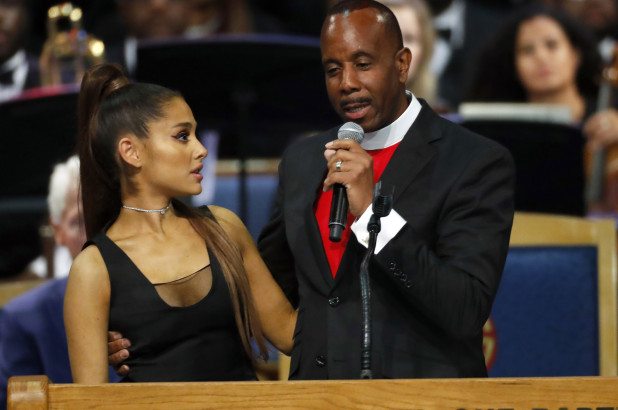
2. More Aretha Franklin Ethics. Even a funeral of a beloved pop star can’t proceed without manufactured outrages, controversies and PC offenses. Bishop Charles H. Ellis, III, felt that he had to apologize for touching singer Ariana Grande like this after she performed during the funeral service for Aretha Franklin…

The funny thing is that this could indeed constitute sexual harassment in a workplace setting, if the singer decided that the touch—unconsented, arguably a mini-grope–was “unwelcome.” So the Bishop had to grovel, which he did, saying,

“It would never be my intention to touch any woman’s breast. … I don’t know I guess I put my arm around her,” Ellis said. “Maybe I crossed the border, maybe I was too friendly or familiar but again, I apologize….I hug all the female artists and the male artists. Everybody that was up, I shook their hands and hugged them. That’s what we are all about in the church. We are all about love. The last thing I want to do is to be a distraction to this day. This is all about Aretha Franklin.”

Continue reading