Prison Labor Ethics

Prison labor is an ethics issue that I have never considered before. Apparently that’s true of a lot of people. In Massachusetts, an Amherst-Pelham Regional High School  student named Spencer Cliche (great name!) was challenged to undertake an investigative journalism project, He eventually published a 3,000-word exposé  on prison labor topic in his school’s newspaper.

The high school, it seems, had contracted with a local prison to re-upholster its auditorium seats,  taking its low bid for the job over another bid by a local business. As a result of the uproar sparked by Spencer’s work, the school superintendent issued a statement to school staff members promising never to contract with the prison again.

It does not appear, however, that this decision was based on  careful balancing of the ethics issues involved, but rather, as usual, a lazy capitulation to avoid an emotion-based controversy.

The local  newspaper, The Daily Hampshire Gazette, eventually picked up the story. as did a local radio station that featured Cliche’s report as the “question of the morning.” Then the issue was raised by The Marshall Project, a prison and justice system reform project.

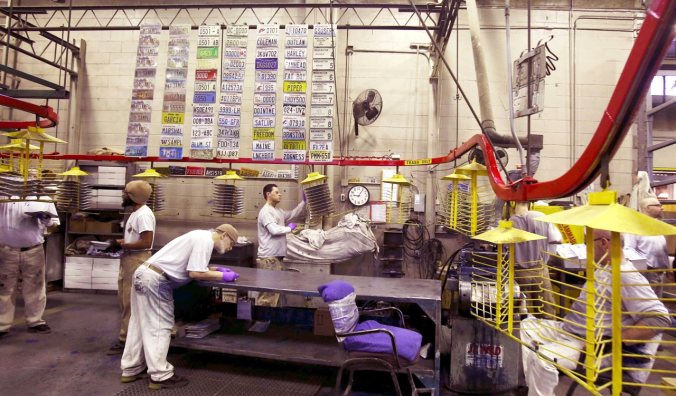
In addition to routine prison labor, which is usually handled in a prison facility, there are also state-run “correctional industries,” such as MassCor, which arranges for inmates to do work for  schools, nursing homes, towns, non-profits and other institutions. Obviously, their costs are lower than competing businesses, because prisoners earn less than a dollar an hour on average for their labor, according to Prison Policy Initiative.

Thus we have multiple looming ethics issues, among them…

  • Is it ethical to force prisoners to work at all?

I don’t see how an honest argument can be formulated that argues that it is not. Work organizes the time and attention of the jailed, keeps them occupied, minimizes boredom and the opportunity to get into trouble. Social justice advocates seem to think that prisons should be like summer camps, with sports, crafts, and other pleasant diversions. That approach is both expensive and undeserved. Prison, among other things, is and ought to be punishment.

  • Is it ethical to pay prisoners less than the minimum wage? Isn’t forced labor with no compensation or minimal compensation virtual slavery?

Convicted prisoners forfeit most of their constitutional rights. Some forms of forced labor might rise to the level of cruel and unusual punishment, and prison labor is ripe for abuse (just ask Andy Dufresne, the protagonist of “The Shawhsank Redemption”), but criminals are a burden on society, and warehousing them is expensive. There is nothing unethical about requiring those who have imposed that burden to help alleviate it.

  • Are prison-based businesses like MassCor unethical?

 Cara Savelli, a spokeswoman for the Massachusetts Department of Correction interviewed by the student journalist, defended the program, saying,


Continue reading

Comment Of The Day: “Ethics Dunce: Professor Lara Bazelon” (2)

The second (of three, so far) memorable comment generated by the Lara Bazalon post here on the lawyer’s essay, I’ve Picked My Job Over My Kids : I love them beyond all reason. But sometimes my clients need me more,” came from Ryan Harkins.

Here is his Comment of the Day on “Ethics Dunce: Professor Lara Bazelon”:

My wife left her work as a process engineer at the refinery where I work when she became pregnant with our first child. (We actually agreed she could quit so that we had the chance of conceiving. Long story short, when we agreed she could quit, she tested pregnant mere days later!) Since then, she has received a great deal of scorn from friends, family, and acquaintances because she is not a working mother. She has devoted herself to raising our kids despite having a lucrative career ahead of her. Even worse in the eyes of those around us, we’ve chosen to homeschool our children, which means that burden falls mainly on her while I work most of the day.

What kind of epithets does she receive? That she’s lazy, that she’s spoiling our kids, that she’s wasting her life. When it comes to the homeschooling, she’s told endlessly that she’s ruining our kids’ chance of having a social life or any normal interaction in society. The animus directed toward mothers who stay at home is intense and unrelenting.

So maybe we’re a bit defensive about the topic. And maybe we’re just as judgmental, looking at what other people do with their kids. We’ve seen numerous speakers who demonstrate that, unless the mother is making a significant wage (like an engineer’s salary, to be fair), the cost of day care, and cost of continually taking time off of work to care for a sick child, and so on, eventually outweighs the monetary compensation of the second job. But even more, we witnessed friends who grew up with both parents working, and the anecdotal evidence at the very least suggests that those friends tended to get into trouble more and tended to have greater relational troubles. And the psychology says that those kids go out looking for affirmation (or at least attention) that they don’t get at home. We want our kids to know they are loved, they are worthwhile, that they have our dedication to them. Continue reading

Comment Of The Day: “Ethics Dunce: Professor Lara Bazelon” (1)

The Ethics Dunce post highlighting prominent lawyer and legal commentator Lara Bazelon’s op-ed celebrating her decision to place her career and the welfare of clients over the best interests of her own children didn’t attract a lot of commentary, but the comments that arrived were excellent and often moving, and readers related her dilemma to their own lives. There have been three Comments of the Day so far. I’m going to post them in the order in which they arrived.

Here is JP’s Comment of the Day on “Ethics Dunce: Professor Lara Bazelon”:

About 8 ½ years ago, I became a father. As I looked down at my newborn son, I couldn’t help but note was how small he was. How beautiful he looked. How unprepared I was to be in this situation. It’s funny the way life teaches us lessons. For example, did you know an 18-month-old could lock you out of your house? Or that a 2-year-old could operate an elevator? How about a 3-year-old using deception to win a game of hide and seek? Maybe that a 4-year-old could teach himself to swim?

It hasn’t been easy taking care of my oldest. From the beginning of his life, he has always been too interested in what was going on to care about being held or even staying in one place. His confidence has given him a unique perspective on the world where everything is a new adventure. It seems that he always must be in the thick of things. But here I am, trying to keep up, increasingly more aware that I am falling further behind and time is running out. Continue reading

Independence Day Morning Ethics Warm-Up, 7/4/19: Jefferson, Amash, Snyder [UPDATED]

Happy birthday, USA!

1. Thomas Jefferson’s Day. Since Nike chose this time to announce that it was ashamed of the Revolutionary War flag, and Charlottesville similarly picked this week of all weeks to distance itself from it most famous and accomplished son,  it is appropriate to recall why Thomas Jefferson is the single American who should be most honored on the Fourth of July.

At the Foundation for Economic Education site (excellent site, by the way), the organization’s president, Lawrence W. Reed, offers a cogent rebuttal to those who would metaphorically (or literally) tear down Jefferson’s memorials because he could not find it in himself to stop practicing slave-holding while publicly making the case against it. Reed writes in part,

More than any other man or woman, July 4 belongs to Thomas Jefferson. As the principal author of the charter that proclaimed America’s independence and the reasons that impelled it, his spirit and his words are essentially what we celebrate on this day.

That such praise is not deemed “politically correct” in some quarters and may even evoke hostility in others is not a pleasant commentary on the state of current political dialogue. A kind of intertemporal bigotry is loose in the land. It prompts the virtue-signaling self-righteous to judge people of the past against the conventions of today. Isn’t it strange that evolution is accepted as natural in the biological world but often not in the realm of human thought?

…[H]umans didn’t support slavery one day and then oppose it when they all woke up the next. Some people never saw the light; others were against it from the moment it first entered their minds. Millions in the late 18th and early 19th centuries were somewhere in between, and lots of them evolved on the issue over the course of their lives. In other words, they learned and they changed. That’s how humanity progresses.

Thanks to visionaries like Jefferson, Americans were forced eventually to end the contradiction between the words of the Declaration of Independence and the reality around them. Jefferson’s own words were evoked to accomplish that.

Historian Jim Powell, in his FEE article of July 1, 1995, titled “Thomas Jefferson’s Sophisticated, Radical Vision of Liberty,” addressed the slavery issue thusly.

“Though Jefferson had personal failings—in the case of slavery, a monstrous one—they don’t invalidate the philosophy of liberty he championed, any more than Einstein’s personal failings are evidence against his theory of relativity. Moreover, every one of Jefferson’s adversaries, past and present, had personal failings, which means that if ideas are to be dismissed because of an author’s failings, Jefferson and his adversaries would cancel each other out. When historians finish dumping on Jefferson, they still won’t have cleared the way for Karl Marx or whomever they admire. Jefferson’s accomplishments and philosophy of liberty must be recognized for their monumental importance.”

So yes, Thomas Jefferson wasn’t perfect. And neither are his critics. They should hope that across their entire lives, they might accomplish for liberty what Jefferson achieved in a few weeks of literary genius. He marshaled the English language on behalf of ideas, and they sparked liberty’s loudest thunderclap in human history….

2. Yes, Rep. Amash is an Ethics Dunce. One reason the Tea Party movement ran out of gas is that the elected officials who rose to power under its banner were mostly unqualified, doctrinaire, simplistic grandstanders who seemed to think bumper-sticker slogans are a substitute for reasoning. Amash is typical of the breed. He recently gained the praise of the Trump Deranged by declaring that the Mueller Report proves that the President engaged in “high crimes and misdemeanors” (it doesn’t, but any effort to undermine President Trump qualifies as heroic  to “the resistance”).  This predictably attracted a furious backlash in his district and his party, and Amash’s prospects for re-election in 2020 now appear to be about on par with John McCain’s.

His solution? Amash has declared that he is “disenchanted” and “frightened” by party politics, so he is leaving the Republican Party and becoming an Independent.

Party flipping mid-term is per se unethical, as I have pointed out here before.  He has a contract with his voters to serve in the party whose banner under which he presented himself for public service, and the party that helped fund his campaign. One of the few party-switchers in political history who did the deed ethically was former Texas  Senator Phil Gramm. [CORRECTION NOTICE: I had originally written “the late” here, because I was sure Gramm was dead. He’s not. I’m glad.] From my post about West Virginia’s Governor Jim  Justice, who switched from Democrat to Republican in 2017…

Just days after  he had been reelected to a House seat  as a Democrat in 1982, Gramm was thrown off the House Budget Committee in a dispute with party leadership. In response, Gramm resigned as a Representative, changed parties, and ran for his old seat as a Republican in a special election. He won easily, and  was a Republican ever after. That’s the honorable way to do it.

Rep. Amash isn’t honorable. He isn’t ethical. And after Election Day 2020, he won’t be in Congress.

Good. Continue reading

July 4th Celebration Ethics

Since anything this President of the United States says, tweets, decides or does is automatically wrong, bad, stupid or ominous (according to 90% of the news media and the immovable “resistance”) the big story today will undoubtedly be how lousy the Trump-produced celebration in Washington, D.C. is.

Nobody will mention that the celebration has been pretty continuously lousy for decades, low-lighted by the hollowed out, aging, croaking shell of The Beach Boys that headlined the festivities for so many years, giving it the whiff of a cheesy local summer  county fair. It was high time someone shook up the thing, and this President, who has experience in theatrical production, is as good a choice to do that as anyone, except for those who refuse to concede that he is good for anything.

Most of the recent bitching has focused on the President’s insistence that a tank be part of the festivities. I can see several reasons why the President, or any President, might want to do this. The tank is a symbol of  military force, and a less ambiguous one than parading soldiers. In the midst of the kind of tough diplomacy with several hostile powers, sending the message that this administration, unlike the last one, is not reluctant to project the threat of military action has some obvious benefits.

Or maybe the President just likes tanks. Continue reading

Ethics Warm-Up, 7/3/2019: Holiday Follies [UPDATED]

The end of Pickett’s Charge, July 3, 1863

Happy weird mid-week day before a holiday when almost nobody seems to be working…and remember Pickett’s Charge, July 3, 1863.

But ethics never takes a break…

1. Oops! Did we miss the real holiday? On this date in 1776, John Adams wrote to Abigail that the day before, July 2, 1776, the Continental Congress had voted to declare American independence from the British Empire. Adams predicted that July 2 would eventually be celebrated by every generation of Americans with parades, speeches, songs and fireworks, which Adams called  “illuminations.” Why did he turn out to be wrong? Oh, because history is messy, mistakes don’t get corrected, and tradition becomes more important than facts. (Once again, “The Man Who Shot Liberty Valence” rule applies: “When legend becomes fact, print the legend!” )

What happened on July 4th? The unsigned but ratified Declaration was sent to the printer on that date, and the printer dutifully marked his prints with “July 4, 1776”. The delegates didn’t start signing the document until August 2, and all the signatures weren’t down on parchment until November. The dramatic depiction of the signing taking place on July 4 in the musical and movie  “1776” is fake history.  It’s not all Broadway’s and Hollywood’s fault: the iconic painting “Declaration of Independence,” by John Trumbull, a version of which hangs in the Capitol Rotunda in Washington and which the actors are staged to re-enact in “1776” is often captioned “July 4, 1776.”

Trumbull’s artwork actually shows the moment on June 28 when the Declaration drafting committee officially presented its work to  the chairman of Continental Congress. John Hancock, There never was a signing ceremony.

Nonetheless, July 4 has, for some reason, been an unusually felicitous and significant day in U.S. history. It would be difficult to pick another that carried so much history, even without being the chosen date to honor the nation’s founding. Three of the first five U.S. presidents died on July 4, with John Adams and Thomas Jefferson famously dying on that date within hours of each other in 1826, fifty years after….the Declaration was sent to the printer.

But July 4, 1803, was the day word arrived from Paris that the Louisiana Purchase was complete, having been signed by Napoleon.  Without it, the United States would have been a very different country, and a much weaker and poorer one.

July 4, 1863 also was the date Robert E. Lee acknowledged his defeat at Gettysburg after his desperate, risky, massed attack on the Union line across a fence-strewn field and up a grade into artillery fire failed. That defeat probably sealed the fate of the Confederacy, and meant that this unique nation would, despite a bloody close call,  have a new birth of freedom, and that government of the people, by the people, for the people, shall not perish from the earth. Continue reading

A Kardashian Sister Is Exposed As Hypocritical And Mean. What A Surprise…

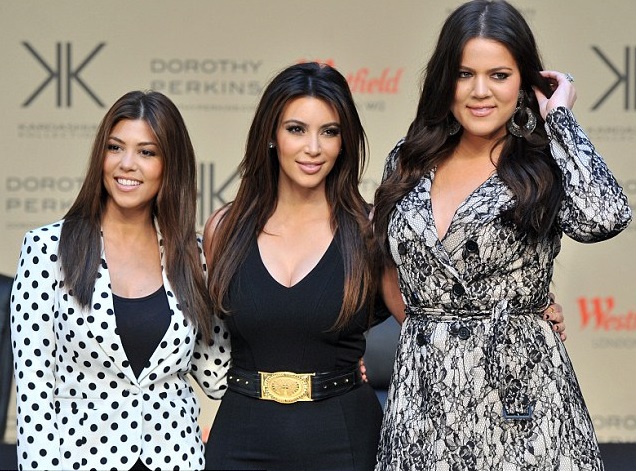
Khloé Kardashian–thatr’s her on the right— was long the ugly duckling of the Kardashian sisters—taller, chunky, cruder features. Her travails at dieting and her insecurities in comparison to her more glamorous—but equally trivial and useless—sisters Kim and Kourtney was an ongoing theme in the brain-meltingly crude and cretinous reality TV show “Keeping Up With The Kardashians,” which has been making Americans idiotic for 16 years, enough time for Khloe’s half-sisters Kendall and Kylie Jenner to grow from little girls into professional sluts too.

After yo-yoing on the weight spectrum in full view of America, Khloé found the right combination of cosmetic surgery, exercise and diet to transform into  Khloé 2.0:

Well, good for Khloé . Now she fits right in! See?


Somehow this all reminds me of the creepy Twilight Zone episode, “Number 12 Looks Just Like You.”

But I digress. Here’s the scandal:Khloé’s various sexual liaisons are hard to keep up with—she’s partial to NBA players—and the various affairs and infidelities her love life involves are reliable tabloid fodder. Lately a model named Jordyn Woods has become a Kardashian bete noir for her romantic involvement with one of Khloé’s exes,  Tristan Thompson of the NBA’s Cleveland Cavaliers. Continue reading

OH! The Teen Who Raped A Drunken Girl And Sent The Video Of Him Doing It To His Pals On Social Media “Has A Good Family!” That Changes Everything, Then! [UPDATED]

A New Jersey Appeals Court has reversed a decision of a Family Court judge who has a claim on the title of “Most Incompetent Judge Ever.”

The facts showed that  a drunk 16-year-old boy raped an even more drunk  16-year-old  in the basement during a party. The boy recorded a video of  himself penetrating her from behind, and then shared it on social media among friends along with a text that said, “When your first time having sex was rape.” The victim could barely recall the incident, and when she confronted her attacker, he denied that he had raped her  even as he continued to circulate the video. When the victim, known only in public records as Mary, an alias, because of her juvenile status, learned this, she had her mother contact authorities.

The Monmouth County prosecutor’s office wanted the boy to be tried as an adult. They applied for a waiver of his juvenile status, arguing that the alleged assailant’s actions were “predatory and sophisticated.”  “At the time he led ‘Mary’ into the basement gym, she was visibly intoxicated and unable to walk without stumbling,” the prosecutor wrote. “For the duration of the assault, the lights in the gym remained off and the door was barred by a foosball table. Filming a cellphone video while committing the assault was a deliberate act of debasement.”

In criminal law, the defendant’s lawyer always tries to get a “good judge,” and in this case, the accused rapist teen hit the jackpot. Judge James Troiano of Superior Court was the ideal judge for this defendant, because he apparently leads his profession in rationalizing idiocy. “Good,” in this case, meant incompetent. Continue reading

Ethics Dunce: Professor Lara Bazelon [UPDATED]

The click-bait headline is, I’ve Picked My Job Over My Kids : I love them beyond all reason. But sometimes my clients need me more.”

The author is well-published law school professor Lara Bazelon, who often opines at Slate. I could, but I won’t, give Bazelon the benefit of the doubt, assuming that as a lawyer and advocate, the article is intentional hyperbole and intended to both spark debate and to assuage the conscience of other working moms. Lawyers, however, are not supposed to mislead or lie. If Bazelon doesn’t believe that she has picked her job over her kids, then she shouldn’t write it. If she does believe it, then she is rationalizing away a breach of duty.

There are millions of working mothers who have no choice other than to work when their children may need them, but Bazelon is not one of them. She writes, Continue reading

Morning Ethics Warm-Up, 7/2/2019: Monkeys, Howlies, Nikes, And The Great Tag Hoax

Gooooood Morning!

1. Talk about a newspaper column that is exactly the opposite of the truth! The Times had an essay in its “Review” section this Sunday with a title that gave me a shock: Want to Be Less Racist? Move to Hawaii”

The headline would have been more accurate if it read, “Want to live in the only state with lawful and open racial discrimination? Move to Hawaii!” Hawaii gives special benefits to residents with full or partial Native Hawaiian ancestry. There is a special  Hawaiian registry program which verifies an individual’s Native Hawaiian ancestry, so the favored race can receive such goodies that are unavailable to other racial groups as buying land for a home at only $1 a year,  low-interest loans, and admission for their children to the elite Kamehameha Schools.

Anecdotally, I can also state that the only time in my life that I felt I was the target of racial epithets was in college, when the Hawaiian contingent frequently derided me and my white room mates as “howlies,” a disparaging Island term reserved for anyone who is not a native Hawaiian. I will always remember my 6’5″ roommate Dave ending the practice by saying to the two main offenders, “If I ever hear that word from any of you again, I promise that I will shove you, Howie, directly up Reggie’s ass, head first.  Are we clear on that?”

Dave never bluffed, and seldom joked. That was the last time we were called “howlies.”

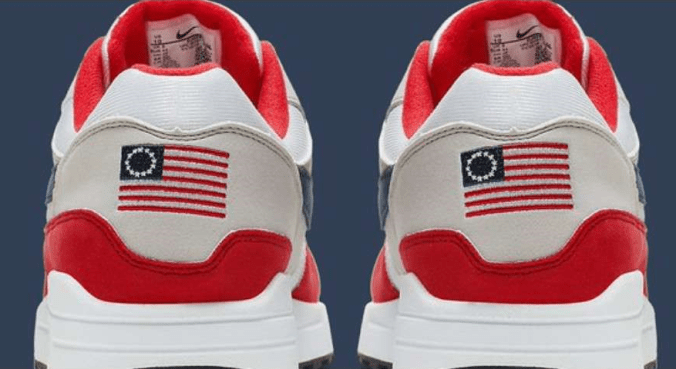
2. Nike is not just scum, but cowardly, sniveling scum. Nike Inc. cancelled a U.S.A.-themed sneaker featuring the Betsy Ross American flag because Head NFL Kneeler Colin Kaepernick, a Nike endorser, told company officials that he and others felt that the  historic flag is an offensive symbol because of its connection to an era of slavery.

The Air Max 1 USA had been designed for release in celebration of the July Fourth holiday, and scheduled to go on sale this week. The heel of the shoe featured a U.S. flag with 13 white stars in a circle, the original flag created during the American Revolution and known as the Betsy Ross flag.

Wow! How racist can you get!

Continue reading