Horse Racing Ethics: Justify Was A Fake Triple Crown Winner. Now What?

The term “horse racing ethics” is justly regarded as an oxymoron, and the stunning scandal revealed yesterday shows why.

The U.S. Thoroughbred Racing Triple Crown is one of the most prestigious achievements in all of sports. The three races that make up the Triple Crown, all competed in by three-year-old horses, are the Kentucky Derby, run over the 1 1⁄4-mile dirt track at Churchill Downs in Louisville, Kentucky; the Preakness Stakes, run over the 1 3⁄16-mile (1.9 km) dirt track at Pimlico Race Course in Baltimore, Maryland; and the Belmont Stakes, run over the 1 1⁄2-mile (2.4 km) dirt track (the longest in U.S. thoroughbred racing) at Belmont Park in Belmont, New York.

The first Triple Crown winner was Sir Barton in 1919, and there have been only twelve since, among them the most fabled names in the sport: War Admiral, Count Fleet, Whirlaway, Secretariat, Affirmed. Winning the Triple Crown is a bonanza for the sport as well as the owner of the victorious horse, which will eventually demand huge stud fees. After Affirmed won the Triple Crown in 1978, no horse achieved that pinnacle for 37 years. Then, finally, American Pharaoh  broke the drought in 2015. A filly out of that Triple Crown winner recently sold for a record $8.2 million. The Triple Crown is a big deal; in thoroughbred racing, there is no bigger deal.

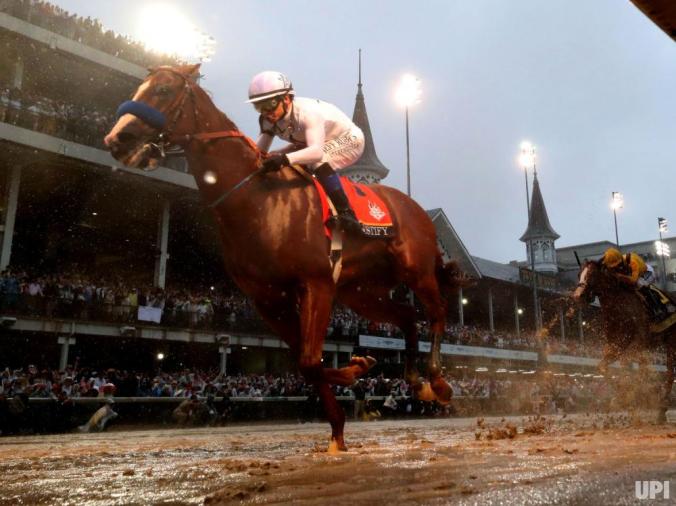
The thoroughbred racing world only had to wait three years for another super-champion this time: Justify won the Triple Crown in 2018. Now we know, however,  that the horse was an illicit competitor, and should have been disqualified. This is approximately the horse racing equivalent of  gamblers rigging baseball’s World Series in 1919, a scandal that almost destroyed the sport.

This week we learned, courtesy of a New York Times investigation, that  Justify had tested positive for the banned drug scopolamine after winning the Santa Anita Derby on April 7, 2018. That win qualified the horse to run in the Kentucky Derby, one month later, in which he would be a likely favorite to win. Behind closed doors, the California Horse Racing Board first stalled on acting, then decided to dismiss the case after the colt went on to win the Triple Crown. Continue reading
Ethics Quote Of The Day, 9/11 Edition: Nicholas Haros, Jr.

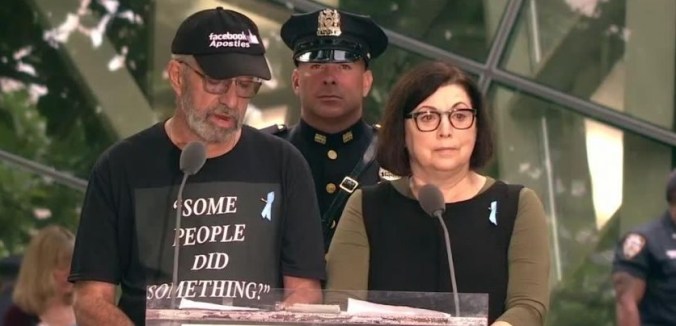
“’Some people did something,’ said a freshman congresswoman from Minnesota. Today I am here to respond to you exactly who did what to whom. Madam, objectively speaking, we know who and what was done. There is no uncertainty about that. Why your confusion? On that day, 19 Islamic terrorist members of al Qaeda killed over 3,000 people and caused billions of dollars of economic damage. Is that clear? But as to whom…I was attacked, your relatives and friends were attacked, our constitutional freedoms were attacked and our nation’s founding on Judeo-Christian principles were attacked. That’s what some people did. Got that now?”

Nicholas Haros Jr, reading the names of the 9/11 victims, including his mother, at today’s commemoration of the Twin Towers attack.

Res ipsa loquitur.

Visual Bias Ethics

Let’s see: Hack, hack, probably a hack, and hack.

One aspect of broadcast journalism ethics that the Old Guard—Murrow, Cronkite, Brinkley, Huntley, Thomas and the rest— observed and respected was a neutral demeanor. They knew (and today’s hacks know as well, but with different results), that tone of delivery, body language and facial expressions can convey a journalist’s personal views and biases as clearly as a direct statement. Their practice, therefore, was to maintain a poker face and a matter-of-fact delivery. When Walter Cronkite brushed away a tear while announcing JFK’s death in 1963, it was considered newsworthy because Walter did not bring his own feelings into the news. The consensus was that hee could be forgiven this one time.

If that professional practice is taught in journalism classes any more, it is ignored. Now broadcast journalists and reporters deliberately use every tool at their disposal to signal to viewers what they think, and thus what the viewers should think as well. The election of Donald Trump represented a full-on, industry wide rejection of objectivity by the broadcast media, as many reporters allowed themselves to appear in mourning, or close to tears.  Unlike the assassination of JFK, however, this  was not an excusable exception, or, as we have learned, an exception at all.

Look at the faces of last night’s CNN panel reporting on what had been built up as a bellweather election in North Carolina that, should a Democrat have won, would be string sign that President Trump and Republicans were in trouble nationwide. Is there any doubt who they were rooting for?

This is not only unethical journalism, it’s incompetent journalism.

But that’s the way it is.

Morning Ethics Warm-Up, 9/11/19: September 11, 2001, And Other Cataclysms

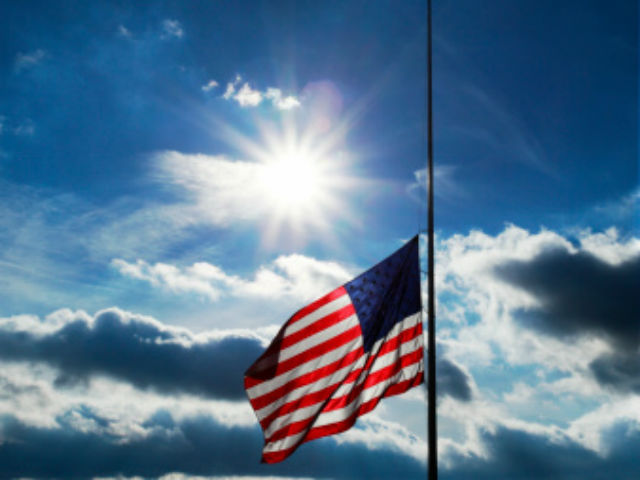
The flag is still there…

Good morning.

1. A question that shouldn’t even have to be asked.  The New York Times asks if the “right thing to do” is for films and TV shows to edit out the Twin Towers in pre-2001 productions so as not to “trigger” sensitive audience members. Productions debuting in 2002, soon after the 9/11 attacks, are a special case: several films re-shot scenes to avoid references to the disaster, and that was just common sense. The suggestion that historical airbrushing is appropriate for works release before 2001 is disturbing, however, and symptomatic of the current belief that historical records cand and should be manipulated and censored for “the greater good.” Taking out the Twin Towers is a close unethical cousin of removing Robert E. Lee statues and references to slavery.

Director Michael Bay, who had a shot of one of the towers burning (from a meteor strike) in “Armageddon,” made an appropriate “slippery-slope” argument to  the Times, saying,

“Movies are shot, edited and finished for the world to see. They don’t get re-edited because history changes. If we go there, that means every movie must change. Every book, every short story, every painting of New York in the past 30 years. It would never end.”

I would add that it will be difficult to remember the September 11. 2001 attacks if we try to eliminate visual records of the Twin Towers.

2. Meanwhile, here’s how the New York Times wants us to remember the attackers: Continue reading

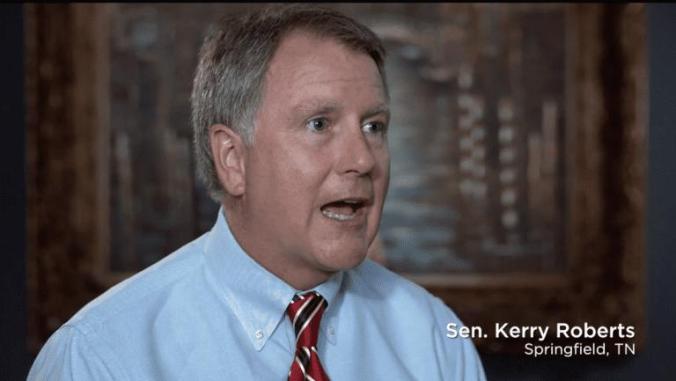
Incompetent Elected Official Of The Month: Tennessee State Senator Kerry Roberts (R)

What an idiot.

On his conservative radio talk show on September 2, Senator Roberts complained about a witness who supported abortion in a Tennessee legislative hearing. He attributed her opinion to the influence of college,  and announced that to “save America,” we need to get rid of higher education. “If there’s one thing that we can do to save America today, it’s to get rid of our institutions of higher education right now and cut the liberal breeding ground off! Good grief!” Roberts said.

Good plan! Even if colleges were a true scourge of the nation, and while I won’t go that far, they are failing their mission while over-charging their victims, getting rid of them is impossible, of course. It’s such a ridiculous thing to suggest that it qualifies as irresponsible public discourse, and comes mighty close to signature significance, meaning that only a complete fool would say something like that in public, even once. Continue reading

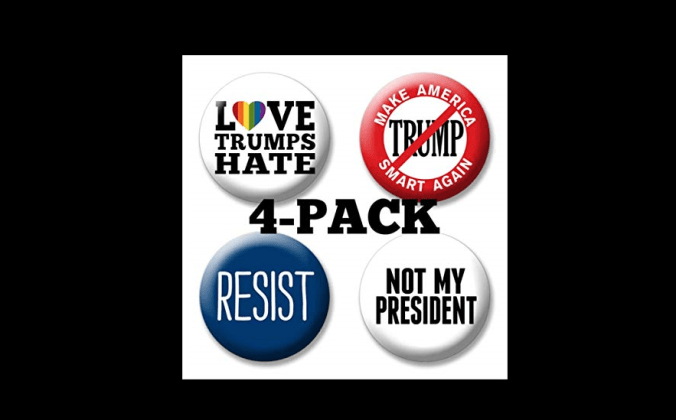
Anti-Trump Hate Porn

I’ve written my quota of “resistance” ethics articles today I know, but I can’t help posting this one.

I was stuck in the DMV, and read a New York Times book review titled Which Came First, Trump or TV?” The reviewer is , who is described in biographies as a writer of satire. The book he reviews is “Donald Trump, Television, and the Fracturing of America” by James Poniewozik, the Times TV critic.

Both the positive review and the book it describes cannot be justified except as salacious efforts to slake the hate of the most Trump-Deranged among Americans. Poniewozik‘s book, described as non-fiction, is full of negative characterizations of the President, his thinking and his personality that are not justified by the author’s education, background, research or expertise. Poniewozik is a TV critic, and that’s pretty much all he has ever been. He has no special expertise or experience in politics or history; he is not a biographer; he isn’t a psychologist. This is his only book, and he is obviously using Trump hate to attract readers and sales, as well as positive reviews by writers who also have no qualifications to justify their getting the assignment. Both the book and the review are the product of bias, designed to foster bias.

Early in the review, we get this:

But Poniewozik, the chief television critic of this newspaper, uses his ample comedic gifts in the service of describing a slow-boil tragedy. If humor is the rocket of his ICBM, the last three years of our lives are the destructive payload.

Everything is terrible! Where have I heard that Big Lie before? I would have stopped reading right there, but you know: Department of Motor Vehicles.

Almost immediately after that moment of signature significance from the reviewer, we get this… Continue reading

One More Time: Leadership, Moral Luck, Accountability, And Scapegoating, Baseball-Style.

Here is part of the statement released by  Boston Red Sox owner John Henry yesterday after the team fired its head of Baseball Operations, essentially the team’s General Manager, Dave Dombrowksi:

“Four years ago, we were faced with a critical decision about the direction of the franchise. We were extraordinarily fortunate to be able to bring Dave in to lead baseball operations. With a World Series championship and three consecutive American League East titles, he has cemented what was already a Hall of Fame career.”

Wait…HUH? He was hired four years ago, the team won three consecutive American League East titles (for the first time in the franchise’s history), a World Series Championship (following an epic 2018 season that saw Boston win 108 games) and he’s fired? What did he do, sexually harass players? Flash the owner’s daughter? Continue reading

Noon Ethics Warm-Up, 9/10/2019: Fat-Shaming, Race-Baiting, And Terrorist-Tarring [UPDATED]

ARRGH!! Half-way through the day, and not out of my pajamas yet!

1. Here’s the kind of comment that won’t get an aspiring  new commenter approved…From Erik Guettler: “It’s sad that you think you actually know anything about ethical behavior by criticizing Bill Maher, while Donald Trump’s the most unethical, openly racist and corrupt president Americans have ever had.”

The comment fails on many levels. To begin with, it’s stupid (there is a stupidity justification among the Ethics Alarms banning tenets.) Criticizing Maher for his frequent absence of functioning ethics alarms cannot make me think I know anything about ethical behavior. The opposite is true: it is because I am an ethicist that I criticize Maher, though it hardly requires an expert to recognize his unethical conduct.A relatively well-raised 17-year-old could do it.

Second, the comment breaches basic ethical analysis principles, not to mention common sense: President Trump’s conduct is irrelevant to how unethical Maher is, as is my criticism, or not, of the President. Third, his list of Trump failings is—oooh! Let me finally use this!NPC junk. Neither he nor anyone can find me any “openly racist” conduct or statements on the President’s part, for this is one of the Big Lies (#4, to be exact.) I have gone through this dance with many Trump Deranged Facebook friends. Challenged to back up the “openly racist” lie, they babble about how he challenged Obama’s birth certificate, and go downhill from there. The statement that he is the “most unethical” President, personally or professionally,  is proof of historical ignorance and bias. Unethical he is, but whether Trump’s lack of ethics is more or less substantive than that of Andrew Jackson, James K. Polk, Woodrow Wilson, Franklin Roosevelt, Jack Kennedy, Lyndon Johnson, Richard Nixon or Bill Clinton is a matter of legitimate disagreement. The “corrupt” accusation is also non-substantive, unproven, and based on supposition and bias rather than evidence.

But never mind all that: the claim that Ethics Alarms has somehow ignored Donald Trump’s ethics deficits is so easily disproved that the insulting comment is an example of reckless disregard for the truth.

Bite me, Erik.

And don’t come back.

2. While we’re on the topic of Mr. Maher’s ethics…Here is the professional asshole in his most recent HBO episode:
Continue reading

Comment of the Day Trio: “Principled Or Betrayer: Pete Buttigieg’s Brother-In-Law, Pastor Rhyan Glezman”

I won’t make a habit of this, I promise: a Comment of the Day deserves its own post. However, the comments on the question of whether Mayor Buttigieg’s brother-in-law was crossing ethical lines or not by making an inter-family disagreement into media fodder have been uniformly excellent, and bundling the three of moderate length coming up makes sense to me.

Incidentally, the polling shows a real split of opinion, but 59% agree on the basic question: they feel the pastor was ethical. (I’m still not sure about that.)

Here’s the poll so far…

The first of the trio of Comments of the Day on “Principled Or Betrayer: Pete Buttigieg’s Brother-In-Law, Pastor Rhyan Glezman” comes from James M….

As a pastor, Pastor Ryan Glezman has an obligation to attempt to resolve his conflict with his brother-in-law in a way that respects Biblical teachings. (If he doesn’t respect the wisdom of the Bible, he’s probably in the wrong line of work…)

Fortunately, the Book of Matthew, Chapter 18, has some straightforward instruction for dealing with such conflicts. Since both profess to be believing Christians, they are “brothers”, and Matthew’s Gospel gives clear direction:

Verses 15-17:
15 “If your brother or sister sins, go and point out their fault, just between the two of you. If they listen to you, you have won them over.
16 But if they will not listen, take one or two others along, so that ‘every matter may be established by the testimony of two or three witnesses.’
17 If they still refuse to listen, tell it to the church; and if they refuse to listen even to the church, treat them as you would a pagan or a tax collector.

Pastor Glezman has expressed his concern that Pete Buttigieg’s frequent forays into Biblical interpretation pose a risk of leading others astray. He didn’t go public over this right away: Mayor Buttigieg has been bloviating about what he thinks Christians should do for quite some time now. Based on that, I’d guess that the pastor has already attempted to privately address the issue with his brother-in-law, and has now moved to treating him as if he were “a pagan or a tax collector”.

Since Chapter 18 gives dire warnings to us all not to cause others to stumble in their faith, Pastor Glezman has ample cause for his concern. Pete Buttigieg’s religious pronouncements do pose a risk of misleading others.

The chapter also emphasizes the vital importance of practicing forgiveness and grace when we deal with others. Now, some people think that means that Christians need to let bad actors continue to cause problems, “turning the other cheek” and “going the extra mile”. That is only part of the truth. Our obligation as Christians includes helping bad actors to understand whatever they’re doing wrong and repent of doing it. We’re not doing a bad actor any favors if our compliance leads him to continue screwing up. We need to approach the problem with love for the bad actor, but we may also cause the bad actor significant heartburn if that’s what it takes to deal with their behavior.

Next is first time commenter Barbara Ravitch. I love when a new commenter enters with such a high-level splash, and with some recent defections and unexplained disappearances, the Ethics Alarms binders full of women could use some replenishment.

Here is her Comment of the Day: Continue reading

The Scourge Of Technologically Ignorant Judges

The American Bar Association and most state bars have added an ethical requirement for lawyers to be competent and knowledgeable regarding relevant technology. In 2012, the ABA adopted an amendment to ABA Model Rule of Professional Responsibility 1.1, comment 8, providing that “a lawyer should keep abreast of changes in the law and its practice, including the benefits and risks associated with relevant technology . . . .” Since then, at least twenty-seven states have officially adopted Comment 8 or some version of it as part of their rules of professional conduct. It’s still a long slog; many lawyers, far too many, are limited to email and Google searches, and often aren’t sufficiently adept at either.  There should be such a requirement in every jurisdiction, and the ABA language is far too vague and lenient.

Judges, however, often make lawyers look like  cyber-whizzes. Here’s a ridiculous example from Franklin Country in Washington, where superior court judges disagreed with their clerk about transitioning from paper to electronic files.  The clerk “deemed it unnecessary” to incur the expense of maintaining duplicate paper files after a paperless filing system was implemented . The judges declared an emergency (!) and issued an order directing clerks to keep paper files. One gutsy, probably soon to be unemployed clerk refused. The judges then appointed a special prosecutor to pursue civil claims against the clerk. Continue reading