Month: March 2020
Noonish Ethics Warm-Up. 3/24/2020: The Web Is Alive With The Sound Of Zugswang!*
So far, there have been only 28 Wuhan virus deaths in Austria…
1. There is nothing strictly unethical about the Democrats attempting to use the current crisis to get some of their non-pandemic agenda items, like them or not, passed. That’s politics. They would be remiss if they didn’t try that. It will be unethical if their efforts materially interfere with the efforts to assist individual and business victims of the Wuhan virus, and if that is what they do, there is ample evidence to hang them, like this:
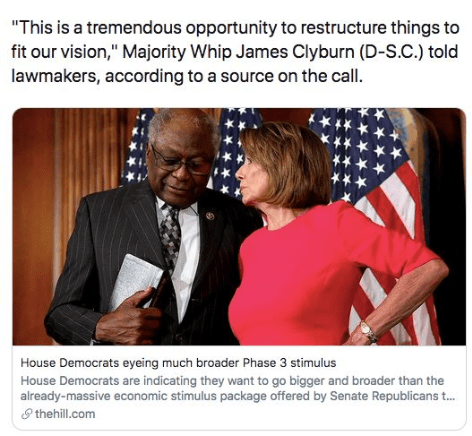
…if, that is, the facts are reported fairly. Speaker Pelosi’s House bill including such pork as support for the Kennedy Center For The Performing Arts is also a “smoking gun.”
2. Ethics Quote of the Week from Dr. Fauci: Continue reading
“Dark Waters”
“Dark Waters” is another ethics movie, and a very good one. Like all ethics movies involving real events, it is also educational—disturbingly so.
The film, which was released late last year, dramatizes the story of attorney Robert Bilott and his nearly two decades of battling DuPont over its deliberate (okay, “negligent”) poisoning of citizens and the entire nation with the chemicals used to manufacture Teflon. Yes, “the entire nation”: that’s not hyperbole. It is believed that the unregulated and toxic chemical called PFOA is in the system of everyone living in the U.S. as a result of DuPont’s conduct.
The movie has not been a prominent success, perhaps because is treads along the well-worn path of earlier movies about similar corporate scandals and class action law suits, like Julia Roberts’ “Erin Brockovich” ( Pacific Gas and Electric Company ) and John Travolta’s “A Civil Action” (Beatrice Foods and W. R. Grace and Company). The star (and producer) of “Dark Water,” Mark Ruffalo, isn’t quite in the same star category as Travolta and Roberts, but an A-list cast was assembled to back him, including Anne Hathaway, Tim Robbins, Victor Garber, Mare Winningham, and Bill Pullman.
“Dark Waters,” horrifying to say, is mostly accurate. It was also one of those films where I was left wondering, “How did I miss this? Was it me, or was the story under-reported? If it was the latter, why was it under-reported?” The film was based on the 2016 New York Times Magazine article “The Lawyer Who Became DuPont’s Worst Nightmare” as well as that lawyer’s memoir. “Exposure,” giving Bilott’s perspective on his 20-year legal battle against DuPont. In the end, the company paid over $600 million in a settlement, which was far less than they should have paid; I’m sure the company regards this as a victory. (Its stock went up after the announcement.)
Imagine: Continue reading
Ethics Hero: Don Giuseppe Berardelli
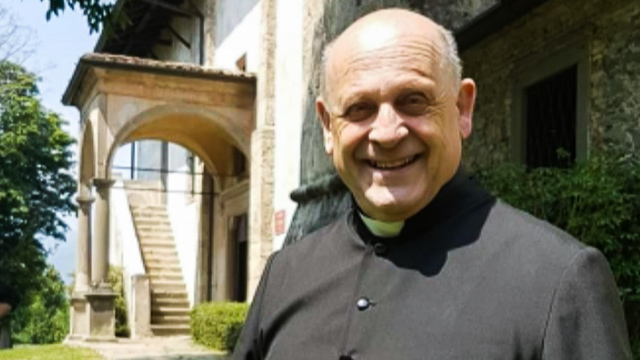
Be sure to tell David Brooks about this..
Don Giuseppe Berardelli, an Italian priest, died from the Wuhan virus after giving up his respirator to a younger patient, a stranger. The following is from the Google Italian to English translation of this source:
Don Giuseppe had been archpriest of Casnigo for almost fourteen years and would have concluded his mission in Casnigo. He ended it earlier, in a hospital in Lovere, hit by the coronavirus. Already last year he had had health problems. His perennial smile, his availability, but also his activism in the realization of important and expensive works, that smile hid the worries.
He was a simple, straightforward person, with a great kindness and helpfulness towards everyone, believers and non-believers. His greeting was ‘peace and good’. Always friendly and available to the public administration, associations and not only those of the parish, he participated in all the events without ever being intrusive…. He was loved by everyone: his former parishioners still came from Fiorano after years to find him. But he also had an incredible ability to solve economic problems, to knock on the right doors for help.
This is the testimony of Giuseppe Imberti, long mayor of Casnigo: “Don Giuseppe died as a priest. And I am deeply moved by the fact that the archpriest of Casnigo, Don Giuseppe Berardelli – to whom the parish community had bought a respirator – announced his will to assign it to someone younger than him.” Continue reading
This Time, Blame The Victim
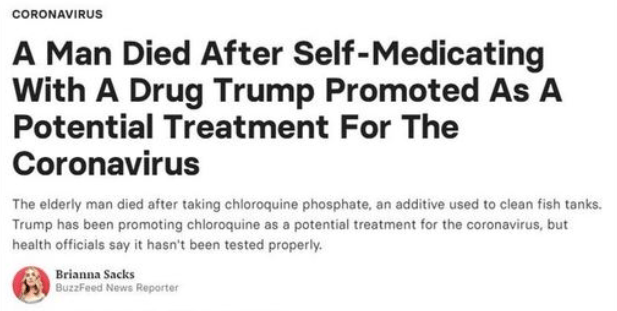
The headline above, courtesy of BuzzFeed, one of the minor members of the Democrat/”resistance”/ media collective currently dedicated to spreading misinformation to undermine the President’s leadership during a major crisis, alerts us to just how low these people—I say “these people” because they are not like me and hopefully not like you—will stoop for their political agenda.
That deceptive description is not a fair or accurate description of what happened. This is…. Continue reading
When Ethics Alarms Don’t Ring (Or Were Never Installed): The Covidiots
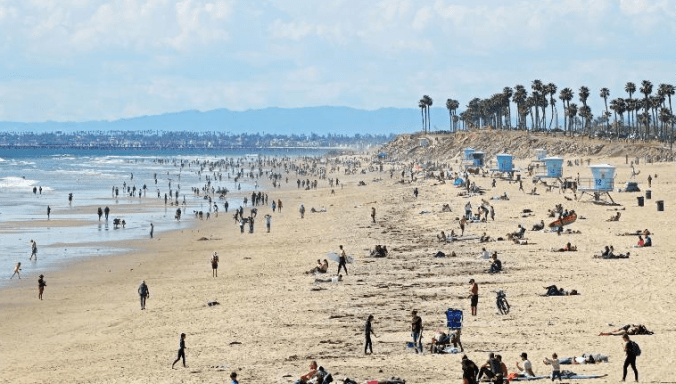
Once again, one has to ask:
What’s the matter with these people?
The Beach
California Gov. Gavin Newsom issued a shelter in place order for the Golden State’s nearly 40 million residents to stay at home from March 20 to the foreseeable future. California is third among the states in number of Wuhan virus cases. So, naturally, people went to enjoy themselves at the beaches, hiking trails and parks.
The Hosts
New Jersey police arrested Eliyohu Zaks last week after a neighbor notified law enforcement that a large crowd had been observed at his home. It was a wedding. Police dispersed the crowd of at least fifty and charged Zaks with “maintaining a public nuisance.” Earlier in the week, police broke up two other weddings in the same neighborhood, and the day before, a fourth homeowner, Shaul Kuperwasser, was also charged with “maintaining a public nuisance” by hosting more than fifty friends at his residence.
This is something of an epidemic of its own. “The Lakewood Police is asking that its citizens be responsible and obey the directives set forth by the State of New Jersey for the safety and health of all,” local law enforcement said in a statement. “Those that choose not to will be subject to criminal prosecution.” Continue reading
Afternoon Ethics Warm-Up, 3/23/2020: Examining The—OH NO! I TOUCHED MY FACE!!!
1. From the “Futile isn’t Ethical” files. The hectoring over face-touching is annoying at a time when we need less annoyances. Here’s a useless article that gives elaborate strategies for eliminating face-touching only to admit toward the end that you probably can’t stop. I’ll wager that nobody can stop, since we do it thousands of times a day, often for good reasons, and that with all the other things we have to think about, thinking about NOT doing something natural all day long—which is essentially the strategy the three professors of psychology credited with the article recommend—will do more damage than it addresses.
Here’s a typical passage:
“Now that you are aware of the behavior you want to change, you can replace it with a competing response that opposes the muscle movements needed to touch your face. When you feel the urge to touch your face, you can clench your fists, sit on your hands, press your palms onto the tops of your thighs, or stretch your arms straight down at your sides.”
Here’s another idea that I’m sure everyone will want to adopt while they worry about their jobs, their friends, and where their next meal is coming from:
Self-monitoring is more effective when people create a physical record. You can create a log where you briefly describe each instance of face-touching. For example, log entries might say:
—Scratched nose with finger, felt itch, while at my desk
—Fiddled with eyeglasses, hands tingled, frustrated
—Rested chin on palm, neck sore, while reading
—Bit fingernail, nail caught on pants, watching TV
2. Baseball ethics fix: While there’s no baseball for an undetermined period, baseball continues to spark ethics consideration. Continue reading
Movies To Keep You Happy, Inspired And Optimistic , Part I

This is a very subjective and personal list. The main requirement was that they all must be, in the final analysis, upbeat. I also have seen all of them more than once.
I left out some obvious choices that I have already devoted full posts to on Ethics Alarms, like “It’s a Wonderful Life” and “White Christmas.” Some of the films on my ethics movies list appear here, but not for the same reasons. Obviously, I encourage you to see those movies too.
Below is approximately the first half of the list. The rest will be along eventually.
Rocky (1976)
It still holds up as one of the most exhilarating sports movies of all time.
The Natural (1984)
Great score and a happy ending, unlike the novelette it was based on.
True Grit (1969)
This is the John Wayne version, with two of the go-to scenes I’ll play when I want to feel better.
E.T. (1982)
Other than the unforgivable rainbow at the end, a near perfect feel-good film.
Stand By Me (1986)
One of two Stephen King movies on the list. Does anyone not love this film?
The Shawshank Redemption (1994)
And the other King movie. has any suicide in a film been quite this satisfying?
Erin Brockavich (2000)
More or less a true story, which makes it especially inspiring.
Singin’ in the Rain (1952)
If Donald O’Connor walking up walls doesn’t get your heart pumping and your mouth smiling, nothing will. Continue reading
Ethics Dunce: CNN’s Jake Tapper

Observing the slow but steady deterioration of Jake Tapper, whom I once cited as an example of an ethical, objective and trustworthy journalist—it seems so long ago—has been excruciating to watch. He signaled yesterday that his transformation into just another AUC hack (That’s the Axis of Unethical Conduct: Democrats, the “resistance,” and the progressive mainstream media) is complete.
Tapper was interviewing Rep. Ocasio-Cortez on his “State of the Union.” She blathered, as she is prone to do,
“We’re hearing every step from this administration- first, we were hearing it was a hoax, then we were hearing that everything is fine, then we were hearing that the fundamentals of the economy was OK – until the crash comes.”
Jake, from CNN, not State Farm (that’s him on the left above; yes, he used to be white) just let all of that go.
Well, as has been shown again and again to be of no avail as far as the Big Lie-masters are concerned, the President did NOT say the virus was a hoax. (he also never said that “everything is fine,” but never mind). I most recently explained this two days ago, here, and I’m sick of repeating it, frankly.
When he was properly criticized for allowing a false “resistance” narrative to go out over CNN’s imprimatur (whatever that’s worth these days) without uttering a peep of protest, Tapper issued this damning excuse via Twitter: Continue reading
Well What Do You Know! The New York Times Decided To Play It Straight This Time And Passed An Integrity Test….Well, For A While, Anyway. [UPDATED]

Maybe they decided they had arrived at a moment when unified resolve was essential and the national interest was at stake, and the paper had no choice but to stop spinning for the Democrats.
Tonight’s just breaking story is headlined, Coronavirus Live Updates: As State Pleas Mount, Trump Outlines Some Federal Action; Senate Democrats Block Stimulus Package.
It says in part,
Senate Democrats on Sunday blocked action on an emerging deal to prop up an economy devastated by the coronavirus pandemic, paralyzing the progress of a nearly $2 trillion government rescue package they said failed to adequately protect workers or impose strict enough restrictions on bailed-out businesses.
The party-line vote was a stunning setback after three days of fast-paced negotiations between senators and administration officials to reach a bipartisan compromise on legislation that is expected to be the largest economic stimulus package in American history — now expected to cost $1.8 trillion or more. In a 47-to-47 vote, the Senate fell short of the 60 votes that would have been needed to advance the measure, even as talks continued between behind the scenes between Democrats and the White House to salvage a compromise.
The failure to move forward shook financial markets and threatened an ambitious timeline set by the Trump administration and leading Republicans to move the rescue package through the Senate on Monday and enact it within days.
In voting to block action, Democrats risked a political backlash if they are seen as obstructing progress on a measure that is widely regarded as crucial to aid desperate Americans and prop up a flagging economy.
 Ethics Alarms
This masterful epic by Comment of the Day auteur Steve-O-From-NJ needs no introduction, so I’m just going to say, here is Steve-O-From-NJ’s Comment of the Day on the post, “Afternoon Ethics Warm-Up, 3/23/2020: Examining The—OH NO! I TOUCHED MY FACE!!”