Morning Ethics Warm-Up, 4/15/2020, As Time Compresses And Weeks Pass Like Minutes: Ethics Déjà Vu

Good Morning.

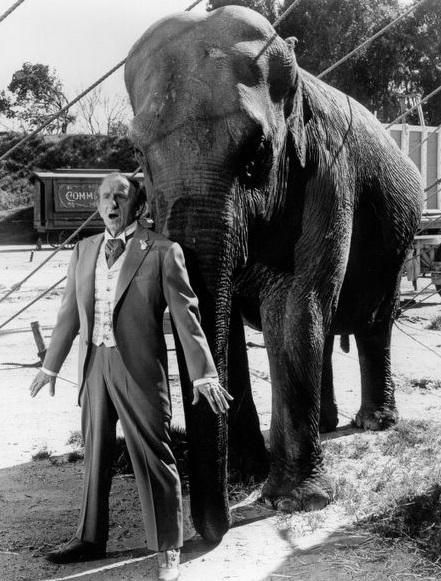
I‘m beginning to feel like poor-chooser Walter Donovan above in the last decent Indiana Jones movie. Every day seems the same, they all run together,  time, at least for me, feels like like it’s accelerating, not slowing down…and these ethics issues start feeling like déjà vu…

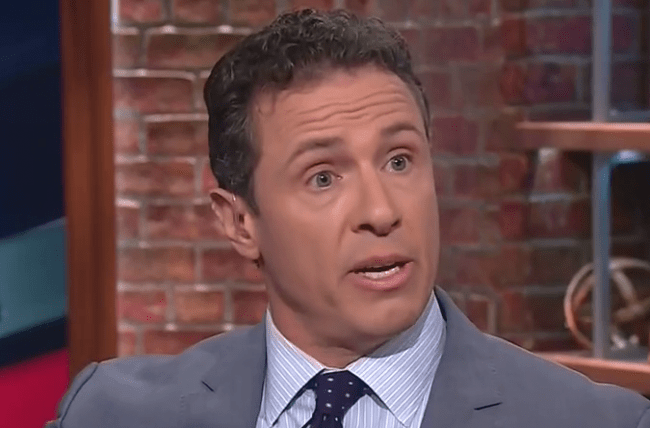
1. Chris Cuomo update: The Long Island resident whom Chris Cuomo called a “jackass loser fat-tire biker” in a radio rant that the CNN anchor says never happened gave more details to the New York Post, because, understandably, he’s annoyed.

The 65-year-old longtime resident said he was just out for a bike ride  when he spotted who he thought was Chris Cuomo on property he says the CNN anchor bought in East Hampton last year. Cuomo was with his wife, another woman and three kids. The resident said he stopped and sat on his bike “well over a hundred feet” away,  and said, ‘”Is that Chris Cuomo? Isn’t he supposed to be quarantined?’” Cuomo  started toward him, coming to within about 40 feet, and started screaming,  “Who the hell are you?! I can do what I want! I’ll find out who you are!”

The cyclist says he answered, “Your brother is the coronavirus czar, and you’re not even following his rules . Unnecessary travel!”

Cuomo allegedly replied, “This is not the end of this. You’ll deal with this later. We will meet again!” The cyclist said that he took that as a threat, and the next day called East Hampton police to report the incident. Best quote from the NY Post story: “Sometimes he’s scary stupid.”

Indeed.

2. Meanwhile, the curve on the virulent Trump Derangement Virus has definitely NOT been flattened: Continue reading

Mrs. Q’s Corner: The Bigotry Behind Hate Crime Laws [Expanded And Corrected]

by Frances Quaempts

[Editor’s note: The version of this column that was originally posted this morning was missing several paragraphs as well as some important quotes. I apologize profusely to Mrs. Q, whose version was fine, but for some reason I had a devil of a time formatting it, putting me into back and forth, paste and copy, metadata Hell. In the ned there were four drafts of the post up at once, plus previews to show where the formatting wasn’t working. I have no idea how so much was dropped, but it was all my fault. Please read the expanded piece, and again, my apologies to all.]

“As a gay woman, it’s kind of flattering to have the government say that if someone who has the wrong kind of hate kills me, it’s a special killing.  But flattery should only go so far.  My selfish side likes to be viewed as “special” by the FBI, but my honest side knows that this is both unfair and treacherous.  As a gay woman, I refuse to be part of a system that tells me that I count more than any other woman who gets raped or murdered.” 

—-Tammy Bruce, author of The New Thought Police. 

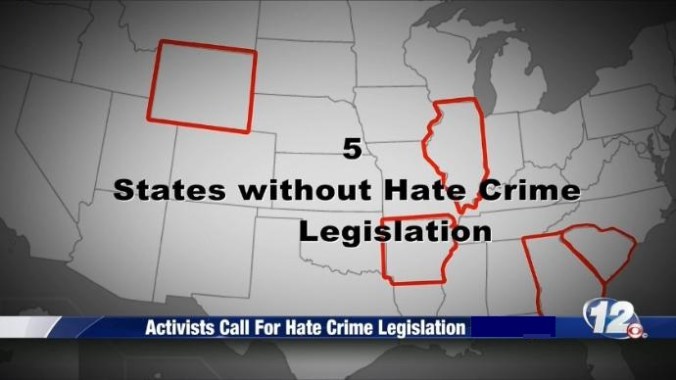
The April 2nd Ethics Alarms post on the acts of violence committed by Jose L. Gomez against an Asian family he believed had COVID-19, highlights how hate crime laws are problematic because such laws, “have never made any legal or ethical sense, criminalizing prejudice and thought, neither of which can be made illegal under our Constitution.  They were virtue-signaling and pandering to certain minority group political agendas from the beginning.”

 Booker T. Washington, in his book My Larger Education, published in 1911, challenged minority based group victimhood and those who push this agenda.

 “I am afraid that there is a certain class of race-problem solvers who don’t want the patient to get well, because as long as the disease holds out they have not only an easy means to make a living, but also an easy medium through which to make themselves prominent before the public.”

One of the first issues with hate crime laws is the defeatist and demoralizing outlook among their advocates that all minorities are victims.  Referring to various minority types as belonging to a “victim group” attempts define or redefine how minorities think about themselves, and negates in attitude, the resilience of these peoples.  Instead of highlighting, for example, how racial minorities have endured and even thrived, race-hustlers and other so-called justice advocates cling to the narrative that they need help, especially from the government, to make their lives animus free.    

 Minorities are not a monolith.  In FBI Hate Crimes Statistics Reports the assertion is made that “the effects can reverberate beyond a single person or group into an entire community, city, or society as a whole.” What this assumes is that all people who have been designated as a minority, whether they want to be put in such a category or not, is somehow magically affected by an act committed on another person who fits the same category. Where is the evidence of this? Pandering politicians along with media misery merchants do a great job of taking a story and using it to attempt to instill fear in “victim groups” and moral grandstanding in those who love to self-flagellate with guilt, but that doesn’t mean all people of said group cares or is affected.

 In Thomas Sowell’s 2009 book Intellectuals and Society, he challenges how self-proclaimed allies tend to pit, “group against group by arbitrarily viewing innumerable situations through the prism of “race, class, and gender,” setting unreachable standards of “social justice,” and setting impossible goals of redressing the wrongs of history.”   He goes on to say:

“So long as sweeping presumptions are accepted as knowledge and lofty rhetoric is regarded as idealism, intellectuals can succeed in projecting themselves as vanguards of generic “change”- for whose consequences they remain unaccountable.”

Author and former radio host Ken Hamblin made a similar assertion in his 1996 book Pick a Better Country when he wrote about this vanguard of helpers:

“I understand that it was natural for them to get warm feelings when they were helping us.  But I had no idea that for some liberal do-gooders, those warm feelings would become an intoxicating narcotic. Today they simply refuse to let us go.  They refuse to face the fact that it is possible for a black person to get a fair shake – to be truly free and to be treated justly in America.  They refuse to admit we can make it without special consideration and without their special help.  They refuse to treat us as equal Americans.”

 Certainly minorities, like every class of persons, experience bigotry and unfairness.  However special hate crime laws haven’t eased the pain of these so-called victim groups because both new and old types of discrimination between fellow “victim groups” have continued.  In LGBTQ+ circles, homophobia has made a bold resurgence, creating sometimes dangerous ill will between these rainbow groups, leading some members to break away and create their own charities and organizations.  Jose L. Gomez is a Latino who attacked an Asian family.  Colorism persists among racial and ethnic groups.  And let’s not forget there are numerous instances of racial minorities who have brutalized whites for their skin color.

 One example noted in Larry Elder’s book Stupid Black Men was a 2006 incident on Halloween where, “30-40 teens and a few adults – mostly black – beat three young white women.” These women required surgery afterward, including the repair of twelve facial fractures in one victim.  Witnesses to the mob heard people in the crowd shout “we hate white people, fuck whites.”  My own wife experienced race based prejudice last year when a black man followed and threatened her for blocks screaming, “I’m gonna fuck you up,” and,  “I hate whites” while also calling her a “faggot.”  Interestingly, in progressive Portland, none of the bystanders offered to help my wife.  Perhaps they paused because they were trying to decide who the greater victim was – the black man yelling in the streets or the Irish appearing short haired lesbian.  When situations like this happen, rarely is the media or those who claim to fight for equality there to seek justice for this version of hate.  It seems if love is love, then the same should apply to hate.     Continue reading

Perspective From Michael Crichton On Experts And Predicting Crises

Michael Chrichton was a unique and relentlessly positive influence on our culture, popular and otherwise, before his death in 2008 at the age of 66.  Trained as a doctor and scientist, he applied his knowledge, his brilliance, and more importantly, his remarkable powers of lateral thinking and unbiased analysis, to myriad  fields, always aimed at a form of public education that was fueled by entertainment.  He taught, he wrote best-selling novels, he was a futurist, he directed movies, he created TV shows.   Mostly he thought, and through the fruits of his thought, made ordinary people smarter, at least those smart enough to pay attention. Yes, he thought a lot about ethics. You can learn more about his career and interests at his website, here.

Michael Crichton was especially interested in threats and crises, how they happen and our reactions to them. His first hit novel, “The Andromeda Strain” was about a deadly virus. He would have been very helpful right now. Though he was himself an expert on many topics, he was wary of the abuse of expertise; though he was a visionary, he was was a vocal skeptic of predictions and assumptions. Crichton, I think, would have found the current weaponizing of hindsight bias to find a new way to demonize President Trump as revolting and dishonest as I do.

In this 2002 lecture, Crichton discussed the media’s obsession with speculation, and society’s unwarranted confidence that the future is predictable, especially when experts are doing the predicting. Some selections: Continue reading

And Now Chris Cuomo Scores A Jumbo!

When we left CNN’s quarantined (when he feels like it) anchor, he was telling SiriusXm listeners how sick he was of his job, among other complaints.

Now he’s doing his Jimmy Durante impression (“Elephant? What elephant?”) and denying , Bart Simpson-style…

… that he did what he did when there is absolutely no question that he did it. The Clinton version of Bart and Jimmy’s tactics is “Deny, deny, deny.”

From the Hollywood Reporter:

“It’s not true,” Cuomo said today. “I never said it. I never meant it…I have never been in a better position, professionally, than I am in right now. They’ve been so good. They’ve been so supportive of me in ways I could never have imagined. … I’ve never had a group of people professionally care about me the way they have shown. I’ll never be able to repay them, but I’ll try hard to do so. I’ve never been more grateful. I’ve never been on a better team….I love where I am, I love the position that I’ve been given, and I love who I’m doing it with. Those are all matters of fact for me. No place has ever been better to me. No place has ever given me the opportunities that [CNN president] Jeff Zucker has.”

Well, which is it, Chris, not true, something you didn’t say, or something you didn’t mean?

Cuomo is ridiculous. How CNN expects any sentient being to trust a reporter, pundit or whatever he is who would deny he said what he said on the air the day before, and quite flamboyantly too, is unfathomable.

Introducing The 103rd Rationalization: Kennedy’s Stall, Or “We’ll Cross That Bridge When We Come To It.’

The latest rationalization for the list came to my attention when I used it myself.

I have been reading various opinion pieces and reports about the stance of anti-vaxxers as researchers push to develop a vaccine as quickly as possible for the Wuhan virus.  A Daily Beast essay cautioned that the need for haste had to be balanced against the consequences of failure:

“Urgent as the need is, public health leaders warn, moving too quickly could have disastrous consequences not only for reining in COVID-19, but for vaccines more broadly. If a vaccine is released that doesn’t work well or yields dangerous side effects—especially in the face of an historic pandemic—it could empower anti-vaccine activists and reduce support for other longstanding vaccines that have gone through rigorous and exhaustive testing”

My reaction to that was instant: “What sense does it make to moderate your efforts to solve an urgent problem because you are worried about a possible future irrational reaction to an adverse result? “You cross that bridge when (and if) you come to it,” I thought. Then the faint sound of an ethics alarm ringing caught my attention. Continue reading

Ethics Lunch, 4/14/2020: The Bad, The Ugly, And The Yummy

Abundunza!

1. Remember when Joe Biden said that the President needed to stop saying whatever popped into his head? This is the kind of thing he was talking about.

He suggested last week during the White House briefing that insurance companies should pay out business interruption claims related to the pandemic, even if coverage for such an event  is not explicitly included in their policy. Trump said regarding insurance for an interruption of business,

“If I had it, I’d expect to be paid. All of the sudden they need it … and I don’t see the word pandemic mentioned. Now in some cases, it is. It’s an exclusion. But in a lot of cases, I don’t see it. I don’t see reference and they don’t want to pay up. I would like to see the insurance companies pay if they need to pay, if it’s fair….You have people that have never asked for business interruption insurance (payouts) and they’ve been paying a lot of money for a lot of years for the privilege of having it. And then when they finally need it, the insurance company says ‘we’re not going to give it.’ We can’t let that happen.”

Ugh. Insurance doesn’t work like that and can’t work like that, though I’m sure, as a businessman, Trump would take a shot at trying to make such a case. It is irresponsible, however, to misinform the public that such a claim would be reasonable. Insurance companies should have to meet their contractual obligations; Trump’s theory would cause premiums to explode. Continue reading

Fredo Snaps

Chris Cuomo is a fascinating case. Maybe someone will write an opera about him.

He’s the younger, less ambitious, less accomplished son of a popular and (in some circles) revered governor of New York. If the term privileged has any meaning at all, it applies to him. He graduated from elite schools, including law school, but as he has proven again and again, he neither acquired any skill at critical thinking, nor at legal reasoning and the basic principles of law. He’s emotional, and not very bright. The younger Cuomo was blessed with good looks, a usually amiable nature, and charisma, and these, along with some excellent contacts, were enough to get him an anchor’s position on CNN. In this position he has embarrassed himself repeatedly; fortunately for him, the news organization he works for has become immune from embarrassment, as evidenced by the fact that it also  employs Brian Stelter and Don Lemon, among others.

Every now and then his amiability is cracked open to reveal the traditional frustration and anger of the lesser son. Cuomo erupted a while back when he was first referred to as “Fredo,” alluding to the elder but mentally deficient son of Vito Corleone in the “Godfather” saga. The nickname is mean but apt, and frankly, as long as CNN allows someone of Chris Cuomo’s limitations to pretend to inform its audience, it is also useful. Cuomo is a fraud, and by presenting him as a trustworthy journalist, CNN is mistreating its audience. Yes, I’m sure Cuomo does the best he can, but then, so did Fredo Corleone.

Cuomo is ill with the Wuhan virus, and quarantined. I’m sure this is hard for him, but his stresses are still less than those of most Americans. He’s broadcasting (and making a fool of himself) from home; he’s getting a 7-figure salary; his ordeal is relatively minor.

Apparently a confrontation with  someone Cuomo considers one of the little people  on Easter Sunday caused the CNN anchor to snap and reveal the turmoil within, much like Fredo in his famous lament to Michael in “Godfather II.” On his Sirius-XM  satellite radio show, Cuomo vented about the incident, in which a stranger on a bicycle confronted him on Easter Sunday for being outside his Southampton home with his family despite the positive Wuhan virus diagnosis. Continue reading

BREAKING (And Astounding): A Smoking Gun Inside A Smoking Gun!


The New York Times just published an interview with its editor, Dean Baquet. You, everyone needs to read it. I’m want to minimize commentary, because I think–I think–that the interview  speaks eloquently for itself. What it says, amazingly, is that the New York Times is exactly as biased and partisan as its critics have said it is, and yet is somehow both in denial and incapable of making  coherent statements adequate to the task of fooling anyone who isn’t already on the “team” and committed to its mission. That the paper would subject its own editor to an interview—the interviewer is ex-BuzzFeed editor Ben Smith–that exposes the Times’ unethical manipulation of news and reveals the Times’ own editor as a babbling, rationalizing, spinning and obfuscating fool is incomprehensible.

And the Times published it! How can that be explained? Did the paper want to confess? That can’t be it. Is the Times so completely delusional that they don’t see how awful and incriminating Baquet’s answers are, that they are signature significance for an editor of exactly the kind of newspaper those who resent American journalism turning into partisan propaganda have been saying it is?

Is Baquet, who had to approve this, that certain that his readers have been so corrupted, or are so gullible, that they wouldn’t derive the obvious conclusion from his  double-talk?  Really?

One exchange is sufficient to make the point. Here Smith asks about the fiasco Ethics Alarms covered here, when the Times wrote, of its investigation of Tara Reade’s allegations, “The Times found no pattern of sexual misconduct by Mr. Biden, beyond the hugs, kisses and touching that women previously said made them uncomfortable.”

Smith: I want to ask about some edits that were made after publication, the deletion of the second half of the sentence: “The Times found no pattern of sexual misconduct by Mr. Biden, beyond the hugs, kisses and touching that women previously said made them uncomfortable.” Why did you do that?

Baquet: Even though a lot of us, including me, had looked at it before the story went into the paper, I think that the campaign thought that the phrasing was awkward and made it look like there were other instances in which he had been accused of sexual misconduct. And that’s not what the sentence was intended to say.

“The campaign thought that the phrasing was awkward and made it look like there were other instances in which he had been accused of sexual misconduct.” This was left in the interview! The statement means the New York Times was coordinating its reporting of a serious  charge against against the presumptive challenger to President Trump with that challenger’s campaign, and now sees that kind of—shall we say collusion?—as so routine that the editor doesn’t even think it’s damning. Continue reading

No, The President Isn’t A Dictator, But Given The Opportunity, These Elected Officials Might Be

There are many ironies and contradictions in the various government reactions to the Wuhan virus, some quite yummy, like the municipalities that had banned plastic bags that are now forced to ban the re-usable kind, and demand the use of the plastic once again. Some day, when this is all over, we can sit around and laugh about it all.

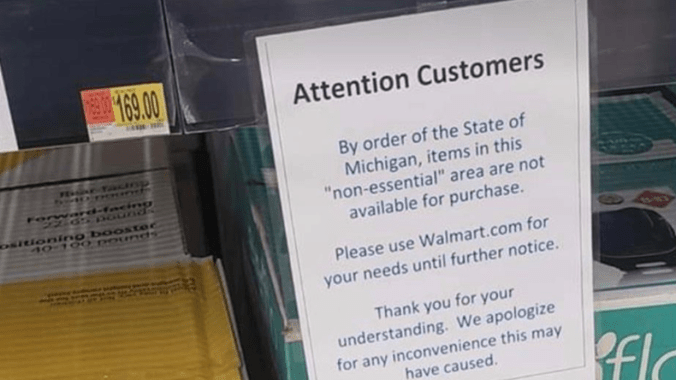
This development, however, is not funny: a frightening number of governors, mayors and police officers have demonstrated how much of our democracy is currently entrusted to nascent totalitarians. I know, I know: to protect the public in a unique crisis, extraordinary measures must be taken, and because so many in our democracy don’t really possess the intelligence and sense of social responsibility that the Founders, in their idealistic fervor, decided to pretend they had (much less the common sense of the average meerkat), sometimes those measures must be accompanied by the force of law. However, because it is a democracy and one that begins with wariness of governments infringing on personal liberties, and will end with our governments being supported when they decided those liberties can be ignored on a whim and a hunch, the recent gusto with which elected officials and their police forces have felt justified in crushing those liberties are warnings that responsible citizens must not let go unpunished. I wrote about one example here, regarding Vermont’s governor’s move to stop the big box stores from selling items Maple Syrup big Brother considers “non-essential.” There are more.

Ethics Alarms already covered the father taken away in handcuffs for playing T-ball on on otherwise empty field with his wife and 6-year-old child, but the Philadephia police pulling  people off  buses for not wearing masks, or the aspiring fascist officer  who tried to  chase down single jogger on an empty beach initially escaped my attention. There are so many examples, you see. Continue reading

Ethics Dunces: The U.S. Congress. Again

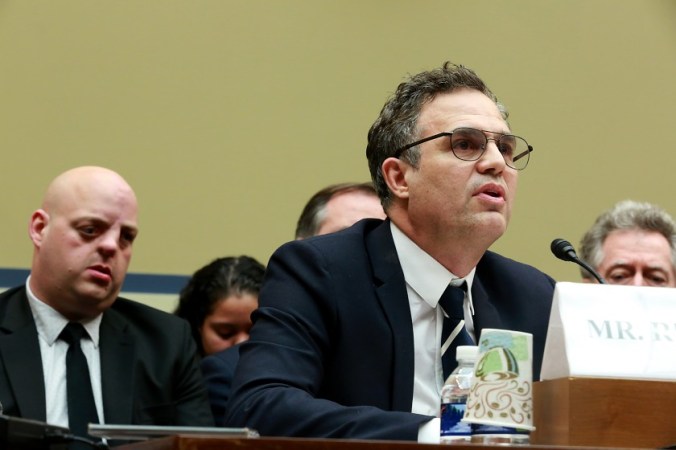
Actor Mark Ruffalo (he plays the Hulk in The Avengers  movies, but it wasn’t because of that role) was invited to testify before Congress last year on public policy involving  public health, chemistry, toxicology, and epidemiology. He has no expertise in these areas at all. The reason was that he starred in “Dark Waters,” which I wrote about here.

Ruffalo is a 9/11 truther, believing  that the U.S. government helped destroy the World Trade Center. That would be enough for me to ding him as an authority on anything, but he has embraced other conspiracy theories as well, like this one.

Never mind: he was presented to the public as an authority on pollution whose opinions on environmental matters have weight. The don’t, and they shouldn’t.

This is a repeat offense. Members of Congress are addicted to the unprofessional and insulting stunt of inviting actors and performers to testify as substantive witnesses on topics that they acted about in movies. As a professional director, I can state with absolute certainty that if an actor is really an expert in something their character was supposed to experience or know something about, 1) that actor is very unusual, and 2) there will still be thousands of real authorities who know a lot more.

Nevertheless, Congress keeps doing this, apparently believing that the public is so naive and gullible that they really believe that because a performer credibly pretends to know what a script-writer prepares to make them sound like the know, they really are experts. Sadly, a lot of the public does believe that. (More sadly, a lot of actors do too) Continue reading