Ethics Quiz: Superman Ethics

superman-american-way

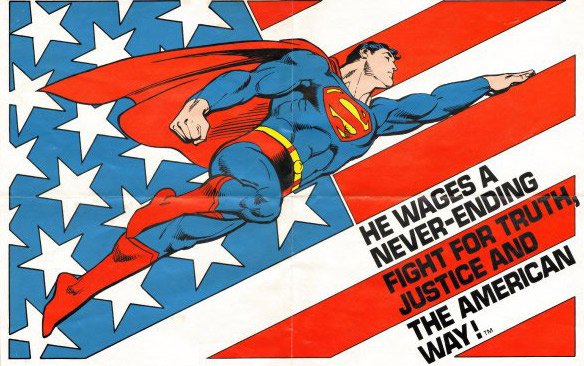
A DC Comics artist announced that recent decisions by the venerable comic book company to wokify its iconic hero were causing him to quit in protest. “I’m finishing out my contract with DC. I’m tired of this shit, I’m tired of them ruining these characters; they don’t have a right to do this,” said colorist Gabe Eltaeb during a recent podcast. “What really pissed me off was [changing Superman’s credo] to “truth, justice, and a better world,” Eltaeb added. “Fuck that! It was Truth, Justice, and the American way! My Grandpa almost died in World War II; we don’t have a right to destroy shit that people died for to give [to] us. It’s a bunch of fucking nonsense!”

What do you really think, Gabe? First, you should know what you’re quitting about: the new slogan is “Fighting for Truth, Justice, and a better world.” And the company obviously has a right to change the big guy’s slogan to whatever they want to. But yes, “the American way” has been sent to the ash heap of history.

Over at Fox News, they were freaking out, as usual. Fox News contributor Raymond Arroyo said on a Sunday talking heads show that DC Comics altering Superman’s motto to eliminate fighting for “the American Way” was a “disservice to fans.” “Now you have a multinational corporation, D.C. Comics, that decided it would rather politically grandstand and build foreign markets than respect their character and the audience that built him. You don’t need Kryptonite to kill Superman when you have D.C. Comics doing a great job. This is a huge disservice to fans and I’m waiting for Superman to turn up in a red costume and we will just call him Super Person. Lex Luthor should send DC Comics a thank-you card for sidelining and killing Superman.”

“This is clearly a distortion and a disservice to anyone who loved Superman that read the comic books and watched those movies,” Arroyo told “The Big Sunday Show.” “Remember, this was about an alien from another planet, a dying planet that comes and lands in the heartland of America and embodies the American ideals of freedom, justice. He wears red, white and blue for goodness sake!”

There were two recent developments in the DC Comics universe that provoked all the angst: the longtime publisher of Superman comics, changed Superman’s 80-year-old slogan from fighting for “truth, justice, and the American way” to “truth, justice and a better tomorrow,” and also revealed that the younger version of Superman, the son of Lois Lane and Clark Kent, is bi-sexual, and was drawn kissing a guy.

OK, the last one is obviously blatant pandering, but what about the motto?

Your Ethics Alarms Ethics Quiz of the Day is…

Is there anything wrong with DC making the Superman motto change?

Continue reading

The 111th Rationalization: “Tom’s Delusion”

Tom’s Delusion, or “Everyone agrees with me!” is unique in the annals of Ethics Alarms. The latest addition to the rationalizations list was inspired by banned commenter of short duration here, but I genuinely intend the title as a sincere honor: it really is a useful rationalization, and I would not have realized it had “Tom” made, as one of his last annoying comments before he quit in a huff, this assertion to support his claim that the January 6, 2020 riot at the Capitol was a seminal event in U.S. history, of the same magnitude, or close to it, as the terrorism of 9/11, as he attempted to counter the observations of Steve-O-in NJ (and others, including me) that this is a contrived Democratic talking point without basis in fact or logic:

“Well the majority of the country disagrees with you.”

And there it was!

1E. Tom’s Delusion, or “Everyone agrees with me!”

Tom’s Delusion is another point where the rationalization list intersects with logical fallacies. #1E is a particularly foolish version of the Appeal to Authority fallacy, which is bad enough when the user believes that the fact that someone of note has adopted his or her position is evidence of the dubious position’s validity.

Using the argument that a position, belief or action is correct or defensible using “everyone” as the authority appealed to is infinitely worse. First, it is based on a lie: “everybody” doesn’t agree on anything. Of course, in its common use, “everybody” is  shorthand for “most people” or in Tom’s case, “the majority,” which is why this rationalization is under #1, “Everybody Does It.” Even if it was literally true that “everybody” believes something, that is not proof, evidence or even a coherent argument. “Everybody” used to believe the world was flat. Most people are lazy, apathetic, poorly educated and ignorant: what the majority of such people may believe creates problems, but it is certainly is not evidence one can rationally to rely on.

Indeed, when the mob agrees with you, it’s a strong indication that you need to reexamine your beliefs.

***

Continue reading

Ethics Quote Of The Month: The Foundation For Individual Rights In Education

Yale intimidation

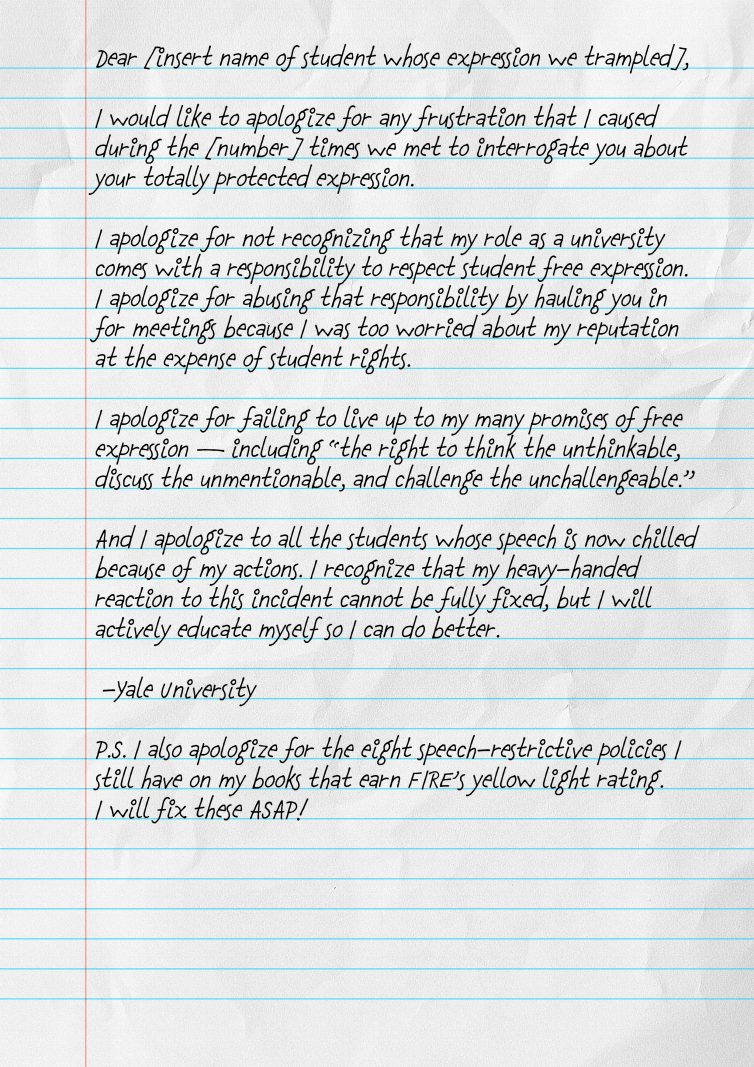
Following through on its criticism of Yale Law School administrators’ attempts to threaten student Trent Colbert and intimidate him into signing a pre-drafted apology for an email that violated no policies and was both benign and constitutionally protected, The Foundation For Individual Rights In Education (The F.I.R.E.) has offered its own pre-drafted apology for the offending individuals [Director of Diversity Equity & Inclusion Yaseen Eldik and Associate Dean of Student Affairs Ellen Cosgrove (above)] and Yale’s leadership to sign and present to Colbert, as well as any other students who have been treated similarly but who weren’t as careful as Trent and did not surreptitiously record their meetings:

Pre-written apology

Today’s Ethics Warm-Up That I Was Supposed To Put Up Yesterday, 10/20/21: All Is Not Well

Jen Psaki may not be the worst liar among the many Presidential spokespersons I have seen come and go, but she may be the biggest asshole since Ron Ziegler, Nixon’s infamous paid deceiver. Yesterday, asked about the administration’s failure to anticipate and act on the supply chain disruptions despite early warnings, Psaki snarked about “the tragedy of the treadmill that’s delayed.” Friend of Ethics Alarms Joe Concha responded, “This kind of pious posturing by Psaki — who is increasingly acting this way as Biden’s numbers fall — is not helping matters. The supply chain crisis is very real [and] will impact the low/middle class the most. But…Psaki makes it about an issue for the rich.” Indeed, my son, who is an auto mechanic, says that inability to get needed auto parts is killing his business, with direct impact on his income. It is clear now that as with inflation, the border crisis and the missing Americans left behind in Afghanistan, the Democratic strategy is to pretend there is no problem, confident the the news media will do a good job hiding the facts.

1. Speaking of gaslighting…Terry McAuliffe’s new strategy as his poll numbers sink in what was supposed to be a cake-walk to a second term as Virginia Governor is to claim that he was quoted “out of context” when he said “I don’t think parents should be telling schools what they should teach.” In what possible context would that statement, which he made on TV during a September 28 debate with Glenn Younkin, the Republican, mean anything other than that he doesn’t think parents should be telling schools what they should teach? McAuliffe’s new ad making the claim that his statement isn’t what it is (Rationalization #64) is like a holding a sign saying “I am a liar.” Yes, we know you are, Terry: that you got elected the first time disgraced the voters of Virginia.

The ex-Clinton henchman is desperate, but obvious obfuscation won’t help except with the admittedly substantial idiot vote. “As parents, Dorothy and I have always been involved in our kids’ education. We know good schools depend on involved parents. That’s why I want you to hear this from me. Glenn Youngkin is taking my words out of context. I’ve always valued the concerns of parents,” McAuliffe says in the new ad. “It’s why as governor we scaled back standardized testing, expanded pre-K, and invested a billion dollars in public schools.” But none of that addresses the issue of parent input into what is taught. So a billion dollars is being invested in having schools teach that whites are oppressing minorities and the United States of America is evil: how does that encourage parent input into the curriculum? As governor, McAuliffe vetoed legislation in 2016 and 2017 which would have notified parents of sexually explicit content in school materials and mandated that teachers offer alternative educational resources to students whose parents objected to such content. That’s the “context” of his infamous statement.

2. Huh. If you pay people not to work, they won’t see any need to work. Who would have thought? The news is full of reports that the economy is threatened by a labor shortage, and economists are not quite sure why. “COnservatives,” sniffs the Times, are sure this is because of over-generous unemployment benefits. What do they know? Nah, that’s not it…then teh same story goes on to note that Americans saved trillions during the pandemic, with lower income Americans being able to stash away enough to forgo work with the help of “the government’s trillion dollar response to the pandemic” including food aid, forbearance on mortgages and student loans, and eviction moratoriums. But not those “unemployment benefits”!

Continue reading

The Assault On Free Speech And Thought Continues: No, The “OK Culture” Isn’t A Problem, But The Progressive Police Are An Existential Threat To Democracy

One of the ways you can tell that the creeping totalitarianism of progressives seeking to enforce thought and speech conformity on us all “for the greater good” is getting closer is that advocacy for punishing thought has become mainstream. Indeed, it’s respectable. The supporters of punishing Americans not only for conduct but for “wrongthink” (“1984” lexicon might as well be considered common tongue today) are now not even slightly hesitant to reveal their goal: Agree with them, or lose jobs, friends, associations—rights.

A smoking gun in this regard is an op-ed page (the Times doesn’t call them op-eds any more for some reason: I don’t care) dominating essay by regular Lindsay Crouse—not to be confused with the now-retired actress of the same name—titled “‘Cancel Culture’ Isn’t the Problem. ‘OK Culture’ Is.” Using the firing of NFL coach Jon Gruden as her launching pad, Crouse argues that America is too tolerant of jerks and others who say or think things people like her—you know, good people—-object to, disagree with or find offensive.

“Here’s how it works,” the aspiring censor writes. “Do you have a sexist, racist, xenophobic, homophobic or fat-shaming thought? Are you smart enough to know you shouldn’t say it in public but want to say it anyway? Are you a powerful and successful person? If so, just make your mean remark or crass joke to a select group who hold similar views or at least wouldn’t dare challenge yours. Don’t worry. It’s OK!”

The writer apparently thinks this statement is so self-evidently ridiculous that she doesn’t feel it necessary to explain why expressing ideas, thoughts and beliefs that she regards as per se unacceptable to those who don’t feel as she does must be prevented and punished. “A common aspect of OK Culture is the tendency to look the other way when someone is professionally excellent but personally awful,” she adds later. Wait a minute: if the individual is really professionally excellent, then he or she isn’t “awful” in the workplace. Not being able to interact professionally with colleagues and subordinates is not professional excellence. So Crouse is referring to personal, private opinions, beliefs, tastes and speech habits that have no relationship to the workplace at all—in short, opinions, beliefs and speech habits that are none of the employing organization’s damn business, none of the government’s damn business, none of public accommodations’ damn business, and especially none of Lindsay Crouse’s damn business.

Continue reading

And The Great Stupid Figures Out How To Feed Itself: The NCAA’s Brilliant Plan

brilliant

I saw this coming. Didn’t you see this coming? Once colleges were told that they could and should treat college athletes as professional athletes, any effort to ensure that they might leave college able to do anything but run, throw, and dunk was on the way out. And so it is.

Last week, an NCAA task force recommended that incoming freshmen in Division I and II sports should no longer be required to meet minimum scores on standardized tests for initial eligibility.

Do you realize how ignorant you have to be to fail to meet the minimum scores?

The recommendation was made by the NCAA Standardized Test Score Task Force, was formed as part of the NCAA’s eight-point plan to advance racial equity. Yes, one sure way to advance racial equity is to let student athletes remain as dumb as marmots.

The Division I Committee on Academics and Division II Academic Requirements Committee will consider the recommendation at their next scheduled meetings in February. “This work reflects the NCAA’s commitment to continually reviewing our academic standards based on the best available data and other relevant information,” task force chairman David Wilson, president at Morgan State, said in a press release. “We are observing a national trend in NCAA member schools moving away from requiring standardized test scores for admissions purposes and this recommendation for athletics eligibility aligns directly with that movement.”

Everybody’s doing it! Now there’s a good reason for abandoning higher education for athletes! The ball started rolling in July 2020, when the National Association of Basketball Coaches called for the NCAA to permanently eliminate standardized test scores from eligibility requirements. Naturally, the main concern of basketball coaches is the educational achievements of student players.

“The days of colleges requiring the SAT or ACT are passing rapidly: more than half of all four-year colleges and universities will not require these tests for admissions in 2021, and more are dropping the requirement every week,” the NABC said in a statement at the time. “These tests should no longer be required in the initial-eligibility standards. The tests are again being recognized as forces of institutional racism, which is consistent with their history, and they should be jettisoned for that reason alone; moreover, pragmatics also support this change.”

Writes education blogger Joanne Jacobs, “So the plan is to admit unprepared students who will play football or basketball and leave college without a degree.”

Exactly. After all, a thuggish Minnesota cop accidentally killed a lifetime black hood without any racial motive, so this is a perfect response. And I am Marie of Romania.

The disgusted Ms Jacobs appended a relevant literary reference to her report…

Continue reading

Star Chamber At Yale Law School

Yale-Law-School2

One of the most brazen and enduring Big Lies emanating from the mainstream news media, its pundits and, of course, the progressive/Democratic collective it works for, is that Republicans, conservatives and Donald Trump are existential threats to democracy, all while the various components of the Left, especially the institutions it has co-opted like the news media, Big Tech, the professions and education, are openly attacking the basic tenets of personal liberty. Yale Law School has been caught in a particularly odious example of this (not Harvard, for a change). So far, only conservative media sources and blogs have covered the story, but it is really bad. I doubt the the MSM will be able to bury it much longer.

As first reported in The Washington Free Beacon, Trent Colbert is a second-year student at Yale Law School and a member of both the Native American Law Student Association (NALSA) and the Federalist Society. He sent an email on September 15 inviting NALSA members to a social event, writing, “This Friday at 7:30, we will be christening our very own (soon to be) world-renowned NALSA Trap House . . . by throwing a Constitution Day Bash in collaboration with FedSoc. [That is, the Federalist Society] Planned attractions include Popeye’s chicken, basic-bitch-American-themed snacks (like apple pie, etc.),” and a cocktail station.”

Almost immediately the invitation had been shared to an online forum for all second-year law students, several of whom complained that the term “trap house” indicated a blackface party. It doesn’t. The term can mean many things, like inner city crack dens, but “trap house” is most often generic slang for a place where teens or students can get beer. Oh, never mind! Facts don’t matter! “I guess celebrating whiteness wasn’t enough,” the president of the Black Law Students Association wrote in the forum. “Y’all had to upgrade to cosplay/black face.” She then objected to the event’s affiliation with the Federalist Society, which she said “has historically supported anti-Black rhetoric.” (And that is absolutely false.)

Colbert was quickly summoned to the law school’s Office of Student Affairs, which received nine discrimination and harassment complaints about his message from students. Wisely, the Trent secretly recorded the proceedings at that and subsequent meetings,. This is legal in Connecticut, a so-called “single party” state. It is unethical for a lawyer to do this in Connecticut, but Colbert isn’t a lawyer yet.

Continue reading

Typo Ethics! The Supreme Court Had A Really Bad One, And It Made A Difference

Justice_Pierce_Butler

As regular readers here know, there are a lot of typos, too many, on Ethics Alarms, mostly because I have to write posts more quickly than I’d like, I’m often interrupted, I can’t spell and I can’t type. Thankfully readers alert me to the most egregious (two generous readers particularly), and whenever I catch a typo in an old post, which is often, I fix it (and think “One more down, 701, 566, 211 to go!”). Fortunately, very few typos over the years have resulted in a post saying something other than what I intended, though the occasions where I have left off a “not” or an “un-” have been embarrassing. It all weighs heavily on my conscience and self-esteem, which is why this revelation, regarding a consequential typo in a Supreme Court opinion, was a welcome one.

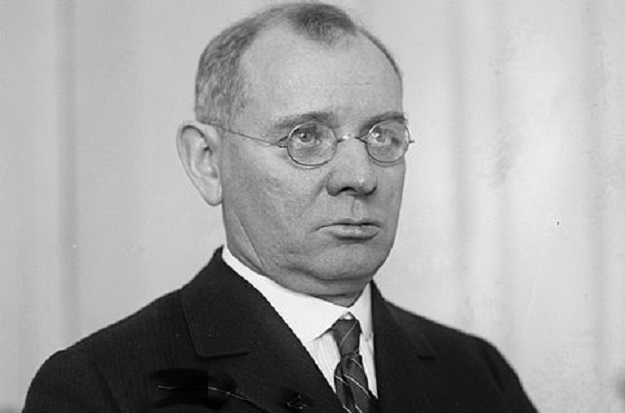
A slip opinion (in other words, a preliminary opinion subject to revision before publication) was issued in 1928 regarding a zoning dispute. The author of the opinion, Justice Pierce Butler (above), had written, “The right of the trustee to devote its land to any legitimate use is properly within the protection of the Constitution.” But the opinion was misprinted as “The right of the trustee to devote its land to any legitimate use is property within the protection of the Constitution.” That was a sweeping statement about the constitutional stature of property rights, and not what the opinion was intended to stand for. But the slip opinion typo slipped under the Court’s radar for a while.

SCOTUS eventually fixed the mistake, so the final version of the opinion published in book form in United States Reports, contains what Butler intended. But the Court negligently and irresponsibly did not draw attention to the change (which was typical at the time), so most judges, lawyers and law professors assumed that the typo version was the law of the land. The mistaken version, which appeared to declare a vastly expanded interpretation of property rights, has appeared in at least 14 court decisions, including one was issued in 2020. It was cited in at least 11 appellate briefs, in a Supreme Court argument, and in countless books and articles.

A new study published in The Washington University Law Review traces the carnage and confusion created by the nearly century-old typo. Michael Allan Wolf, the law professor at the University of Florida who discovered the mistake and wrote the article, believes that while it is impossible to measure how much impact the typo has had in court decisions, there is little doubt that it has served to advance an interpretation of property rights that was never supposed to have Supreme Court support.

Continue reading

Doug Glanville’s Internal Debate And The Student’s Slavery Petition

40 acres and a mule

I highly recommend this essay by Doug Glanville, an African-American sportscaster and blogger who has frequently distinguished himself with perceptive commentary on matters relating to race and sports. In a long, Mobius strip of a personal reverie—you get the impression that Glanvilles wasn’t certain what he thought until he read what he was writing, he reflected on how he would have, and should have reacted if he was in the broadcast booth when Jim Kaat made his ill-considered “40 acres” comment, which Ethics Alarms discussed here. Glanville weaves his way through several options and impulses:

  • “Faced with this reference during a baseball game, I found myself stuck on pause, wondering how we touched on reparations for slavery during the [American League Division Series] while discussing the value of a Latin player. At least, I hoped, it was done so unknowingly. For almost a week, I have grappled with whether I should say anything at all — whether the lessons from it are worth pursuing on a public scale, or if it’s just better to move on. I answered my internal debate by deciding I should at least try.”
  • “So what if I were covering that game, with Showalter and Kaat, as the field reporter or a second analyst? What would I have done? What would I have said? It is an obligation sharply felt by the only Black voice in any room, let alone during a baseball game, where you are expecting to just talk baseball.”
  • “I could have responded indirectly. I could have hit the talkback button and taken my issue to the producers off-line, in order to go through the proper channels. From experience, I know that calling a game is hard. You have to talk for over three hours, and your brain is crammed with information. Data, analytics, interviews, inside information, you name it. And every so often, it just simply comes out wrong, or you react with your mouth before your mind. You don’t have time to dissect the nuance of what someone has said without the risk of making the same kind of generalizing mistake…”
  • “I could have responded directly. I could have interjected on live television to express my consternation — even knowing how that might be taken…. how do you address it while upset, without coming off a certain way?”
  • “I could have stayed silent. I could have internalized it. There is an etiquette to broadcasting. You have to think long and hard about whether you are going to contradict someone or call them out, on Twitter or live during a game. It doesn’t have to be because of insensitive content — it could be about a mistake on a call or simply getting a player’s name wrong. The default is that you don’t do it. And if you do, you do it with care, smoothly, out of respect for your colleague.”
  • In the end, Glanville settles on the Golden Rule: “We all need to be better and more aware, more educated about history so we don’t make bad analogies. Yet we also have to see how understanding is an evolutionary process and grant people the bandwidth to grow, including ourselves. I certainly would want to be extended the same courtesy.”

That’s good, as far as it goes. In the process of getting there, Glanville still managed to blow Kaat’s comment out of proportion, writing at one point,

“In this instance and in so many others, the intent behind the statement becomes beside the point. Kaat apologized for his “poor choice of words” four innings later, but by then, it felt too late — you don’t have to be malicious to negatively impact someone….The pressure is often on Black people to bury their feelings and carry on…We can brush off slavery or we can recognize the vestiges of it and how it still plays a role in our systems. Just last week, a petition to bring back slavery circulated through a school in Kansas City, so I am not talking about 1865.”

Hold it, Doug. When someone is claiming offense, intent is always relevant. This is the great “gotcha!” game in the age of cancel culture: someone makes an innocent misstep, an a social justice mob sets out to destroy them, or at least force them to pathetically confess their sins and beg for forgiveness. Those who are so easily “negatively impacted” that an obviously botched spontaneous comment referencing “40 acres and a mule” while discussing ‘ the value of a Latin player,” want to be “negatively impacted” or at least to be able to claim to be, because it gives them power. Commentators like Glanville enable such political correctness bullies and agents of the cancel culture.

But I want to look at Glanville’s reference to “a petition to bring back slavery” circulating “through a school in Kansas City.” I had missed that episode, and with good reason: it wasn’t newsworthy, it was exploited by exactly the kind of “gotcha!” purveyors I just described, and Glanville’s facts were wrong. Continue reading

Ethics Quiz: The Cancelled Coach’s Video Game Avatar

kyle-pitts

This is almost too stupid for Ethics Alarms to comment on, but as regular readers here know, very little is too stupid to interest me.

We discussed earlier the fate of Las Vegas Raiders coach Jon Gruden, who was always a pretty revolting character (and everyone knew it) but who was brought down when a bunch of his old emails were made public. One seemed pretty clearly racist; some were sexist, some were homophobic, and some were just politically incorrect to the Progressive Mob the NFL is kowtowing to these days. Gruden was forced out of his job, and now the woke brigade is in the process of making him a non-person, because the Soviet Union understood these things, I guess.

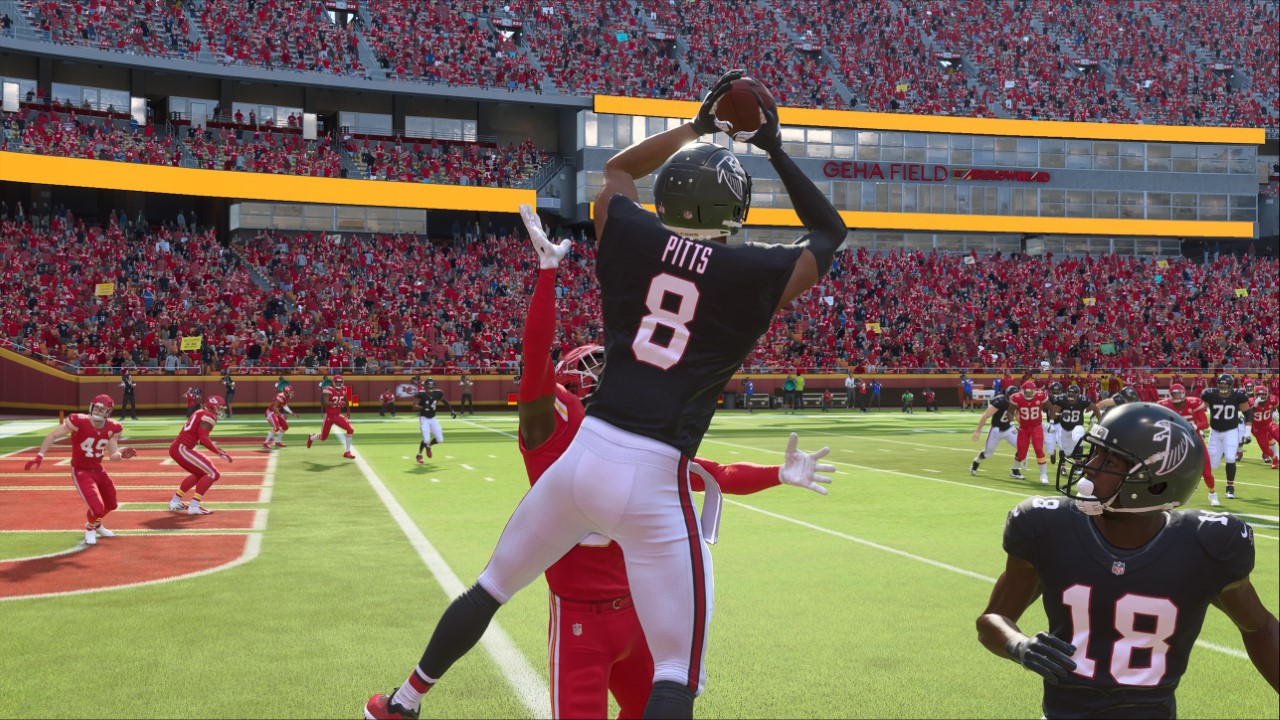
Now we learn that Gruden will be removed from the popular “Madden NFL 22” video game, as developer EA Sports announced last week. Gruden’s image will be replaced with a generic, imaginary coach who never sent emails that insulted Joe Biden.

EA Sports explained: “EA Sports is committed to taking action in maintaining a culture of inclusion and equity. Due to the circumstances of Jon Gruden’s resignation, we are taking steps to remove him from Madden NFL 22. We will replace him with a generic likeness via a title update in the coming weeks.”

Your Ethics Alarms Ethics Quiz of the Day is…
Is this really “doing the right thing”?

Continue reading