I almost missed this kerfuffle completely. Of all people, one of my most reliably Democrat-supporting friends raised it, beginning by saying. “I know this is not something a good progressive is supposed to say or think, but….
…why in the world is it ‘racist’ to say ‘colored people’ but politically correct to use the term ‘people of color’ when by the undeniable rules of English, they mean exactly the same thing?”
She continued, “And how can anyone belonging to an organization called ‘The National Association for the Advancement of Colored People’ accuse someone of being a racist for saying it?”
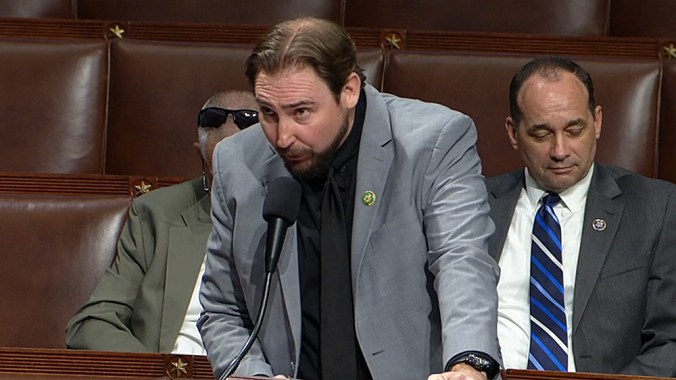
Arizona Republican Rep. Eli Crane was arguing for his amendment to the defense budget and policy bill, as he wants to prohibit the Pentagon from requiring participation in DEI training or the use of ” race-based concepts” in the hiring, promotion or retention of individuals. In the course of debate, Crane said “My amendment has nothing to do with whether or not colored people or black people or anybody can serve, okay? It has nothing to do with color of your skin… any of that stuff.”
Recognizing a “gotcha!” when she saw one, black Democratic Rep. Joyce Beatty, an enthusiastic member of the racist Congressional Black Caucus, demanded Crane’s words be stricken from the congressional record. “I am asking for unanimous consent to take down the words of referring to me or any of my colleagues as “colored people,'” said the dues-paying member of the NAACP. Crane wanted to amend his comments to “people of color,” but Beatty insisted that she wanted his words stricken. Censorship is, after all, her party’s way, and no Republicans had the guts to object.The chair ordered Cranes entire statement stricken by unanimous consent.
Beatty then worked to exploit the gaffe for all it was worth, writing on Twitter: “I am still in utter and disbelief that a Republican uttered the words ‘colored people’ in reference to African-American service members who sacrifice their lives for our freedom… I will not tolerate such racist and repugnant words in the House Chamber or anywhere in the Congress. That’s why I asked that those words be stricken from the record, which was done so by unanimous consent.” Then the Ohio Democrat told CBS that Crane’s explanation that he “misspoke” was a lie. “He didn’t misspeak,” Beatty said. “He said clearly what, in my opinion, he intended to.”
In other words, he intended to use a racist slur.
Your Ethics Alarms Ethics Quiz of the Day is…
What is fair treatment for Rep. Crane?
To answer my progressive freind’s query on why what he said is “racist,” I would say, “It’s racist because African- American activists declared the term derogatory as a political ploy and power tactic, to show they could and should make the rest of society jump through whatever hoops they want jumped through, and it is easier for everyone else shrug and say, “Fine, whatever,” and toe the line rather than hewing to principle and declaring, “I won’t be jerked around like this. Sorry not sorry.”
You will note that Ethics Alarms refuses to capitalize “black” when used in a racial context for exactly this reason.
“It shows us directly why we need DEI ,” Beatty said later, hilariously unaware of her own hypocrisy. “DEI is not about just hiring a Black person or putting a person in the military or in college. It’s about having diversity of thought.”
And punishing anyone whose thoughts are difference from hers.
As with the craven unanimous vote to strike Crane’s remarks, House Speaker Kevin McCarthy piled on as well, telling CBS News that Crane’s comments were “not acceptable.”
I agree that from a political standpoint, this gaffe is not a metaphorical hill to die on. Nonetheless, I would have gained a measure of respect for Crane had he said,
“I regret upsetting anyone when I said ‘colored people’ rather than ‘people of color,’ and that anyone was offended or took my words as a sign of disrespect. That was not my intent: since the two phrases literally mean the same thing, I believe it was an easy and innocent mistake to make, although I should have been aware of the sensitivity to the symbolic differences in the two terms. I will strive to never make that mistake again, while at the same time objecting, here and now, to the constant employment of linguistic tricks and games to cast aspersions on unwary Americans of good faith and fair minds and put them on the defensive. This is part of the scourge that has brought us traps like “misgendering” and people being fired, shunned and cancelled by not keeping up with the latest WrongSpeak codes. And since I am being impugned for carelessly using the term “colored people,” I call upon the NAACP to alter its own name in the same spirit of respect and progress.”
That, of course, could never happen. What can happen is that I might be called a racist here some day because I use a lower case b instead of an upper case B.
Let me also add that since “colored people” was widely, vocally and emphatically declared offensive to woke blacks more than 50 years ago, Crane’s gaffe suggest an absurd lack of awareness for a member of Congress in 2023, and badly maintained ethics alarms.
_____________
Source: Politico
 Ethics Alarms
And of course, some time ago, “negro” became verboten. Which was pronounced by well to do southern whites as “nigrah.” I’m waiting for “people of color” to exceed its expiry date. Could happen any day now. No one expects the woke inquisition.
Hold on… Beatty is a member of a group called the ‘Congeessional Black Caucus’?
She has no standing to complain until she exits the group in protest asking they reorganize as the ‘Congressional African-American Caucus’ … Err… Hold up… I’ll let her chime up with a better name as I heard once that term excludes many non-African people that clearly ought to remain included in the group.
What does NAACP stand for again?
I’m confused… “colored people” sounds very awkward and tinny to my ear, but I was unaware it actually made ban lists. I’m left wondering if anyone actually finds this offensive?
It seems part of the linguistic game we play where in order to better police language, the censors decide every 10 years or so that the current slate of politically correct terms are not correct enough, and the situation demands an ever more sanitized and linguistically tortured label.
Ten years from now we’ll be referring to the melanin-havers or something.
FYI… you have melanin too, and lots of it.
Which one where is the question.
https://my.clevelandclinic.org/health/body/22615-melanin
Eumelanin. There are two types of eumelanin: black and brown. Eumelanin is responsible for dark colors in skin, eyes and hair. People with brown or black hair have varying amounts of brown and black eumelanin. When there’s no black eumelanin and a small amount of brown eumelanin, it results in blonde hair.
Pheomelanin. This type of melanin pigments your lips, nipples and other pinkish parts of your body. People who have equal parts eumelanin and pheomelanin have red hair.
Neuromelanin. While eumelanin and pheomelanin control the colors of things you see (such as skin, hair and eyes), neuromelanin is responsible for the color of your neurons.
Rep. Beatty’s bleating is nothing more than a mutation of the whole “preferred pronoun” speech-control scheme.
Baa baa person-of-color sheep
Have you any wool?…
Isn’t it Baa baa sheep-of-color?
The Good Representative’s Faux Outrage didn’t sit well on Twitterverse, judging from the comments:
jvb
I heard the NAACP explained that they could not change the name because it had become part of their branding. So, you know, … money.
As far as “colored people” go, I thought the objection to it was that “colored” ended up getting associated with Jim Crow, and separate drinking fountains, etc. It is too much associated with segregation that it had to go.
-Jut
Fine. But how far away does “people of color” go? It’s silly on its face.
And doesn’t the congressman get the “speaking in public error” excuse? Certainly, any Democrat would. And sure as heck Joe Biden would.
Right on both counts. But those are contradictory.
How hard would it be to change it to NAAPC? Not hard at all. It would remove the stench of Jim Crow. For a pittance. And make them look up to date and woke.
But different rules for thee and me is now a routine leftist presumption.
America was once were bastions of free thought, where even outrageous ideas could be proposed, attacked, and defended. That era has ended, raising the question: If free thought and expression will not be cultivated and supported in the halls of government, where will it bloom? Because, if it is driven out of the governance and academy, will it survive the attacks of lawmakers and academia?