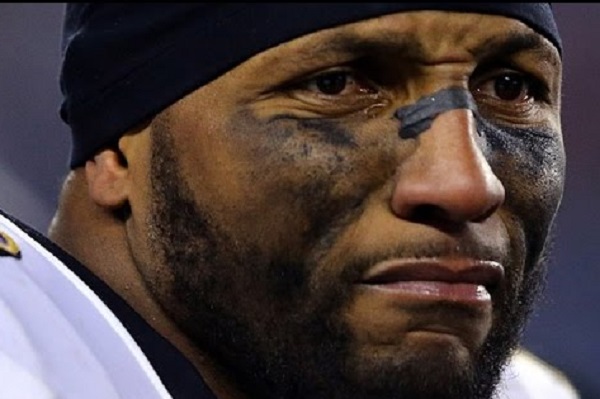
This past Saturday night in Green Bay, Wisconsin, Isiah Bolden, a cornerback for the Ne England Patriots, collided with a teammate, lay motionless on the ground, and was put on a cart to be rolled off the field. Though there was little more than 10 minutes to play, the NFL canceled the rest of the game. Patriots coach Bill Belichick praised the NFL for acting quickly. Patriots players then praised Belichick. Bolden was released from the hospital the next morning and appeared to be in good health, but the Patriots canceled a pair scheduled of joint practices anyway.
Conservative political pundit and sports commentator Jason Whitlock wrote of the episode, “The enemies of football and masculinity have won. They killed football. They won the long war of convincing men that the key to happiness is choosing safety over freedom, safety over everything.” Whitlock is saying, in essence, that the incident has greater significance beyond football, that it demonstrates that the progressive weenification of the culture has reached a critical and dangerous level that has ominous implications for American society at large.
Sports and entertainment both mirror the culture and influence it. If the National Football League stops a football game because a player is hurt playing a dangerous game he is paid a great deal to participate in and after he fully consents to its known dangers, doesn’t that grease the slippery slope to “restorative justice” and de facto legalized shoplifting, among other woke pathologies?
Your Ethics Alarms Ethics Quiz of the Day is...
Did the NFL do the right thing by canceling the game?
I have couple of points as you ponder this:
1. It was an exhibition game, after all, and Whitlock doesn’t mention this. The game was meaningless, essentially a training exercise. Will the NFL treat serious-appearing injuries during the regular season the same way? We shall see.
2. There’s wild hypocrisy here, and Whitlock doesn’t flag that, either. The NFL stopped a game because a single player was hurt on the field, but it cheerily sends all of its player out to sustain long-term, crippling and ultimately fatal brain injuries, profiting all the while. The “safety over everything” message, coming from the NFL, is virtue-signaling, posturing, and an obvious lie. Ridiculous, in fact.
3. I’m a theater guy, which means I fervently believe that “the show must go on,” and not only in theater. The mission is more important than any one participant: you do your job, complete the task, and deal with the consequences later. I believe in sacrifice, determination and fortitude, and I agree with Whitlock in the sense that this is an American ethical norm that is being deliberately eroded and weakened to the nation’s detriment. Admittedly, I could be called an extremist in this area: when I was running my theater company as artistic director, I criticized a stage manager’s decision to stop a performance after one of the actors was knocked cold on stage and had to be carried off by EMTs. It’s true: I would have insisted that the show continue.
But that’s just me.
 Ethics Alarms
When they first started the New York Air Show at Stewart Airport in 2015, there was a crash on the practice day (it’s customary to run through the whole show the day before, sometimes that’s open to the public, sometimes not), and one of the pilots was KILLED. The show still went forward the next day, everyone saying “the show must go on.” You can’t stop for one person, only if everyone would be in danger.
No, it did not.
My initial inclination was that it was a meaningless exhibition game. There is no harm in stopping it.
However, stopping the game really accomplishes nothing. This is not a situation where an external threat (like a thunderstorm, hurricane, or wildfires) endangered people. This was an example of the inherent risk to the players they face in every game. Stopping the game does nothing but eliminate the risk for the remainder of that game. The gesture is really symbolic. It is deceptive, as you suggest.
They should have finished the game.
-Jut
Cynically: the NFL do not want players to get injured in a meaningless exhibition game; they want them to stay healthy through the pre-season so they can get hurt when it really matters..
-Jut
I do think that, particularly in light of the chronic danger the sport represents, I agree that this is a step in the wrong direction. Thus merely gives the NFL the veneer of compassion, making it easier to duck it’s own long term culpability in a long parade trail of broken young men behind it. While bolstering a national trend of “compassion comes before all else, whether it makes sense or not.” But hey – nice optics, though!
Cynically: the NFL do not want players to get injured in a meaningless exhibition game; they want them to stay healthy through the pre-season so they can get hurt when it really matters..
-Jut
Spot on, I suspect. Not cynical at all.
For the record, exhibition games, especially in football, are NOT meaningless. They are when it comes to standings, of course, but the exhibition schedule is there so that team management can see how players are developing and whether they’ll be offered a spot on the regular-season roster. It’s the same in hockey and baseball. So truncating the game may have cost one or more players an opportunity to make a favorable impression.
Also, a fair number of teams have canceled joint practices. This has less to do with health and safety as it does with the fact that there has been too much in the way of extracurricular activities – as in, players are brawling with each other.
Whether that’s because they want to prove their toughness – or just revealing that they are, at heart, thugs – is an open question.
A friend was giving a speech at a professional conference, became light-headed, and keeled over, falling to the ground behind the lectern, microphone in hand. He came to, realized his situation and intoned into the microphone, “And now, I’ll take any questions from the floor.”
“Whitlock is saying, in essence, that the incident has greater significance beyond football, that it demonstrates….”
If this is true, would this make football an ethical sport with a necessary evil injury?
Stopping the game did nothing for the injured player. It may have avoided “You would have stopped the game if it had been a white guy.”, though. Is that too cynical?
I think a key consideration here is the seriousness of the injury. Were it life-threatening, then cancellation of even an exhibition game might be a sign of respect. (We all understand that “sign of respect” is a figure of speech here, not actually an indication of sincere empathy.) But he appears to have had feeling in his extremities although he was motionless. Still… potential paralysis, exhibition game, fourth quarter…
On the scale from “it’s football, people get hurt sometimes!” to “all hail the compassionate coaches and league officials, the decision to cancel the rest of the game rate a raised eyebrow and a deep sigh.
I think there also has to be consideration of what stopping the game for an injury does to the psychology of the coaches and players. Okay, a pre-season game, where the coaches are still finalizing the roster and seeing how the group performs with their new formations, I can somewhat understand the sentiment that stopping the game won’t have any great impact. It doesn’t hurt the team’s regular season standings. It doesn’t add confusion to the playoff picture. But it still does something, especially after last year’s cancelled game between the Bills and Bengals.
Coaches and players have to now have in the back of their mind, “will this game get cancelled because a player gets seriously hurt”? And before long, you have to suspect that at least some will start thinking, “How can I use a game cancellation to my advantage?” Maybe put that player on the field that has been roughed up, and is maybe concussed, and see if he gets knocked out when you’re down 21 and there’s 7 minutes left in the game? Or maybe ask your lineman to really rough up the opposition player, in hopes that will lead to a cancelled game?
Worse, what about the players who feel they have to start handling their position with greater delicacy because they don’t want to have the game called on account of an injury? I don’t have any hard evidence, but I cite my father who swears that more injuries occur when a team lightens up and plays soft than when they keep focus on doing their best every play. Maybe that’s not actually the case, and maybe my concerns here have no grounding, but I think it should be asked if setting this precedent is going to unwittingly lead to more injuries?