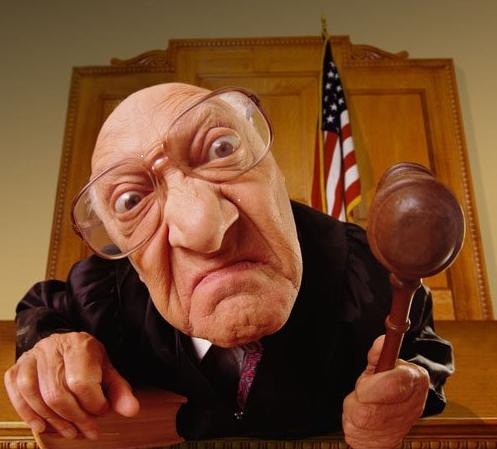
Justice Arthur F. Engoron of the New York Supreme Court ruled yesterday that Donald Trump repeatedly inflating the value of his assets, thus constitution fraud on banks and insurers. Thus New York Attorney General Letitia James will no longer have to prove fraud in her lawsuit against Trump. She is seeking a penalty of $250 million in a trial scheduled to begin next week. Justice Engoron ruled that the annual financial statements submitted to banks and insurance companies by Trump agents “clearly contain fraudulent valuations that defendants used in business.”
He also fined Trump’s lawyers $7,500 each for persisting in making arguments that he had previously rejected, and warned them that the arguments in question bordered on being frivolous. The former president, the judge wrote, ignored reality when it suited his business goals. “In defendants’ world,” he wrote, “rent-regulated apartments are worth the same as unregulated apartments; restricted land is worth the same as unrestricted land; restrictions can evaporate into thin air.” Trump’s defense was that the banks made large profits in their dealings with the Trump Organization and could not be called victims, and that valuing property is subjective. This is the classic and often successful defense offered in many tax fraud cases.
Trump had, the evidence showed, overestimated the size of the triplex apartment in Trump Tower in which he had lived for decades, telling banks that it was 30,000 square feet fwhen it was really only about 11,000 square feet. Justice Engoron noted that Trump’s lawyers had argued that the calculation of square footage was “subjective.” “A discrepancy of this order of magnitude, by a real estate developer sizing up his own living space of decades, can only be considered fraud,” he wrote.
I don’t see how one can argue with that.
A few points:
- I’m not interested in the possible consequences of the ruling to Trump’s finances or his business prospects. If you are, read the Times story. [ Added: Esteemed commenter valkygrrl properly chided me for not directly including a link to the opinion itself. It’s here, and addresses many of the issues raised in the comments. My fault. Mea culpa.]
- I have little doubt that the ruling is correct and justly decided. Trump’s defense reinforces that conclusion. He might as well have argued, “But everybody does it!”
- It will be no surprise to anyone that Trump is claiming he is being persecuted by political enemies, and that this ruling is The judge, he points out, is a Democrat. (Most judges in New York are Democrats.) For ethical judges, political affiliations do not determine rulings, and the evidence in this case looks awfully strong.
- However, the fact that James has a good case and may win on the merits does not mean that the prosecution of Trump on this and other fronts is not politically motivated. “Show me the man and I’ll show you the crime,” Stalin’s enforcer Beria memorably said. Show me a real estate developer, and that crime should be easy to find. James started investigating Trump in 2019 and finally filed a lawsuit against him last September after it became clear that two impeachments, an electoral defeat and the House’s kangaroo court on the January 6 riot hadn’t successfully eliminated him as a threat to the Democratic Party and Joe Biden. Selective prosecution for political and partisan motives is unethical and a threat to democracy. I am as convinced that this is what is going on here as I am that Trump is guilty as hell..
 Ethics Alarms
Are these bank and insurers the plaintiffs?
The banks’ leaders would have an ethical duty to sue Trump if they had a compelling case of fraud against him.
Is representation by Trump of his properties size/value what lenders and insurers trust or do they do their own independent evaluations, especially for property this size and value?
If so, why does it really matter how accurate Trump’s reporting is? Merely a guilty by technicality because we can prosecute him?
I don’t understand this at all… So what if Trump said these things. Did they just take him at his word? Where are the appraisers and inspectors?
He didn’t just say them: he signed documents asserting false facts to banks and insurers,
I don’t know. I’m kind of with him on this one. Unless he actually changed official records, I don’t see how putting down the wrong information on what you think your property values are is better than a guess (assuming the benefit of the doubt here), when its not your job to verify this information.
It’s not a guess. I’ve reviewed these cases from legal ethics perspectives. He’s the owner. He hires people who know or think their job is to inflate the value of his business assets to present to lenders for massive loans. They have the same duty as accountants: relay facts and the truth. He know they are cheating. he signs the papers, and their false representations become his. He’s committed a crime.
My youngest brother is a valuer. He appraises the value of farms and houses previously in New Zealand and now in Carlisle, England. The customers of the companies that employ him are the banks that lend mortgages to the buyers, insurance companies that insure the buildings and the city and town councils that tax the properties. He does not work for the owner of the property. Why would any bank, insurance company or council trust the owner in their estimate of the value of their property? If that’s how it is done in America then you are doing it wrong.
Bank appraisers have a conflict of interest like accountants do. Even if they are the bank’s appraisers, Trump pays them. If he likes their appraisal, he will hire them again. Any time the real client isn’t the one paying, that’s an invitation to a conflict.
“If he likes their appraisal, he will hire them again.”
Here in New Zealand the bank would choose the appraiser, not the owner.
So a different appraiser and a different bill for each loan application, then?
I presume the banks would have a company they work with and that company would give the work to whichever employee lives in that area and can fit it in their schedule. So if a property is sold and resold a few times in a short time period then it could be the same appraiser or different appraisers. The property seller or buyer has no control over the choice of appraiser, as it is the bank’s money at risk, it is their choice of appraiser.
That’s how it works here too. The owner does not pay the appraiser, and in most instances the appraiser has no contact with the owner. The owner gives a costs deposit to the bank with the loan application and that cost deposit covers appraisals, inspections, attorneys’ fees, title, etc. The bank cuts the check for each of those items directly to the provider, and there is no way the appraiser, for instance, can know if those funds originated from the owner (other than common practice). The appraisal is certified to the bank and not to the owner.
It is his job to make sure the information is accurate.
Like Michael, I too, as a non-lawyer, don’t understand this. It seems we often see important cases of Constitutional import tossed out because plaintiffs are not considered to have standing. Who is the injured party here, & what is the injury?
The state is the plaintiff.
And……..standing and injury?
Many Reason commenters are actually making this point. See the comments section here.
https://reason.com/2023/09/27/trumps-absurd-property-valuations-confirm-his-disregard-for-reality/?comments=true#comment-10252648
In NY, the attorney general is allowed to sue for fraud violations. And they have an interest in protecting the marketplace against fraud.
My understanding is that fraud requires showing of damage or injury (in addition to showing of misrepresentation, knowledge of the misrepresentation, and reliance on the misrepresentation). Even assuming that all the first three elements are established (I question that the reliance is shown because, presumably, banks and other sophisticated entities will do their own due diligence), where is the injury/damage? By all accounts, the banks and insurers did not complain that they lost any money, or that Trump did not pay; so how did the judge reach the decision?
The judge found that Trump had “fraudulently secured favorable terms on loans and insurance deals.” If the terms were better than they should have been had he been honest in the evaluations, then that’s harm. Fraud does not require a particular party to complain of fraud. The harm in a case like this is implicit in the resulst. Banks may have chosen to allow themselves to be defrauded, which just made them complicit in the fraud that affected other bank stakeholders unaware of the scams. That doesn’t make it any less of a fraud.
Remember, this wasn’t the trial. This was the determination that the representations were false in advance of the trial.
If these banks allowed themselves to be defrauded, should not the leadership be fired?
If these valuations didn’t pass the smell test (I’ve never believed a cent of Trump’s self-declared net worth), why aren’t the lenders and insurers and county assessors being prosecuted as co-conspirators in a conspiracy to defraud … whoever the hell you want to identify as a victim.
“Fraud does not require a particular party to complain….”
Is that unique to fraud cases?
Prosecutors can and sometimes do choose to prosecute when a victim refuses to press charges for a crime. But this is civil fraud, not criminal fraud.
I think part of my not understanding this is I don’t know the difference between the two. I assumed civil matters were mostly between two people. If the government is prosecuting without a victim how is this not criminal fraud?
Violations of federal regulations are often civil matters. There are civil and criminal prosecution by the FTC and the Civil Rights Division of Justice, for example.
Here’s the link to the full opinion. I should have included it at the outset; it addresses a lot of the issues discussed in the comments. I just put the link in the post as well. Thanks to valkygrrl for the suggestion.
I would be interested in knowing more about how the judge evaluated the facts before him. Simply having him quote differential size is insufficient in valuations.
BOMA which has established the standards for measuring commercial real estate has three different categories: gross leasable area, net leasable area, and net usable area. To determine the market value of a building for sale you do not use simply the net usable area you must use gross areas. It is possible that two categories could be vastly different because of assessments for common area. I don’t think that such a large difference is plausible in most cases, but Trump Tower is not your typical class A building and assessment for common areas could be quite large in a mixed-use building.
There are also variations in valuation methodology. So, which valuation was used: Purchase price cost, Replacement cost, or comparable market prices. I doubt that Trump’s living space had many comps from which to evaluate.
The market system works exactly like the judicial system; it is adversarial. Each side makes representations, and the other side has a duty to evaluate the merits of the other’s offer.
The judge found that Trump had “fraudulently secured favorable terms on loans and insurance deals.”
How does the judge know that he got better terms on loans and insurance deals without deposing the banks and insurance firms in question? Maybe he did. I do not know. But nonetheless pricing of financial products denominated in millions of dollars are not etched in stone as might be your standard mortgage rates based on a FICO score. Therefore, who can claim he got favorable terms based only on his asset value representations? Keep in mind that Trump’s financial activities are well known and who could forget how often the Dems reminded voters how often he went bankrupt. Obviously with such a track record, banks should have been suspect of him, or they went along willingly. To hold one side of the transaction liable for fraud while the other side (his adversary) benefitted is my estimation unjust. To claim the state was the harmed party should have to be proven.
To suggest that banks and insurance firms lack the sophistication necessary to enter into deals of such magnitude is farcical. In fact, when dealing with securities, only those who are deemed “sophisticated investors” by the Federal government can enter into transactions that require significant due diligence to ensure the representations made are true and accurate. The SEC classifies someone as a sophisticated investor as anyone with a net worth in excess of $1mm or an annual income of $250K per year. I think banks and other financial intermediaries meet this threshold. While real estate transactions with those who hold significant expertise in that market are not subject to SEC investor restrictions it stands to reason that they had all the requisite skills to ascertain that veracity of the claims made.
I cannot actually grasp how he would get more favorable insurance on a property he claims is three times as large given the formulaic way insurance firms calculate replacement costs. For all I know, given the lavishness of the fixtures in his condo, it may have been suggested by his insurance carrier that he up the size of the net living space to a factor large enough to recover the actual replacement costs.
Ultimately, the price of something charged is determined by the seller and not the buyer.
Excellent comment, Chris.
I know A LOT about residential mass appraisal, but not as much about commercial, although the basic principles are the same, not the least of which is that appraisal, by definition, is “an estimate of value”. It’s also not a principle, but a fact, that competency in tax appraisal can vary wildly by jurisdiction, and that high-value properties are more difficult to value than cookie-cutter tract homes. Comparable sales are fewer, and adjustments for differences are harder to establish. With hotel properties and such, an income approach is likely most accurate. Tax assessments also tend to lag the market.
I don’t know of a mortgage lender or bank that would just accept an owner’s or tax assessors office appraisal for lending purposes. If they do, they are knowingly accepting the risk. I’m also skeptical about many judges having a good grasp of the process. Having quite literally written the book for one large metro Atlanta county on certain processes of valuation and exemptions, I personally know that the politicians who write the laws don’t.
I think a perfect example is Trump’s evaluation of the square footage of his apartment. It’s reasonable to assume you would be off by a little bit, but not 3xs.
10000 sq feet vs 30000 is way too big of an error to blame on different measuring techniques
I disagree.
Appraisals are simply opinions. The only real values are prices paid by buyers in arm’s length transactions. Appraisers are members of the Appraisal Institute, and they add the initials “M.A.I.” after their signatures on their appraisals. The real estate partner I cut my teeth working for explained to me that “M.A.I.” stood for “Made After Instruction.” He also told me about the big rancher who owned acres and acres of land in the county who would invite the county appraiser out for a round of golf at the rancher’s exclusive country club. And darned if the client didn’t lose thousands of dollars’ worth of bets on each hole! Which of course, was bribery.
Mrs. OB and I just closed on a piece of real estate this month. I don’t recall having the mortgage broker ever ask us what we thought the patio home was worth. That’s because we paid 800 bucks for an appraisal by the mortgage broker’s appraiser. All financial information we gave them was verified by checking with the IRS and our financial institutions. They didn’t ask for a personal financial statement. We just received our notice of appraisal from the county tax assessor’s office. Again, I don’t recall them ever asking me for my opinion.
This is soviet style “justice.”
When is Ms. James going to open up a task force to review every similar transaction?
Yeah, my thoughts were that if New York banks allow residence owners to define their own property spaces, the breadth of fraud could be enormous. Surely there will be a good number of additional such cases in the near future…?
Not just one…
Especially if fraud doesn’t require a particular party to complain.
Property appraisals, and the appraiser industry, is notoriously crooked, especially in NY, and property owners like Trump know it is crooked. A crackdown on the practice has been long in coming. If no other factors were at issue in picking NY’s most famous real estate mogul to use to send a message, I wouldn’t have any problem with that from a prosecutorial strategy perspective, and before 2015, that would be how this could be justified.
Jack,
The real estate appraisal industry underwent extreme scrutiny after the housing market collapsed in 2007. Appraisers, I believe were the scapegoat. Prior to that collapse, appraisers routinely went along with the price that agents listed properties. Appraisers were aware of the contract price and simply ratified that to which the parties agreed. This by itself was not wrong – such that two parties had a meeting of the minds to a purchase price. But when you had buyers and sellers churning properties and ratcheting up the valuation then the value of the underlying asset to an arms-length buyer was distorted. Artificially low interest rates and easy money policies allowed churning to become a wealth building strategy for many. How many house flipping shows were on the air then?
Appraisers evaluate properties based on the three methods I identified earlier. Owner occupied homes are typically valued by comparable sales while commercial properties have multiple factors at play. An 11,000 square foot condo in Manhattan will have considerably more value than an identical property (except location) in Hagerstown or Baltimore. The locational value is a function of the value of the income streams which is added to the rebuild cost to establish a market value estimate. Apparently, the judge in this case believed the location rents were out of line with the market.
Appraisers took a lot of heat after the collapse in 2008. Some may have been warranted but the government pushed more and more buyers into the market, driving values up, who would otherwise never have been able to get a mortgage. If appraisers used sales data from executed contracts to establish valuations it would be hard to say they are crooked. You could say they were misled by virtue of government policies.
Post eaten
Got it—it was spammed. This is resembling the conservative media’s reporting of every sudden death as an implied Wuhan vaccination result. I’m hearing from commenters who are having their comments failing to post, and then this: my first thought was “WordPress! There they go again!” but no, this was just a typical WP spamming of a long comment for no discernible reason.
I was intimidated at first by the new way you identify yourself to leave a comment — when it says ‘log in’ that typically implies you need to set up an account. However when I simply provided my email and name — as I have been for lo these many years, it went through just fine.
So Word Press appears to have changed the look of their site, but not the content.
Nice of them to let us know…
Test
What would a non-political charge against Trump look like?
How does one charge Trump without it looking political?