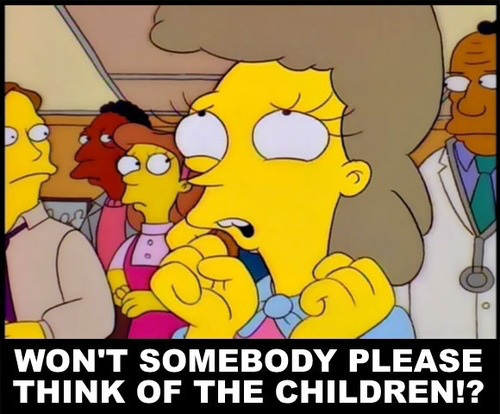
And ignore facts, history common sense and reality. Like so much of the Hamas-Israel Ethics Trian Wreck, this car has value unrelated to the war itself. Now we can understand why the Times op-eds are the way they are.
The Times just published a column by a recent edition to its stable of extreme woke pundits. Lydia Polgreen opines, in “This Photograph Demands an Answer,” that the news media should bombard the public with photographs that will flood readers’ minds with emotion, making rational, objective analysis difficult or impossible.
Many people may want to look away, to see the world as they prefer to see it. But what should we see when we see war? What should war demand all of us to see and understand? Given my experience in war zones, it is a rare thing for a violent image to stop me in my tracks. But I believe that this is an image that demands to be seen….And so I ask you to look at these children. They are not asleep. They are dead. They will not be part of the future. But know this: The children in the morgue photo could be any children. They could be Sudanese children caught in the crossfire between two feuding generals in Khartoum. They could be Syrian children crushed under Bashar al-Assad’s bombs. They could be Turkish children who died in their beds when a shoddily constructed apartment block collapsed upon them in an earthquake. They could be Ukrainian children slain by Russian shells. They could be Israeli children slaughtered in a kibbutz by Hamas. They could be American schoolchildren gunned down in a mass shooting. These children are ours.
In her own op-ed headlined “When to Show War’s Horrors,” New York Times opinion editor Kathleen Kingsbury argues that the Times was correct to refuse to publish the photo, writing in part, “There are reasonable people who would argue, as Lydia does, that showing this specific photograph is necessary to offer moral clarity around the stakes of this war and the pain it is inflicting on civilians in Gaza. Others, including supporters of the Palestinian cause, would see the same image and suggest that publishing it risked dehumanizing the children it depicted. And still others could ask why Times Opinion has not published similar graphic photographs of the Israeli babies killed in the Oct. 7 terrorist attacks.”
But by definition, the argument made by Polgreen is not reasonable. It is an argument that emotion should be the basis on which opinions and decisions are made when major issues are involved with far wider significance than a particular detail. Appealing to emotion doesn’t offer “moral clarity.” It encourages those being informed to default to abstract, idealistic positions divorced from reality, emulating the fatuous sentiments of “Imagine.” (I know I’ve referenced John Lennon’s silly ode to brainlessness a lot lately, but it epitomizes the logic and intellectual honesty—that is, none—of the Left’s sympathy for the Palestinians. It might as well be the theme song for all the protests.) Emotion is not morality, and appeals to emotion are not ethical.
I am willing to bet that Polgreen would argue that anti-abortion activists are unethical to use photographs of aborted last trimester babies in their promotional materials. But those are different in kind: the thrust of the pro-abortion movement is that only one human life is involved, that of the mother. Those images are essential to breaking through a fog of disinformation: dead innocent life is what the abortion debate is about. The Hamas-Israel war is not about children, and seeking to make it about children using visceral images doesn’t clarify the real issues but instead obscures them is irresponsible.
This, of course, is not even mentioned in Kingsbury’s piece; her main objection to an appeal to emotion is itself emotional: “I could not imagine loved ones discovering that this image had been published in The Times without warning.”
“History will very likely determine if I made the right call,” she concludes. What is that supposed to mean? I read it to mean, “If there is a ceasefire without the news media having to resort to publishing dead children photos, then my decision was the correct one.” This is pure consequentialism that endorses the concept that manipulative appeals to emotion are valid, if that’s the only way to achieve a desirable result.
The photo in question can be seen here.
 Ethics Alarms
This quotation has been swimming around in my head for the last several weeks and this seems to be the best place to use it.
Of course, I don’t know who said it (but I believe it was a Jew), it’s not a direct quotation, and my paraphrasing is probably even less eloquent than the original quotation, but here it is:
“We can forgive you for killing our children, but we can never forgive you for forcing us to kill yours.”
-Jut
Golda Mier according to the interwebs
Sounds about right.
Very relevant at this time.
-Jut
It makes no more sense than all the dimwits who espouse “moral equivalency” and promote “proportionality” in military response. Perhaps the most cogent observations on proportionality were penned by General W. T. Sherman, who knew that the fastest way to end a war was to make it as terrible as possible.
Hamas could end the killing today if they surrendered, illustrating that their desire to kill Jews and maintain power over the “Palestinians” clearly supersedes any care for the lives of their children. Anyone who supports Hamas is either evil or willfully ignorant, perhaps both.
“Hamas could end the killing today if they surrendered”
I don’t think so; Netanyahu has said they are dead. If I were in Hamas, surrender is not an option anymore.
-Jut
So, Jut, you could become a martyr!
Hamas is a death cult.
A good half of the Muzzies are a death cult. The joke is what’s he difference between a radical Muzzie and a moderate Muzzie? One blows himself up, the other is the one cheering him on for blowing himself up.
Queue that video of the woman from the Heritage Foundation who spoke about the “peaceful” Muslims being completely irrelevant.
I think that if Hamas surrendered and its leaders gave themselves up to the Israelis, they might survive. I don’t believe Israel is big on the death penalty — but they do make exceptions for genocidal maniacs.
I think it’s a moot point — I can’t see Hamas surrendering. They think forcing the Israelis to kill their civilians is a winning option for them.
Diego Garcia,
In case my reference was not clear, I was alluding to this:
https://www.ndtv.com/world-news/israel-prime-minister-benjamin-netanyahu-says-all-hamas-members-are-dead-men-walking-4514252
-Jut
Yes, I did see that statement. I just think it is not a total absolute if Hamas were to do something — totally out of character for them — to totally surrender to the Israelis.
I recall that for two or three years we were telling Japan that unconditional surrender was the only option, but in the end we accepted some just a bit less.
I don’t for a moment believe Hamas would do this, but I do think it’s something that Israel might be able to accept.
As I said, I think it is moot.
Hmmm, on the other hand, I am also recalling the 1972 Olympics. But no, that strengthens your point. Israel has historically had the strength to follow through on something like this.
Agreed. The HAMAS leader is calling shots from Qatar.
jvb
“…surrender is not an option anymore…”
Precisely. They would gladly sacrifice their children’s lives to delay their own deaths, or put another way they would not sacrifice their lives for their children’s lives. Death cult, indeed.
It was purportedly Robert E. Lee who said, after the Battle of Fredericksburg (I believe): “It is well that war is so terrible, else we should grow too fond of it.”
Yes, but there is a context to that quote. Lee said that after one of the few totally one-sided battles of the war, after the Army of the Potomac hurled themselves forward to be shot down without ever being able to effectively respond. So Lee was referring to a battle where the casualties were quite one-sided in the Confederate’s favor.
That was not the usual case during the Civil War, even for battles where one army was decisively defeated. Generally speaking there were a lot of battles where the two armies closed with each other and shot it out at close range until one side reached a breaking point. So you see significant casualties for both sides. Fredericksburg was the exception.
But, that makes it the perfect quote: after winning convincingly in battle, he still recognizes how terrible war is.
-Jut
But reason and rationality are rooted in Western Culture and that means Whiteness and therefore evil. I keep seeing this argument used. Emotion IS viewed as the proper way to analyze situations. It is what many cultures value. It is what our schools teach. Reason, truth, these are things of Western Civilization. They are also things that are more attractive to men than women, so reason and truth are toxic masculinity as well.
You may laugh, but these arguments are being made and are probably the majority opinion of schoolteachers.