Another “Nah, There’s No Mainstream Media Bias!” Smoking Gun: Trying to Pretend That Another Murder by an Illegal Immigrant Isn’t Blood on Biden’s Hands

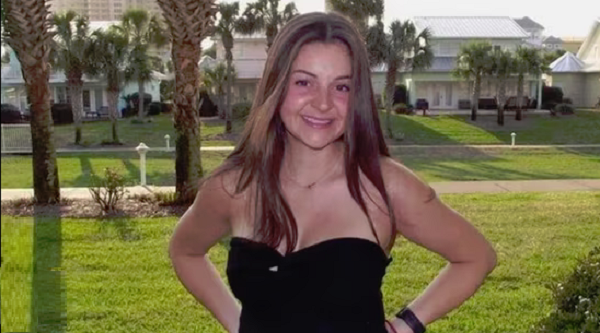
On today’s CNN’s “AC360,” host Anderson Cooper described the “horrifying” details of student Laken Hope Riley’s murder on the University of Georgia campus last week, then quickly pivoted to spinning that “the revelation the suspect was in this country unlawfully” had caused the murder to be “politicized.” Earlier, CNN’s Jake Tapper similarly adopted the “Republicans pounce!” tactic, saying “They’re seizing on this as an example of Biden’s failure to protect the American people and secure the border.”

Damn right, because that’s what it is. This death should be politicized: it’s Willie Horton all over again, except that Biden and the open-borders Democrats didn’t just goof by releasing one dangerous criminal to prey on the public, they have released many, and are releasing many more. Trump on Truth Social said the obvious, that Riley’s murder should’ve ‘never happened.’” Of course it should never have happened. Illegal immigrants shouldn’t be allowed to roam free, and this one had already been arrested more than once.

Continue reading

Did Oscar Hammerstein Jr. Have an Ethics Problem?

A series of random events have caused my mind to wander over to “Carousel,”the second musical by the legendary team of Richard Rodgers (music) and Oscar Hammerstein II (book and lyrics), following their ground-breaking “Oklahoma!” The 1945 work was adapted from Ferenc Molnár’s 1909 play “Liliom,” and although it is a favorite of most critics (declared by TIME as the best musical of the 20th Century, for example, but what does TIME know?), its plot and characters become more troubling the longer one thinks about them. Rodgers said it was his favorite of his musicals with Oscar, and he was definitely in top form; I think his Overture to “Carousel” may be the best thing he ever wrote.

For the “hero” of the musical, Billy Bigelow, is a thug, a dolt, and a domestic abuser. I found the musical hard to take even as a kid for those reasons. When, in his justly famous song “My Boy Bill” after learning that he is going to be a father, Billy suddenly realizes that he might end up with a daughter instead (this only occurs to the big dummy two-third of the way through), his immediate conclusion is that he’ll rob and steal if that’s what it takes to raise her. Sure enough, that’s what he does: ultimately Billy gets himself mixed up in a dumb robbery scheme that goes sideways, and he is killed. The whole show is about his bad decisions and an ultimate opportunity given to him by God (or someone) to leave Purgatory (where everyone has to polish stars) and go back to Earth for a day to try to clean up the mess he’s made.

Continue reading

Curmie’s Conjectures: Court Storming and the Absence of ‘Sprezzatura’

by Curmie

After the Wake Forest Demon Deacons beat the Duke Blue Devils 83-79 in basketball Saturday afternoon in Winston-Salem, hordes of Deac fans stormed the court .  Actually, the previous sentence isn’t quite accurate.  Video footage shows that several fans who had gathered under one of the baskets ran onto the court and were already at the free throw line before the game even ended.

These incidents are increasingly commonplace, abetted by television coverage of the events, even as the networks pretend to be appalled by the potential for injuries resulting from the practice.  Court-storming may be part of the culture of the sport, but there are—or at the very least should be—limits.  I have no problem with displays of post-adolescent exuberance, but the safety of players, coaches, and officials must be paramount.

The inevitable finally happened, and Duke star Kyle Filipowski was not merely jostled, but injured, in the melee, seriously enough that he had to be helped off the court.  As the recipient of a degree from the University of Kansas, I am morally and ethically obligated to despise all things related to Duke basketball 😉, but whereas I want them to lose every game, I don’t really want anyone to get hurt.

The exact extent of Filipowski’s injury is still unclear, but it certainly could affect both the Blue Devils’ chances for the rest of the season and post-season, and, importantly, Filipowski’s future.  He’s projected as a first-round draft choice, possibly even a lottery pick, in the upcoming NBA draft.  He stands to make tens of millions of dollars over the course of his career… assuming he can play.  There is such a thing as a career-ending injury, especially when we’re talking about knees, and that’s what this is; if this injury wasn’t severe, that’s only because of what Jack would call “moral luck.” 

The video shows that at least three different Wake Forest fans made contact with Filipowski as he was trying to leave the court.  Whether or not the bumping was “intentional” and “personal,” as Filipowski alleges, it was at best reckless and at worst criminal.  Let’s face it: the man is seven feet tall; it’s not like he couldn’t be seen.  The ethics of the situation, of course, would be the same if it had been a bench player, a student manager, a coach, or a referee who was injured.  The incident attracts more headlines because it was Kyle Filipowski who needed to be helped off the court, but the rationale for banning court storming would be the same. 

At least two other visiting players have been bumped into by opposing fans in court stormings this season.  One of them is Iowa’s Caitlin Clark , probably the most famous women’s basketball player in the country—even more so than WNBA stars.  She was “blind-sided” and actually knocked to the floor by an Ohio State fan in a court storming in Columbus. 

Imagine if she’d been seriously injured.  She wouldn’t have broken the NCAA scoring record for the women’s game, and she wouldn’t be closing in on the real record, held by Lynette Woodard.  (The NCAA wasn’t the organization in charge of the women’s game when Woodard played, and they’re being predictably petty, narcissistic, and anal retentive about recognizing Woodard.)

Oops.  Once again, I indulged in a little inaccuracy.  What I referred to above as “the inevitable” had long since happened, as ESPN’s William Weinbaum reports:

 In a 2004 court storm, Tucson H.S. star Joe Kay suffered a stroke & was partially paralyzed. “It’s way too long that we’ve been putting up with this,” Kay told ESPN Sat. after Duke’s Kyle Filipowski got hurt. “I’m completely in favor of banning court storms & field storms.”  Now 38, Kay said, “The police should arrest people for going places they are not allowed to go… enforce the rules as they do at other places. It’s exactly the same thing.” “Hopefully people will now come to their senses.”

The only thing that’s changed is that Filipowski is known by virtually all college basketball fans across the country, whereas Kay may have been a local celebrity, but folks like me in East Texas weren’t saying “OMG, Joe Kay got hurt in a court storm.”  Now, maybe, something will happen… but not unless the powers-that-be actually want it to, and that, despite the copious tut-tutting from the NCAA, conferences, universities, and the media, doesn’t seem to be the case.  Indeed, statements of concern and promises of future action from the likes of ACC commissioner Jim Phillips seem very much to be what my mom would call “balloon juice.”

Among those who have engaged in court storming this season, both in games in which their team beat Kentucky, were LSU women’s star Angel Reese and South Carolina President emeritus Harris Pastides, who even took to social media to boast about his participation.  The problem isn’t going to go away, even in the wake of an injury to a star player, unless there are real, enforceable, guidelines designed both to allow celebrations and to protect the visiting team.  And by “enforceable,” I mean sanctions that will be felt, not petty fines of a few thousand dollars to multimillion-dollar programs.

Jay Bilas, probably ESPN’s best analyst (and a former star big man for Duke himself), is outspoken about this issue:

“It’s got to stop but it’s not going to.  There’s no appetite in college basketball to stop it. The SEC has a rule against it but the institutions are happy to pay the fine because they like the visual. And the truth is, we in the media like the visual too.  We put it at the end of every highlight. Years ago, when people used to run out on the field or on the floor, we wouldn’t show it. That was our policy. We don’t have that kind of policies with court stormings. We like it. It’s not stopping and it’s a shame.

Duke coach Jon Scheyer said after the game that when he played, “at least it was 10 seconds and then you could storm the court. Now, it’s the buzzer doesn’t even go off and they’re running on the floor.” 

Ten seconds isn’t enough, but 30 probably is.  It wouldn’t be difficult to institute a rule that no fans are allowed onto the court, ever, until 30 seconds after the final buzzer.  The mechanism already exists in the 30-second clock; let it serve another purpose.  The home university can forbid court storming altogether, but they must enforce the ban for 30 seconds.  If fans want to celebrate on the court and the home team doesn’t object, so be it, but not until the officials and the opposing team are out of harm’s way.

And if fans are on the court before the game clock has expired, that should be a technical foul on the home team in addition to the other penalties.  Would it have mattered this weekend?  Duke would have had two free throws and the ball with about a second left in the game.  Could they have forced overtime or even won in regulation?  It’s extremely unlikely, but the chances wouldn’t have been quite zero.

Whatever the exact rules become, violations must be punished severely.  At present, neither the NCAA nor the ACC (in which Wake Forest and Duke play) have any specific sanctions at all in place for court storming.  The home university must be responsible for enforcing the rules; failure to do so should be punishable by a significant fine even for the first offense.  I’d suggest $500,000 for the first offense, with half paid to the NCAA or the conference and the other half to the opposing school.  Subsequent offenses within a 36-month period would involve stiffer fines, loss of scholarships, and perhaps a prohibition against post-season play.

Continue reading

A Relatively Minor Incident That Explains Why Nobody Can Trust Anybody in Politics, and Shouldn’t.

A robo call supposedly featuring President Biden urging New Hampshire Democrats not to vote in the state’s presidential primary was immediately used by the news media to accuse Republicans of suppressing votes, because, you know, that’s what they do. The media reported that two Texas companies were the source of the calls: Life Corporation and Lingo Telecom, and that the Federal Communications Commission (FCC) had issued cease-and-desist letters to both companies. Texas companies—well, we all know what THAT means.

Surprise! The deep-fake recording was not the work of those racist Republicans, but of a Democratic consultant who worked for Democrat Dean Phillips’s quixotic Presidential campaign. Phillips has the ethical mission of giving his party’s voters the opportunity to show that they would prefer not to have a rapidly declining dementia sufferer carry the Democratic banner in November.

Paul Carpenter, a New Orleans magician—that’s him doing street magic above— came forward to admit that he was hired to use artificial intelligence to impersonate President Joe Biden for the robocalls. Carpenter explained that he was hired in January by veteran Democratic consultant Steve Kramer, who has been advising Phillips. “I created the audio used in the robocall. I did not distribute it,” Carpenter said. “I was in a situation where someone offered me some money to do something, and I did it. There was no malicious intent. I didn’t know how it was going to be distributed.” He says he was paid $150.

Continue reading

Confronting My Biases, Episode 7: Buying Lottery Tickets

Interjecting itself before my planned first post this morning is the latest installment of the Ethics Alarms series in which your friendly neighborhood ethicist examines the biases that may make him (that is, me ) stupid, or not. At my local 7-11 just now on an emergency errand, I spied one of my next door neighbors purchasing lottery tickets. I have long suspected that he is an idiot, and this pretty much locked down my diagnosis.

Ethics Alarms has covered the issue of state lotteries extensively; you can see most of the results at this depressing tag. The most recent piece was in 2022, reacting to a CNN segment that declared state lotteries to be racist because a disproportionate percentage of the players are black. I believe that CNN’s analysis is racist, and I ended the post this way…

Continue reading

How Greedy Parents Pimp Out Their Daughters on the Web

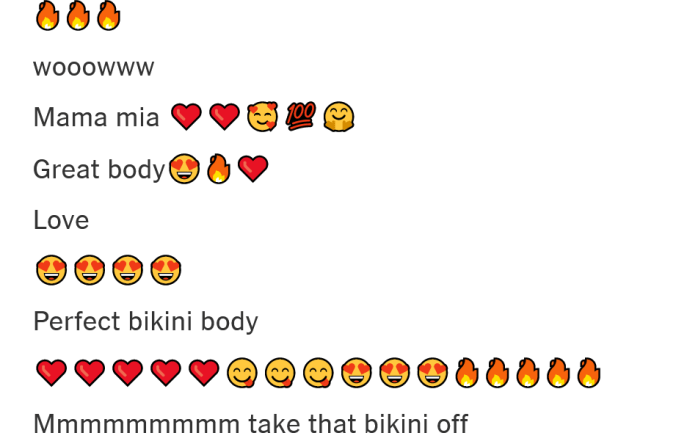
Those are some of the comments that the New York Times found on Instagram in response to the photo of a pretty nine-year-old girl posing in a bikini. Her parents posted the photo to attract attention, and they are not as rare as you might think. In one of the investigative reporting projects that periodically justifies the Times’ existence, the paper found many juvenile “Instagram influencers” whose accounts are managed by their parents. “Although the site prohibits children under 13, parents can open so-called mom-run accounts for them, and they can live on even when the girls become teenagers,” the story reports. “But what often starts as a parent’s effort to jump-start a child’s modeling career, or win favors from clothing brands, can quickly descend into a dark underworld dominated by adult men, many of whom openly admit on other platforms to being sexually attracted to children.”

Ethics Alarms has long taken the position that parents posting revealing, embarrassing or provocative photos of their children on the web without a child’s informed consent (and children cannot give informed consent) is per se unethical, and that was before even considering this disgusting phenomenon.

The Times examined thousands of such accounts with parents operating the sale of their daughters’ photos, exclusive chat sessions and even offering their girls’ worn leotards and cheerleading outfits to followers. It’s profitable, for the parents, and the girls don’t understand the implications of what they have been thrust into. Some customers—pedophiles—- spend thousands of dollars nurturing the underage relationships. A demographics firm hired by the Times found 32 million connections to male followers on the 5,000 accounts examined by the paper.

This is all ethics rot, an unforeseen consequence of the World Wide Web colliding with the same unethical instincts that prompt parents to guide their young children into modeling, acting, gymnastics and other sports for their vicarious pleasure and profits. Here is the worst news in the piece:

“The troubling interactions on Instagram come as social media companies increasingly dominate the cultural landscape and the internet is seen as a career path of its own. Nearly one in three preteens lists influencing as a career goal, and 11 percent of those born in Generation Z, between 1997 and 2012, describe themselves as influencers. The so-called creator economy surpasses $250 billion worldwide, according to Goldman Sachs, with U.S. brands spending more than $5 billion a year on influencers.”

What the Times found is not an internet problem but an irresponsible, incompetent, greedy and abusive parent problem that has been around as long as there have been families. Social media only is giving it a new and revolting place to thrive. I was especially annoyed by the response of one of the mother/pimps whose daughter has been promoted on the web from a young age. “But she’s been doing this so long now,” the mother says. “Her numbers are so big. What do we do? Just stop it and walk away?”

Yes, you stupid, stupid woman. Just stop it.

Do read the whole piece. It is long and horrifying. This link lets you avoid the paywall.

How Did California Conclude That It Could Constitutionally Ban the Possession of Billy Clubs?

A case out of the Golden State reaffirms my belief that there are too many unconstitutional laws around the country to count, and that a lot of them are passed by irresponsible legislators with their fingers crossed, hoping that the bogus government restrictions will slip through the judicial net.

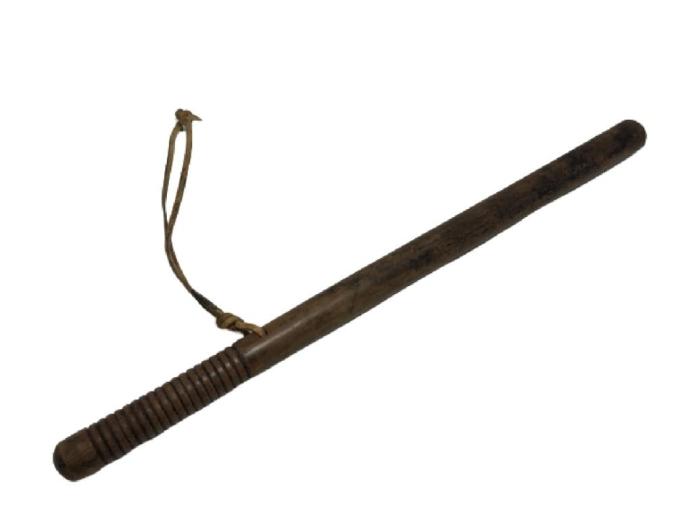
For example, did you know that a California law makes it a crime to simply possess or carry a billy club, which is basically a stick? That’s ridiculous, but there was such a law until it was struck down last week by a Judge Roger Benitez, a federal judge in San Diego, who ruled in Fouts v. Bonta that billy clubs are protected by the Second Amendment. Why wouldn’t they be? California really is estranged from basic American values and common sense. (The state’s billy club prohibition would make it illegal for a member of the LA Dodgers to walk to the stadium carrying his bat.) The core of the opinion is this:

This case is not about whether California can prohibit or restrict the use or possession of a billy for unlawful purposes…. Historically, the short wooden stick that police officers once carried on their beat was known as a billy or billy club. The term remains vague today and may encompass a metal baton, a little league bat, a wooden table leg, or a broken golf club shaft, all of which are weapons that could be used for self-defense but are less lethal than a firearm…not everybody wants to carry a firearm for self- defense. Some prefer less-lethal weapons. A billy is a less-lethal weapon that may be used for self-defense. It is a simple weapon that most anybody between the ages of eight and eighty can fashion from a wooden stick, or a clothes pole, or a dowel rod. One can easily imagine countless citizens carrying these weapons on daily walks and hikes to defend themselves against attacks by humans or animals. To give full life to the core right of self-defense, every law-abiding responsible individual citizen has a constitutionally protected right to keep and bear arms like the billy for lawful purposes.

In early America and today, the Second Amendment right of self-preservation permits a citizen to “‘repel force by force’ when ‘the intervention of society in his behalf, may be too late to prevent that injury.’” The Founders of our country anticipated that as our nation matured circumstances might make the previous recognition of rights undesirable or inadequate. For that event, the Founders provided a built-in vehicle by which the Constitution could be amended, but a single state, no matter how well intended, may not do so, and neither can this court.

What other unconstitutional laws are lurking out there, unchallenged?

The Chrystal Clanton Saga: I Don’t Understand This Story At All…

Does this make sense to you?

SCOTUS Justice Clarence Thomas has hired Crystal Clanton to be his law clerk beginning in the upcoming term. In 2015, when Clanton was 20 and working for Turning Point USA, she was accused of sending racist texts to a fellow employee. One alleged text read, “I HATE BLACK PEOPLE…Like fuck them all … I hate blacks. End of story.” The New Yorker’s Jane Mayer wrote about the texts in 2017 in an article about Turning Point USA, which is close with Thomas’s activist wife Ginni. Clanton wrote in an email to Mayer, “I have no recollection of these messages and they do not reflect what I believe or who I am and the same was true when I was a teenager.” The first aspect of the story I don’t understand: I am reading everywhere that Clanton didn’t deny writing the texts, which points to her guilt. I would say that stating that you don’t recall sending a message and that it isn’t something you believe, believed or would ever say is the equivalent of a denial.

Continue reading

Is It Too Much To Ask For Elected Officials, Journalists and Educators to Read, Understand and Respect the Constitution?

Apparently.

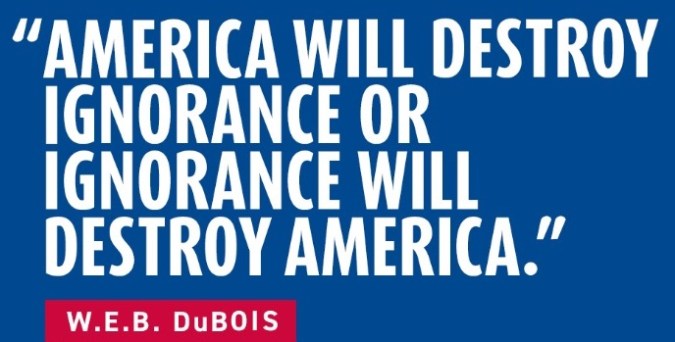
Sorry, W.E.B….

1. Politico national investigative correspondent Heidi Przybyla went on MSNBC (where reality goes to die) and smugly stated that an “extremist element” of Christian nationalists hold the nutty belief that rights “come from God” rather than the government. “They believe that our rights as Americans, as all human beings, don’t come from any earthly authority, Przybyla said during her appearance on MSNBC’s “All In With Chris Hayes.” “They don’t come from Congress. They don’t come from the Supreme Court. They come from God.”

This woman presumes to interpret political news for the public, and she doesn’t comprehend the Declaration of Independence or its activating document, the Constitution. Both are built on the philosophy of Locke and Rousseau that humans beings, by virtue of being alive, have intrinsic “unalienable rights,” and that governments may not take away those rights or infringe on them. It matters not whether “God,” “the Creator,” “Nature,” “Providence” or some other designation is used to describe the origin of those intrinsic rights, because the United States of America accepts the bedrock belief that government is limited in its ability to dictate to its constituents. Przybyla’s position, in addition to being stunningly ignorant, is the rejected concept that underlies monarchies and other totalitarian systems. Naturally Chris Hayes, poor man’s Rachel Maddow that he is, didn’t have the wit, guts or professionalism to point out to the reporter that she sounded like a complete ignoramus.

As an aside, I should probably post one of the “My Biases” essays about how quickly my respect for anyone plummets when they tell me that they watch MSNBC. The network will literally make you dumber the as you watch it. How anyone qualified to do something more challenging in life than running a bait shop could be so naive as to trust an alleged news source that employs Al Sharpton and Joy Reid is a constant mystery to me.

The question is, how many journalists, prominent pundits and U.S. citizens are just as addled as Przybyla? Remember, these are the people who are screaming about wanting to save democracy from Donald Trump, but they embrace Przybyla’s anti-democratic concept of human rights.

Continue reading

Ethics Quiz: The Gratuitous Diagnosis

I am 100% on the other side of an ethics question recently raised for the New York Times’ ethics advice maven, “The Ethicist.” You tell me which of us you think is right.

Details aside, the inquirer asked if he should, as a retired neurologist, tell a woman he admittedly barely knows but whom he has been in frequent contact with recently that he believes she has Parkinson’s Disease…

….There’s been no occasion to mention my professional background, and I’m now uncertain about whether I should tell her about it and my clinical impressions. Her disease, at its current stage, is likely to be successfully managed with oral medication. However, it is neither obvious that she will have access to skilled neurological care nor that she will be willing to seek it. And a new diagnosis of Parkinson’s, without prompt treatment, on top of her recent loss and the challenges that have followed, may further overwhelm her. My wife is in favor of my informing her, because treatment would benefit her quality of life. I’m hesitant, as there has been no invitation to become more involved in her personal life, and I cannot provide her with a supportive doctor-patient relationship. What would you recommend?

I’ll tell you which of us ethicists believe what after you’ve formulated your own answer. For now, Your Ethics Alarms Ethics Quiz of the Day is,

What would YOU recommend?

Continue reading