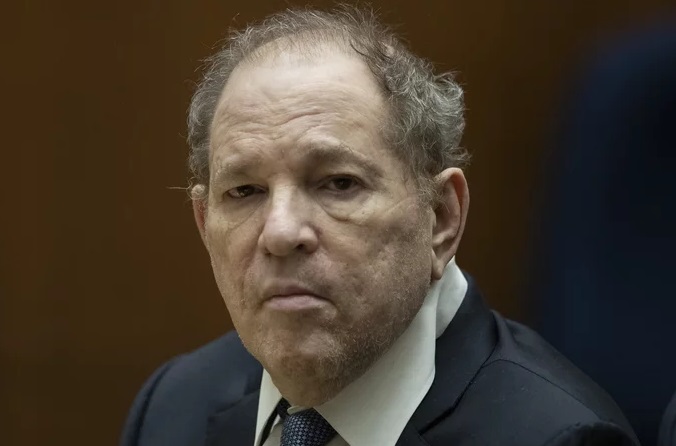
The New York Court of Appeals overturned the felony sex crimes conviction of Hollywood producer Harvey Weinstein yesterday. The 4-to-3 decision held that the trial judge deprived him of his right to a fair trial in 2020 when he allowed prosecutors to call witnesses who said Weinstein had sexually assaulted them despite the assaults having never been charged as crimes or proven to have occurred. Using allegations of past bad acts to prove guilt in a criminal trial is generally forbidden in New York and other U.S. jurisdictions with limited exceptions. Since Harvey is already serving a prison sentence for another set of crimes that will keep him locked away until he is almost 90, the decision is more symbolic than useful to Weinstein. But it still needed to be made.
Observations:
1. Manhattan district attorney Alvin L. Bragg announced that he would seek to prosecute Weinstein again, saying through a spokeswoman, “We will do everything in our power to retry this case, and remain steadfast in our commitment to survivors of sexual assault.” Unethical, but we knew that about Bragg anyway. Prosecutors are obligated to enforce the law, not to have favorite groups they enforce the law to please, protect or benefit. He has no legitimate “commitment” to survivors [that’s wokespeak for “victims’] of sexual assault, but because he thinks he does, he paid no attention to Weinstein’s rights as a citizen.
2. That tactic they used to convict Weinstein is absolutely unethical and wrong. Is there a difference between what was done at his trial and having Bill Cosby’s victims testify at Bill’s trial (which was overturned anyway), or at the trial of Dr. Larry Nasser? Right now I don’t have time to check.
3. The short version of the rationale and authority for the opinion:
Every person accused of a crime is constitutionally presumed innocent and entitled to a fair trial and the opportunity to present a defense (see U.S. Const Amend VI, XIV; NY Const art I, § 6; Estelle v Williams, 425 US 501, 503 [1976] [“The right to a fair trial is a fundamental liberty secured by the Fourteenth Amendment” and “(t)he presumption of innocence, although not articulated in the Constitution, is a basic component of a fair trial under our system of criminal justice”]…Under our system of justice, the accused has a right to be held to account only for the crime charged and, thus, allegations of prior bad acts may not be admitted against them
for the sole purpose of establishing their propensity for criminality (see People v Molineux, 168 NY 264 [1901]). Nor may the prosecution use “prior convictions or proof of the prior commission of specific, criminal, vicious or immoral acts” other than to impeach the accused’s credibility (People v Sandoval, 34 NY2d 371, 374 [1974]). It is our solemn duty
to diligently guard these rights regardless of the crime charged, the reputation of the accused, or the pressure to convict (see Boyd v United States, 116 US 616, 635 [1886] [“It is the duty of courts to be watchful for the constitutional rights of the citizen, and against any stealthy encroachments thereon”]).
To which I respond: “Bingo!”
4. The two dissents are profoundly disturbing. They both boil down to “the ends should justify the means”: sexual exploitation and assault like Weinstein’s, taking advantage of vulnerable young actresses is terrible and Harvey is terrible, so the courts being sticklers for basic rights will just make it harder to nail these powerful men, because we don’t yet “believe all women.” It is terrifying that anyone who views the law this way can end up as a judge on a state’s highest court. This is what Donald Trump faces. Good luck with that.
 Ethics Alarms
This is more consequence of the incompetence crisis in America. These prosecutors and judges don’t know their job or the law. They play it fast and loose and society loses. It wasn’t the judges that overturned the Weinstein conviction, it was the arrogance and incompetence of the prosecutors. In any workable system, they would be forced to resign for such behavior.
Michael R. said:
This is more consequence of the incompetence crisis in America. These prosecutors and judges don’t know their job or the law.
I wonder if it is incompetence or studied rejection of Western legal theory? Jack discussed an “ends justify the means” rationale, which is just utilitarianism writ large. The problem is, applying such a philosophy in law rejects the legal rights of the individual in favor of highly subjective social benefit.
The problem with this is that the U.S. Constitution does not recognize social benefit as a more valuable construct than the individual rights of persons, particularly in the criminal context. Social benefit, for example, may be gleaned by an excessively cruel and/or unusual punishment designed to place potential offenders in great fear of the consequences of such an offense. Fortunately, our Constitution explicitly rejects this utilitarian exercise.
So what we have here, in the dissent, is in fact a rejection of the Constitution’s protection of criminal defendant’s legal process in favor of a preferred “fair” outcome for the victims — past, present, and future. We see exactly the same theories at work in the lawfare against Donald Trump.
From what I can tell, they thought it would be legal because NY has a law that allows such testimony under certain circumstances. The prosecutors were not competent or diligent enough to understand that law before they tried to use it.
I am trying to find the explanation of it, but an example is that if someone was being charged for burglarizing a house. They have video of the suspect’s truck through the back fence of a yard and into the sliding glass door, a person about the same height and build of the suspect gets out, burglarizes the house, and leaves. The suspect claims that their truck was stolen, but they found it just before the police pulled them over and arrested them. The prosecutor could enter into evidence the fact that the suspect had been convicted of driving his truck through the back fence and into the sliding glass doors of three previous homes when he burglarized them, but he could NOT just bring up the fact that he had burglarized homes previously. The very unique way he burglarized homes is the factor that is allowed and they didn’t understand that.
Any mention of “believe all women” should immediately require an explanation of the Trevor Bauer case.
It won’t matter to morons at large, just as here the law didn’t matter to the prosecution, nor did the Constitution to the NY judge who’s (head exploding) story is making the rounds of the 2A community.
For these people to be in these positions means The Great Stupid was in full swing for at least a generation before Jack officially named it.