Major League Baseball’s absurd and self-wounding decision to lump all of the old Negro League season and career statistics in with those of its own players is impossible to defend logically or ethically. Ethics Alarms discussed this debacle of racial pandering here, three days ago. What is interesting—Interesting? Perhaps disturbing would be a better word—is how few baseball experts, statisticians, historians, players and fans are defending this indefensible decision or criticizing it. As to the latter, they simply don’t have the guts; they are terrified of being called racists. Regarding the former, there is really no good argument to be made. MLB’s groveling and pandering should call for baseball’s version of a welter of “It’s OK to be white” banners and signs at the games. Instead, both the sport and society itself is treating this “it isn’t what it is” classic like a particularly odoriferous fart in an elevator. Apparently it’s impolite to call attention to it.
As I mentioned in the comment thread to the first post, I saw a black CNN newsreader say that “Negro League stars have finally been given their rightful place in baseball’s record books.” As I ponder this, I bet the woman and whoever wrote her copy know little or nothing about the Negro Leagues, baseball records or why this was done. It is, therefore, another version of fake news. The real news, if it was reported in a manner that even casual or non-baseball fans could understand as well as telling them what they need to know about the society they live in, is that one of the U.S.’s most prominent professional sports has chosen to deliberately destroy the integrity of its own statistics and history in an effort to pretend that an ugly part of America’s history never occurred.
If you doubt for a nanosecond that this is the case, the revelation in today’s Athletic (the online sports publication that the New York Times bought because it was cheaper than maintaining its own sports department) should enlighten you. The article by long-time MLB pundit and authority Jason Stark entitled “Did Satchel Paige throw more no-hitters than Nolan Ryan? As MLB adds Negro League stats, it’s unclear” asks this question:
“How could the league add all of the career and season records to the hallowed official numbers of baseball despite the slight technicality that it literally can’t total up the numbers of all the games that produced those records?”
It can’t, obviously. The question answers itself. Give Stark at least credit for adding the sarcastic words “slight technicality” to that question. (His article is full of such cute rhetorical ambiguity. The Negro League statistics are described as “remarkable,” for example.) The “answer” he is able to offer his readers is even more damning than the question. Elias Sports Bureau’s John Labombarda, one of the members of the Negro Leagues Statistical Review Committee that inflicted this pack of lies on the sport, told him that the committee made a “fundamental decision” that made that trick possible: “Really, we’re just trying to concentrate on the information we have more than the information that we don’t have.” Oh. What? If you don’t have the game box scores that contain the information that the statistics that are supposedly represented reflected in the Negro League career statistics, then you can’t validate the career statistics. If you can’t validate those career statistics, then you don’t “have them.”
Stark, again being sarcastic but slyly enough so he can deny it when he’s accused of being a racist, comments, “Great idea.” I believe and hope that means “Riiiiight.”
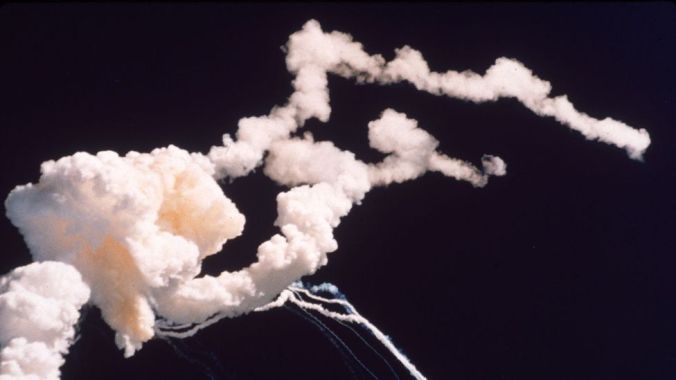
The only objective conclusion one can reach from reading Stark’s article was that the decision to merge the Negro League statistics with MLB’s statistics was driven by exactly the same kind of results-driven thinking and rationalizations that caused the Challenger disaster. But this decision didn’t kill anyone, or destroy the space program. All it did is ruin baseball history’s integrity. It was worth it, though, because a lifetime hood overdosing on fentanyl resisted arrest in Minneapolis and found himself under the knee of a brutal white cop.
That makes no sense to me, because it makes no sense. I don’t think it makes sense to Jason Stark either, but he doesn’t have the courage to to say so.
 Ethics Alarms
Again, all they had to do was put them up along side MLB’s records. Plaster the Negro League’s numbers all over MLB’s website if they want. But at least fans can learn and grasp and discern for themselves the differences between a season and career of a Negro League player vs. a MLB player.
But no.
They arent doing anyone any justice here. The Negro Leagues can surely stand on their own. They dont need MLB to diminsh their achievements by throwing thier numbers into MLB’s. I bet most of those players would say, “Hell no man! I couldnt play in your game then to actually prove myself! Well I sure as hell dont want to be in it now as some cheap ass afterthought!”
Its as nonsensical as inserting 1898’s season stats into 2023’s. Those players cant help they werent around in 2023? Their existential fate had them in alive in a dead ball mind era with inferior equipment. That’s not fair? So Willie Keeler led the league in batting in 2023 with a .385 average. Into the record books it goes! There! Poor 19th century man. Fixed! Now he is whole.
MLB is a joke.
“they simply don’t have the guts; they are terrified of being called racists.”
I think I am fairly good at spinning things. I don’t know if it is a skill, or just a mind-set that allows you to avoid the mental pitfalls that lock you into a specific point of view. I expect that a lot of people who would call people racists lack this ability because their mind gets locked into the racism narrative.
With respect to this controversy, I have been able to formulate a few observations that insulate me from accusations of racism by framing the issue in such a way that it does not fit nicely into the pre-conceived boxes in one’s head:
I particularly like the last one. I was not a huge fan of the retiring of Robinson’s number league-wide because it seemed like pandering. But, Jackie Robinson’s breaking of the color barrier was an unquestionably significant event in the history of the MLB and the country. Retiring his number served as a reminder of where we were and how we got to where we are. And, to some extent, it was kind of a penance for MLB admit openly that its past was flawed in much of the same way as the rest of the country was at the time.
Integrating the Negro League records cheapens Jackie Robinson’s legacy.
-Jut