Incompetence or bigotry?
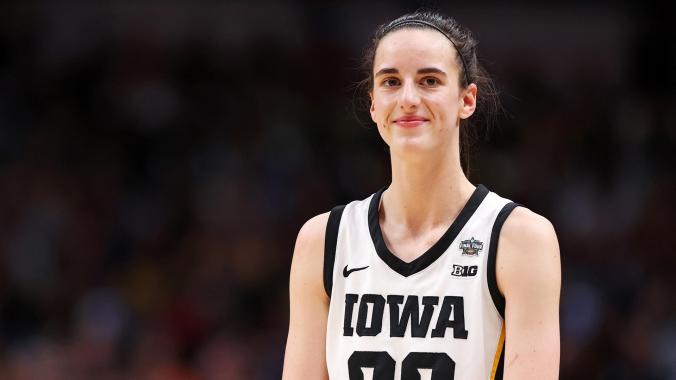
Over the weekend the announcement came out that Caitlin Clark was not on the roster for the USA women’s basketball Olympic team for the games in Paris. This seemed, and seems, strange to put it mildly. Clark, a rookie this season, is by far the most famous, publicized and popular professional women’s basketball player of all time, as well as the most important. Her stellar performance as a college player led her to be the obvious #1 first round draft pick in the WNBA draft, and her presence in Indiana Fever games has led to a significant spike in attendance, TV ratings and public interest. The Olympic Games are mostly publicity for the league and the sport: once professionals were permitted to play, the U.S. women’s team has been unbeatable for decades. It would win the gold if the Olympics team coach picked the names of the team member out of a hat. But having the league’s charismatic rookie play would guarantee more interest in the sport during the Paris Games this summer, which logically should translate into more attention—popularity, TV ratings, money—for the sport itself.
So why isn’t Clark on the team?
No whistleblowers have come forward, but there is a strong suspicion that the reason is pure bigotry, reverse DEI in action. Clark is white, and the WNBA has less than 25% players of non-color. More to the point, Clark is “cis,” as in “not a lesbian,” and the combination of pallor and non-rainbow sexual proclivities makes her a unicorn on the court. And quite possibly a pariah.
There has already been plenty of circumstantial evidence that Clark is unpopular with the players in her own league for reasons unrelated to her character: envy maybe? Jealousy? The belief that she is so popular because she is white and straight? (I’m sure those qualities have a lot to do with her popularity, but so what? I thought being able to identify with “people who look like you” was a legitimate goal in the entertainment business. The majority of potential women’s basketball fans are still white and un-gay.)
Meanwhile, Phoenix Mercury center Brittney Griner was, again, chosen for the squad. She’s an outstanding player. She also is a vocal anti-American player who enjoyed “taking a knee” during the National Anthem. She got herself arrested for smuggling illegal drugs into Russia and getting caught, causing an international incident that required the country she regards as so racist to trade a dangerous international arms dealer serving a 25-year sentence to free her.
I wouldn’t watch a WNBA team with Griner on it if you stapled my eyelids to my forehead. (Okay, okay, I wouldn’t watch a WNBA game anyway.)
The snubbing of Clark for the Olympic team is either malicious or astoundingly stupid. If there is a third explanation, I’d love to hear it.
 Ethics Alarms
While I agree with many of the points you have made regarding Clark’s entry into the WNBA (I think jealousy has a lot to do with it regarding her fellow players, outrage with others), I actually think it was reasonable to leave her off of the Olympic roster, the main stat leading to this conclusion being turnovers. Although she is still a prolific scorer, she also leads the WNBA in turnovers, which means she hasn’t adapted yet to the increase in talent around her. Remember, a month ago she was playing college basketball and faced, maybe, one pro-quality athlete per game. Now she plays against players who are bigger, stronger and more experienced. They are better able to anticipate where she will go with the ball, resulting in turnovers.
She will eventually be a great player, and make Olympic teams, but right now the only justification to put her on the team would be her popularity. As a sports fan yourself, you have to know that popularity should never be the reason to put a player on a non-allstar game roster.
I actually, for probably the first time, agree with Jemelle Hill on this issue. Clark has been playing non-stop since November(?). She went strait from playing in the National Championship to playing in the WNBA. She could actually benefit from the Olympic break.
This is my comment I thought hadn’t gone through. Sorry to all about repeating myself below.
I’ve read several stories on this. I think most objective observers think she ought to have been on the team. Diana Taurasi, now 42, apparently was first on the team at age 22, roughly where Clark is today, and is now going for her sixth gold.
Yes, Clark has faced an adjustment playing in the WNBA. Not only is she playing against much more talented players, for the most part, but she is playing with a relatively bad team (there’s a reason that team got to pick first). Iowa wasn’t stocked full of professional caliber players, but they were an excellent team overall.
It is a generational missed opportunity for the sport, both the Olympic team and the WNBA (and women’s basketball in general). She is not the player she will be in the future, but she would certainly benefit from playing in the Olympics, and more importantly the sport would benefit even more. If WNBA viewership has tripled or more this season, you cannot tell me that the Olympics wouldn’t draw a lot more viewers with Clark present.
As far as Clark playing straight through since November, I’m afraid that has been typical for WNBA players. They play the WNBA season, then go overseas to play during the off season, or a lot of them do. The WNBA just can’t pay enough for them to only play there. Why do you think Griner was in Russia to start with?
One other thing — yes, it’s going to be a tough adjustment when you first get to the WNBA. But think of the adjustment baseball players have to make when they start using a wooden bat for the first time in their lives. That’s got to be a shock as well.
Caitlin Clark.
-Jut
“Get the brick” (Jack knows)
Indeed I do.
See, now THAT was incompetence, not malice. I was thinking of CNN anchor “Kaitlan” Collins, she of the ridiculously precious spelling.
Fixed.
I saw an argument that because she’s probably not yet at the same level as established pros–rookies seldom are–that she’d get little playing time, and that would make her fans upset.
There are two problems here. The less obvious one is that the US team is so dominant that a fair number of their games will be blowouts, and any coach worth a damn will clear the bench in such situations.
The more obvious problem is that the solution to potential fan displeasure at CC’s relatively little playing time does not seem to me to be to give her none at all.
Side note: the official team tryout was during the women’s final four, so she was otherwise engaged and couldn’t attend. Sure seems to me like that was intentional.
I think the commentary of veteran sportswriter Christine Brennan is apt: “I’ve seen some bad team and athlete selection decisions in the 40 years I’ve covered the Olympics, but this is the worst by far. Then again, we probably shouldn’t be surprised. As we’ve known for years, the last amateurs left in the Olympic Games are the people running them.”
I think the Olympic tryouts were more a problem of scheduling for women’s sports in general. I don’t know about the NHL, but I can’t think of another sport where players go from college to draft to professional play in the course of a month. The tryouts were before the WNBA season. Caitlin Clark had no “before the WNBA season” because she went from the National Championship to the draft to preseason in the course of a month. I don’t think any league would delay training camp and season to accommodate one player.
“I can’t think of another sport where players go from college to draft to professional play in the course of a month.”
It’s relatively minor sport in terms of fan interest (although I’m a fan), but the Professional Lacrosse League holds its draft during the college season, and several players in the NCAA championship game were on the field for their pro teams less than a week later.
I don’t know the exact timing, but MLB holds its draft in June (July?) and I think there are some folks who get signed fairly quickly. Now none of them are going to start in the majors, but are they eligible to play in the minor leagues once signed? Certainly the season would already be in full swing, but I’m sure there are a lot of guys who have finished either their high school or college eligibility and are immediately eligible to play somewhere.
After doing a bit of checking, yes it appears players can immediately join the farm system. And there have been a few players who went straight to the majors the year they were drafted.
I don’t follow the WNBA, which is not surprising because I don’t really follow sports all that much (when our son was club swimming at an extremely high level with lots of colleges looking at him, I was more engaged in collegiate and Olympic swimming, but I also like swimming so I followed it . . .) but I wonder if there is a corollary to the “Miracle on Ice” where the US Olympic hockey coach didn’t want the best hockey players but the best overall hockey team.
I don’t know the women’s players but I generally familiar with the men’s players. I don’t watch the games and have very little (if any) interest in basketball. I do have to say that I took great satisfaction when I beat our son in a one-on-one game in our driveway. I frickin’ dominated the paint that day. Yes, I did. I still throw it in his face when he gets all uppity and high-fallutin’ (well, he was 9 years old at the time . . .) . . .
jvb
I thought about this too, John. If the lesbians and blacks and the “club” in the WNBA are not inclined to be welcoming to Clark, isn’t that a valid reason to keep her off the team?
But wouldn’t that also have been a reason to keep Jackie Robinson off the Dodgers roster?
That is an interesting angle. I am not sure of the answer, though. I saw Stephen Smith lambasted the Olympic committee for not selecting her for the team.
jvb
I commented once, but for some reason it didn’t go through so I will try again.
Although Clark draws large crowds and is the most visible player in the WNBA, she is not ready for the Olympic team. Although she is still the prolific scorer she was in college, she also leads the league in turnovers, which means she hasn’t yet adapted to the level of competition that she faces in the WNBA.
Remember, 2 months ago she was playing in the NCAA national Championship. She went from playing against teams that may have one pro-level talent, to playing entire rosters of pro-level players. The players she plays against now are bigger, stronger and more experienced and it shows.
I suspect that by the end of this season she will adapt, but she needs some time. The Olympic selection shouldn’t be about picking the most popular players (this isn’t and All-Star game) but about the most capable players.
I also agree (for once) with Jemelle Hill when she said that what Caitlin needs more than the Olympics is some time off. She has been playing since November(?) and went straight from her college season to playing professionally, a quirk of scheduling. She will make future Olympic and All-Star rosters, but she simply isn’t ready yet.
I’m sorry that first comment got hung up in WordPress Hell: I’ve included it to go along with your re-do. All of your commentary on this issue is helpful. I apologize for my publisher….
Sorry, I was a little quick to rewrite my comment. I will pause a little longer next time.
Just email me (jamproethics@verizon.net) when a comment gets eaten.
<i>I don’t know about the NHL, but I can’t think of another sport where players go from college to draft to professional play in the course of a month.</i>
Doesn’t happen in the NHL, either. North American draft-eligible players are 18-20 years old (European players are draft eligible 18-21 years old). Mind you, those kids have been playing high-level hockey for years in various youth and junior programs.
Being drafted is no guarantee that the player will get a contract. It simply means the drafting team holds their rights for the next seven years (yes, those rights can be traded). Some drafted players continue playing junior hockey; some continue to play in college – the NCAA has a very active hockey development program. The odds-on favorite to be the first pick in the 2024 draft, a kid named Macklin Celebrini, is an amazing player who currently plays for Boston University and is likely to do so for at least another year. He’s just about to turn 18.
Drafted players who are progressing well may be offered contracts in the American Hockey League, which is equivalent to AAA baseball and serves as a development and depth pool for their related NHL franchises. Some are contracted by the AHL team; some are put on a two-way contract, which means the big team owns the rights but the player is likely going to spend most of their time in the AHL, with a salary about a tenth of the NHL entry level contract value (don’t weep for them. It’s about $80K/year and that’s not bad dough for a kid who just turned 20).
Usually takes several years of development in the various ranks to be ready to skate in the NHL. There are a rare few who jump immediately; Connor Bedard, drafted by Chicago in 2023 as the number one pick, made it to the Blackhawks in his first year under contract. But he’s what’s considered a generational player.
I cannot comment intelligently on this subject and many of the subjects addressed in your blogs. That is why I enjoy reading your and your readers comments about these subjects, such as sports (all sports), politics, laws, history (world and American). I’m afraid I’ve not done due diligence to all these and am embarrassed to say so but I guess better late than never is applicable here. Thanks for the education, I never worked to gain, to Jack and his commenters. May you all continue to share your knowledge with all us, as Hilary described, uneducated unredeemable individuals. By the way, she failed to offend me because I consider her the lesser since I see my ignorance but she doesn’t.
First they came for the white heterpsexual male, now we exclide the white heterosexual female, who is a minority in the league itself. Is there no end to this lunacy?
“The majority of potential women’s basketball fans are still white and un-gay.” Hmm. Objection? Assumes facts not in evidence?
I get such a kick out of everything having to “look like America.” So, the NBA should be what, thirteen percent black? If people have to see themselves reflected in everything (like TV commercials) why are the fans enthusiastically attending NBA games, and NFL games, and MLB games (at great to not inconsequential expense) almost uniformly, uh, white? And it seems every team has to have at least one, token white guy. Thank God the white guys from Eastern Europe are massive and they can play. It just reminds me of when teams used to have token black guys.
If the lesbian women in the WNBA are pissed off because Caitlin Clark is not a lesbian, then…uh…wait a minute. So they’re angry because she chose to be straight and have a boyfriend? Oooohhh…so being gay IS a choice…and they want Ms. Clark to make that choice rather than just living out “the way she was born?”
You can’t have it both ways. The women in the WNBA can’t say “it’s not a choice because I was born this way” when they want to justify their own proclivities, then turn around and be angry with Ms. Clark – who apparently was “born straight” – for simply choosing to act based on the way she was born.
A person is either born with a sexual tendency or he/she chooses it. Which is it?
Shhhh. A distinction that must not be made. Bad!
I think an argument can be made that she should’ve been picked over the 42-year old Taurasi, except there are several other players that are not rookies with better performances who were also overlooked. Arike Ogunbowale has far better stats than Clark, is not a rookie, and was also snubbed. So if Taurasi were to step away, Ogunbowale would be the first merit-based replacement that should be considered.
The biggest argument for Clark’s inclusion seems to be her popularity, but when we argue for merit as the driving factor in teams like this, including someone because they are popular but have inferior experience and overall basketball performance would be a curious argument for conservatives to make, yet I’ve seen it over and over. One expects something like that from the Left, as ends always justify the means with them it seems.
Ultimately, the decision to leave of Clark is entirely defensible on the merits (i.e. her play). It is indefensible in terms of getting eyeballs on the game, but is that really to be the criteria for the Olympics? Maybe it is, but then maybe it’s not (and I don’t think it should be). It’s bad enough that Taurasi got picked, because her choice is statistically questionable although her career leadership ability is undeniable and can’t be ignored.
It’s a tough old world. Clark has a case, but not a particularly strong one based on her performance in the WNBA so far, and she has a lot of arguably stronger competition in that department. There are also things like team makeup to be considered, and this team is already very guard-heavy.
The snub of Clark may have been race-based, ethnicity-based, or sexuality-based. But even if that were so, there are strong merit-based reasons not to pick her, and nobody seems to be fessing up to the other three.
“It is indefensible in terms of getting eyeballs on the game, but is that really to be the criteria for the Olympics?”
For a professional sport trying to build a following with a once-in-generation chance to attract the “What’s all the fuss about?” viewer, on a team that is going to win anyway and that typically has blow-out wins in the Olympics about as exciting as when the Red Sox play their annual Spring Training game against Holy Cross?
Yes, that should be the criteria.
I’m old fashioned, I guess. I think merit should be the criteria, and the eyeballs be damned.