Just Stop. The Left’s Propaganda Machine Keeps Pretending Dr. Fauci Is a Hero When He’s the Exact Opposite


Stephen Colbert is really is beneath contempt. His late night show proudly promoted the guest appearance of Anthony Fauci last week, which is roughly the equivalent of cheering for the Sackler family. This is one of the subtle ways—not so subtle, really—that the media pimps for Democrats and the party’s agenda (“The Government knows best, proles!”) Colbert only has guests that align with the Axis; Nancy Pelosi was another recent guest, and the producers obviously have no interest in presenting anyone who isn’t fully part of the “team.” They also don’t have any interest in entertaining audience members who, having paid attention and having not been brainwashed, know the likes of Pelosi and Fauci for what they are.

Fauci, however, is a far more nauseating and unforgivable object of fawning idolatry than even Pelosi. He’s a certifiable, no-contest ethics villain: incompetent, irresponsible, dishonest, hypocritical, an abuser of power, position and influence, and the perfect poster boy for the fake “Trust the science!” mantra that the Left has weaponized for political gain.

Continue reading

Umpire Ethics: Robo-Ump Update and “Oh-oh!”

Regular readers here know about both my passion for baseball and my disgust with how many games are determined by obviously wrong home plate calls on balls and strikes. Statistics purportedly show that umpires as a group are correct with their ball/strike edicts about 93% of the time, representing a significant improvement since electronic pitch-tracking was instituted in 2008. What explains the improvement? That’s simple: umpires started bearing down once they knew that their mistakes could be recorded and compiled. In 2008, strikes were called correctly about 84% of the time, which, as someone who has watched too many games to count, surprises me not at all.

Even 93% is unacceptable. It means that there is a wrong call once every 3.6 plate appearances, and any one of those mistakes could change the game’s outcome. Usually it’s impossible to tell when it has, because the missed call was part of a chaos-driven sequence diverging from the chain of events that may have flowed from the right call in ways that can’t possibly be determined after the fact. Sometimes it is obvious, as in several games I’ve seen this season. An umpire calls what was clearly strike three a ball, and the lucky batter hits a home run on the next pitch.

Before every game was televised with slo-mo technology and replays, this didn’t hurt the game or the perception of its integrity because there was no record of the mistakes. (Sometimes it wasn’t even a mistake: umpires would punish batters for complaining about their pitch-calling by deliberately declaring them out on strikes on pitches outside the strike zone.) Now, however, a missed strike call that determines a game is both infuriating and inexcusable. As with bad out calls on the bases and missed home run calls, the technology exists to fix the problem.

Baseball only installed a replay challenge system after the worst scenario for a missed call: a perfect game—no hits, runs or base-runners—was wiped out by a terrible safe call at first on what should have been the last out of the game. The game was on national TV; the missed call was indisputable. That clinched it, and a replay challenge system was quickly instituted. I long assumed that robo-umps would only be instituted after an obviously terrible strike call changed the course of a World Series or play-off game, embarrassing Major League Baseball. For once, the sport isn’t waiting for that horse to leave before fixing the barn door. It has been testing an automated balls and strikes system (ABS) in the minor leagues for several years now. Good. That means that some kind of automated ball and strike system is inevitable.

Continue reading

Curmie’s Conjectures: Book Reviews and the Warm Fuzzies

by Curmie

[This is Jack: I have to insert an introduction here. Curmie’s headline is fine, but it would come under the Ethics Alarms “Is We Getting Dumber?” or “Tales of the Great Stupid” banners if I had composed it. What he is describing is a culture-wide phenomenon that is far more insidious than its effects on scholarly book reviews alone. I also want to salute Curmie for slyly paying homage in his section about typos to one of my own most common and annoying typos. I know it was no coincidence.]

I published my first book review in an academic journal in 1991.  In all, I’ve written about 30 reviews on a wide range of topics for about a dozen different publications.  In some cases, I was only marginally qualified in the subdiscipline in question.  In others, especially more recently, I’ve been a legitimate authority, as well as being a full Professor (or Professor emeritus) rather than a grad student or rather green Assistant Professor.

The process has changed significantly in recent years, the biggest change being the increased level of editorial scrutiny.  A generation or more ago, I’d send in a review and it would be printed as written.  That was back when I was an early-career scholar, at one point even without a terminal degree, often writing about topics on the periphery of my interests and expertise.  My most recent reviews, when I was a senior scholar writing about subjects in my proverbial wheelhouse, went through three or four drafts before they were deemed publishable.  Note: I didn’t become more ignorant or a worse writer in the interim.

Some of the changes came indirectly, no doubt, from the publishers rather than the editors: I received the same stupid comment—to include the chapter number rather than a descriptor like “longest” or “most interesting”—from book review editors from two different journals published by the same firm.  Actually, one of those “corrections” wasn’t from the book review editor himself, but was a snarky comment from his grad assistant.  You can imagine how much I appreciated being condescended to by a grad student.  Other changes were just kind of dumb: one editor insisted that I change “whereas” to “while” (“whereas” was the better term).

But these are the kind of revisions at which one just shakes one’s head and shrugs.  The ones that actually affect the argument are far more problematic.  One author was writing about the production of a play by a female playwright from the 1950s.  There’s no video footage (of course), and if literally anyone who saw that production is still alive, I think we could forgive them for not remembering many details.  But the author decried the (alleged) sexism of the male newspaper reviewers who weren’t impressed with the production.  Nothing they said, or at least nothing the author quoted, struck me as anything but a negative response to a poor performance. 

Remember, they’re not talking about the play as written, but as performed, so the fact that the text isn’t bad (I’ve read it) doesn’t render the criticism of the acting and directing invalid.  I said that in what amounted to my first draft, but was told that I needed to say that the allegations of sexism could have been true (well, duh!), but weren’t necessarily.  In my view, declaring suspicions as fact, even if there’s some supporting evidence, might cut it as a blog piece, but it isn’t scholarship.  But whatever…

In another review I suggested that the mere fact that male dramatists wrote plays with specific actresses—their “muses”—in mind for the leading roles doesn’t mean that those women should share authorship credit any more than Richard Burbage should get co-authorship credit for Shakespeare’s plays.  I was ultimately able to make that point, but in a watered-down version. 

More recently, I was asked to “tone down” a comment that several of the authors in what purported to be an interdisciplinary collection of essays were so committed to discipline-specific jargon, incredibly complex sentences, and sesquipedalian articulations (see what I did there?) that readers, even those well-versed in the subject matter—me, for example—would find those chapters unreasonably difficult read, and might be tempted to conclude that the authors were more interested in strutting their intellectuality than in enlightening the reader. 

I stand by the analysis, but the editor was probably right to ask me to temper the cynicism.  I did so, but I kept the rest in a slightly revised version.  She seemed pleased, and told me she’d sent it off to press.  When it appeared in print, only the comment about jargon remained… and the verb wasn’t changed from plural to singular.  Sigh.

Perhaps the most telling episode was when I said that a book was extremely poorly edited and proofread.  I’ve never written a book, but I have published several chapters in collections of scholarly essays.  The process varies a little from publisher to publisher, but for one recent chapter I sent a draft to the book editor, who made editorial suggestions and proofread, and sent it back to me.  I approved some of the changes he suggested and made my case for not changing other parts of the essay.  After about three drafts, we both pronounced ourselves satisfied, and the essay went off to the series editor, who requested a couple of very minor changes.  And then it went to the publisher.  And then the professional proofreader.  And then back to the publisher.  And then back to me.  At least five different people proofread that chapter, some of us several times.

It’s still almost inevitable that some typo will still sneak by.  Of course, some publishers will cheat and rely on spellcheck, sometimes without even checking the final product.  I once encountered a textbook that intended to reference the 19th century playwrights Henri Becque and Eugène Brieux, but rendered their surnames as Bisque and Brie—a nice lunch, perhaps, but hardly important dramatists.

But this book, published by a prominent academic press, was ridiculous.  There were four and five typos on a single page, inconsistent formatting so it was impossible to tell when quoted material began and ended, at least two (that I caught) glaring malapropisms, and a number of instances of sentences or paragraphs so convoluted it was literally impossible to tell what was intended.  We’re not talking “teh” for “the” or accidentally omitting the “l” in “public,” here.

I was insistent on making the point that the book was not yet ready to be published.  A lot of the scholarship was really excellent, but the volume read like a first draft, neither edited nor proofread.  Finally, the book review editor had to get permission from the journal’s editor-in-chief (!) for me to go ahead with that commentary.

So what’s going on, here?  I can offer no firm conclusions, only speculations… “conjectures,” to coin a phrase. 

Continue reading

Wait, This Was A Gang Rape? [Expanded]

From “The Ethicist” column: A perfect example of why capitulating to preferred-pronoun bullying is madness, sending human communication back to grunts and squeaks. Here’s the inquirer’s story:

I went on a date with someone, and we went back to their apartment. In the middle of sex, I caught this person, who uses they/them pronouns, recording me on their phone. For my safety, I chose to pretend I did not notice, as I did not want to be stranded in the middle of the night. In the morning, I confronted them, and they apologized and deleted the video. They said that was their first time recording someone during sex and a spur-of-the-moment decision, albeit a bad one.

When I arrived home I felt more dehumanized than angry, as if I were a sex toy. I told my friends what happened, and they were very upset, and urged me to file a police report. I dismissed this at first, but I looked online and found that capturing imagery of a person’s private parts without their consent, when there is a reasonable expectation of privacy, is a violation of state and federal laws.

I decided to contact my date and inform them of the gravity of their actions and told them never to do it again. I also decided that I didn’t want to press charges. I do not want to subject myself to a lengthy legal process, repeating and reliving this story over and over, as well as having to tell my family or put my life on hold. My friends are concerned that I don’t feel upset enough, and they assume that this was not my date’s first time recording someone, and will not be the last. They think I should file a police report to prevent my date from recording others in the future. I chose to assume that my date is a normal human being who made a stupid decision and does not necessarily deserve a criminal record because of it. By informing my date of the severity of their actions, they now know to never make that mistake again.

My friends don’t agree with my decision, despite understanding why I would not want to press charges. We all agree that it should not be my responsibility to prevent my date from committing future crimes, but they think I should do it anyway because it’s the right thing to do. I fear that they think less of me now because I am ‘‘protecting’’ my date by giving them the benefit of the doubt, and that I’m being selfish because I do not want to sacrifice myself to the legal system on the chance that my date is a morally reprehensible person who will continue to record people without their consent. — Name Withheld, San Diego

Continue reading

Correct Decision in the “There Are Only Two Genders” T-Shirt Case

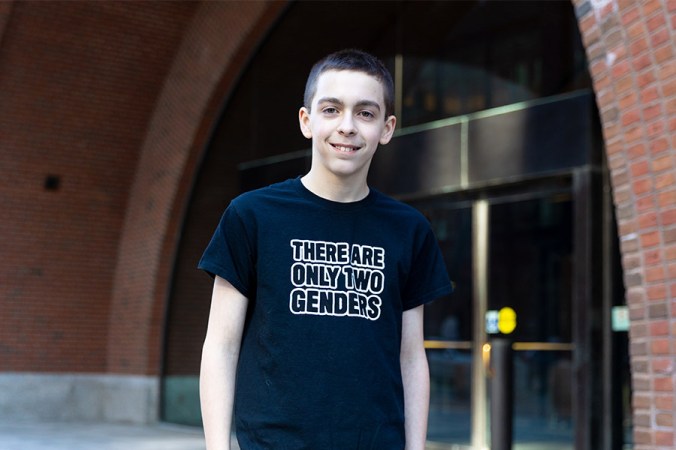
The conservative media is foaming at its metaphorical mouth after a three-judge panel of the U.S. Court of Appeals for the 1st Circuit upheld a District Court decision from last summer that the Nichols Middle School in Middleborough, Massachusetts didn’t violate then-seventh grader Liam Morrison’s First Amendment rights when he was required to remove his “There are only two genders” T-shirt last year.

Liam, no weenie he, was sent home from school in March 2023 after he refused to change into a more neutral shirt. The case was filed on behalf of Morrison and his family last year by two conservative Christian groups, Alliance Defending Freedom and the Massachusetts Family Institute. Sam Whiting, a staff attorney with MFI, reacted to the ruling by saying in a statement, “This case is about much more than a t-shirt. The court’s decision is not only a threat to the free speech rights of public school students across the country, but a threat to basic biological truths.”

Continue reading

Democrats and the Media Escalate Their Totalitarian Response To Biden’s Decline

The Party told you to reject the evidence of your eyes and ears. It was their final, most essential command.

—George Orwell, “1984”

The increasing tendency of the Axis of Unethical Conduct—you know, the “resistance,” Democrats, and the mainstream media—to adopt totalitarian tactics to try to deal with the failure of the Biden Presidency and its alleged author’s obvious mental and physical deterioration is now nearing Code Red status. I wonder what more it will take to alarm partisan progressives sufficiently to have them slap their foreheads and exclaim, “What the hell am I doing? THESE people are the ones who threaten democracy!” If the latest bombardment of astounding “it isn’t what it is” denials doesn’t provoke that response, one has to despair that nothing will. Facts don’t matter.”Res ipsa loquitur” is dead to these zombies.

Insisting that what should be obvious to anyone isn’t real is unethical. Why should I even have to write that?

In three recent incidents caught on video, President Biden appeared confused, dazed, or just hopelessly doddering at public events. One took place at the G7 in Italy, as Biden appeared to wander off during a parachuting exhibition until he was tapped on the shoulder and lead back to the group by Italian Prime Minister Georgia Meloni. The other two are shown above: in one, Biden is led shuffling off stage by Barack Obama who appears to be leading and steadying the President. In the other, Biden stands oddly motionless with a frozen smile on his face as those around him bop to the music at a White House Juneteenth event.

All three episodes are subject to interpretation and confirmation bias. However, Biden has appeared doddering, unsteady, confused and dazed many, many times going back to before the 2020 election. He also mutters, slurs his words, and sometimes descends into gibberish. Even though one could, if one were desperate enough, insist that there is no reason at all to doubt the President’s mental fitness and health (another relevant context: he refuses to take a mental acuity exam) the Axis’s strategy for deflecting perceptions of reality sufficiently to get Biden re-elected has now shifted into an alarming new stage.

Continue reading

The Great Neighbors’ Newspaper Dilemma, or “It’s No Fun Being an Ethicist”

Before I became obsessed with ethics, I wouldn’t have given two seconds of thought to this situation.

My wonderful next door neighbors always flee the D.C. area this time of year until Labor Day. In the past they left their home vacant with Grace and I having the responsibility of keeping a watch on the property, an eye out for packages, that sort of thing. This time, however, their recently-engaged college age granddaughter is staying in the house with her fiance.

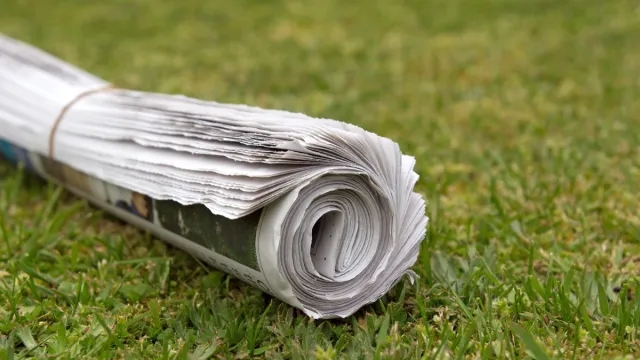
I haven’t seen any evidence of them, however, since they moved some stuff in over the weekend. Walking Spuds by the house yesterday mid-morning, I noticed a Washington Post on the lawn. I noticed it because my neighbors always get the paper very early: I never see a Post there that late. One of my jobs in the past was to pick up the paper if they had neglected to cancel delivery, which they occasionally did.

Boy, I really miss having a real paper around, even the Washington Post, but I dropped that paper long ago because—you know—and replaced it with the Times. Then I decided paying almost a hundred bucks a month for that propaganda rag was idiotic, and went to all digital.

I was sorely temped to take the paper, but reasoned that it wasn’t my responsibility this time, and also that the paper properly belonged to their granddaughter and her beau, the house-sitters. I walked on, after Spuds had peed on their lawn.

Today I walked him by the house even later, around noon. Two papers were on the lawn. Now what? I considered taking the day-old paper home to read, since I guessed that the couple wasn’t keen on newspaper-reading or they would have picked it up the day before. I considered taking both papers, because now the papers were piling up, sending a “Rob me!” message to miscreants. But maybe the two love-birds were just sleeping in. Should I stick the papers through the mail slot? What am I, the Paper Monkey?

Reluctantly, I left the two Posts on the lawn, and now wonder what I should do if there are three there tomorrow.

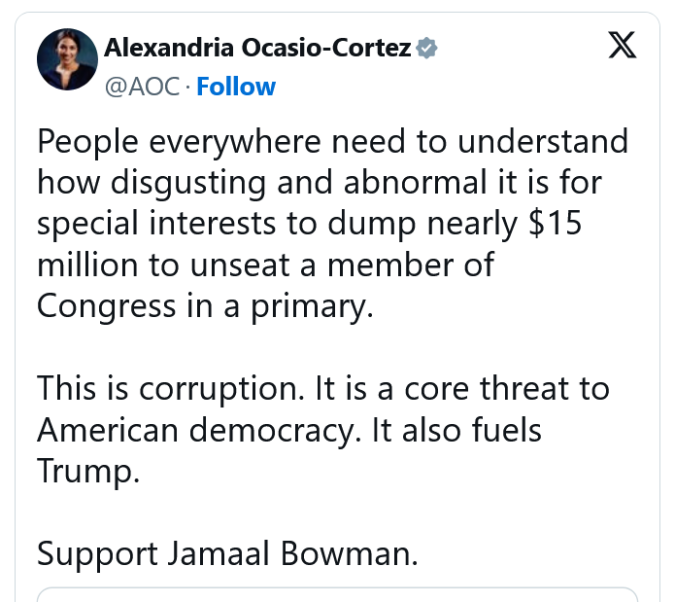
A Popeye: I Can’t Let This Idiotic AOC Tweet Pass…

As Popeye so memorably said on more than one occasion, “It’s all I can stands, ‘cuz I can’t stands no more!” (Then he would swallow a can of spinach and beat the crap out of someone or something.)

From a 2021 report: “Democratic Senators in battleground states are raking in donations from out-of-state donors, amassing a hefty cash advantage over potential GOP challengers who haven’t launched Senate bids yet.  Four of the most competitive 2022 Senate races are in states held by Democrats: Arizona, Georgia, New Hampshire and Nevada. Each of the incumbents in those states received more than three-quarters of their campaign cash from out-of-state donors in the first three months of 2021.” 

Classic. A practice is “disgusting and abnormal” when it is aimed against Democratic Party incumbents, but just democracy at work when it benefits incumbents. And how is contributing to a political campiagn in a primary “corrupt”? AOC should stick with the old stand-by, since Jamaal Bowman is the incumbent in question. It’s racist not to support him.

Continue reading

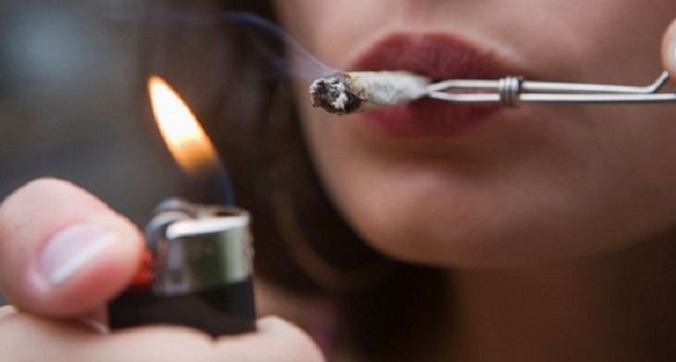
Ethics Quiz: Maryland’s Mass Pot Pardon

This is an ethics quiz because I recognize that I am irretrievably biased on the question of marijuana (no, I really don’t care that I’m supposed to call it “cannabis” now: bite me), which I believe should continue to be illegal, though I am under no illusions that this metaphorical horse has left the barn for good.

Maryland’s governor Wes Moore signed an executive order yesterday that pardons more than 175,000 convicted drug-abusers whose crimes were related to marijuana use. Moore said he did this “with deep pride and soberness.”

Yes, he’s proud to announce that Maryland doesn’t think violating laws is anything anyone should be ashamed of.

“Today is about equity; it is about racial justice,” Anthony Brown, Maryland’s attorney general, said. “While the order applies to all who meet its criteria, the impact is a triumphant victory for African Americans and other Marylanders of color who were disproportionately arrested, convicted and sentenced for actions yesterday that are lawful today.” This is because a disproportionate number of blacks broke the pot laws. This in turn acculturated many of them into breaking other laws with impunity as well. The progressive rule is that if laws are violated by larger numbers of a minority group than their demographic presence in the population would predict, it is discriminatory to enforce those laws.

I wonder who thought up that dodge? Whoever he or she is, it’s brilliant.

Your Ethics Alarms Ethics Quiz of the Day is…

Is the Maryland pardon fair and responsible?

Continue reading

Ethics Quote of the Month: Banned EA Commenter “David”

“Fuck you, you Trump -supporting fascist!”

–Ethics Alarms troll “David” signing off after being banned

Why is this just an “ethics quote” instead of an “unethical quote”? I chose that designation because the line is invaluable information, revealing the crippling delusions at the heart of the implacable Trump-deranged that swarm around us.

“David” entered the fray here demonstrating some rhetorical ability and intelligence. It became clear, however, that he was here only as a hostile adversary and an advocate, not to explore ethics issues but to confront those whose analysis didn’t mesh with his pre-determined ideological and partisan biases, which proved unshakable. They also manifested themselves in trolling and sealioning tactics to relentlessly push a single narrative, the one that the news media, the resistance, Democrats and, to significant extent, Trump himself has fostered by his own incurable trolling habit.

The sequence that produced that quote goes like this. Trump is a bad person, and thus anything he is accused of, anything harmful that is predicted about his future conduct, any malign motives or intent that is attributed to him. must be true regardless of the sources and irrespective of facts. The confluence of these presumed vile acts, confident predictions and bad motives and intent points to racism, lust for power, instability, a thirst for revenge, and determination to topple the democracy. This, in turn, “proves ” that Trump is a super-villain out of Marvel Comics, and driven by fascist aspirations.

Continue reading