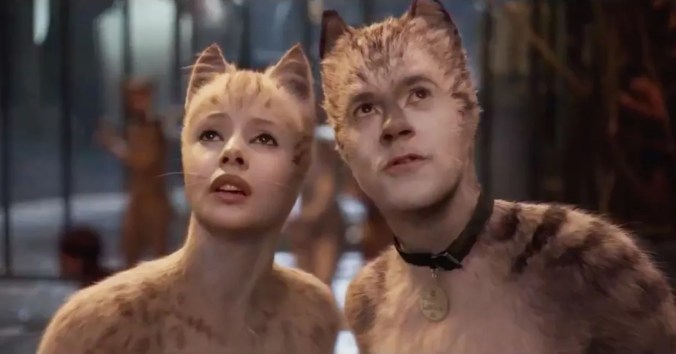
J.D. Vance’s much maligned “cat ladies” snark , like many furiously slammed comments by conservatives and Republicans are, may have focused attention on to a societal trend seriously threatening the health of American society. (If only he could have articulated it better.)
Lately I have been bombarded with TV ads for Smalls cat food. The promotions and commercials claim that it is “human grade” cat food, and why not, since the TV spots feature disturbed individuals male and female, not just proclaiming these animal companions as their surrogates for children, but literally stating that they are children. “He’s my son,” a young woman says in one ad, speaking of her cat. “She’s literally my baby!” says some guy, also talking about a feline “fur-baby.” Literally!
This would be funny in a mordant way if it were not so ominous. I can’t blame cat food companies for taking advantage of the apocalyptic collision of progressive anti-family attitudes in the U.S. and pet mania: so many people do come to regard a dog or a cat as cheaper, more predictable, less demanding equivalent of a child. What is disturbing about the Smalls commercials is that they represent this mindset as healthy and normal.
It isn’t healthy and normal. Taking on the responsibility of raising a child is a critical part of the obligation one has to the community, the nation, civilization and posterity. Not everyone has the opportunity to raise children, and indeed many people shouldn’t. But substuting cats and dogs for offspring fails the Kantian principle of Universality: if everybody did it, the human race would cease to exist.
Progressive madness contributes to the problem. Yesterday, I moderated a post-performance talk-back after a production of the British drama “A Number.” The Twilight Zone-ish play tells the strange tale of a neglectful father who has his thoroughly messed-up son cloned so he can get a second chance at raising a psychologically healthy son after Son #1 is send off to an institution. I don’t recall how the topic came up, but several members of the audience endorsed an increasingly popular unethical rationalization for abortion and not siring children: Can’t it be more ethical not to bring a child into the climate-threatened, pandemic-ravaged world of war, pain, strife and Donald Trump than to thrust an unsuspecting innocent life into this Hell on earth?
I bet you can guess my answer to that concept, which is essentially the reasoning of serial killer Sweeney Todd in the Sondheim musical of the same name in his epic song, “Epiphany”:
There’s a hole in the world like a great black pit
And it’s filled with people who are filled with shit
And the vermin of the world inhabit it
But not for long
They all deserve to die
Tell you why, Mrs. Lovett, tell you why
Because in all of the whole human race, Mrs. Lovett
There are two kinds of men and only two
There’s the one staying put in his proper place
And the one with his foot in the other one’s face
Look at me, Mrs Lovett, look at you
No, we all deserve to die
Even you, Mrs. Lovett, even I
Because the lives of the wicked should be made brief
For the rest of us death will be a relief
We all deserve to die…
But instead of raising miserable people who will need to be or grateful to be killed, how much more responsible it is, the cat people are telling us, to raise felines instead of children! And the cat food people are purrrfectly happy to encourage that belief.
 Ethics Alarms
The Freshpet commercials, though finny, follow this trend. The pet owner kicks out the guest when the guest is grossed out they pet owner keeps dog food in the refrigerator. These commercials elevate pets over people, generally stating that the docs are smarter and more intuitive.
jvb
Yup, seen those too, and that’s exactly right.
I’m only aware of “Sweeney Todd” from afar. It sounds revolting. Is it popular among angry gay guys? It seems unrelentingly vicious. Are there any redeeming qualities in the play? And it’s a musical? Ugh.
Oh, its a great musical, easily Sondheim’s best, and probably the only one that will be done regularly by amateur and professional groups in a hundred years. Do NOT watch the movie,however, which is terrible by any standard. Sweeney is a legitimately tragic figure who has good reasons to be angry at the world, just not good enough to justify being a serial killer. And that song I quoted is very perceptive: I am convinced that it accurately expresses the thinking of many who snap and start shooting.
Okay.
The 1982 filmed TV version of the original cast is very good, except that filmed stage productions are always inferior to the real thing. And it’s not as clear as one could wish.
Molto gratzie. I’ll watch it.
Remember: it is essentially a musical horror movie qua Shakespearian tragedy with a lot of philosophical observations and black humor thrown in. And BY FAR, the creepiest, bleakest ending any musical has had or ever will have.
I just finished performing in the musical earlier this summer, playing the role of Judge Turpin. I had always avoided the show, both as a matter of taste and not enjoying the musicality of many of the number – it’s very jarring and atonal at points, intentionally so. Being in the show helped me learn to appreciate it, as often happens.
Sweeney is a tragic character who lets rage and vengeance overcome him. His quest for revenge at all costs blinds him and costs him everything by the end. Much like Little Shop of Horrors, it’s a cautionary tale.
However much I appreciate it’s value as a art, however, it’s still not my cup of tea for entertainment. I love and appreciate the cast and director and time I spent there, but probably wont be buying tickets to see it next time it comes to town!
Well, playing Judge Turpin, one of the most disgusting characters in the history of musical theater, might color my perception of the show a bit. He makes poor Jud seem like Li’l Abner.