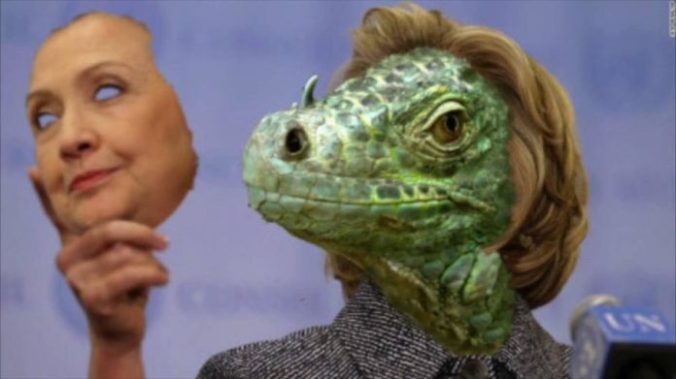
I think it’s time for a new ethicist to write “The Ethicist” column…
Kwame Anthony Appiah has been shaky all year, but he seems to be bottoming out. A disturbed inquirer who works in the I.T. department of a town government asked what he should do about his boss, who “frequently discusses bizarre ideas” including conspiracy theories about lizard people infiltrating the federal government and the Rothschilds as “vampiric blood drinkers.”
“It is not outside the realm of possibility that this alternate reality could compromise the director’s decision-making, potentially jeopardizing the security of our town’s sensitive information,” he writes, but although the concerned worker has gone “up the ladder” as we say in the ethics biz, none of the manager’s superiors think there is a problem.
“I am left in a difficult position, fearing not only for the security of our town’s data but also for my own job stability under a manager detached from reality. Is it ethical for someone in such a crucial role to openly espouse these beliefs at work?” he asks “The Ethicist.”
The last question is a legitimate one, so, naturally, Prof. Appiah virtually ignores it, only saying that because the Rothschild fantasy is a famous anti-Jewish libel, it “raises a workplace issue.” However, it is a workplace issue whether the manager is inflicting his opinions on the staff about the virtues of abortion or a plague of lizard people. The ethical policy is easy: co-workers should never proselytize others in the work place about anything and that goes triple for supervisors. Instead, “The Ethicist” turns in this direction:
“It also raises a judgment issue. Maybe their appetite for this stuff will have no effect on their professionalism, but why take the risk? People who harbor suspicions about vast conspiracies are, as we’ve learned, prone to being manipulated. The World Economic Forum’s Global Risk report for 2022 reported that 95 percent of cybersecurity failings were traceable to human error. People appear to be the weakest link in cybersecurity, and so a secure system depends on keeping track not just of hardware and software but of the people who interact with them as well. Given that you’ve tried getting senior management to do something about this, you’re entitled to act as a whistle-blower here and get the word out. I hope that you do.”
As Johnny Carson might say to Ed McMahon, “You are wrong, Ethics Breath!” A competent ethicist should be very wary of the position that an individual holding minority, seemingly bizarre and unpopular views necessarily implicates that individual’s judgment. The obvious example: religious beliefs. Yeah, yeah, that’s “faith,” but faith in, say, Scientology beliefs, or, sorry, fundamentalist Christian theology, are objectively no more incredible than the lizard people theory. Where should we draw the line between beliefs that show cognitive problems and beliefs that a society, a workplace or a culture just don’t want to accept or even consider? More important still is the question of who gets to draw the line.
I know very astute people who believe anyone who doesn’t swallow the “consensus” for climate change hysteria whole is an idiot, and maybe a criminal. You can spin out the hypothetical list as well as I can. Sometimes, history tells us, those crazies who seemed paranoid turn out to be right. “Nah,” wise heads in the Jewish communities in Germany told alarmists, “This will pass. What are they going to do, kill us all?” Or, in a more recent and less extreme example, “Come on. Why would all those intelligence experts lie about that phony Hunter Biden laptop?”
I admit, that other line between bizarre beliefs and assertions proving beyond a shadow of a doubt that the speaker is a moron can be tricky too. I know I wrote here that Sunny Hostin, the embarrassing member of the legal profession on “The View,” called into question her fitness to practice law by my analysis when she said solar eclipses and earthquakes were evidence of climate change. As a general rule, however, someone’s competence and trustworthiness at a job should be measured by performance, not opinions on matters having nothing to do with the job. That principle, combined with the principle that supervisors should keep their beliefs, faiths and conspiracy theories to themselves, solves the problem.
A competent ethicist should understand that.
 Ethics Alarms
The Ethicist’s view that computer system security being the issue at risk is bizarre.
If anything, the paranoia often accompanying lizard people beliefs makes these individuals less susceptible to social engineering credential theft.
Also–isn’t stigmatizing mental illness the opposite of a progressive value?
The blood-drinking thing by the elites seemed silly, until the recent stuff has come out. After watching pictures of celebrities at these parties with realistic-looking ‘bodies’ claimed to be made of food with blood oozing out of them and the partygoers eating it… well…is it ALWAYS fake? I mean if you were really eating people, this is the kind of thing you would do so you could deny it. Hollywood always had had an obsession with the occult and pushing boundaries. It is also true that transfusions of blood from the young does reverse some of the effects of aging and you know what Hollywood types would do to reverse aging…
So, not impossible.
As for the lizard people, I have always understood that to be symbolic. It isn’t that they are really lizards, they just are cold-blooded and unfeeling…except for Zuckerberg.
“…except for Zuckerberg.”
And Gavin Newsom.
Jack, you never answer the question, “What should we do about the lizard people infiltrating the federal government?”
On a slightly more serious note, am I the only one who sees the irony in Appiah quoting a report by the World Economic Forum one sentence after expressing concern about people who harbor suspicions about vast conspiracies?
I thought that might provoke comment…
”Human Error” is meaningless in this case anyway. I work in IT in higher ed and attended a security conference last week. The biggest issues are incompetence (IT employees doing thing in an insecure manner), lack of resources (failure to provide adequate budget – is that human error?), lack of policy enforcement (management won’t allow IT to enforce security- is that human error?), and people falling for scams (phishing, etc). For the scams, a large majority of those who have fallen for them have “Dr” in front of their name and “Ph.D.” after. I think I would prefer someone who is suspicious of lizard people compared to many faculty members (sorry for those reading this, but look around at your colleagues, you know I’m right).