2024 Introduction
When I look back on what I wrote to introduce the greatest of all Christmas movies last year, I almost have to laugh, if I could laugh.
“What makes ‘Miracle on 34th Street” the most appropriate classic Christmas film for 2023 is its theme: the importance of conquering cynicism and pessimism, and always keeping one’s mind and heart open to hope…. I know my year has been especially miserable on multiple fronts. Nonetheless, I remain, at heart, about 12 years old. The same things make me laugh; my level of optimism remains high; I believe in this nation’s miraculous ability to somehow get out of the fixes it gets itself into; I’m still a romantic, and, yes, I think with a little luck and one more starting pitcher, the Boston Red Sox can make it to the World Series next year. I am being constantly confronted with old friends, some much younger than me, who have suddenly decided to be old: they think old, they act old, and they seem to have given up the future as irrelevant. The Santa Claus myth represents faith in the possible, or rather the impossible. Yes, its easier when you are a child, but it is worth the fight to never lose the part of you that still believes in magic and miracles.”
What a joke on me. My wife died unexpectedly in February. Hidden financial horrors were uncovered that she had been hiding from me. My son decided he was trans; a lot of those friends who were acting old ended up acting dead, and rather convincingly. I lost my last connection to my mother’s family when Aunt Bea died at 96; my mentor and Most Unforgettable Person, Tom Donohue of the U.S. Chamber of Commerce, died as well; one of my closest lawyer clients died too. Another loss that I felt: Luis Taint, the Boston Red Sox pitcher who was at the center of some of my most cherished baseball memories, died this year. A big theatrical project I had been working on for six months was abruptly cancelled (the theater was condemned as structurally unsound). Worst of all, the Red Sox had a star-crossed, frustrating season: if there’s anything worse than watching baseball alone, it’s watching your team lose alone.
Indeed, I do, as Auntie Mame sang, “need a little Christmas,” but it is very little indeed this year. Luckily for me, there’s a song for that: “Have Yourself a Merry Little Christmas,” from “Meet Me in St. Louis.”
So the Christmas movies are about it for me this holiday season. I’ve seen “It’s a Wonderful Life,” “White Christmas,” my favorite version of “A Christmas Carol,” “The Santa Clause,” and even “Holiday Inn.” (No, “Die Hard” and “Die Hard 2” are not “Christmas Movies.) “Elf” doesn’t make the cut; I suppose that I’ll see “A Christmas Story” eventually, though I am sick of it, and Grace’s complaints about Melinda Dillon’s hair haunt me. I will revisit “Home Alone” and “Home Alone 2.” I’m saving “Miracle on 34th Street” for tonight, Christmas Eve.
I confess, I believed n Santa Claus until I was 12. I didn’t want to give the fantasy up: I loved magic, and my parents always tried to make the season magical. (More of that later.) Grace and I tried to do the same with Grant, now “Samantha,” but he was a non-believer by the third grade. Is there anything more joyful to see than the look on a child’s face as he or she sees what Santa has delivered? Will anything feel that wonderful again?
“Miracle on 34th Street” is an ethics movie in part because its artists committed to telling a magical story and charming audiences by working as an ensemble selflessly and efficiently. The director, George Seaton also wrote the screenplay, and it won him an Oscar. He cast his movie brilliantly, and making the correct but bold decision to stick with a matter-of-fact, realistic, unadorned style that keeps the story grounded in reality while it spins off into fantasy.
“Miracle on 34th Street” is about the importance of believing in good things, hopeful things, even impossible things. The movie reminds us that wonderful things can happen even when they seem impossible, and that life is better when we believe that every day of our lives. I’m trying.
One thing this film does well is to concentrate on the secular holiday without any allusions to the religious holy day, but not being obnoxious about it. “It’s a Wonderful Life” straddles the line very cleverly: it begins in heaven, after all. All the “A Christmas Carol” films include Bob Cratchit telling his wife that Tiny Tim mused about how his disability reminded people of Jesus’s miracles at Christmastime, and that’s Dickens’ only reference to Jesus in his story. On the offensive side is the Rankin-Bass animated “Rudolph the Red-Nosed Reindeer”—I can’t believe they still show that thing—when the “stormy Christmas Eve” causes Santa to decide to “cancel Christmas.” I’d say that’s above Santa’s pay grade, wouldn’t you agree? It also suggests that Christmas is only about gifts and children. (Do parents today explain that the singing snowman who narrates the story is based on (and looks like) the real person who also sings the most memorable songs? They should. Burl Ives had a fascinating life and a varied career, and those kids will probably be hearing him sing “Have a Holly Jolly Christmas” for the rest of theirs.
Last year I discussed the many remakes and the fact that they all fail to equal the original. I wonder why this, of all the Christmas classics, has inspired so many remakes. Nobody would dare remake “It’s a Wonderful Life.” I think it’s because the story connects with children as well as adults, and there is a sense that a black and white movie very obviously set in the 1940s seems too distant.
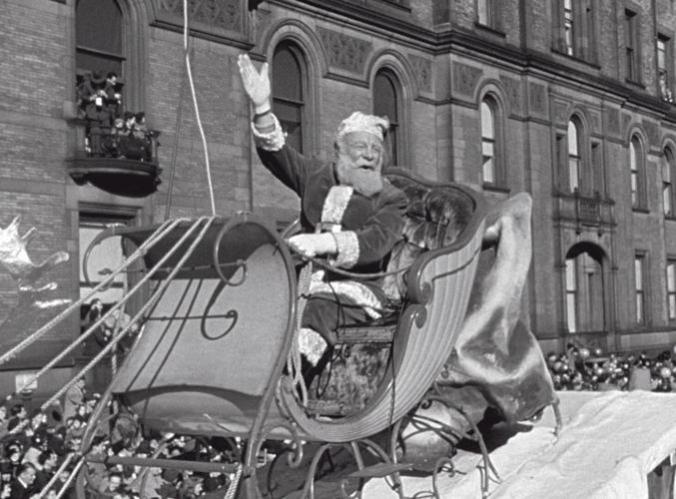
Interestingly, all of the perennial Christmas movies have been made into stage musicals of varying success—“White Christmas,” “It’s a Wonderful Life,” “A Christmas Story,” “Elf”—- but “Miracle on 34th Street” flopped so badly when Meredith Willson [“The Music Man”] adapted it as “Here’s Love” on Broadway that nobody has tried again. The show included the song, “It’s Beginning to Look a Lot Like Christmas,” which Willson wrote long before the show was assembled, and it was still the best song in the weak score. At one point John Payne took over the part of Fred Gailey, reprising his role in the film. But as with all the movie remakes, the show missed Edmund Gwynn, the best Kris Kringle of them all.
Continue reading →







 Ethics Alarms