Today Pete Rose and other players “banned for life” by Major League Baseball were reinstated. This doesn’t mean they have been brought back to life, and it won’t get them into baseball’s Hall of Fame in Cooperstown. All it means is that a banning for life doesn’t extend past a banned player’s death.
I have to say, I thought this would bother me more than it does.
The decision by Commissioner Robert D. Manfred, whom I would regard as the Worst Commissioner Ever were it not for the fact that his predecessor, the revolting Bud Selig, should have that distinction forevermore, was clearly prompted by the death of baseball scumbag Pete Rose, President Trump’s meaningless promise to “pardon” him, whatever that means, and the Rose family’s renewed efforts to get baseball’s all-time hit leader into the Hall of Fame. From a lawyer’s perspective, I can’t quibble with Manfred’s logic that a lifetime ban, however deserved, should expire upon death, as most things do.
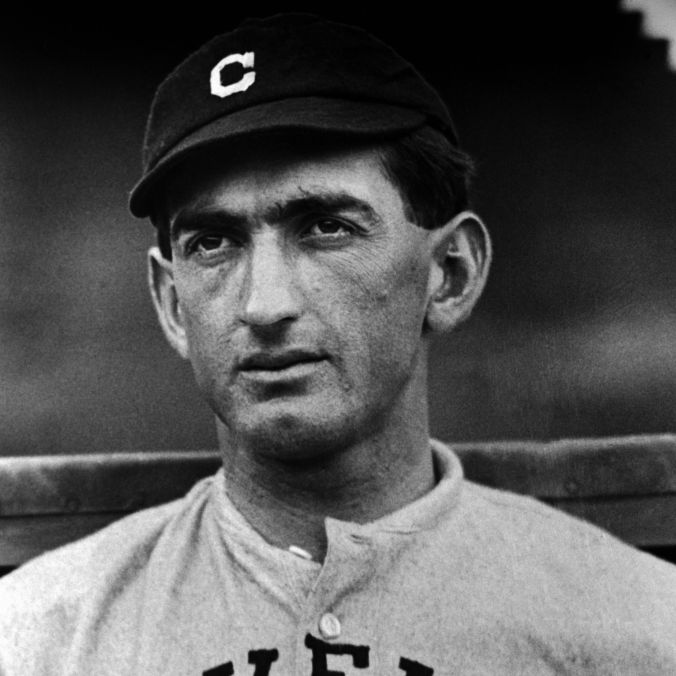
Rose’s “reinstatment” also applies to 16 other banned players—Eddie Cicotte, Happy Felsch, Chick Gandil, Shoeless Joe Jackson (above: I must confess, I like that photo of Joe because it makes him look like an axe murderer), Fred McMullin, Swede Risberg, Buck Weaver and Lefty Williams; Joe Gedeon; Gene Paulette; Benny Kauff; Lee Magee; Phil Douglas; Cozy Dolan; and Jimmy O’Connell, as well as one banned owner, William Cox. It’s a motley crew, and Rose belongs right in the middle of it. I’d rate Pete as less corrupt than Joe Jackson and more deserving of infamy than Buck Weaver, while not quite as repulsive as several of the others, like Chic Gandil.
“Charley Hustle” is the Hall of Fame’s problem now, just like all the steroid cheats, proven and suspected: Barry Bonds, Manny Ramirez, Alex Rodriguez, Rafael Palmiero, Mark McGwire, Sammy Sosa, Roger Clemens and the rest. Would I support Rose’s election to the Hall before I’d accept any of those players? Absolutely. But the Hall of Fame still has a character clause (Good!) and until that is repealed, the ghost of Pete Rose, like Shoeless Joe’s, shouldn’t even be able to haunt the place.
Here is the statement from Major League Baseball:
“Commissioner Robert D. Manfred Jr. today issued a policy decision regarding the status of individuals who have passed away while on the permanently ineligible list,” the league’s press release says. “This issue has never been formally addressed by Major League Baseball, but an application filed by the family of Pete Rose has made it incumbent upon the Office of the Commissioner to reach a policy decision on this unprecedented issue in the modern era as Mr. Rose is the first person banned after the tenure of Commissioner Kenesaw Mountain Landis to die while still on the ineligible list. Commissioner Manfred has concluded that MLB’s policy shall be that permanent ineligibility ends upon the passing of the disciplined individual.
In a letter to Jeffrey M. Lenkov, the attorney for Mr. Rose, Commissioner Manfred wrote, ’In my view, a determination must be made regarding how the phrase ‘permanently ineligible’ should be interpreted in light of the purposes and policies behind Rule 21, which are to: (1) protect the game from individuals who pose a risk to the integrity of the sport by prohibiting the participation of such individuals; and (2) create a deterrent effect that reduces the likelihood of future violations by others. In my view, once an individual has passed away, the purposes of Rule 21 have been served. Obviously, a person no longer with us cannot represent a threat to the integrity of the game. Moreover, it is hard to conceive of a penalty that has more deterrent effect than one that lasts a lifetime with no reprieve. Therefore, I have concluded that permanent ineligibility ends upon the passing of the disciplined individual, and Mr. Rose will be removed from the permanently ineligible list.’
Commissioner Manfred further wrote, ’While it is my preference not to disturb decisions made by prior Commissioners, Mr. Rose was not placed on the permanently ineligible list by Commissioner action but rather as the result of a 1989 settlement of potential litigation with the Commissioner’s Office. My decision today is consistent with Commissioner Giamatti’s expectations of that agreement.
’Commissioner Giamatti’s comments were completely reasonable given that, at the time, the Hall of Fame did not have a rule barring people on the permanently ineligible list from Hall of Fame consideration. In fact, Shoeless Joe Jackson was afforded the opportunity to be voted upon in 1936 and again in 1946.’
To establish clarity for the administration of the Major League Rules, the decision in this matter shall apply to individuals in the past or future who are posthumously on the permanently ineligible list. There are 17 deceased individuals disciplined since the founding of the Commissioner’s Office impacted by today’s announcement, including Eddie Cicotte, Happy Felsch, Chick Gandil, Joe Jackson, Fred McMullin, Swede Risberg, Buck Weaver and Lefty Williams; Joe Gedeon; Gene Paulette; Benny Kauff; Lee Magee; Phil Douglas; Cozy Dolan; Jimmy O’Connell; William Cox; and Pete Rose.”
I can live with that.
 Ethics Alarms
Apologies my question has nothing to do with baseball ethics. My question is, can someone explain how the following is legal. This seems like a dangerous avenue for the court justices to allow.
The victim died in 2021 and cause of death was road rage. It seems like a dangerous avenue to allow a AI created video creating the victims’ own voice to make what I would imagine an emotional impact on all in the court room including the judge. Even though it is the victims voice, it is not the victims’ own words and thoughts, or true recollection of the relationship with the individual that caused the death. Because of the AI invented statement, the individual received a harsher sentencing. https://www.abc15.com/news/region-southeast-valley/chandler/family-uses-ai-to-create-video-for-deadly-chandler-road-rage-victims-own-impact-statement
I expect our host will get to that soon. I was going to bring it up on Friday’s Open Forum.
Jack’s back! I hope you don’t mind that I took the liberty of posting your question to the open forum (with attribution). You can join the discussion here: https://ethicsalarms.com/2025/05/19/nightmare-make-up-open-forum/#comment-887830.
Jack,
After I visited Cooperstown last fall I wondered whether the owner of the Chicago White Sox, Charles Comiskey, truly deserves his place in the Hall of Fame. The Chicago Black Sox scandal would not have occurred but for his miserliness.
There’s nothing to wonder about. He doesn’t. He was an ethics villain.Several owners in the Hall don’t belong there, notably Bud Selig.
Connie Mack was no bargain either.
But when Connie couldn’t afford to pay his players, he traded them or sold them. He never reneged on a contract deal like Cominsky.
All the non-players included in the HOF definitely sully the joint and the experience of making a visit.
No argument here.
I wouldn’t spend too much time worrying about such a moot issue. Not to be out done, nobody is getting rich right now writing books about Jimmy Carter, and the inflation during his term in the 80s.
Tried aga
Succe
Character: Mel Ott. Ty Cobb. Both on HOF. Doesn’t mean that just because character clause wasn’t invoked it shouldn’t be. BUT it’s not a HALL of Ethics or Integrity or Honor. Maybe it’s time to elect OJ to the baseball HOF too
But OJ played football, and in the Pro Football Hall of Fame. Football does not have a character clause I am aware of.
Of course, and of course I know that. This is Michael not whomever the blog keeps attributing
This is so fitting:
https://babylonbee.com/news/pete-rose-hall-of-fame-induction-ceremony-to-be-sponsored-by-draftkings
I wonder how this ruling would work for someone on the banned for life list, who died but was resuscitated. Would that death, however brief, remove that person from the list, requiring reinstatement, or would it not count as true death, since there was still most likely brain activity?