The Ethicist (Kwame Appiah to his friends and NYU students) gets a lot of questions about a common dilemma: what kind of things does a selling homeowner have an ethical duty to inform a potential buyer about? My favorite version of this issue—because you know how I am—involves houses where horrible murders have taken place, or ones that are rumored to be haunted.
Most of these non-horror movie situations are solved by a strict adherence to the Golden Rule. Would you want to be told that a property has X? If so, tell the potential buyer. Yeah, being ethical may cost you some money, or even a sale. Nobody ever said being ethical was easy or always beneficial to the ethical actor.
Last week Kwame was asked by condo seller of she was bound to tell a potential buyer that the condo association uses “pesticides, herbicides and other chemical treatments” that environmentalists regard as harmful, even though they are legal. The seller has been part of a group trying to force the association to go “green” without success. The Ethicist’s answer was reasonable: if the condo association was obeying local laws and ordinances, the dispute was none of the purchaser’s business until after the property was transferred. “[W]hen it comes to selling your unit, your responsibility doesn’t extend to reshaping a buyer’s worldview,” he wrote. “Those who dissent should make their case for reform, but disclosure is usually reserved for departures from what is recognized and approved — from what a reasonable person would anticipate. You’re free to voice your concerns. You’re not required to.”
That’s right. Disclosing the seller’s dissatisfaction with the condo association’s choice of lawn care methods would be exemplary ethics but not getting into those high weeds is certainly not unethical.
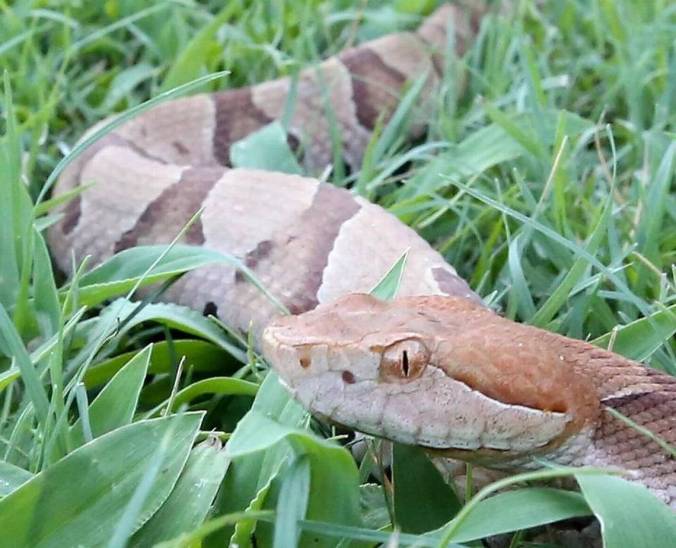
Another yard issue from “The Ethicist” column’s distant past involved a soon-to-be-selling homeowner whose yard occasionally contained deadly snakes, specifically copperheads, along with visits from more friendly, or at least non-poisonous woodland creatures. “I cannot imagine anyone wanting to buy if they knew there were poisonous snakes nearby,” the inquirer wrote. “I doubt any real estate agent would appreciate my informing prospective buyers of this. I thought of sending anonymous warning notes (very cowardly). Of course, if a potential buyer asks me directly about wildlife, I will mention the snakes (I think).”
That one is easy. You tell the potential buyer about the snakes. Any argument agaisnt doing so ( “There aren’t very many;” “They’re usually shy;” “I was bitten once, but I didn’t die”) are rationalizations.
 Ethics Alarms
Perhaps it would be an ethical obligation to advise a city dweller about woodland creatures, otherwise advising of snakes seems like advising of lightning, ants, mosquitos and squirrels(which are a bit of an infestation), oh and the moon(it makes the ocean rise). Where I live even on the edge of the city, if you don’t see snakes of various forms, something is amiss. Just the other day I caught one and brought it home to the kids for a show and tell.
My woodsy-granola-hippie-treehugging bias may be mocking reasonable lack of knowledge of life science.
Why would anyone think about advising of snakes other than someone who has lived inside life long?
I’ve kept snakes as pets for a good portion of my life, so wouldn’t necessarily report except in two situations: venomous and garter snakes (which, oddly enough, are very recently discovered to also be venomous).
There’s the obvious hazard for the former, but regarding garters, they return to centralized communal hibernating locations by the thousands, very much like salmon do. This results in news reports about the poor folks who inadvertently discover prior residents that are the actual owners of their propperty.
https://www.cbsnews.com/colorado/news/snake-force-family-from-home-into-bankruptcy/
There are relatively easy ways – in nearly every situation – to deal with snakes, venomous or no. If there are venomous snakes that live on or visit a property, a prospective buyer should be informed. A hundred years ago, it would have been a given to expect snakes on or around your property, today that’s far less common. Full disclosure is fully ethical. But better yet, the current homeowner should take steps to eliminate the issue. Snakes can be captured and relocated by a professional with a minimum of fuss. But the biggest issue is this: snakes go where they can get a meal. As a homeowner, ask yourself, “Does my property have other little critters that make a hungry snake happy?” If so, deal with them and very likely, the snake issue disappears as well.
Two things: 1) snakes generally do not want to be around people, and 2) snakes want to eat. Keep those in mind and you’ll probably be fine.
Snakes on a plain >> snakes on a plane.
Oh What Fun and Joel have captured my sentiments on this issue but I would add that if I was selling a house out in the boonies where, we, by building out there invaded the territory of any wild animal I would simply say that they can expect to see nature in the wild without going into detail. On the other hand, if the property in question is simply suburban I agree with Joel that you should take steps beforehand to eliminate the threat. If you are moving to get away from the threat and you do not disclose this then that would make it unethical to remain quiet. This would be no different than knowing that your sewer pipe had collapsed and you are moving to avoid a big repair bill. In such a case their is a duty to disclose; at least in Maryland there is.
As a Flordia homeowner, I think an important consideration is, “What’s normal?” It wouldn’t cross mind to tell a prospective buyer that my suburban lawn is frequently visited by snakes, armadillos (who carry legionella btw), and the occasional hurricane. That’s normal in Florida. I would consider it an ethical duty of a new resident anywhere to learn what natural hazards are endemic to their new home before buying property there.
Sorry, i had a brain fart. Armadillos can carry M.leprae, not legionella.
*my mistake, it’s not legionella, it’s M.leprae. My brain got confused between legionella/leprosy. It’s a little different.
Good point. An alligator in my yard would cause quite a stir.